Halloween STEM Activities for Kids: Spooky Builds That Teach Real Science
Halloween hands kids a stack of ready made science questions. Why does a pumpkin foam over? Why do ghosts melt faster with salt? How much candy can a cotton swab bridge hold?
The 16 activities below answer questions like those in 30 minutes or less, most with kitchen supplies. They are sorted by age, and each ends with the one science idea your child should be able to explain at dinner.
Quick picks: 16 Halloween STEM activities at a glance
|
# |
Activity |
Ages |
Time |
STEM Skill |
Mess |
|
1 |
Fizzing Pumpkin Volcano |
4 to 8 |
20 min |
Acid and base reaction |
High |
|
2 |
Melting Salt Ghosts |
3 to 7 |
30 min + freeze |
Freezing point |
Medium |
|
3 |
Dancing Static Ghosts |
4 to 9 |
15 min |
Static electricity |
Low |
|
4 |
Self Inflating Monster Balloon |
5 to 9 |
15 min |
Gas from a reaction |
Medium |
|
5 |
Candy Catapult Launch Test |
7 to 12 |
30 min |
Stored energy, measuring |
Low |
|
6 |
Skeleton Bridge Challenge |
8 to 12 |
30 min |
Loads and triangles |
Low |
|
7 |
Paper Bat Glider |
7 to 12 |
20 min |
Lift and balance |
Low |
|
8 |
Articulated Skeleton Hand |
6 to 11 |
30 min |
Tendons and joints |
Low |
|
9 |
Pumpkin Battery |
9 to 14 |
40 min |
Circuits and voltage |
Medium |
|
10 |
Ghost Path Coding Grid |
4 to 9 |
20 min |
Sequencing, debugging |
None |
|
11 |
Candy Chromatography Race |
5 to 10 |
15 min |
Diffusion, data |
Low |
|
12 to 16 |
Five 3D printed Halloween builds |
6 to 12 |
20 min design + print |
Design, test, redesign |
None |
Why Halloween Makes STEM Click for Kids
Kids pay attention when the materials already matter to them. In October that means pumpkins, candy and anything that glows. Swap a beaker for a jack o'lantern and the same baking soda reaction suddenly draws a crowd.
Halloween projects also give fast, visible results: foam, motion, a collapse, a light. That quick feedback lets a child change one thing and try again, the core habit of science. The Smithsonian Science Education Center notes that homes are full of everyday science and engineering for families to investigate together.
|
Make every activity a real experiment Ask your child to write down a guess before starting, then compare after. One prediction turns a craft into a test. |
30 Minute Halloween Science Experiments (Ages 4 to 8)
No special gear needed. Cover the table with a tray and keep paper towels close.
Fizzing Pumpkin Volcano
Ages 4 to 8 · Time 20 min · You need: small pumpkin, 1/4 cup baking soda, dish soap, food coloring, 1 cup vinegar
1. Cut the top off a small pumpkin and scoop out the seeds.
2. Add the baking soda, a squirt of dish soap and a few drops of coloring.
3. Pour in vinegar slowly and watch the foam climb out.
4. Repeat with more or less vinegar and compare foam height.
The science: vinegar (an acid) and baking soda (a base) react and release carbon dioxide. The soap traps the gas, so you get foam instead of a quick fizz.
Melting Salt Ghosts

Ages 3 to 7 · Time 30 min plus overnight freeze · You need: ice cube tray, water, white washable paint, googly eyes, salt, warm water, pipettes or spoons
1. Mix white paint into water, pour into an ice tray, press in googly eyes and freeze overnight.
2. Pop the ghosts out onto a tray.
3. Salt half the ghosts, then drip warm water on all of them.
4. Check every five minutes: which ghosts lose their shape first?
The science: salt dissolves into the thin layer of water on the ice and lowers the temperature at which it can freeze. Britannica explains this freezing point depression and why road crews use the same trick.
Dancing Static Ghosts
Ages 4 to 9 · Time 15 min · You need: tissue paper, marker, scissors, one balloon
1. Cut two inch tissue paper ghosts and draw faces.
2. Rub the balloon on your hair or a wool sweater for about 10 seconds.
3. Hold it just above the ghosts and watch them lift and wiggle.
The science: rubbing moves electrons onto the balloon, and the charged balloon pulls the light tissue up. Ask your child: does it work better on a dry day or a humid one?
Self Inflating Monster Balloon
Ages 5 to 9 · Time 15 min · You need: balloon, permanent marker, funnel, 1 tablespoon baking soda, empty plastic bottle, 1/2 cup vinegar
1. Draw a monster face on a deflated balloon.
2. Funnel the baking soda into the balloon.
3. Pour vinegar into the bottle and stretch the balloon over the neck, letting it hang to the side.
4. Lift the balloon so the powder drops in. The monster inflates on its own.
The science: the volcano reaction again, but the carbon dioxide has nowhere to go except into the balloon.
Halloween Engineering Challenges (Ages 8 to 12)

Give older kids a few materials, one goal and a timer, then let them fail a few times. The learning happens between version one and version three.
Candy Catapult Launch Test
Ages 7 to 12 · Time 30 min · You need: 7 jumbo craft sticks, rubber bands, a plastic spoon or bottle cap, candy pumpkins, tape measure
1. Band five sticks into a stack. Band two more together at one end only.
2. Slide the stack between the two loose sticks to make a lever, then band the spoon to the top.
3. Launch a candy pumpkin five times and measure each distance.
4. Change one thing (stack height, spoon position) and launch five more.
The science: the bent stick stores energy and releases it as motion. Averaging five launches is real data handling, so let your child do the math.
Skeleton Bridge Challenge
Ages 8 to 12 · Time 30 min · You need: 50 cotton swabs ("bones"), masking tape, two books as supports, wrapped candy
Set the books 8 inches apart. Kids get 20 minutes to build a bridge across the gap, then add candy one piece at a time until it sags or breaks.
The science: triangles hold their shape under load while squares fold. Most kids discover that on their own after the first collapse.
Paper Bat Glider
Ages 7 to 12 · Time 20 min · You need: black paper, ruler, scissors, paper clips
Fold a basic dart glider and trim the wings into bat scallops. Throw it three times and measure. Add one paper clip to the nose and test again, then try two.
The science: a glider flies when its weight sits slightly ahead of the wing center. Too little nose weight and it stalls. Too much and it dives.
Articulated Skeleton Hand
Ages 6 to 11 · Time 30 min · You need: black card, white marker, straws cut into short pieces, string or yarn, tape
1. Trace your child's hand on black card and cut it out.
2. Tape short straw pieces along each finger, leaving gaps at the knuckles.
3. Thread string through each finger and tape it at the tip.
4. Pull the strings from the wrist and watch the fingers curl.
The science: the strings act like tendons, which forearm muscles pull to bend the finger bones at each joint.
Technology and Math Twists: Circuits, Code, and Measuring
Most Halloween lists stop at chemistry. These three add the "T" and the "M" without a screen.
Pumpkin Battery

Ages 9 to 14 · Time 40 min · You need: 3 to 4 small pumpkins or gourds, galvanized nails, copper coins or strips, alligator clip wires, one small LED
1. Push one nail and one copper piece into each pumpkin, about an inch apart.
2. Wire the copper of pumpkin one to the nail of pumpkin two, and so on.
3. Clip the LED to the free nail and free copper piece. Flip it if it stays dark.
The science: two different metals in acidic pumpkin flesh create a small voltage. One pumpkin gives less than a volt, so the cells are chained in series. Expect a faint glow in a dark room.
Ghost Path Coding Grid
Ages 4 to 9 · Time 20 min · You need: a 6 by 6 grid on paper or tape on the floor, a ghost token, candy "goals", arrow cards
One player places candy and a few "haunted" squares. The coder lays out arrow cards as a program, and a second player moves the ghost exactly as written. If the ghost hits a haunted square, the coder finds and fixes the bad card.
The science: that is sequencing and debugging. Add a "repeat 3 times" card for older kids to introduce loops.
Candy Chromatography Race
Ages 5 to 10 · Time 15 min · You need: colored coated candies, white plate, warm water, ruler, timer
Ring the candies near the plate's edge and pour warm water into the center until it touches each one. Every minute, measure how far each color has spread and log it.
The science: water dissolves the coating and the dye spreads by diffusion. Warmer water usually spreads faster, which makes a second experiment.
|
Candy is a choking hazard for young kids Keep hard candy and small pieces away from toddlers during launch and bridge activities. The FDA's Halloween food safety tips for parents also cover checking labels for allergens before any treat gets eaten. |
Design It, Print It, Test It: Halloween 3D Printing Projects
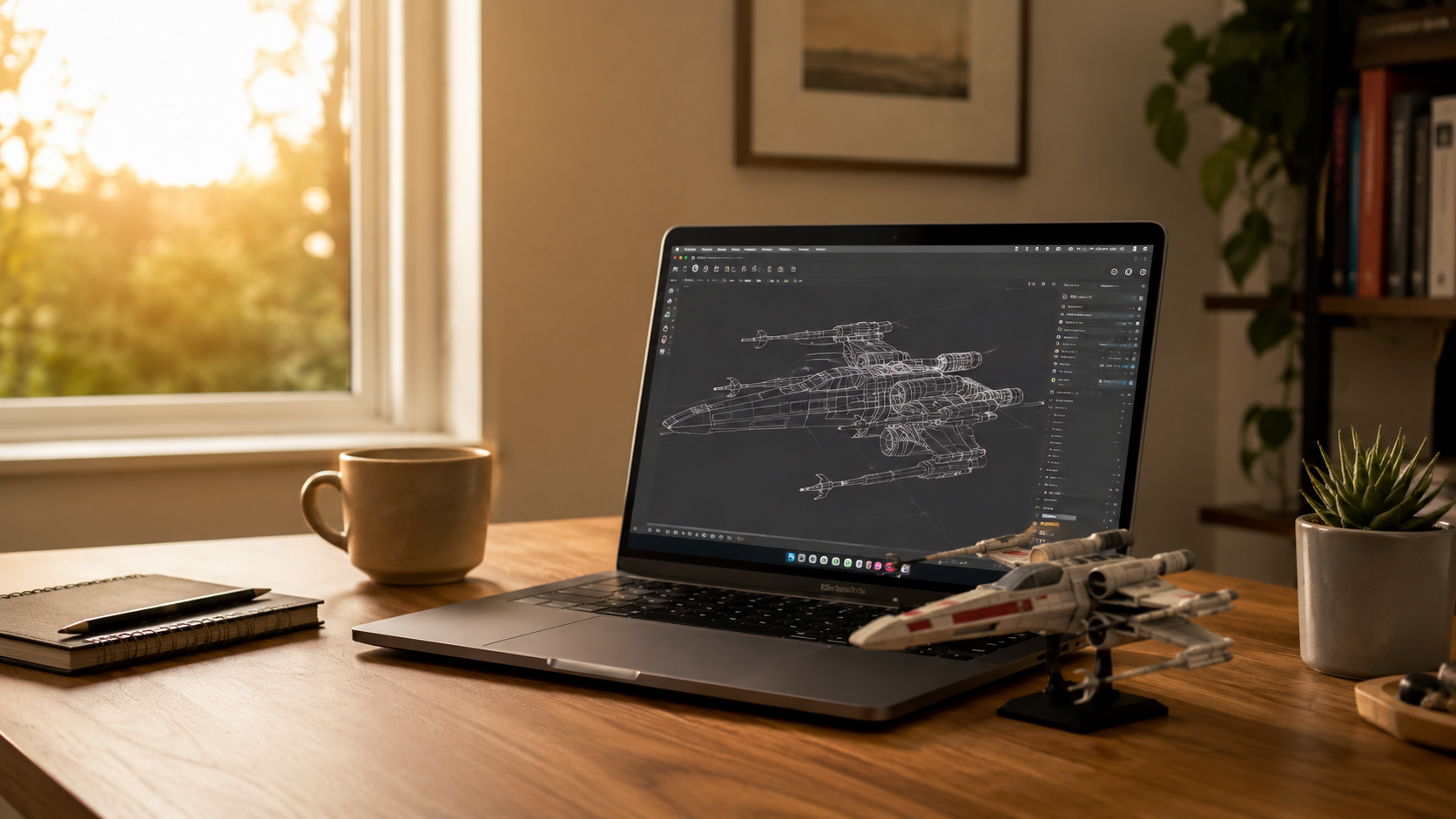
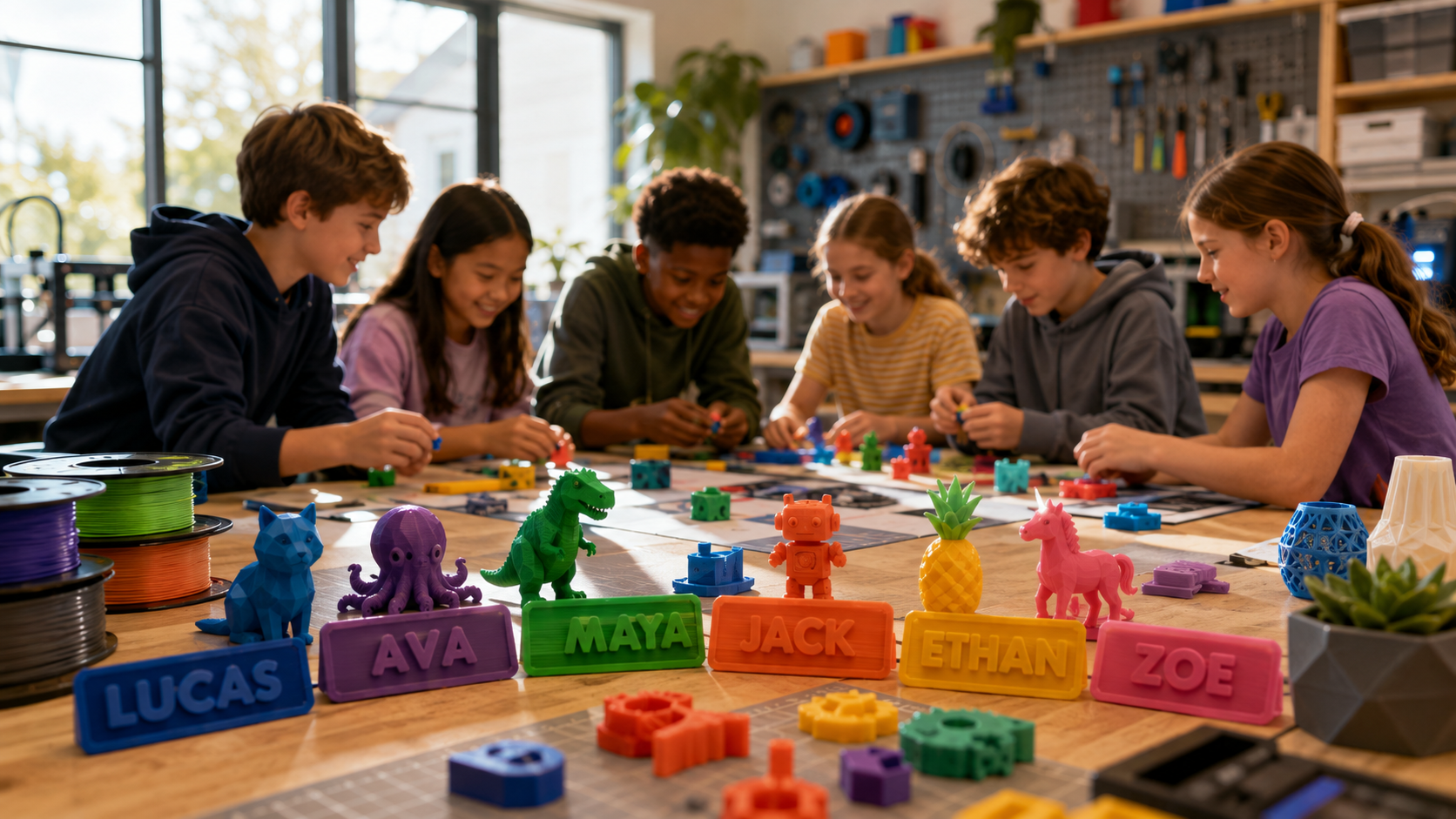
Every activity above follows the same loop: guess, build, test, change one thing. A 3D printer lets kids run that loop on objects they designed. The catapult bucket that keeps dropping candy gets redrawn, reprinted and measured again.
For families new to this, a guided toy making printer for younger kids keeps the process manageable. The AOSEED X-MAKER JOY has a fully enclosed build area, a 120 x 120 x 120 mm print space and a companion app where kids start from ready made models or themed mini design apps before building shapes from scratch.
How the Work Splits Between Child and Parent
|
Step |
What your child does |
Where a parent helps |
|
1. Pick or design |
Chooses a model or designs one in the app's guided tools |
Sets a size limit and a goal ("must hold 3 candies") |
|
2. Print |
Sends the file and watches progress |
Loads filament, starts the first print, stays nearby |
|
3. Test |
Runs the launch, flight or game and records results |
Holds the tape measure, asks "what will you change?" |
|
4. Redesign |
Changes one feature and prints again |
Removes finished parts once they cool |
Five Halloween Prints Kids Can Design and Test

• Printed catapult bucket. A scoop that clips onto the craft stick catapult. Test deep versus shallow for distance.
• Bat glider nose weight. Print clip on weights in two sizes and find the one that flies farthest.
• Pumpkin lantern cover. A cut out shell over a battery tea light. LED lights only, never a candle.
• Ghost vs. pumpkin game pieces. Ten tokens for a Halloween tic tac toe or checkers night.
• Treat bag tag. Measure the handle, then design a tag with a hole that fits. If it doesn't, measure again.
|
Printing safely at home Use PLA filament in a room with airflow. NIOSH advises opening a window or door while a printer runs and notes PLA often releases fewer particles than ABS. The Washington State Department of Health recommends a fully enclosed printer and PLA for schools, and tells students not to hover over the machine or touch heated parts. |
|
WANT THE HALLOWEEN BUILDS TO KEEP COMING AFTER OCTOBER 31? Printed game pieces and catapult parts become next month's projects, not trash. AOSEED printers pair with an app and thousands of ready to print models that get weekly updates, so there is always a next thing to make. If you are weighing ages and project size, compare kids' 3D printers side by side before you pick. |
A Four Week October STEM Plan
Two sessions a week is plenty, and each week builds on the last.
|
Week |
Theme |
Activities |
Done when your child can... |
|
Week 1 |
Chemistry |
Pumpkin volcano, monster balloon |
Say which ingredient makes the gas |
|
Week 2 |
Forces |
Static ghosts, candy catapult, bat glider |
Name one change that made something go farther |
|
Week 3 |
Build and code |
Skeleton bridge, skeleton hand, coding grid |
Fix a program or a bridge without help |
|
Week 4 |
Tech and design |
Pumpkin battery, one 3D printed build, game night on the 31st |
Show version one and version two and explain the difference |
When to Choose a Kitchen Experiment and When to Print
Choose a kitchen experiment when:
• You have 20 minutes and a child who wants a result now.
• The goal is one science idea, like gas, freezing or static.
• You are running a class party with mixed ages.
• Your child is under 6 and learns by touching and pouring.
Choose a 3D printed build when:
• Your child keeps asking "can I make my own?"
• The project needs a part that has to fit, like a scoop, clip or tag.
• You want the result to last past Halloween as a toy or game.
• An older child is ready to test, redesign and compare versions.
Halloween STEM Safety Checklist

• Supervise young children for every activity, as the AAP's Halloween safety guidance advises throughout the season.
• Keep candy, small parts and balloons away from children under 3.
• Use washable paint and food coloring, and old clothes for the volcano.
• Check treat labels for allergens before any edible experiment.
• Adults handle knives for pumpkins and nails for the battery.
• Print with PLA in a ventilated room, and let parts cool before touching.
Conclusion
Halloween STEM activities work because the question comes first. A fizzing pumpkin, a sagging bridge or a ghost that won't fly asks your child to guess, test and try again, and that habit sticks long after the candy is gone.
Start with a 20 minute kitchen experiment this week. If your child starts asking to design their own parts, AOSEED's family 3D printing platform turns those ideas into toys they can hold. The X-MAKER JOY is currently $239 (regular $339) for ages 4 to 12, and older kids who want a bigger 150 mm build space can step up to the X-MAKER at $359 (regular $509), recommended for ages 9 to 16.
FAQs
What are some basic STEM activities for kids?
Basic STEM activities teach one idea each with cheap materials: a baking soda and vinegar reaction for chemistry, a craft stick catapult for forces, a cotton swab bridge for engineering and measured candy launches for math. Each takes under 30 minutes. What makes them STEM rather than crafts is the testing: predict, run it, change one variable, compare. Start with the pumpkin volcano for kids under 7, and the catapult for older kids.
What are some fun Halloween activities for kids?
Melting salt ghosts, dancing static ghosts, a self inflating monster balloon, candy catapults and paper bat gliders are fun and teach something. The classics, pumpkin carving, costumes and trick or treating, can become STEM too: a carved pumpkin can host a volcano, and leftover gourds can power a pumpkin battery. Pair one science activity with one tradition on the same afternoon so the day feels festive, not like school.
What are some STEM activities for October?
Follow a theme each week: chemistry (volcanoes, fizzing balloons), forces (static ghosts, catapults, gliders), building and coding (bridges, skeleton hands, grid coding), then technology and design (pumpkin batteries and 3D printed parts). That order moves from quick results to longer projects. Pumpkins, gourds and apples are cheap in October and work for sink or float tests and battery experiments. Two sessions a week is enough.
What are some 30-minute STEM activities for elementary school students?
The candy catapult launch test, skeleton bridge challenge, melting salt ghosts, candy chromatography and ghost path coding grid each fit one class period, including cleanup. Give a clear goal and a timer, such as "hold the most candy in 20 minutes," and save five minutes for kids to share what they changed. In mixed age groups, pair a younger recorder with an older builder.
What are some easy and fun STEM experiments for kids?
The pumpkin volcano, self inflating balloon, static ghosts, candy chromatography and salted ice ghosts use kitchen supplies, work on the first try and show results in minutes. Each teaches one idea a child can explain in a sentence: gas from a reaction, static charge, diffusion or freezing point. Keep a notebook for predictions and results, and after a few rounds your child will start predicting correctly.
What are some popular STEM games?
Grid coding games, building challenges with a scoring rule, catapult target games and logic puzzles are all popular. The ghost path coding grid is a Halloween version: one player writes a program with arrow cards, another runs it, and bugs get fixed together. A score gives kids a reason to test and improve. For a party, run three stations and rotate teams every 10 minutes.
What are some engaging STEM activities for 5-year-olds?
Melting salt ghosts, dancing static ghosts, the pumpkin volcano and a floor coding grid work well because they involve pouring, dropping and moving. Keep sessions to 15 or 20 minutes and let your child do the pouring, even if it gets messy. Ask one question, like "which ghost melted first?", instead of explaining everything. Skip small candy and balloons with kids who still put things in their mouths.
What are some interesting STEM topics?
Chemical reactions, static electricity, freezing and melting, forces and motion, how bridges carry weight, how the body moves, simple circuits, coding and design. Halloween gives each a hook: ghosts for static, skeletons for anatomy, pumpkins for circuits. The best topic is the one your child already asks about. A bat glider that dives can lead to balance, then to designing and printing a better nose weight.



Further reading

Thanksgiving STEM Activities for Kids: Table Projects and Simple Engineering Challenges
Halloween STEM Activities for Kids: Spooky Builds That Teach Real Science

STEM Crafts for Kids: Build, Decorate and Test