Matte vs Silk vs Standard PLA for Toys: 9 Differences
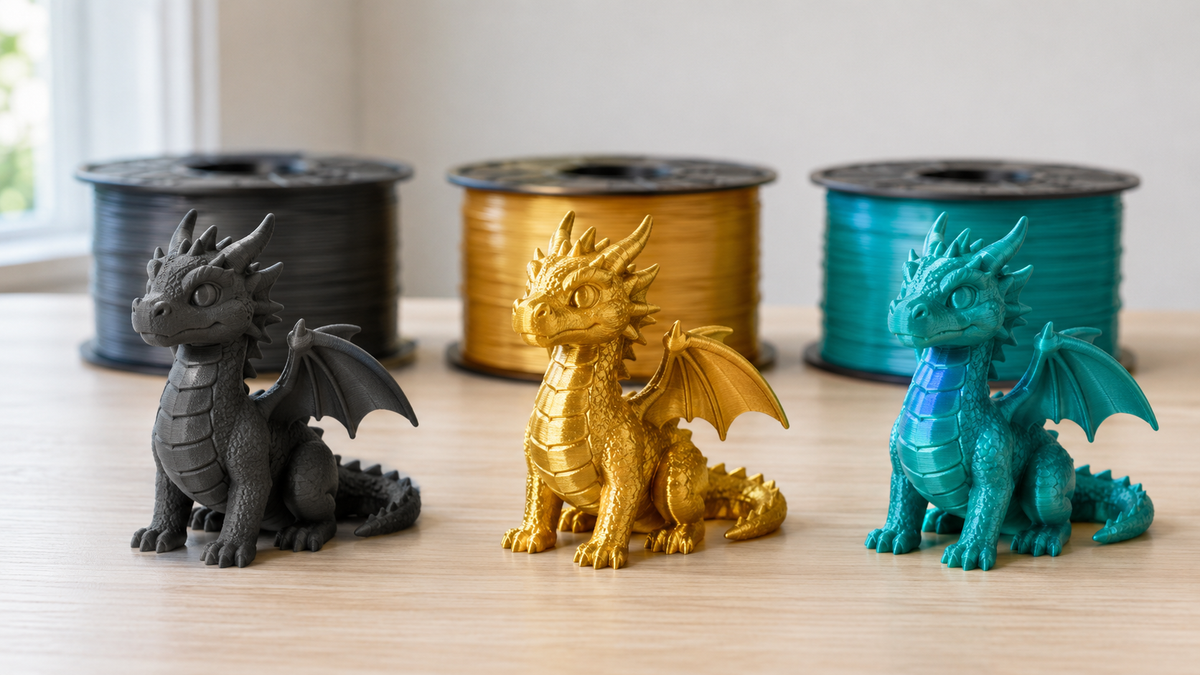
Three spools of PLA can turn the same file into three different toys. Standard lands in the middle with a mild sheen. Matte kills the glare. Silk pushes the shine toward something that reads as metal from across a room.
All three are sold as PLA-based filaments, but their resin grades, pigments, fillers, and modifiers can differ by product. Compare the technical data sheet and recommended settings for the exact spool rather than assuming finish is the only variable.
|
Finish |
Reads As |
Best Toy Use |
Watch For |
|
Standard |
Clean plastic, mild sheen, accurate color |
Puzzle pieces, building parts, anything handled daily |
Layer lines visible up close |
|
Matte |
Flat, velvety, almost painted |
Figures, creatures, terrain, display models |
Chalky fillers can wear a brass nozzle |
|
Silk |
Glossy, metallic, catches light |
Crowns, armor, coins, trophies, robot trim |
Thin parts snap more easily |
1. Surface Finish and Appearance

Finish is the difference you notice first. Print the same dinosaur three times and you get three products, because each surface handles light in its own way.
Standard PLA reflects evenly and keeps color honest. Red stays red. Matte scatters light instead of bouncing it, so the surface reads soft and slightly powdery. Think unglazed ceramic. Grey matte passes for stone, and brown matte passes for clay. Silk does the opposite and sends light back in a more ordered way, which is why gold and bronze silk look plated rather than printed.
One note for parents. Silk shine shifts as the toy turns, and kids notice. That movement is the appeal.
|
Try this first Print the same small model in all three before committing a spool to a big project. A 30-gram test figure costs pennies and settles the argument faster than any comparison chart. |
2. Layer Line Visibility

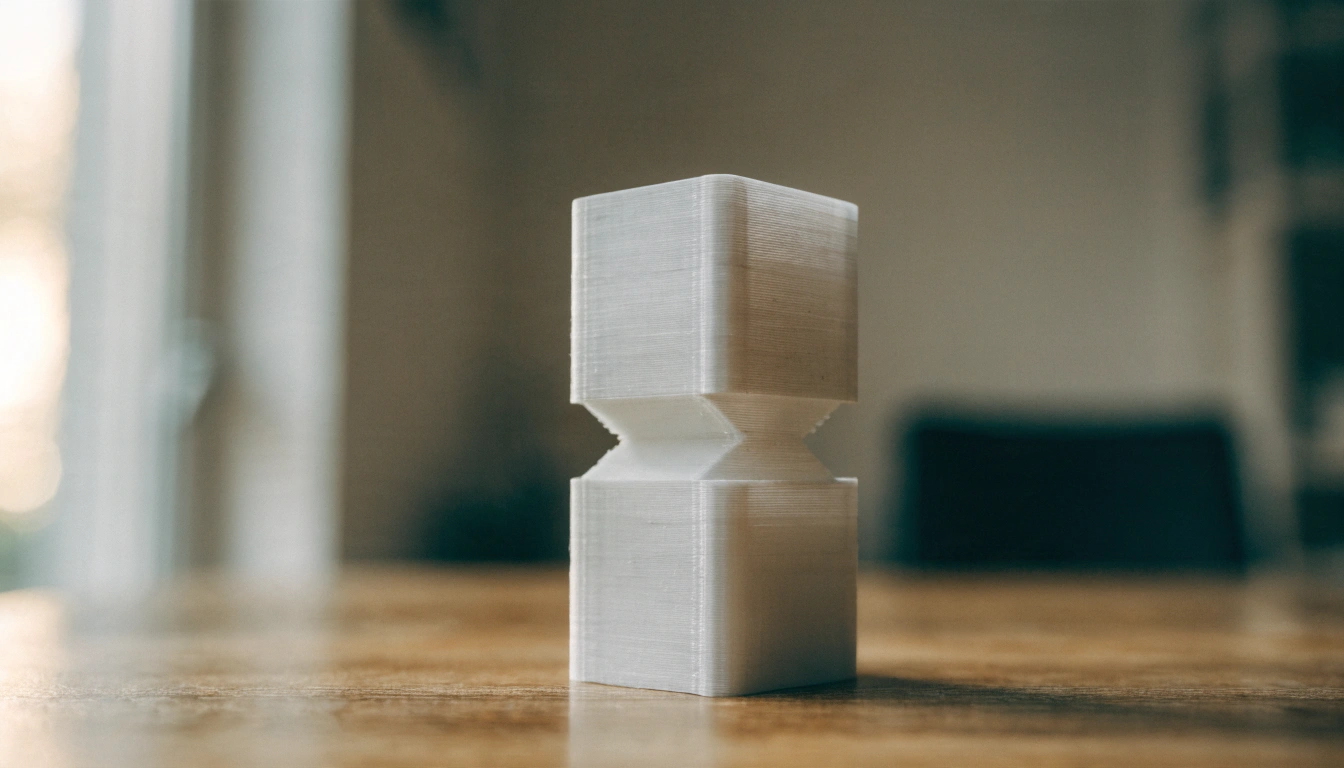
Layer lines never vanish. Changing filament only changes how easily an eye catches them.
Matte finishes often make layer highlights less noticeable under diffuse light. Layer height still affects geometry and surface texture, so choose it for the model’s detail needs rather than expecting matte filament to replace a finer setting. Silk finishes can make reflections and surface changes more noticeable, but the effect varies by filament, model geometry, and lighting.
Standard sits in between. Lines are visible at arm’s length and unremarkable at play distance.
3. Strength and Durability
The word PLA on a label guarantees very little. Pigments, fillers, and modifiers all change how a part behaves. A review of additives used in FDM filaments found that inorganic particulate fillers can improve dimensional stability and printability, while larger particles clump and create voids that act as weak spots. Same label, different behaviour.
Published tensile results for FFF PLA vary widely with material, specimen design, processing, and orientation. The consistent lesson is that layer direction affects failure; for a handled toy, evaluate the finished geometry with an age-appropriate drop, bend, and small-parts inspection rather than relying on a generic tensile range.
|
Property |
Standard PLA |
Matte PLA |
Silk PLA |
|
Stiffness |
Reliable baseline |
Equal or stiffer with fillers |
Similar to standard |
|
Drop and impact |
Best of the three |
Varies by blend, test it |
Usually the weakest |
|
Layer bonding |
Good and forgiving |
Good |
Sensitive to temperature |
|
Thin part risk |
Lowest |
Moderate |
Highest |
|
Best structural role |
Load-bearing toy parts |
Body panels and shells |
Decorative accents only |
None of the three is impact resistant. PLA is stiff and fairly brittle in every version. Design around that. Thicken thin tabs, add a fillet at every joint, and orient the part so stress runs along the layers rather than across them.
4. Print Difficulty

Standard PLA is the easiest of the three. Most slicers ship a working profile, warping is mild, and the filament forgives a sloppy setting.
Matte is close. Some blends flow differently because of the matting particles, so watch the first two layers of a test model and nudge temperature in five-degree steps if bonding looks weak.
Silk asks for the most attention, for an odd reason. Finishing the print is not the goal. Keeping the shine even across the whole surface is, and that depends on holding outer-wall speed and cooling steady from first layer to last.
Hardware features can reduce setup steps, but they do not remove maintenance or safety requirements. If the printer supports a replaceable nozzle or cartridge, an adult should follow the current manufacturer procedure, including any required unloading, shutdown, unplugging, and cool-down steps, before touching or replacing any hot-end component.
5. Nozzle Temperature, Speed, and Cooling
Start from the range printed on the spool. Formulations differ between brands and even between colors from one brand, so treat any chart as a starting point. Never a specification.
|
Setting |
Standard PLA |
Matte PLA |
Silk PLA |
|
Nozzle |
200–215°C |
205–225°C |
210–230°C |
|
Bed |
50–60°C |
50–60°C |
50–60°C |
|
Outer wall speed |
Moderate |
Moderate |
Slower and steady |
|
Cooling fan |
High |
High |
Moderate, avoid dulling |
|
Layer height for looks |
0.15–0.20 mm |
0.15–0.20 mm |
0.10–0.15 mm |
|
Nozzle wear |
Low |
Higher with chalky fillers |
Low, watch for residue |
Temperature is not only a quality setting. It also drives what the printer puts into the room air. NIOSH research on additive manufacturing reports that desktop filament printers emit respiratory irritants, and that filament material and coloration both affect how much comes off. Chamber testing summarised in the agency’s guide to safe 3D printing for schools, libraries, and makerspaces found extruder temperature mattered most, with higher temperatures producing larger emissions. The same guide recommends picking the lowest printing temperature that still gives the result you want.
Use the exact spool manufacturer’s temperature range and the lowest setting that still produces reliable bonding. Provide ventilation or other effective exposure controls for every filament; a closed door limits access but is not, by itself, evidence of emission removal.
|
Keep hands out of the hot zone An FFF nozzle reaches 190°C to 260°C and heated beds run from 55°C upward, which is more than enough to burn a curious hand. Ohio State’s environmental health and safety team notes in its 3D printer safety guidance that enclosures do two jobs at once: they contain emissions and they physically block contact with hot surfaces and moving parts. Ventilated enclosures in NIOSH testing cut particle concentrations by 97% or more. For a printer running in a kid’s room, that is the feature that matters most. |
6. Detail and Color Appearance
Sculpted detail and color accuracy pull in different directions. The finish decides which one wins.
Matte wins on detail. Glare disappears, so small edges and texture changes stay readable from any angle, which helps on faces, fur, scales, and fabric folds. Standard keeps color truest. A four-color robot printed in standard PLA reads as one consistent object under a lamp. Silk trades some of that consistency for drama, because its highlights move as the toy moves and can wash out fine texture.
Matte colors read darker and quieter. Ask the child first. The answer often surprises the adult.
7. Post-Processing, Sanding, and Painting

If the plan is paint, the finish question mostly dissolves. Primer covers all three.
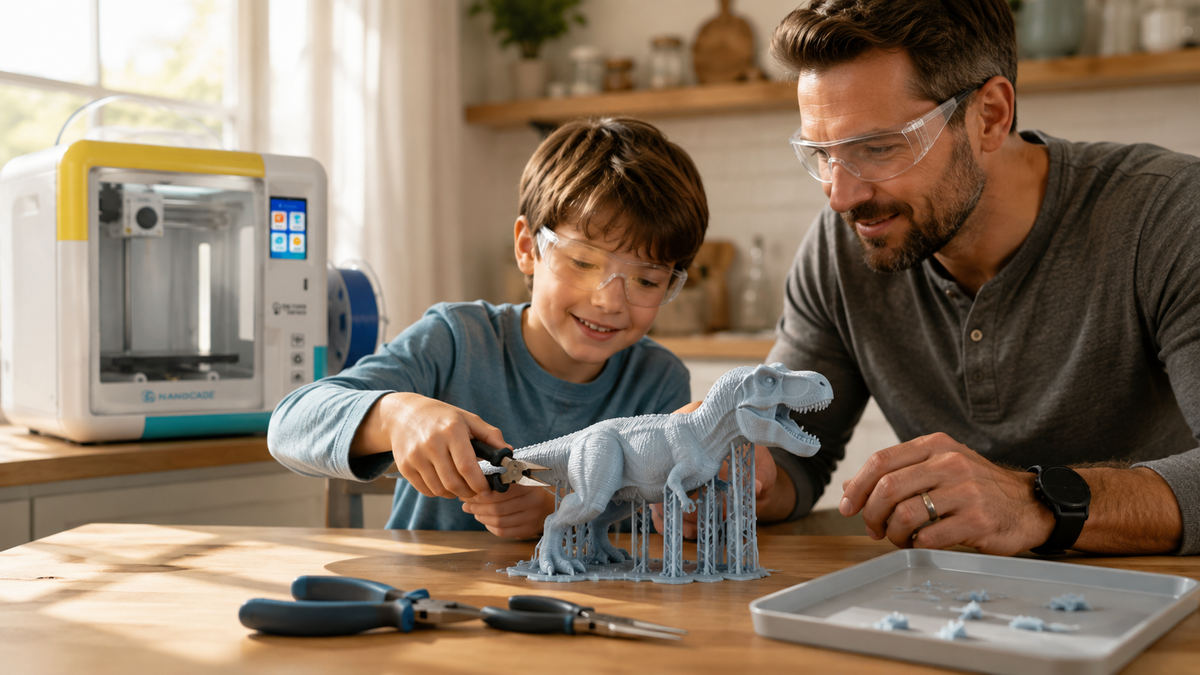
An adult should check the filament SDS before sanding, use wet sanding where compatible, wear eye protection, control dust locally, and wipe down the work area afterward. Keep powered tools and cutting tools away from children, and wash hands before play or eating.
Silk is a different story. The sheen lives in a thin outer skin, so sanding one blemish leaves a dull patch that stands out worse than the flaw did. Fix silk at the printer, not at the workbench. Place seams where a hand will not land. Keep supports off visible faces. Then accept the first print or run it again.
|
Editorial note Buying silk for a toy you intend to paint wastes the premium. Save it for the parts that stay bare. |
8. Cost and Value
Specialty PLA costs more than basic PLA. Prices move with brand, color, and spool size, so the useful question is not which spool is cheaper. Does the finish save work?
Matte earns its premium when a display model has to look finished straight off the plate with no sanding and no paint. Silk earns it when a metallic look replaces primer, paint, and clear coat on a crown or a trophy. Standard covers the rest. That is most jobs. Prototypes, test fits, replacement parts, and the fifth version of a design a child keeps tweaking all belong on the cheapest reliable spool you own.
If AOSEED provides current test documentation for the exact filament SKU, cite the laboratory, report number and date, specific standard or test method, and the conditions covered by the report. Those results apply only to the tested material and conditions and do not automatically certify every finished design or use; follow current ventilation, supervision, and small-parts guidance.
9. Best Toy Types for Each PLA

Match the filament to the part, not the project. One toy can use two finishes and look better for it.
Standard suits puzzle pieces, construction parts, educational models, moving assemblies, and multicolor characters where several pieces must fit. Matte suits figures, creatures, miniatures, terrain, model buildings, and anything meant to resemble stone or clay. Silk suits crowns, armor panels, coins, badges, medals, fantasy weapons, and robot trim.
One safety check comes first for young children. Under CPSC rules, the federal toy safety standard bans small parts in products intended for children under three and requires that parts survive use-and-abuse testing without breaking into a piece that fits the small-parts cylinder. A brittle silk sword handed to a toddler is exactly that risk. Print it thicker. Print it in standard. Or keep it away from the toddler.
|
WHY THIS DECISION IS EASIER ON A KIDS’ PRINTER: AOSEED builds kid-friendly 3D printers built around PLA, which means every finish in this guide loads without a materials debate. The app carries a weekly-updated library of thousands of parent-reviewed models plus themed mini design apps, so a child picks a crown, personalizes it, and prints it in silk while the body of the same character prints in matte. Fully enclosed, under 50 dB, one tap to start. |
When to Reach for Each Finish
Pick standard PLA when:
- The toy gets handled, dropped, assembled, or carried in a backpack.
- Several parts have to fit together and tolerances matter.
- You are testing a design and expect to reprint it twice more.
- Color accuracy across a multi-part model is the priority.
- For a child’s first print, choose the manufacturer-approved PLA profile and have a responsible adult handle setup, material changes, print monitoring, removal, and any troubleshooting required by the manual.
Pick matte or silk when:
- Matte: the sculpt should do the talking and glare is hiding the detail.
- Matte: the model will be painted and you want an even primer base.
- Matte: layer lines need to vanish without dropping to a 0.1 mm layer height.
- Silk: the part is decorative, thick enough to survive handling, and stays unpainted.
- Silk: a metallic look is part of the design, not an afterthought.
Conclusion
Standard PLA is the honest default. It prints easily, holds color, and survives the way children actually treat toys. Matte is the upgrade when appearance matters and paint is not in the plan. Silk belongs on the parts people look at, not the parts that carry load. Test one small piece. Nothing beats matching the filament to the job.
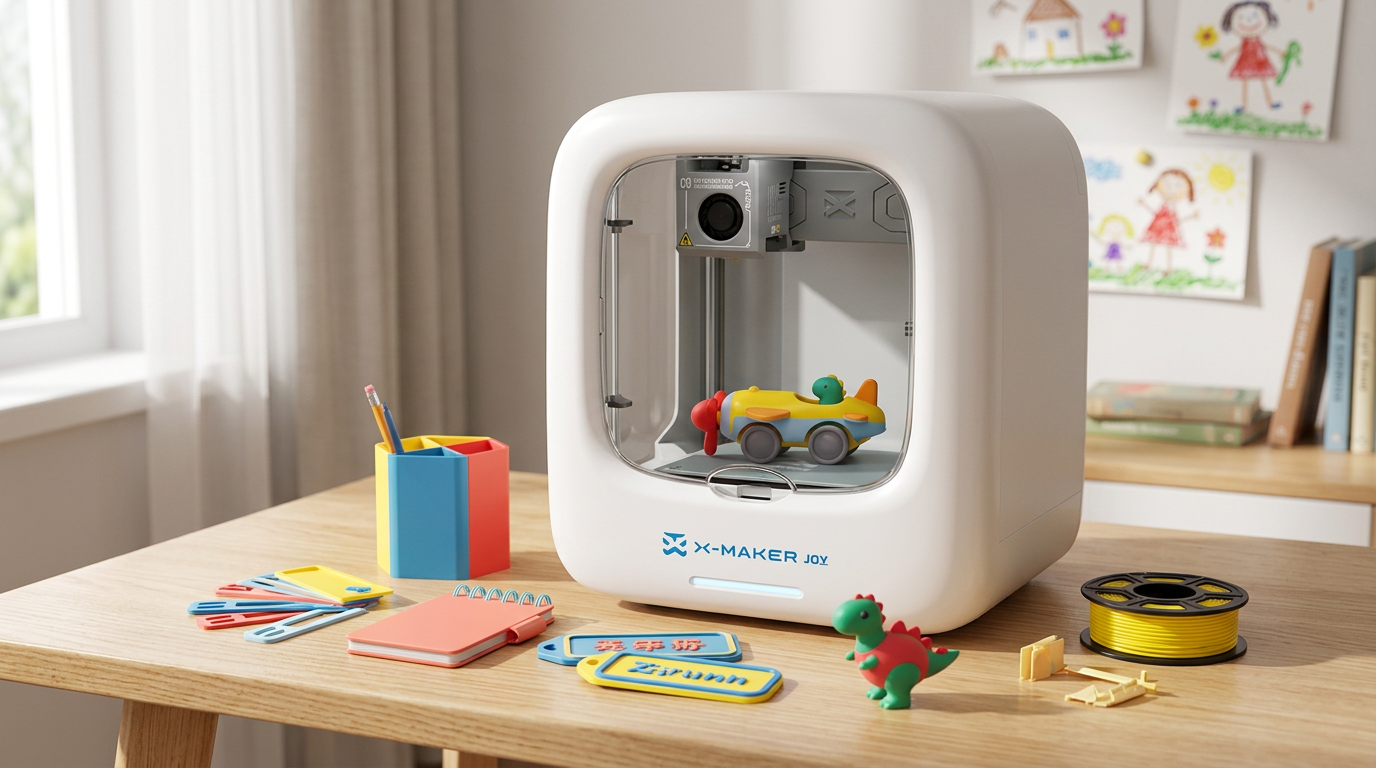
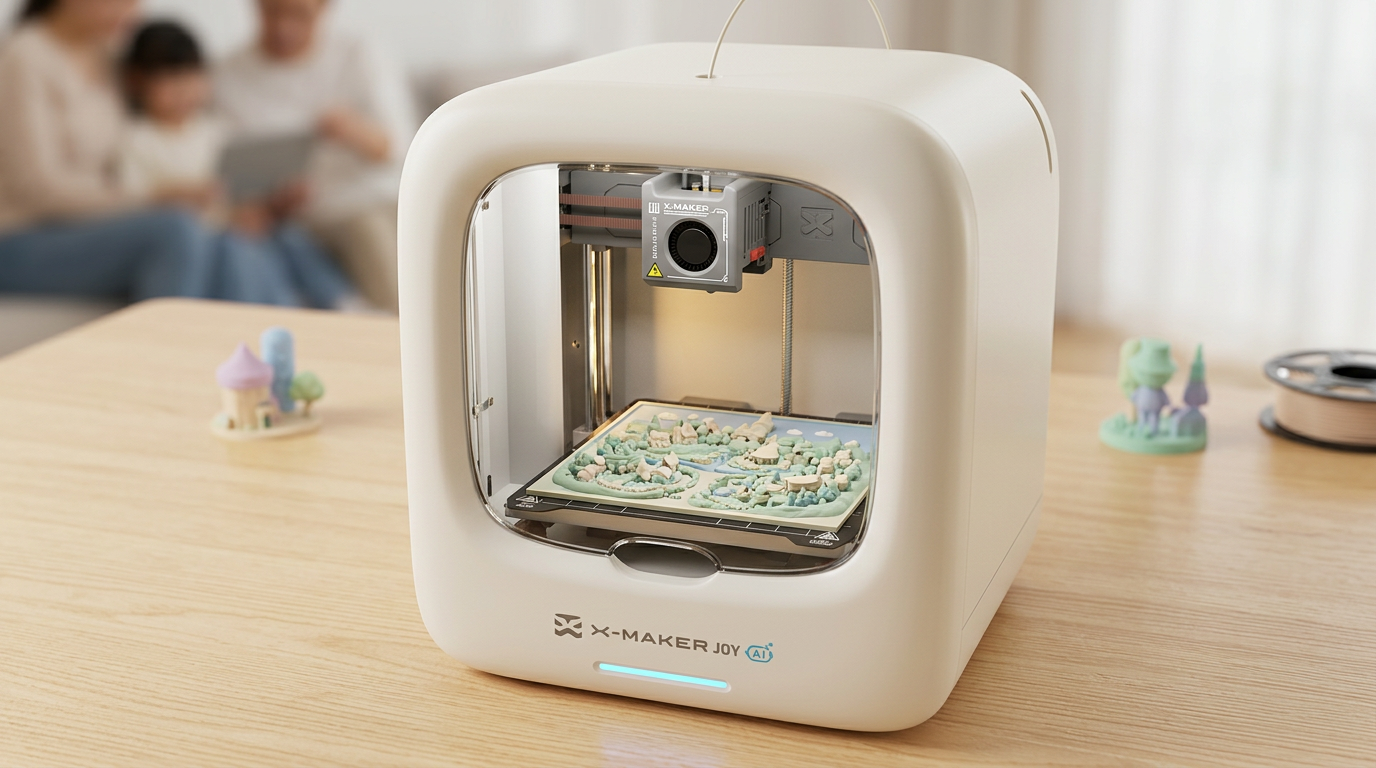
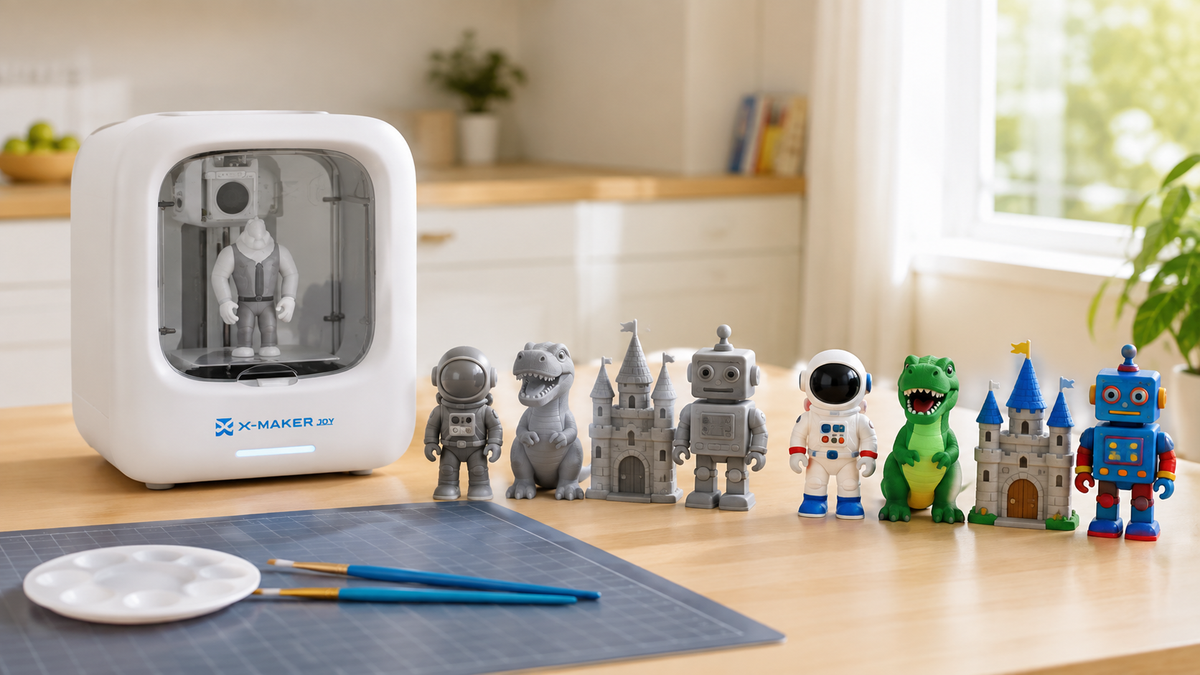
Hardware can simplify setup, but product details and commercial terms can change. Before buying the X-MAKER JOY, check AOSEED’s current regional product page and manual for the exact model’s age guidance, build volume, layer settings, supported materials, nozzle or cartridge procedure, supervision requirements, warranty, returns, and current price or discount.
FAQs
Is matte PLA stronger than silk PLA?
Often yes. Treat it as a tendency, not a rule. Both are modified PLA, and the additives that create each surface effect also shift stiffness, impact behaviour, and layer bonding away from plain PLA. Matte formulations aim at scattering light, which usually leaves mechanical performance close to standard PLA and sometimes stiffer. Silk aims at gloss. Several silk blends give up toughness to get it. The honest answer depends on the two spools in front of you, not on the words matte and silk. Print a small test piece from each in the same orientation, then try to break it by hand before you commit to a part with clips or thin joints.
Is matte PLA better than regular PLA?
Better for appearance, not better in general. Matte hides layer lines, cuts glare, and makes sculpted detail easier to read, which is why figure and terrain printers reach for it. Regular PLA wins on the practical side. Profiles already exist. It forgives a wrong setting, costs less, and keeps color accurate across a multi-part model. For a toy handled every day, regular PLA is usually the better buy. For a display dragon on a shelf, matte is worth the premium. Buy both. Decide per part rather than per project.
Is silk PLA different than regular PLA?
Yes, though the base polymer is the same. Silk PLA is blended so the printed surface reflects light in a more ordered way, which produces that glossy, near-metallic sheen. One change ripples outward. Silk usually wants a hotter nozzle and slower outer walls, it shows flow and speed variation more clearly than any other PLA, and many blends turn brittle in thin sections. Regular PLA is calmer. It gives a mild, even sheen and behaves predictably across a wide settings window. Think of silk as regular PLA optimised for one visual result, with printing and durability trade-offs accepted to get there.
Can I mix matte and silk PLA?
Yes, and mixing them is one of the best-looking things you can do with a printer. A matte body with silk armor. A matte creature with a silk crown. Matte terrain with silk treasure. Contrast is the point. It reads clearly because one surface absorbs light while the other throws it back. Print them separately. Each section gets its own tuned profile, then you assemble. On a multi-material setup you can combine them in one print, but check the recommended profile for each spool first rather than assuming they share settings. Silk is the more sensitive of the two, so build the print around its needs.
Why is matte PLA weaker?
Sometimes it is not. Matte gets called weak because the particles that create a low-gloss surface can trade away a share of toughness even while stiffness goes up. Filler research on PLA composites shows the pattern. Particulate fillers can improve dimensional stability and printability, and larger particles that clump create voids that behave as weak spots. Whether that produces a noticeably more fragile toy depends on the loading and particle size the manufacturer chose. Read the technical data sheet for the exact spool instead of judging the word matte. Then test it. A snap test on a 20-gram print answers the question in a minute.
Which PLA filament is the strongest?
No single PLA is strongest across every brand and every kind of load. Among basic, matte, and silk, standard PLA is the safest baseline when a part has to take stress. Start there. Strength also means several different things, including tensile strength, impact resistance, bending strength, and layer adhesion. A spool can be good at one and poor at another. Orientation matters too. FFF parts fail between layers, so a high tensile number on a data sheet says nothing about a joint pulled across the layer direction. For a functional toy part, compare data sheets, then test the finished piece in the orientation you plan to use.
Is silk PLA more fragile?
Often, yes. It depends on formulation, part design, and settings. The additives that create gloss are not there to improve mechanical performance, and printed PLA is already stiff with low elongation at break. That combination shows up on the thin bits: fingers, horns, swords, antennae, clips, narrow connectors. A glossy surface can look stronger than it is, which is the trap. Poor temperature or speed settings make it worse, because weak layer bonding turns a decorative part into a snapping one. Use silk on thick decorative sections. If a thin silk feature is unavoidable, thicken it in the model or print that piece in standard PLA.
Will silk PLA stick to regular PLA?
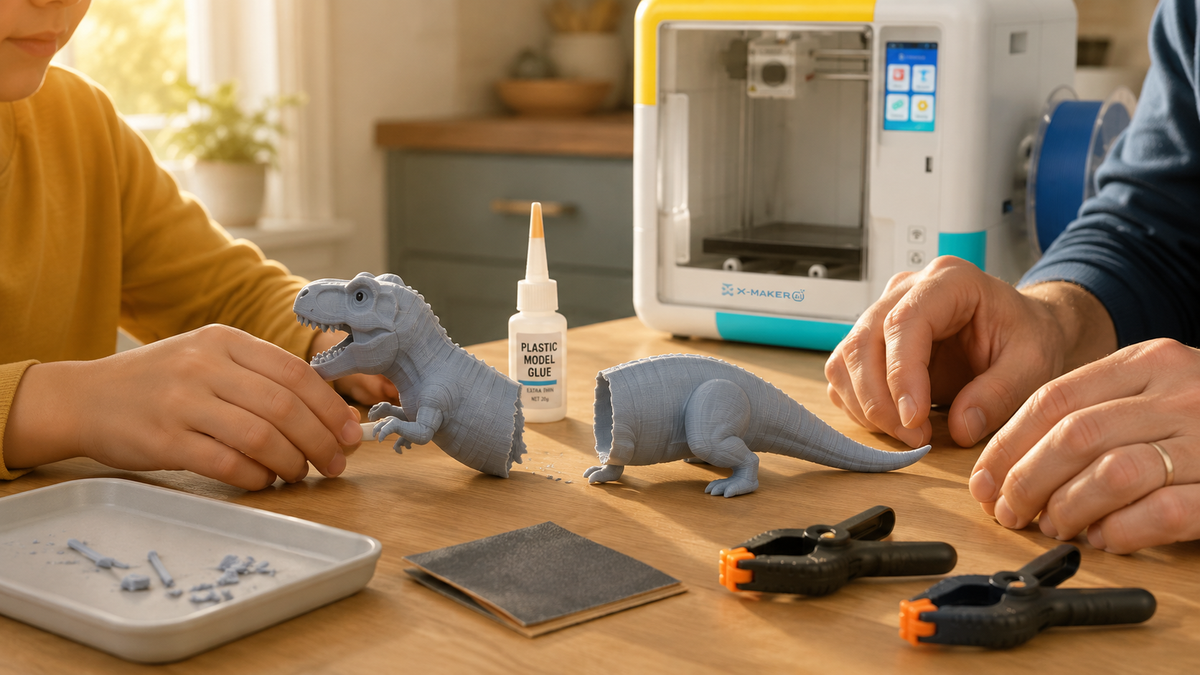
Usually yes, since both share the same base polymer. Bond quality still depends on the two spools and the settings you use. Test it first. They may prefer different temperatures and speeds, and silk is the fussier partner. A successful filament change during a print does not create a joint as strong as a solid part printed from one tuned material. Interlayer bonding is the weak direction in every FFF part. Any transition adds risk. Print a small two-color test block and pull it apart by hand before you trust the bond on a load-bearing toy. For anything structural, print the parts separately and glue them.
Sources
- National Institute for Occupational Safety and Health (CDC), “3D Printing (Additive Manufacturing)”
- National Institute for Occupational Safety and Health (CDC), “Approaches to Safe 3D Printing: A Guide for Makerspace Users, Schools, Libraries, and Small Businesses”
- Materials (via PubMed Central), “Enhancing the Performance of FFF-Printed Parts: A Review of Reinforcement and Modification Strategies for Thermoplastic Polymers”
- Polymers (via PubMed Central), “Enhancing Polylactic Acid (PLA) Performance: A Review of Additives in Fused Deposition Modelling (FDM) Filaments”
- Ohio State University Environmental Health and Safety, “3D Printer Safety”
- U.S. Consumer Product Safety Commission, “Toy Safety Business Guidance”


Further reading

STEM Building Toys for Kids: Blocks, Kits and Printers Compared

Toy 3D Printer: What to Look for in a Printer That Makes Toys at Home

Personalized Gifts for Kids: Name Tags, Keepsakes and Custom Toys You Can Design