STEM Building Toys for Kids: Blocks, Kits and Printers Compared
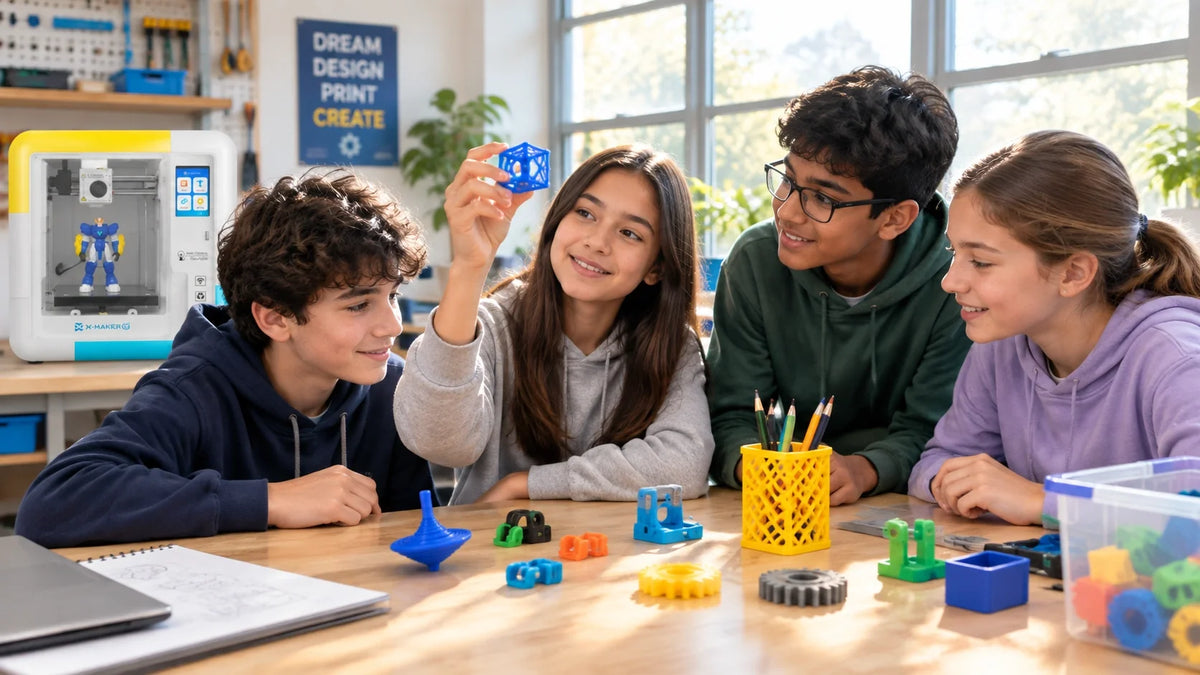
A tower falls over. Your child widens the base and tries again. That small moment is most of what STEM building toys are for.
The category now covers wooden blocks, magnetic tiles, gear sets, circuit kits, coding robots and beginner 3D printers. Each one suits a different age and a different kind of kid. So the real question is fit, not which box looks most advanced.
Quick Pick: Which Format Fits Your Child?
|
Format |
Typical Start |
What Kids Practice |
Adult Help |
Replay Value |
|
Blocks and magnetic tiles |
Age 3 and up (check the label) |
Balance, shape, spatial reasoning |
Low |
Very high |
|
STEM building kits |
Around age 7 |
Gears, circuits, sequencing, debugging |
Medium at first |
Depends on reusable parts |
|
Kid-friendly 3D printer |
Age 4 with a parent, 9 and up more on their own |
Design, measurement, prototyping |
Highest during setup |
High if the child likes designing |
What Are STEM Building Toys for Kids?
 Toys that mix construction with science, technology, engineering or math. A bridge that has to carry weight counts. So does a gear train, a snap circuit, a small robot or a part designed for a printer.
Lights and apps are optional. A plain box of blocks becomes a STEM toy the moment you add a problem to solve, like spanning a gap between two chairs.
Open Play vs. Guided Building
Open play gives kids parts and no correct answer. Guided building gives them a goal or a set of steps. Kids do best with some of each. A review of 39 guided play studies found guided play helped young children more than direct teaching in early math, shapes and task switching, and more than free play for spatial words, though not on every outcome measured.
|
|
Open Play |
Guided Building |
|
Starting point |
A pile of parts |
A goal, diagram or challenge card |
|
Who decides the result |
The child |
The kit, at least at first |
|
Works best for |
Inventors and storytellers |
Kids who like finishing something |
|
Watch for |
"I don't know what to make" stalls |
Copying steps without understanding |
What Skills Do STEM Building Toys Develop?
|
Toy Type |
Core Skills |
What It Looks Like in Play |
|
Blocks |
Balance, shape, spatial words |
Widening the base so the tower stops leaning |
|
Gears and tracks |
Motion, cause and effect |
Sliding a gear closer until it meshes |
|
Circuit kits |
Power, switches, current paths |
Finding the loose snap that kills the light |
|
Robotics and coding |
Sequencing, logic, debugging |
Fixing one command so the robot turns 90 degrees, not 180 |
|
3D printing |
CAD, measurement, iteration |
Enlarging a hole that printed too tight |
Even simple blocks bring math words into play. A preschool study in the Journal of Numerical Cognition logged children using spatial terms for position and shape, plus quantity words, while they built.
|
TRY THIS When a build fails, ask "What could make the bottom stronger?" and wait. Don't fix it for them. |
Building Blocks for Kids
 The easiest way in. Few rules, no setup, and the same set works for a 3-year-old who stacks and a 9-year-old who tests bridges.
|
Block Type |
What It Teaches |
Good From |
Worth Knowing |
|
Wooden blocks |
Gravity, balance, placement |
Toddlers |
Nothing holds a weak design together, so kids learn fast |
|
Interlocking bricks |
Detail, symmetry, stronger joints |
Preschool |
Check the pieces still work after the booklet model |
|
Magnetic tiles |
How flat shapes become 3D forms |
Age 3 (per label) |
Quick snap means less frustration |
|
Gear sets |
Motion, cause and effect |
Preschool to age 9 |
Natural bridge to mechanical kits |
|
Marble runs |
Height, speed, trial and error |
Age 5 and up |
Rebuilding is the actual play |
Go by the age printed on the box, not a general chart. Federal rules ban small parts in toys meant for children under 3 because of choking risk, so keep an older child's set away from toddlers.
|
MAGNET SAFETY Cracked tiles can release loose magnets. The CPSC warns that swallowing two or more magnets can cause internal injuries that need surgery. Check tiles often and throw out damaged ones. |
STEM Building Kits for Kids
 Kits swap freedom for a clear target. A crank that lifts an arm. A light that switches on. A robot that follows a line. Most land well between ages 7 and 12, once kids can follow a multi-step diagram.
|
Kit Type |
Kids Build |
Skills |
Adult Help |
|
Mechanical |
Cranks, levers, pulleys, hydraulic arms |
Force and motion |
Low |
|
Structural |
Bridges, towers, trusses |
Load, bracing, testing |
Low |
|
Circuit |
Lights, alarms, fans, no soldering |
Power paths, switches |
Some at first |
|
Robotics |
A chassis with motors and sensors |
Systems thinking, debugging |
Some at first |
|
Coding |
Tile, card or block programs that move a robot |
Sequencing, loops, logic |
Setup only |
The first build matters less than the second. A kit whose parts only make the model on the box is usually on a shelf within two weekends.
|
WHAT WE LOOK FOR IN A KIT Reusable parts. A few projects beyond the cover model. A first build a child can finish in one sitting. |
3D Printers for Kids
This is where building changes. Blocks and kits give kids a fixed set of parts. A printer lets them make new ones: a wheel for a robot, a game piece, a clip to replace a broken one.
How 3D Printing Works as a STEM Building Activity
1. Pick a ready model or design one in a beginner CAD app.
2. Software slices it into thin layers.
3. The printer lays down melted plastic filament, one layer at a time.
4. Kids hold the result, spot what is off, and print version two.
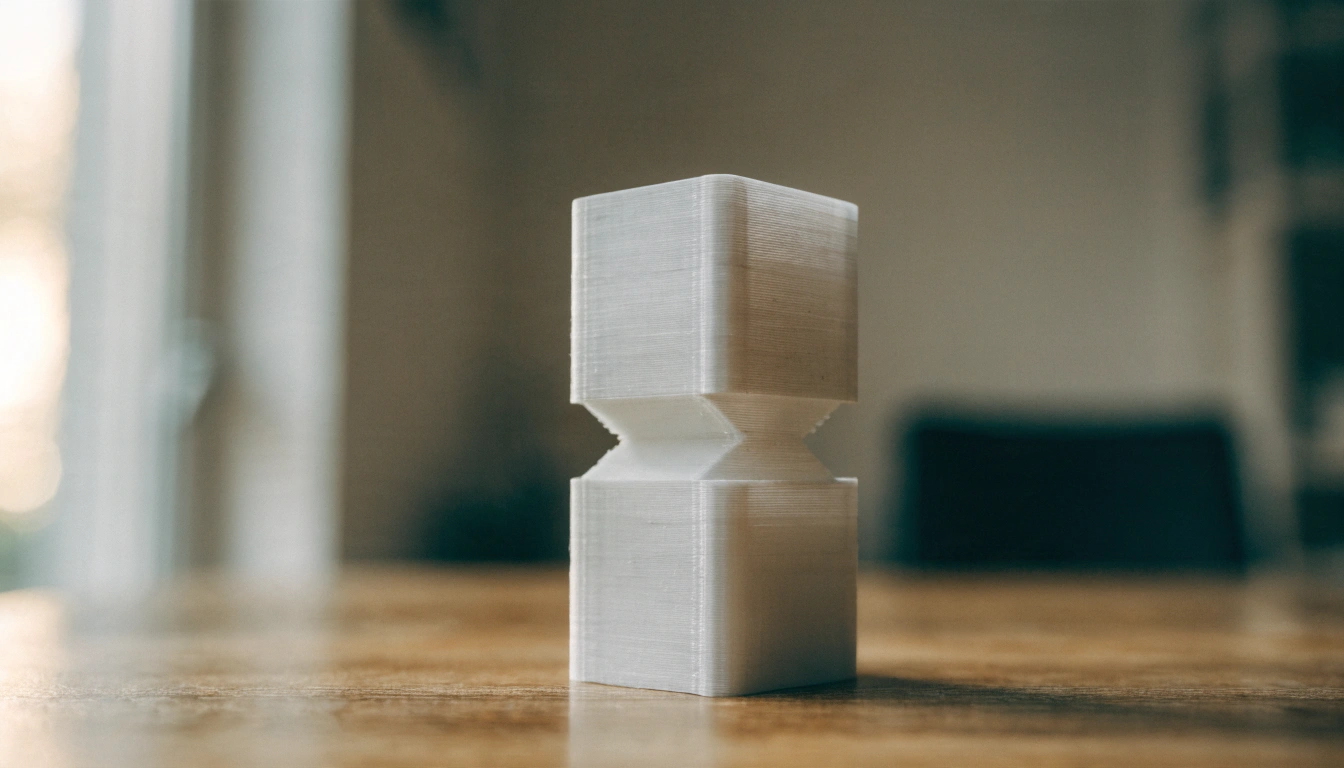
Step four is the lesson. A hole prints too tight or a wall comes out thin, so the child measures, edits and tries again. That is prototyping, the same loop engineers use.
What Can Kids Build With a 3D Printer?
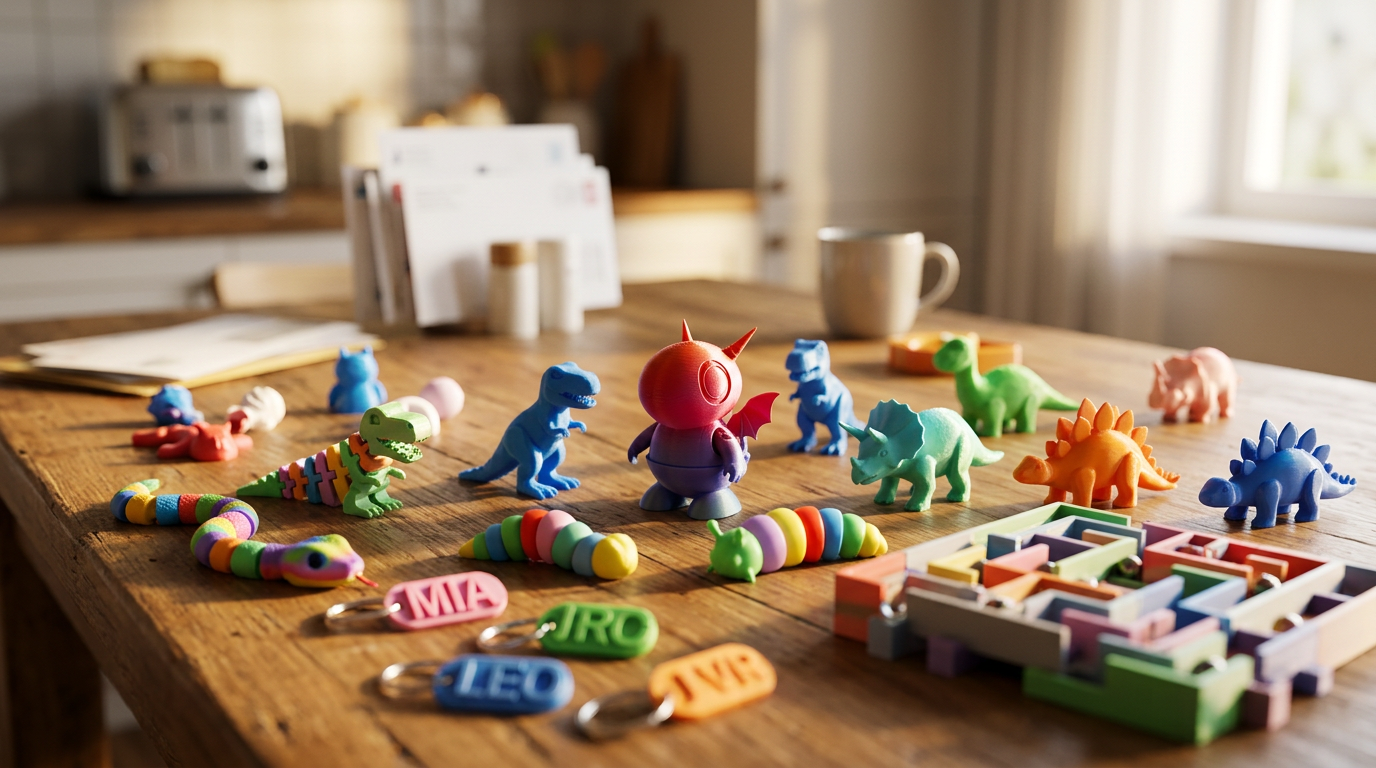
• First projects: name tags, tokens, pencil holders
• Play: board game pieces, spinning tops, small cars
• Parts for other kits, such as robot wheels or bridge connectors
• Fixes around the house, once they can measure
Best Ages for 3D Printing
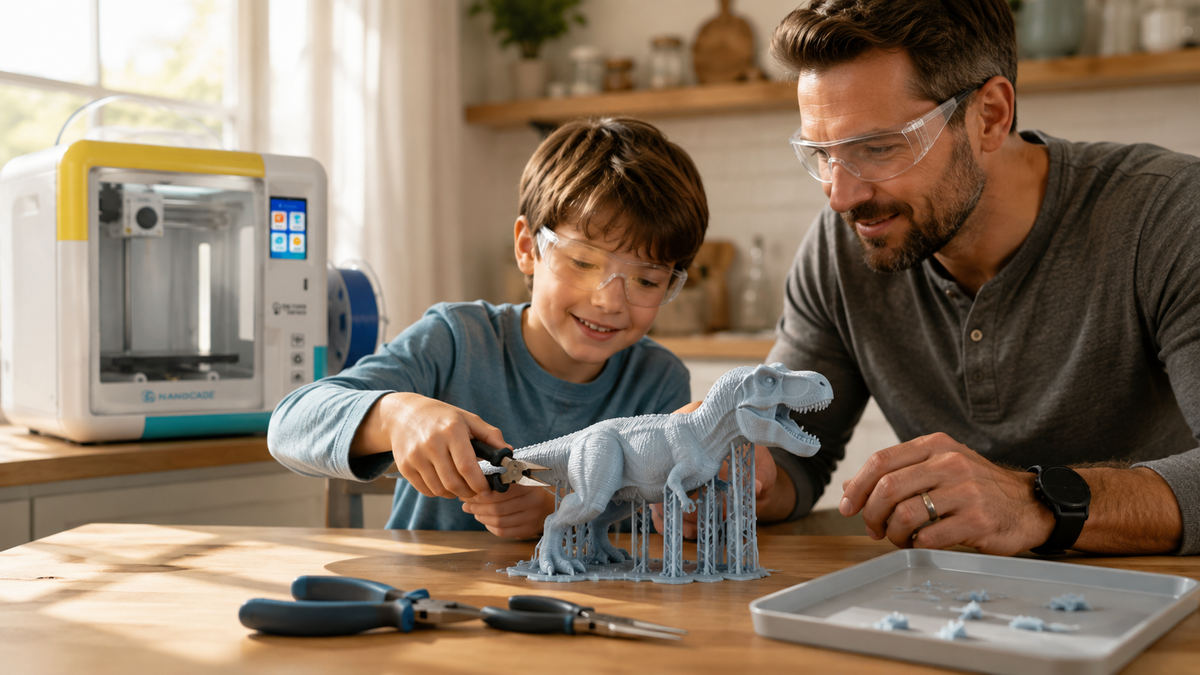
It depends on the printer and on how much the parent handles. Younger kids can pick models and make simple edits while an adult runs the machine. Older kids slowly take over design, slicing and troubleshooting.
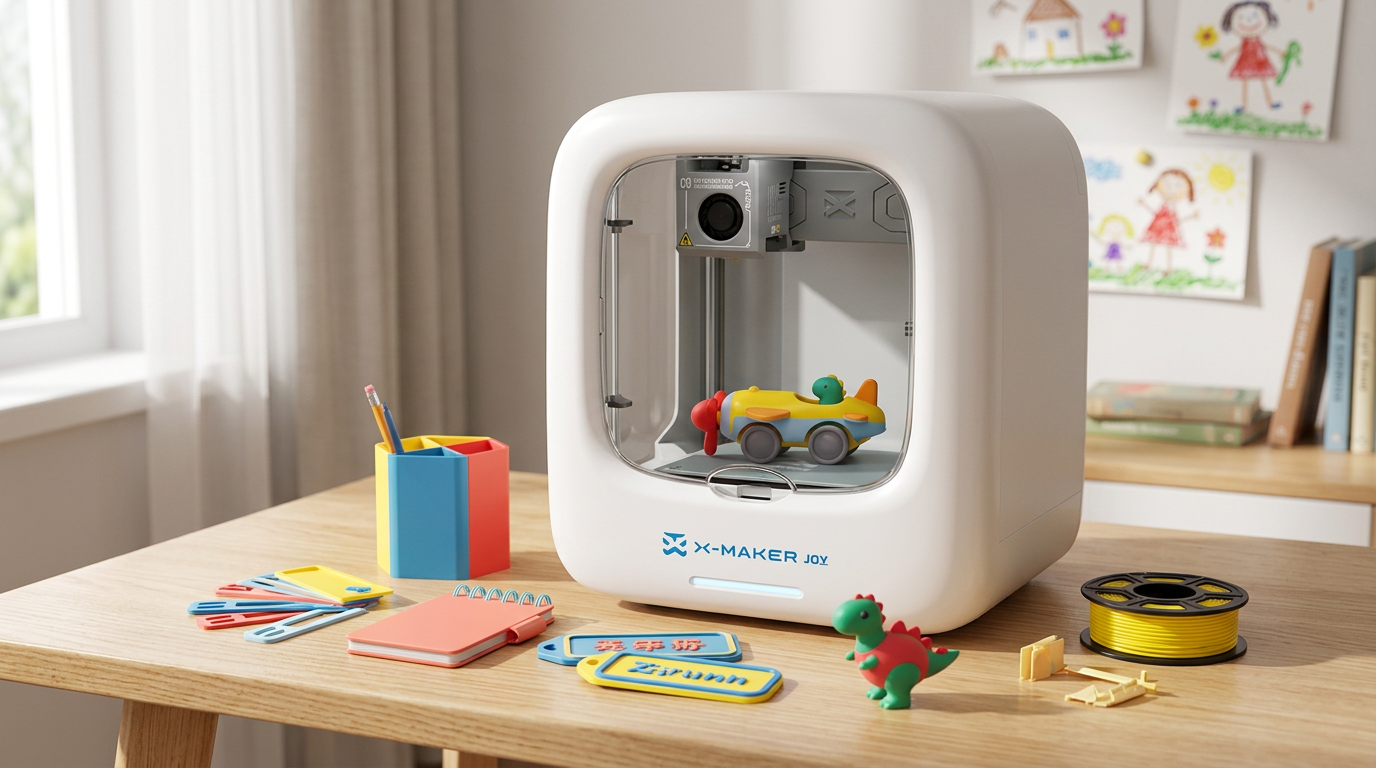
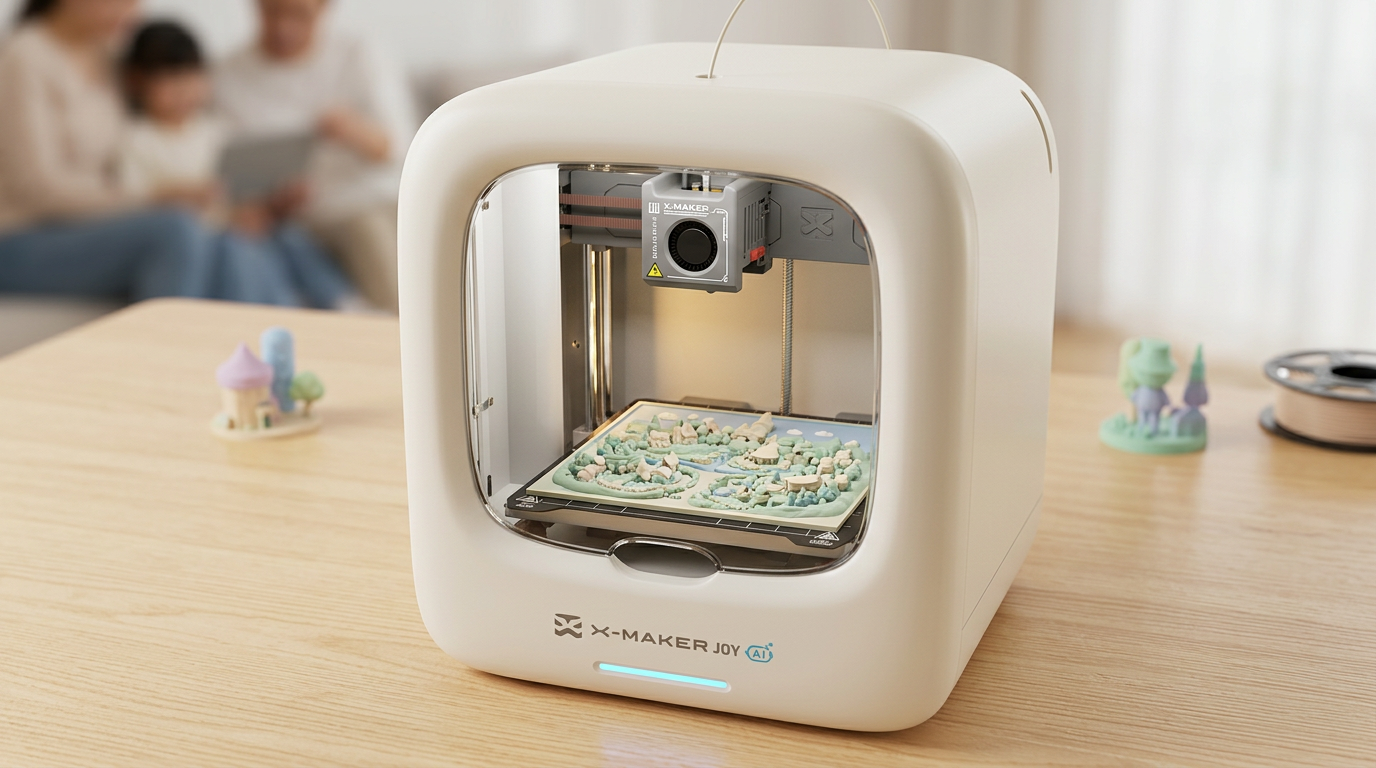
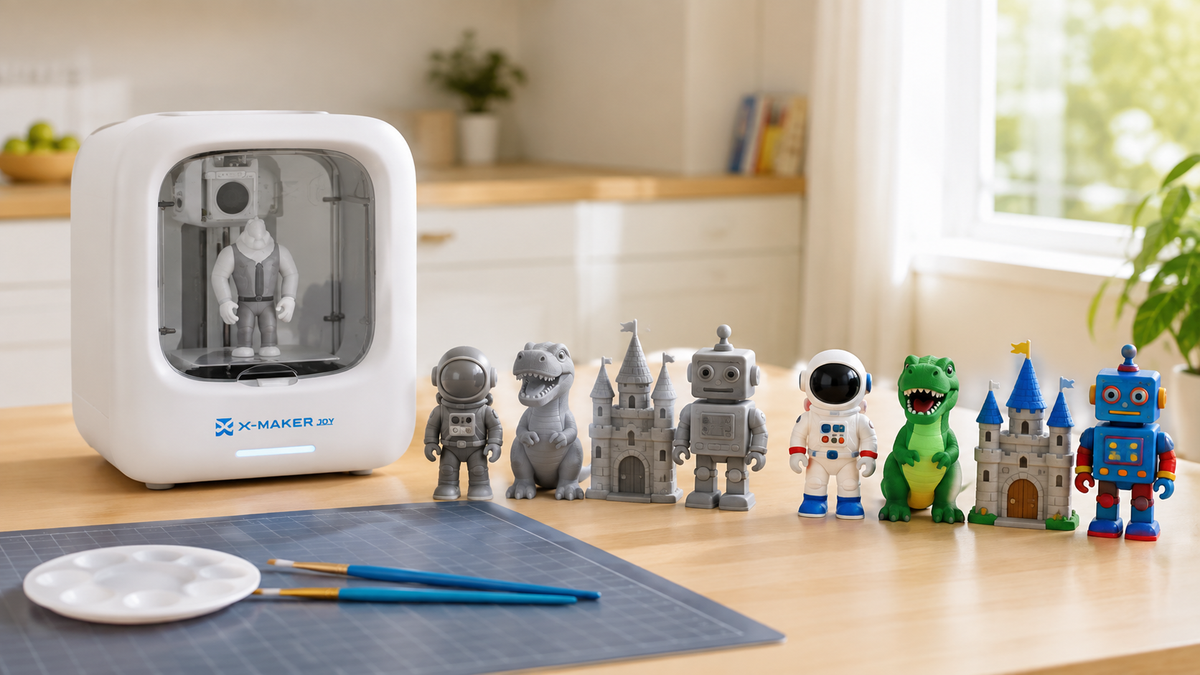
For families starting early, a guided toy-making printer for younger kids makes the first weeks easier. The AOSEED X-MAKER JOY is recommended for ages 4 to 12, has a fully enclosed print area and prints PLA filament. Its app includes AI-assisted creation, 15+ in-app design games and thousands of ready-to-print models. Build size is 120 x 120 x 120 mm, and it is listed at $239 (regular $339).
|
PRINTING SAFELY AT HOME NIOSH guidance for schools and makerspaces recommends a well-ventilated room, keeping people at a distance while a printer runs, and lower-emission filament. PLA releases fewer particles than ABS. Follow the printer maker's age and supervision rules too. |
Building Blocks vs. STEM Kits vs. 3D Printers

|
Question |
Building Blocks |
STEM Kits |
3D Printer |
|
Easiest to start? |
Yes. Open and build |
Needs patience for steps |
Hardest. Software and setup |
|
Open play |
Highest |
Varies by kit |
High once design skills grow |
|
Creative freedom |
Limited to the pieces you own |
Narrow for one-project kits |
Widest. Kids make new shapes |
|
Main STEM skills |
Geometry, stability |
Gears, circuits, code |
CAD, measurement, prototyping |
|
Adult help |
Least |
Some, early on |
Most during setup |
|
Replay value |
Years |
Depends on reusable parts |
High if the child likes designing |
None of the three is "more educational" on its own. They stack. The balance a child learned with blocks is exactly what fixes a printed bridge that sags in the middle.
Short version: blocks for starting, kits for structure, a printer for making parts that do not exist yet.
STEM Building Toys by Age

|
Age |
Good Fit |
Try This Challenge |
Watch For |
|
3 to 5 |
Large blocks, age-rated magnetic tiles |
"Build a garage for this car" |
Small parts, loose magnets |
|
5 to 7 |
Construction sets, tracks, simple gears |
A bridge across a 10-inch gap |
Frustration with tiny pieces |
|
7 to 9 |
Mechanical kits, snap circuits |
Copy a model, then change one part |
A parent doing the key steps |
|
9 to 12 |
Robotics, coding, beginner CAD and printing |
Design a part that fits a real gap |
Paying for features they won't use yet |
|
12 and up |
Custom electronics, multi-part prints |
Solve a real problem at home |
Too little challenge |
Treat these as starting points. In our experience, building history predicts readiness better than age. A 7-year-old who has built for years may handle a kit meant for 9-year-olds.
How to Choose STEM Building Toys for Kids
Six checks before you buy.
|
Check |
Ask Yourself |
Red Flag |
|
Age and skill |
Can my child do the physical steps, like small connectors or reading diagrams? |
An adult needs to rescue every step |
|
Interest |
Does it match what they already build or take apart? |
Bought for the STEM label alone |
|
Guided or open |
Do they want a clear target or a pile of parts? |
All instructions, no room to invent |
|
Replay |
What happens after the first build? |
It goes straight on a shelf |
|
Setup |
Accounts, updates, tools or calibration needed? |
More setup time than play time |
|
Safety |
Magnets, batteries, small or heated parts? |
No age label or warnings |
Screens are not automatically a minus. Code that moves a real robot, or a design that turns into a real object, keeps the screen as one step instead of the whole activity.
|
READY TO MOVE FROM BUILDING TO DESIGNING? If your child has outgrown the block bin and keeps asking how things are made, compare beginner 3D printers for families by age, build size and parent involvement. The AOSEED range runs from the guided X-MAKER JOY for younger makers to the X-MAKER for ages 9 to 16. |
How Kids Can Progress From Blocks to 3D Printing
|
Stage |
New Skill |
Ready for the Next Step When |
|
1. Blocks and shapes |
Balance, spatial words |
They plan a build before starting |
|
2. Moving parts |
Gears, motion |
They fix jams without asking |
|
3. Circuits |
Power, switches |
They rearrange parts on purpose |
|
4. Robotics and code |
Sequencing, debugging |
They change one command and retest |
|
5. Design and print |
CAD, measurement, iteration |
They ask for a part no set has |
No need to skip stages or give up old toys. Plenty of teens still rough out an idea in blocks before they model it.
When to Choose Blocks, a Kit or a 3D Printer
Stay with blocks or a kit when:
• Your child is under 5 or still puts toys in their mouth
• They want to build the second the box opens
• You need independent play while you cook
• A multi-step kit is still too much for them alone
Add a 3D printer when:
• They keep asking for a part their set does not have
• Drawing, designing or customizing is already their thing
• They can follow a sequence and wait for a result
• A parent can join the first few sessions
Conclusion
Blocks teach balance and shape. Kits add mechanisms, circuits and code. A 3D printer lets kids design the parts themselves. Pick by age, experience and how much guidance your child likes, and follow the age and safety labels every time.
When your family is ready for the design step, AOSEED's family-friendly 3D printing platform pairs guided design apps with printers built for kids. The X-MAKER JOY, a starter printer for ages 4 to 12, is currently $239.
FAQs
What Are Some Good STEM Toys for Building?
Wooden blocks, interlocking bricks, magnetic tiles, marble runs, gear sets, mechanical kits, circuit kits, robotics kits and beginner 3D printers. The right one depends on the child. Blocks and tiles suit free building because kids can tear down and start over. Mechanical and circuit kits add gears, motors and electricity. Robotics and 3D printing bring in coding and design, and they work better as a second or third step than a first. Tip: Pick something your child can still change after the instructions are done.
What Is a STEM Building Kit?
A set of parts built to teach science, technology, engineering or math through construction. Kids might make a bridge, a crank machine, a working circuit or a small robot. Some kits follow one project step by step. Others are modular, so the same gears, beams and motors combine many ways. Electronics are optional. A purely mechanical kit still teaches force, motion and measurement. Tip: Check what the parts can build after the cover project.
What Are the Best STEM Kits for Kids?
There is no single best one. A machine lover will enjoy gears and motors. A kid drawn to electronics may prefer snap circuits, and one who likes computers may want a programmable robot. Children who already make their own objects are often ready for beginner CAD and a kid-friendly 3D printer. Replay value and ease of starting matter more than piece count. Tip: Start with the subject your child already asks about.
What Are the Best Building Blocks Toys?
Sets that build many things instead of one model. Wooden blocks teach balance because nothing clicks together. Interlocking bricks allow detail. Magnetic tiles make 3D shapes easy, gears add motion, and marble runs add speed and height. Safety comes first. U.S. rules ban small parts in toys for children under 3, and swallowed magnets can cause serious injury. Tip: Choose sets that combine and rebuild, not single-model kits.
Are STEM Kits Worth the Money?
Yes, if your child keeps coming back to them. Price says little about learning value. A cheap bin of reusable blocks can last years, while an expensive one-model kit may be done in a weekend. Before buying, check whether parts rearrange, whether challenges get harder, and whether new projects come without replacing the whole system. Interest counts too. Tip: Judge value by how many different ways the toy gets used.
What Are the Benefits of STEM Kits?
Hands-on practice with ideas that feel abstract on paper, like structures, gears, circuits and code. Kids also learn to test, look and change one thing. A sagging bridge becomes a problem to solve, not a wrong answer. The research is real but limited. A review of 39 guided play studies found gains in early math, shapes, task switching and spatial words, though not across every outcome. Tip: Ask why a design failed before showing the fix.
What Are the Different Types of STEM Kits?
Structural, mechanical, circuit, robotics, coding, science experiment and 3D design or printing kits. Structural sets focus on towers and bridges. Mechanical kits add gears and wheels. Circuit kits cover electricity. Robotics mixes construction, motors, sensors and code, and 3D printing adds CAD and measurement. The lines blur. One robot kit can cover mechanics, electronics, code and math in an afternoon. Tip: Match the type to what your child already likes to build or take apart.
What Are STEM Toys Used For?
Turning math, science and engineering into things kids can build, test and fix. Families use them at home, teachers use them in class, and many work best as shared parent and child projects. Not every session needs a lesson. Free building invites experiments, while a set challenge focuses on stability, measurement or sequencing. Good STEM toys grow with the child, from blocks to gears, circuits, robots and printed parts. Tip: Give your child a problem to solve, not a finished picture to copy.


Further reading
STEM Building Toys for Kids: Blocks, Kits and Printers Compared

Toy 3D Printer: What to Look for in a Printer That Makes Toys at Home

Personalized Gifts for Kids: Name Tags, Keepsakes and Custom Toys You Can Design