

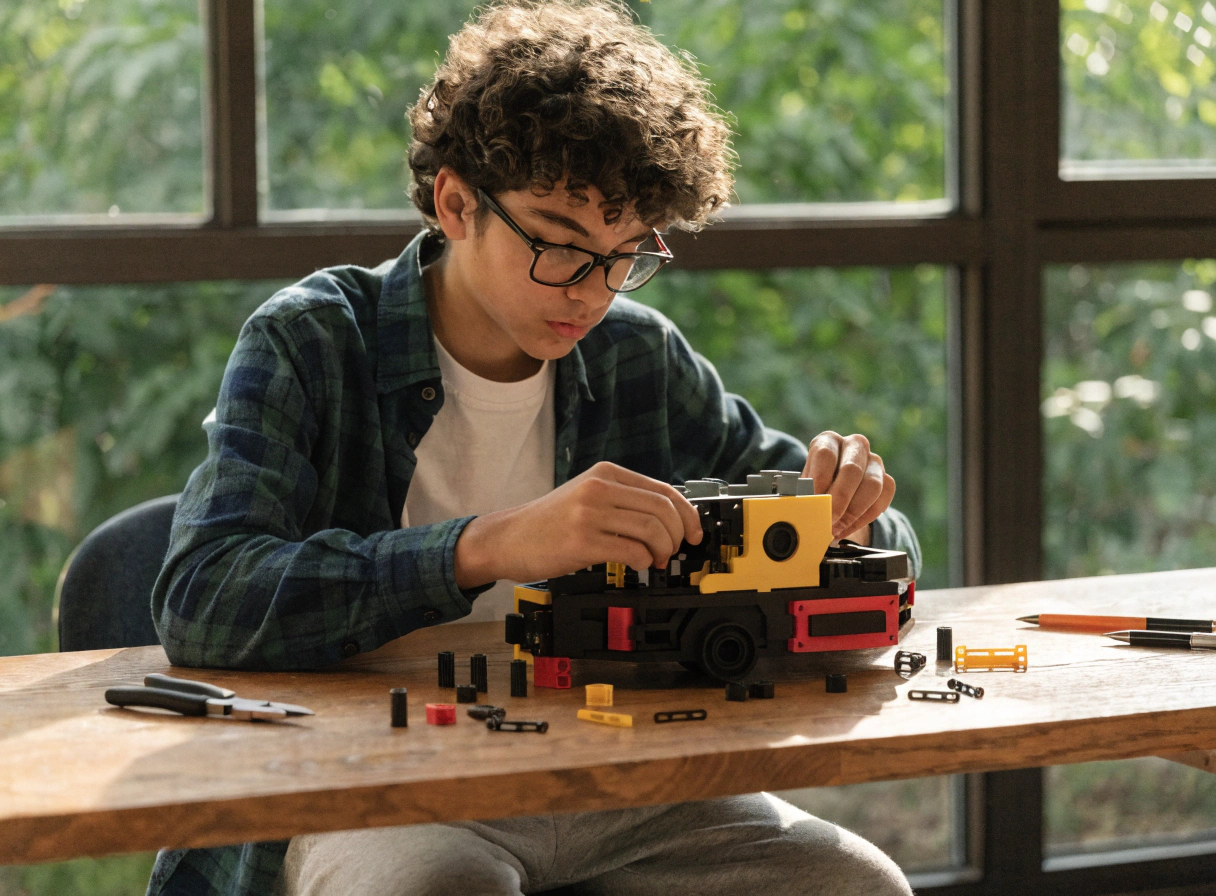
Best 3D Printer for Teens (2026): Beginner, Intermediate and Advanced

The best 3D printer for a teen depends on skill and where the printer will live. First timers in a shared family space do best with an enclosed printer with design tools, such as the AOSEED X-MAKER AI+ (ages 9 to 16). Teens 14 and up with their own room can step up to an open frame hobby printer. Experienced teens who want large or multicolor prints belong in the advanced tier.
The three tiers at a glance
|
Tier |
Price range |
Best for |
Setup time |
Examples |
|
Beginner: enclosed, app guided |
$200 to $400 |
Ages 13 to 14, first printer, shared family space |
About 30 minutes |
AOSEED X-MAKER AI+ |
|
Intermediate: open frame hobby |
$200 to $500 |
Ages 14 and up with their own room; high schoolers learning slicing |
1 to 2 hours, plus learning slicer software |
Bambu Lab A1 Mini, Creality Ender 3 series |
|
Advanced: large or multicolor |
$500 to $1,500 |
Older teens with printing experience, robotics and school projects |
Half a day |
Bambu Lab P1S, Prusa Core One |
Price ranges match our full guide to how much a 3D printer costs. For kids 12 and under, see the best 3D printer for a 10 year old, which covers ages 9 to 12.
13, 14 or 15 and Up: Which Tier Fits?
|
Age |
Usual fit |
Why |
|
13 |
Beginner |
Wants to design and print without an adult setting up each job; printer usually sits in a shared room |
|
14 |
Beginner or intermediate |
Intermediate if the teen has their own desk and wants to learn slicing; beginner if it is their first printer |
|
15 to 16 and up |
Intermediate or advanced |
Ready for slicer settings, larger builds and more materials; advanced once they print every week |
The deciding question is less about age than about the room. An enclosed printer is safe in a living room or a shared bedroom. An open frame printer belongs in a space where no younger child has unsupervised access.

Beginner Tier: AOSEED X-MAKER AI+
The X-MAKER AI+ is built for ages 9 to 16, so a 13 or 14 year old is in the middle of its range rather than at the edge. Tom's Hardware calls the X-Maker "a great starter 3D printer for kids", and the same features matter for a teen starting out: the hot nozzle stays behind a closed door, prints start from a 3.5 inch touchscreen or the app, and nothing needs to be assembled or calibrated by hand.
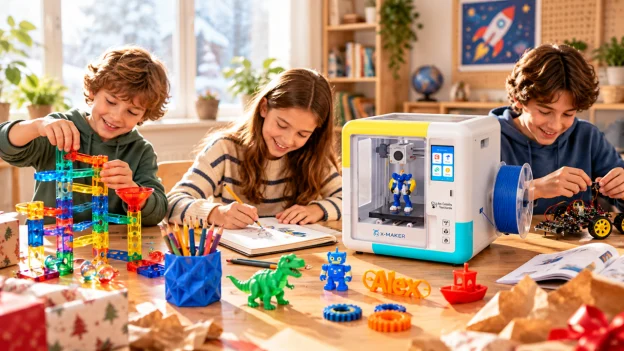
Where it suits teens is design. AI Doodle turns a sketch into a model, AI MiniMe turns a photo into a figure, and the app's design modules let a teen build shapes from scratch before moving on to free CAD tools such as Tinkercad. Creation kits combine printed parts with motors and gears to build cars, robots and moving models, which is where teens learn tolerances and fit.
|
Spec |
X-MAKER AI+ |
|
Ages |
9 to 16 |
|
Build volume |
150 × 150 × 150 mm |
|
Layer height |
0.05 to 0.4 mm |
|
Print speed |
Up to 400 mm/s |
|
Filament |
PLA (recommended) and ABS, 1.75 mm |
|
Controls |
3.5 inch touchscreen with child lock, plus app |
|
Camera |
Built in |
|
Connection |
Wi-Fi and USB drive |
|
Model library |
20,000+ models, AI Doodle, AI MiniMe |
|
Warranty |
1 year, 30 day returns |
|
Regular price |
$389 |
Limits to know: the 150 mm build volume is smaller than most hobby printers, so large cosplay pieces need to be printed in sections. A teen who already wants to tune every slicer setting will outgrow the beginner tier faster.
Put it on your shortlist if: it is your teen's first printer, it will sit in a shared space, and they want to design their own objects.
Intermediate Tier: Open Frame Hobby Printers

Open frame printers such as the Bambu Lab A1 Mini and the Creality Ender 3 series give a teen a larger build volume, faster printing and access to large free model libraries. They also expose the teen to the real workflow: downloading a model, preparing it in slicer software on a computer, and adjusting settings when a print fails. That learning is the point for many high schoolers.
The trade off is safety and setup. The nozzle and heated bed are exposed while printing, so the printer belongs in the teen's own room, not a shared space with younger siblings. Expect one or two hours of setup and a few weeks of learning before prints are consistent. Most failures at this stage come from first layer adhesion and slicer settings, and online communities around these printers have answers for almost every problem a teen will hit.
Put it on your shortlist if: your teen is 14 or older, has their own desk, and wants to understand how printing works, not just press print.
Advanced Tier: Large and Multicolor Printers
Advanced printers such as the Bambu Lab P1S and the Prusa Core One are enclosed, faster and larger, and many support multicolor printing with an add on unit. They suit teens who already print every week, build parts for robotics teams or school projects, or sell small prints. At $500 to $1,500 they are a serious purchase, so most families buy one as a second printer once a teen has proven the interest on a beginner or intermediate machine.

How to Choose: Four Questions
|
Question |
If the answer is... |
Choose |
|
Where will the printer live? |
Living room, shared bedroom, near younger siblings |
Beginner (enclosed) |
|
|
Teen's own room or a desk away from younger kids |
Intermediate is fine |
|
What do they want to make first? |
Figures, gifts, designs of their own |
Beginner |
|
|
Large props, functional parts, models from online libraries |
Intermediate or advanced |
|
Do they want to learn slicer settings? |
Not yet; they want to press print |
Beginner |
|
|
Yes; they enjoy tweaking and troubleshooting |
Intermediate |
|
How often will they print? |
A few times a month |
Beginner or intermediate |
|
|
Every week, for school, robotics or a side project |
Advanced, usually as a second printer |
Teens who chose the printer themselves use it more. Let them read the tier table and pick, then set the rules for where it lives together.
Safety and Placement for Teen Printers
Any FDM printer heats the nozzle above 200°C. On an enclosed printer the hot parts sit behind a door, so the printer can live in a shared room. On an open frame printer they are exposed, so agree on three rules before the first print: the printer stays in the teen's room, younger siblings do not touch it, and long prints are not left running while nobody is home. Use PLA indoors, keep the room ventilated, and place the printer on a stable surface away from curtains and paper. Overnight prints are common with teens; choose a printer with a camera or app notifications so they can check progress without opening the door.
What Teens Make at Each Tier
|
Tier |
Typical projects |
What they learn |
|
Beginner |
Phone stands, desk organizers, name tags, AI designed figures, creation kit cars |
Design basics, fit and tolerance, print time trade offs |
|
Intermediate |
Cosplay pieces in sections, replacement parts, science fair models, game miniatures |
Slicer settings, supports, troubleshooting failed prints |
|
Advanced |
Robotics chassis, multicolor prints, original designs from scratch |
Full design cycle: CAD, print, test and iterate |
Filament for Teen Projects
PLA is the right starting material on any tier: low odor, easy to print and available in many colors. On hobby printers, teens often move on to PETG for stronger parts and TPU for flexible ones. ABS handles heat but needs good ventilation. The X-MAKER AI+ prints PLA and ABS; we recommend PLA for indoor use. Shop AOSEED PLA filament.
Buying a 3D Printer as a Gift for a Teen
|
Holiday pricing: November 20, 2026 to January 5, 2027 X-MAKER AI+: $319 (regular $389). Prices drop automatically; no code needed. |
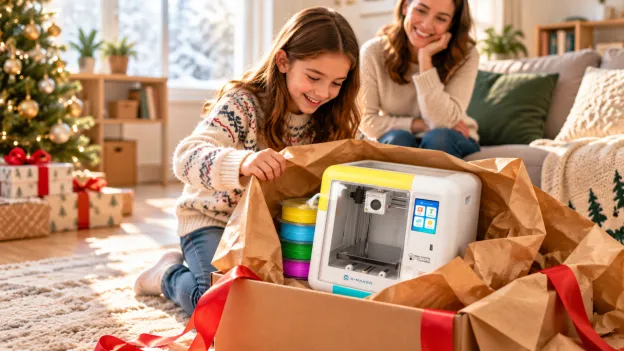
Order by early December and check the delivery estimate at checkout. Ask your teen what they want to make first; the answer usually points to the right tier. For more ideas, see our tech gifts for teens who like to make things.
FAQs
Q: What is a good 3D printer for a teen?
For a first printer in a shared family space, an enclosed printer with design tools such as the AOSEED X-MAKER AI+. For teens 14 and up with their own room who want to learn slicing, an open frame hobby printer such as the Bambu Lab A1 Mini.
Q: What is the best 3D printer for a 14 year old?
It depends on the room. In a shared space or for a first printer, choose an enclosed beginner printer. If the teen has their own desk and wants to learn the technical side, an open frame hobby printer in the $200 to $500 range is a good step.
Q: Can a teen use a 3D printer safely?
Yes. An enclosed printer is safe in any family room. An open frame printer should stay in the teen's own room where no younger child has unsupervised access. Print PLA in a ventilated room.
Q: Is it worth buying a 3D printer for a teenager?
Yes, if they want to design, build or fix things. Teens who print every week learn the same design, test and improve cycle used in engineering. A teen with only a passing interest may be better served by a school or library printer first.
Q: Can a teen design their own 3D models?
Yes. AI tools create models from sketches and photos with no experience. Free browser tools such as Tinkercad are the next step, and most teens design some of their own parts within a few months.
The Bottom Line
Pick the tier first, then the printer. For a first printer in a family home, the X-MAKER AI+ lets a teen design and print on their own from day one. Teens 14 and up with their own space can start on a hobby printer, and experienced makers can go straight to the advanced tier. For how printer types compare across all ages, see our guide to the best 3D printer for kids, or compare models in our kids 3D printer collection.


Further reading

Christmas Gifts for 8 Year Olds (2026): 15 Picks by Interest

Christmas Gifts for 7 Year Olds (2026): 15 Picks for Girls and Boys

Christmas Gifts for 6 Year Olds (2026): 15 Picks They Will Play With


