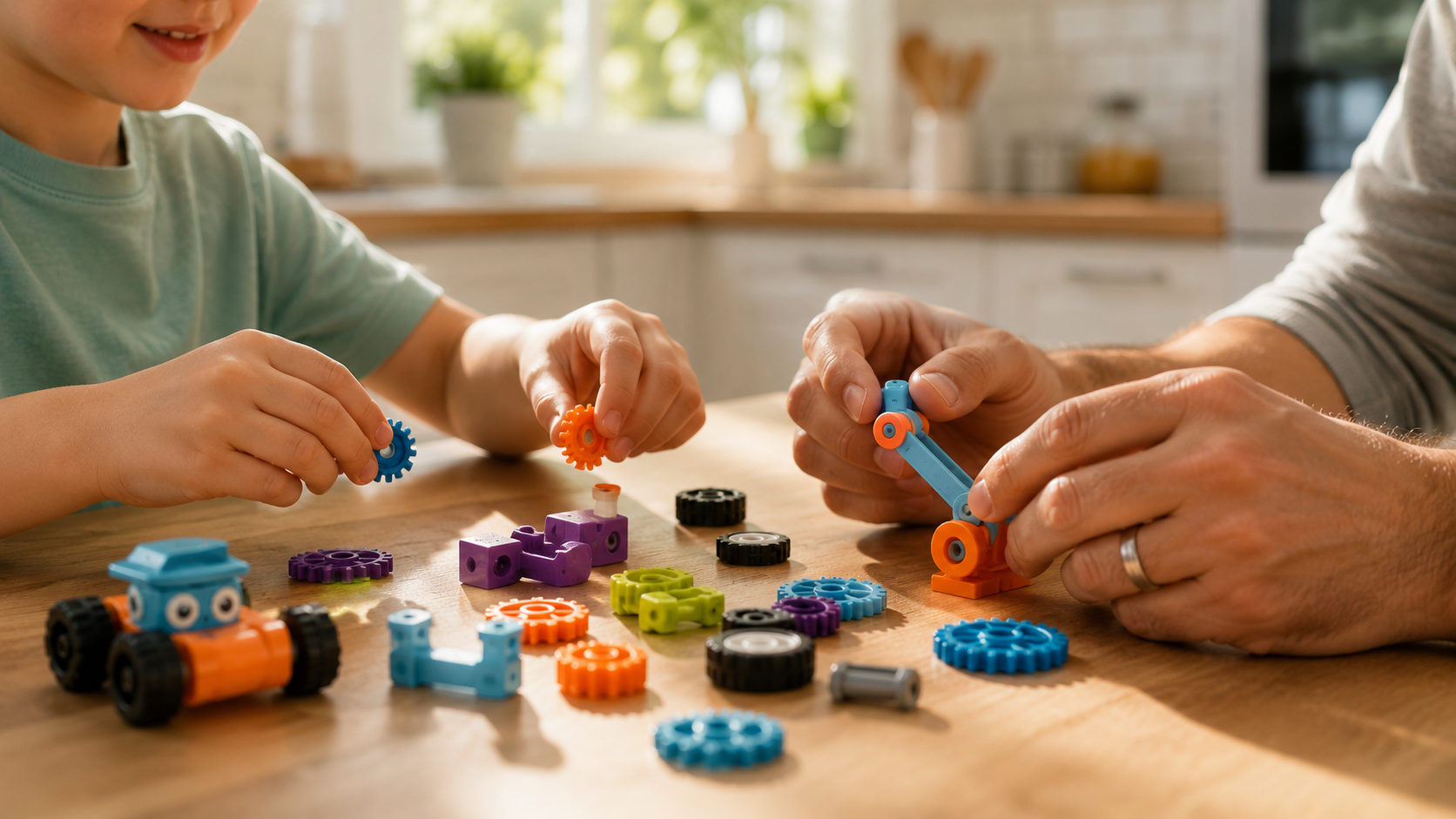
Best Filament for Moving Toys: PLA vs PETG
Choosing the best filament for moving toys depends on how each part will be used. PLA works well for crisp gears and hard wheels, while PETG is better for hinges, axles, and parts that may be dropped or bent. This buying guide compares PLA and PETG so you can choose the right material for each moving part.
TPU is the odd one out. Soft, rubbery, right for tires and grips and bumpers, wrong for a gear that has to hold its shape under load.
Best Filament for Moving Toys by Part: Quick PLA vs PETG Guide
PETG is the safe default for a toy with several moving parts. It takes a hit and flexes a bit before it gives. PLA wins where you need sharp gear teeth, tight detail, and an easy print.
|
Moving toy part |
Recommended filament |
Main reason |
|
Rigid gears |
PLA or PLA Plus |
Sharp teeth, smooth low-friction surface |
|
Pin hinges |
PLA or PETG |
Accuracy from PLA, toughness from PETG |
|
Living hinges |
PETG |
Better flex before failure |
|
Hard wheels |
PLA |
Stiff shape, easy printing |
|
Axles and hubs |
PETG |
Better impact resistance |
|
Tires and grips |
TPU |
Soft surface, added traction |
|
Rough-use toys |
PETG |
Handles drops better than standard PLA |
|
Squeezable parts |
TPU |
Bends and returns to shape |
What Moving Toy Parts Need From a Filament

The Stresses a Toy Actually Faces
One pull will not break a moving toy. Weeks of play will. Parts hold shape, rub against each other, and soak up dozens of small loads. What matters changes by part. A gear needs stiff teeth. A hinge has to bend at its thinnest point without snapping.
Start with impact. It covers how a part handles a sudden hit or a drop, and it matters for wheels, axles, joints, anything that lands on a hard floor. PETG soaks up more of that energy. PLA holds a steady load fine. Hit it sharply though, and a thin PLA part cracks.
Flex, Fatigue, and Friction
Then there is flex, and how long a part survives being flexed. PETG gives more than PLA, so hinges and snap parts last longer through repeated bending. TPU is on another level. It bends, stretches, and springs back toward its starting shape.
Friction cuts the other way. Low friction lets gears, rings, and sliding joints move without drag. PLA prints smooth and firm and slides well. PETG can leave fine strings and small blobs that catch on the next part over. TPU grips. Perfect for a tire. A problem for anything that needs to slide.
Fit, Layer Bonding, and Wear
Fit is the last piece. Print a hole too small and the axle locks. Too loose and the joint wobbles. PLA is usually easier to dial in there. Layer bonding counts just as much. A weak bond between layers splits a hinge even when the outside looks clean. Orientation drives this. Lay out high-stress features so force runs along the layer lines, not across them.
|
Quick tip: If a part will get dropped or twisted, orient it so the layers run along the direction of force. Orientation beats infill most of the time. |
PLA vs PETG for Moving Toys

Strength and Impact
Both work. They just fail differently. PLA is stiff and holds detail. PETG bends and takes hits. People see PLA's high tensile strength on a spec sheet and assume it is tougher. It is not, at least not here. Tensile strength is resistance to a slow pull, not a drop onto tile. PETG is less brittle and absorbs more energy before it breaks. So it goes on exposed axles, hinge leaves, wheel mounts, and the limbs of an articulated figure.
|
Property |
PLA |
PETG |
TPU |
|
Stiffness |
High |
Medium |
Low |
|
Impact resistance |
Low, brittle |
Good |
Very high |
|
Detail and accuracy |
Best |
Good |
Poor |
|
Surface friction |
Low, slides well |
Medium, can string |
High, grips |
|
Heat deflection |
About 55°C |
About 70°C |
Varies by grade |
|
Print difficulty |
Easiest |
Moderate, heated bed |
Hardest, direct drive |
|
Best toy use |
Gears, hard wheels |
Hinges, axles, frames |
Tires, bumpers, squeeze parts |
Rigidity, Finish, and Accuracy
PLA is stiffer. That keeps gear teeth in shape and stops a hard wheel flattening under load. PETG bends a little before it fails, which saves clips and joints but lets a thin shaft flex more than you designed for. Finish differs too. PLA comes off firm and smooth with clean edges. PETG runs glossier and strings between travel moves. Clean those strings before assembly. One thin strand can jam a small joint.
Heat, Moisture, and Print Difficulty
Heat is a real gap. UltiMaker puts heat deflection near 70°C for PETG and around 55°C for PLA, and the exact figure moves with brand and settings, as the UltiMaker PETG material data sets out. Either way, do not leave a printed toy in a hot car without testing it first. Printing difficulty splits them as well. PLA is the beginner's material: lower temps, less warping, clean detail on stock profiles. PETG wants a heated bed and tighter retraction and flow control. Still nowhere near as fussy as the engineering filaments.
|
Watch out: PETG grips the bed hard. If the nozzle sits too close, the first layer spreads and closes the gaps in a print-in-place toy. Run a small test piece before committing to a big one. |
Best Filament for Toy Hinges and Joints

Pin Hinges, Living Hinges, and Ball Joints
Hinges load a small area fast. The pick depends on how the joint moves: rotating on a pin, bending through the plastic, snapping shut, or sliding in a socket. For a pin hinge with separate leaves and a round axle, PLA is fine. The parts turn on the pin, so the PLA never bends in normal use. Just make the barrels thick enough that they do not split. When a hinge arm has to flex under load, switch to PETG. It absorbs more bending before it cracks. And do not go paper-thin at the flex point. A wider root spreads the load and stops a tear starting in a corner.
Ball joints are their own case. PETG resists snapping when you press the ball home. PLA gives a smoother, rounder socket but can crack if the fit is tight. Mixing works well: PETG ball and stem, PLA socket, or a PETG socket with a relief slot cut in.
How to Keep a Printed Hinge From Breaking
Thicken the hinge root before you reach for infill. Hinges fail at the outer wall or between layers, not in the solid middle. Add walls. Round the inner corners. Orient the part so load runs along the layers. Then work the joint through a few full swings before printing the rest of the toy around it. Cheaper to find the weak spot now.
Best Filament for Toy Gears and Spinning Parts

PLA for Precision, PETG for Shocks
Accurate teeth, even spacing, low drag. That is what a gear wants. PLA is the default for light-duty toy gears. It holds small tooth shapes, stays stiff under light load, and cleans up with less fuss than PETG. Give the gear enough teeth and a wide enough face to spread the load, because tiny PLA teeth chip when a kid cranks the mechanism backward. PETG comes in when gears might jam or take rough handling. Leave more backlash then. Pressed-tight teeth bind.
Fidget Toys and Spinning Rings
Desk fidget built on smooth spinning or sliding? PLA. The slick surface and sharp detail carry it. A pocket fidget that gets dropped and squeezed all day holds up better in PETG. TPU is for the soft ones, and its grip drags on anything meant to spin. Printed plastic is never a real bearing either. For fast or long-lasting motion, build around a metal bearing, a smooth steel pin, or a bushing you can swap out.
Best Filament for Toy Wheels and Axles

Hard Centers, Soft Tires
A wheel needs a round, stiff center. Axles have a harder job. They resist bending and shrug off side impacts when the toy turns or tips. Mixing materials beats one-material printing here. PLA makes firm wheels that stay round on small cars and rolling robots. PETG suits hubs and thick axles under repeated side load. Add a TPU tire around either one and you gain grip and a quieter roll. For a tire that stays put on a rigid hub, start at 95A.
Locking the Parts Together
Lock the tire to the hub mechanically. A groove, a lip, a dovetail, something. A plain press fit works loose after the TPU stretches a few times. Wheel binding? Check the axle hole is round and clear of first-layer swelling. Then open the side clearance with a washer or a wider hub.
|
SKIP THE MATERIALS RABBIT HOLE: Tuned profiles do the calibration work for you. AOSEED’s 3D printers for kids include ready-to-use PLA and PETG settings, enclosed frames, and a model library designed to print successfully on the first try. |
When to Use TPU for Moving Toys
Grip, Softness, and Shore Hardness
TPU belongs in parts that need grip, softness, bend, or shock absorption. Not a replacement for PLA or PETG across the board. Tires, corner guards, handles, flexible tails, squeeze toys, yes. Rotating shafts, no. On hardness, printable TPU runs roughly 85A to 95A, and the higher the number the firmer it feels. Go 95A for tires, grips, and flexible connectors on a normal printer. UltiMaker's best practice guide for printing TPU covers the feed and speed settings, worth reading before a first flexible print. Softer grades feel more like rubber but fight the extruder.
Combining PLA, PETG, and TPU in One Toy
One toy does not have to be one filament. PLA body for clean detail, PETG pins and clips to eat impact at the joints, TPU tires for grip. Build the connections as mechanical locks. These three do not reliably bond to each other in a print, and a join that looks fused can peel apart the first time the toy flexes hard. Treat bonding as a bonus, never the thing holding the toy together.
Print Settings for Hinges, Gears, and Wheels

Clearance, Layer Height, and Walls
Dimensions matter more than looks here. Prusa's starting point for movable parts is at least 0.3 mm of clearance, and the right number shifts with calibration, material, orientation, and geometry, which Prusa's guidance on modeling for 3D printing walks through. Begin at 0.3 mm on a well-tuned PLA printer. PETG, or a less accurate machine, usually wants more.
|
Setting |
Starting point |
Why it matters |
|
Clearance |
0.3 mm |
Below this, print-in-place joints fuse |
|
Layer height |
0.15 to 0.20 mm |
Cleaner curves on teeth and round holes |
|
Walls |
3 minimum |
Walls carry the load in hinges and gear teeth |
|
First layer |
About 0.2 mm compensation |
Stops elephant's foot closing joint gaps |
|
Cooling |
More for PLA, less for PETG |
PETG needs weaker fan for layer bonding |
Stringing, First Layers, and Freeing Stuck Joints
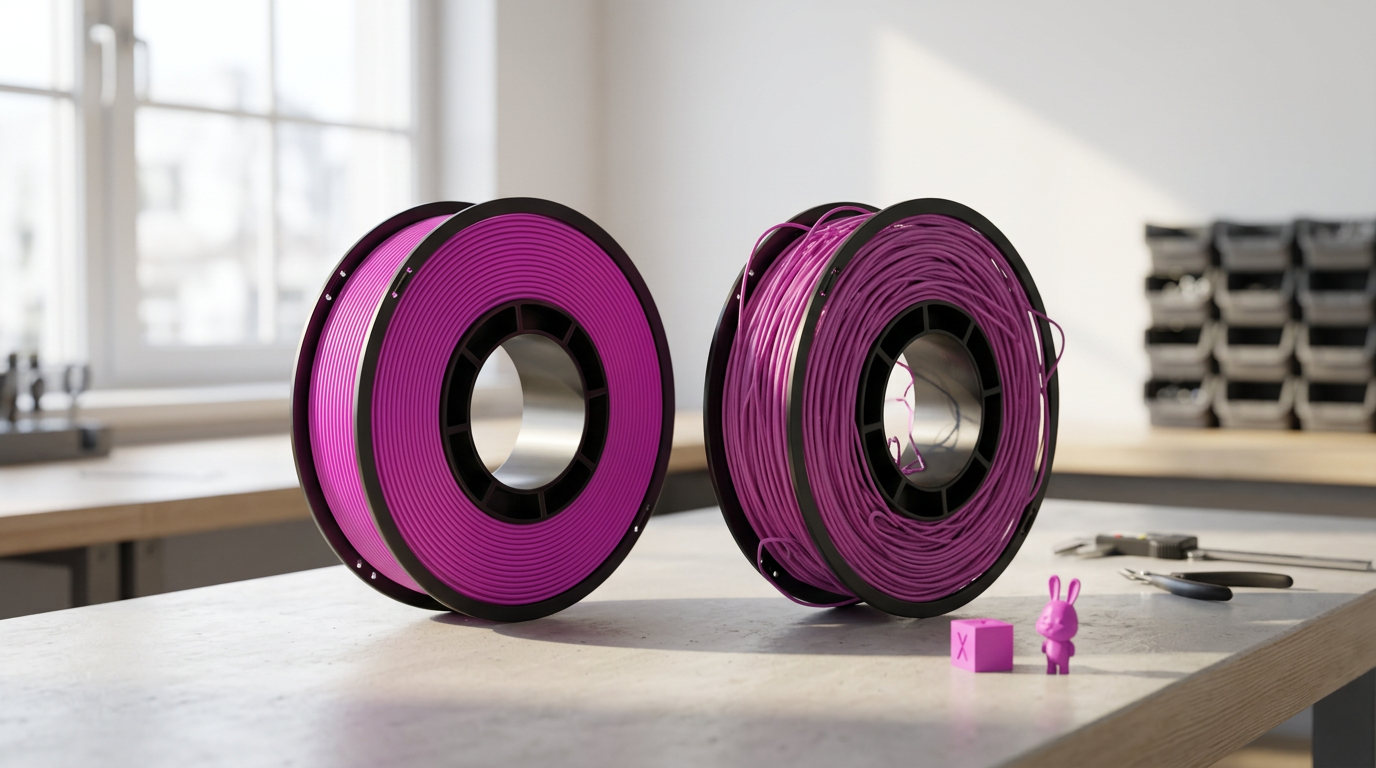
PETG strings more than PLA. If strings get worse out of nowhere, dry the spool, then tune temperature and retraction, and drop the seam off the gear teeth if the slicer lets you. First layers spread wider where they press into the bed, and that elephant's foot shrinks holes and closes joint gaps. Prusa's figure is around 0.2 mm of compensation on a 0.4 mm nozzle, covered in Prusa's notes on elephant foot compensation. A fused print-in-place joint? Do not force it until the plastic goes white and stressed. Rock it gently the way it is meant to move, and clear strings with a thin plastic tool. Never a blade on a finished kids' toy.
|
From the bench: Stringing often comes from damp filament. Dry the spool before changing slicer settings, then run a short reprint to see whether the strings disappear. |
Safety and Durability of 3D-Printed Moving Toys
Pinch Points, Small Parts, and Cracks
A clean print is not the same as a safe toy. Moving parts make pinch points, sharp broken edges, and small pieces that work loose. Run every hinge, wheel, and joint through its full travel and watch where fingers, hair, or clothing could get caught. Round the exposed corners. Box in the gear trains where you can. CPSC guidance is blunt about it: toys for kids under eight cannot have hazardous accessible edges or points, and small gears, wheel caps, and snapped-off clips count as choking hazards, as the CPSC rules on small parts and choking hazards set out. Captured axles, wide retaining heads, closed housings. Especially for anything a child under three can grab.
Food-Safe Claims and When to Replace a Toy
A label on the spool does not certify the finished toy. Pigments, additives, residue in the printer, brass nozzles, the layer lines themselves, all of it changes how safe the final part is. Food-contact claims hold only for specific grades under specific conditions, and finished toys sold commercially face testing rules laid out in CPSC's toy safety business guidance. Buy filament that comes with a real technical data sheet. Then keep checking. Retire a toy when a joint goes loose, an axle bends, or a crack starts to run.
How to Choose the Right Filament for Your Moving Toy

Match the Material to the Motion
Pick by the part's job, not by locking the whole model to one material. Start with the motion, the load, the kid's age, and where the toy ends up living. PLA for gears, rigid rings, hard wheels, fine detail, and it forgives a beginner. PETG for hinge leaves, wheel hubs, axles, snap arms, drop-proof frames. TPU for tires, bumpers, flexible tails, squeeze parts. First print of the week on a beginner printer tuned for PLA and PETG is usually a library model in PLA, which is exactly the right place to learn what your machine does with tight clearances.
When to Print in PLA, and When to Switch
Two lists. Read the left one first, and only move if a part on the right describes your toy.
- Stay with PLA when the part is a gear, a hard wheel, a sliding track, a rotating ring, or a thick hinge pin, and the toy lives indoors on a carpeted floor.
- Stay with PLA when detail matters more than toughness, when the printer is new to you, or when the print is a first test of a design.
- Switch to PETG when the part flexes every time it is used, carries an axle, clips shut, or belongs to a toy that gets thrown, dropped, or taken outside.
- Switch to TPU when the part should squash, grip, or bounce back, like a tire, a bumper, a soft tail, or a squeeze body.
Conclusion
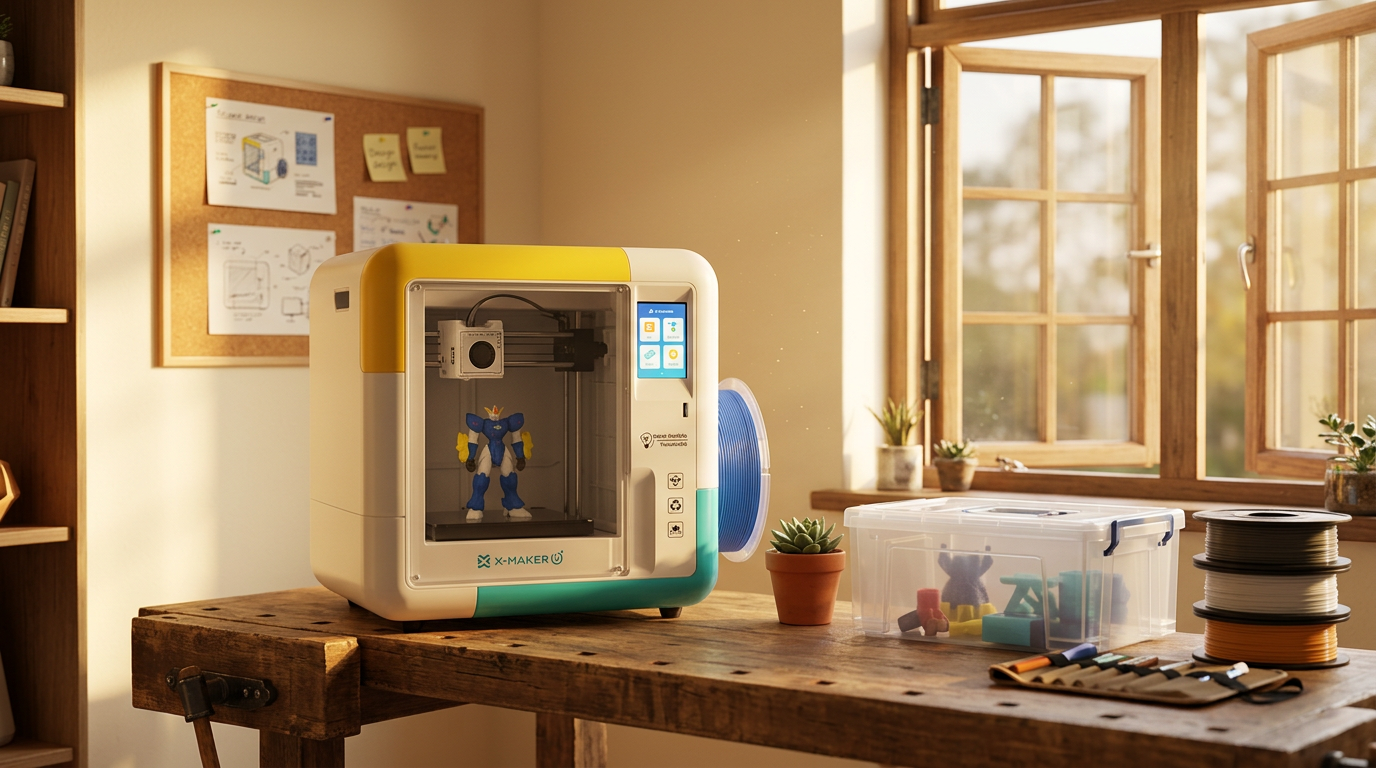
PETG is the all-rounder for moving toys that get dropped, flexed, and handled hard. Hinges, axles, snap joints, structural parts, that is PETG's territory. PLA stays ahead for stiff gears, hard wheels, and sliding tracks where sharp detail and low friction win. TPU takes the soft jobs. A toy built from PLA gears, PETG joints, and TPU tires will usually outlast and outmove one printed from a single filament. Test clearances and joint strength first, then check the finished toy for cracks, sharp edges, and loose pieces before handing it over. Families who would rather skip the calibration can start printing toys at home with the X-MAKER JOY at $259, which ships enclosed, leveling-free, and tuned so the first toy moves the way it should.
FAQs
What is the best filament for flexible toys?
TPU, easily. It bends, compresses, and springs back, which is what soft tires, squeeze toys, and bendable figures need. Start at 95A and run a small test piece first. Softer grades feel more rubbery but fight the extruder.
Is PLA or PETG better for fidget toys?
Depends where it lives. PLA's slick, stiff surface wins on a desk fidget built for smooth spinning. PETG holds up better in a pocket, dropped and squeezed all day. Carrying it around? Go PETG, and clean off the stringing before it reaches the joints.
What type of filament should I use for fidget toys?
PLA for most rigid spinners and sliders. PETG for tougher ones. TPU for soft or squishy designs. A mix often beats a single material. Print a small tolerance test first, because a fused joint means starting over.
What is the best filament for moving parts?
No single answer. PLA suits gears and low-friction surfaces, PETG handles hinges and impact-prone joints, TPU covers tires and flexible connectors. Write down what each part actually does, then assign the material to the job.
Is PLA or PETG better for flexibility?
PETG bends farther before it breaks, so it wins on clips, snap joints, and hinge arms. PLA is rigid and cracks all at once when a thin part flexes too far. Keep gears and precision parts in PLA though. PETG's extra give throws off alignment where you need it stiff.
Is PETG or TPU more flexible?
TPU, by a mile. PETG bends a little under load but counts as a rigid printing material. TPU is genuinely rubbery, stretching and squishing and bouncing back. Use PETG when a part should stay mostly stiff, TPU when you want it to bend or absorb a shock.
What is the strongest filament for toys?
For everyday rigid toys, usually PETG. It takes impacts and bends before breaking. PLA is stiffer but brittle. TPU is tear-resistant but too soft for frames and gears. Strong depends on the stress you mean, so start a rough-use toy body in PETG.
What is PETG not good for?
Tiny gears, very tight print-in-place gaps, high-speed sliding surfaces, and anything that must stay dead rigid. It strings, flexes a touch, and grips the bed hard, all working against fine detail. Save PETG for toughness and hand precision work to PLA.
Sources
- UltiMaker, “PETG Material Properties and Applications”
- UltiMaker, “Introducing UltiMaker PETG”
- UltiMaker, “Printing With TPU: Best Practices for Flexible Success”
- Prusa Research, “Modeling With 3D Printing in Mind”
- Prusa Research, “Elephant Foot Compensation”
- U.S. Consumer Product Safety Commission, “Small Parts and Choking Hazard Labeling FAQs”
- U.S. Consumer Product Safety Commission, “Toy Safety Business Guidance”


Further reading
AI vs CAD for Kids: Which Design Path Fits Each Age?

AI-Generated 3D Models for Kids: 9 Printability Checks Before You Print

How to Fund a Classroom 3D Printer: Grant Budget and Proposal Checklist