Is 3D Printing Safe for Kids? A Parent-First Guide
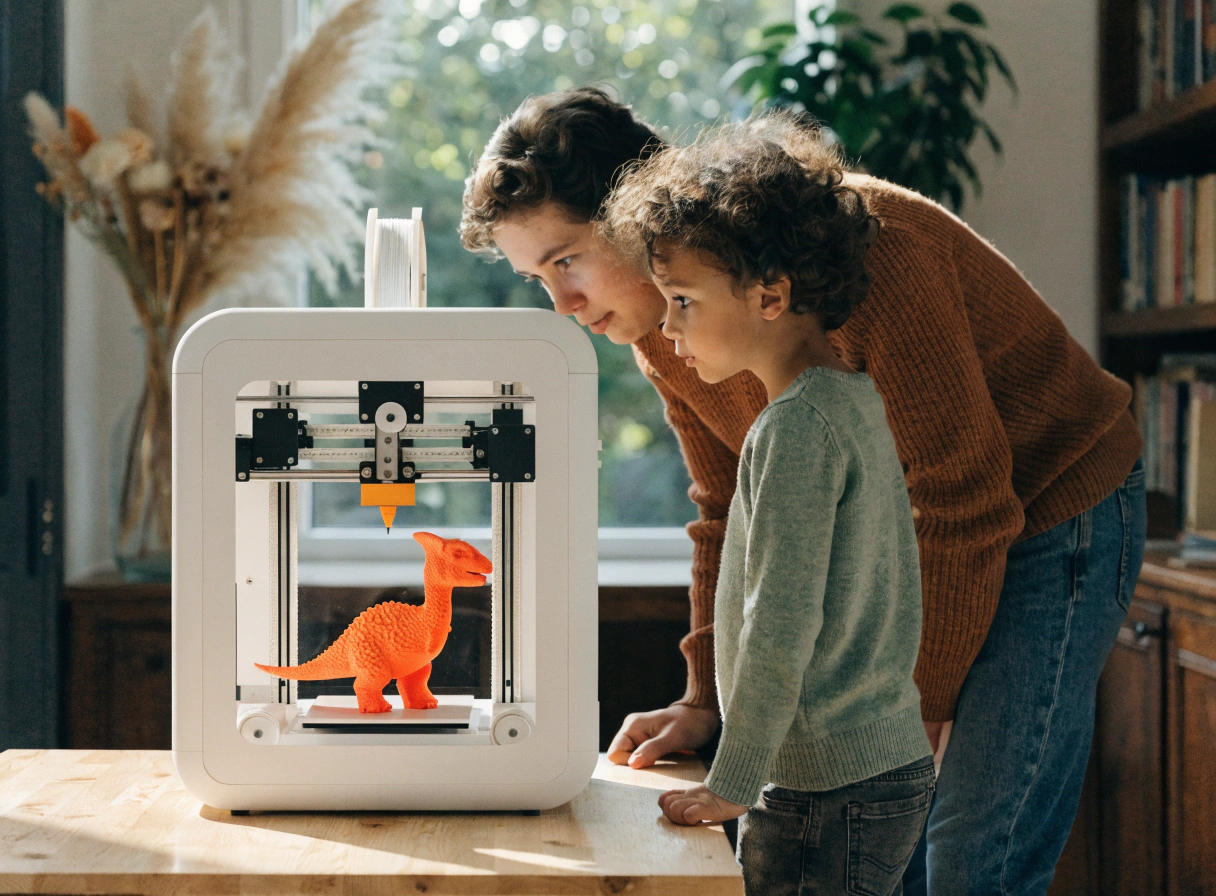
Yes. But it's not a yes you should just take for granted. 3D printing is safe for kids when the right printer, the right materials, and a bit of common sense come together. Here's the thing — most of the worry parents have (burns, fumes, toxic plastic) is real. It's just manageable. And honestly, once you understand what's actually happening inside that machine, it stops feeling scary.
AOSEED's family 3D printing platform is one of the few systems built with exactly these concerns in mind from day one. But we'll get to printers later. First — the actual safety questions.
Covering:
- Is 3D printing safe?
- Are 3D printed toys safe?
- Are 3D pens safe for kids?
- At what age can kids start?
- Which printer is safest?
What Are the Real Risks — and Are They Actually Dangerous?

Let's not sugarcoat it. 3D printers do come with risks. They heat plastic to 200°C+, they emit tiny particles into the air, and some models have exposed moving parts. That's all true.
But context matters. Most of those risks are well within the range of a normal kitchen appliance if you're using the right setup. Here's a simple breakdown:
|
Safety Concern |
Risk Level |
What to Do |
|
Burns from the hot nozzle |
Manageable |
Use enclosed printers — nozzle stays sealed during printing |
|
Fumes and fine particles |
Low |
Print PLA in a ventilated room —a cracked window is enough |
|
ABS or resin fumes |
Higher |
Avoid ABS and resin for kids — PLA is the safe default |
|
Moving parts injury |
Manageable |
Enclosed design keeps moving parts behind a panel |
|
Choking from small prints |
Low |
Inspect prints — avoid tiny detachable parts for under-3s |
|
Electrical safety |
Low |
Standard household voltage — same as any kitchen appliance |
The Fumes Question — What Parents Actually Need to Know
This one comes up a lot in parenting forums,s and honestly, ly it's worth taking seriously. All FDM 3D printers release some level of ultrafine particles (UFPs) when they melt filament. PLA — the most common kids-safe material — produces far fewer VOCs than ABS or other resins. Think of it like cooking on a stovetop. You wouldn't cook without ventilation, but you wouldn't refuse to cook either.
The EPA's indoor air quality guidance consistently indicates that a cracked window or a small nearby fan can handle PLA emissions at a safe level for normal home use. That's really all you need.
Quick Ventilation Rules
|
✓ Open a window or crack a door while the printer is running |
|
✓ Don't hover directly over the printer — especially during the first few layers |
|
✓ For longer print sessions, a small desk fan pointed away from you moves air well |
|
✓ Enclosed printers with HEPA filters reduce particle exposure significantly |
|
✓ Never use ABS or resin in a shared living space with young children |
PLA, ABS, Resin — Which Materials Are Safe for Kids?

In simple terms: PLA is the one you want. Everything else needs a closer look before you let kids near it.
PLA (polylactic acid) is made from corn starch. It's biodegradable, non-toxic once solid, and emits the lowest particle levels of any common FDM filament. You might notice it smells slightly sweet when printing — that's the starch, not fumes.
|
PLA |
✓ Safe. Non-toxic, biodegradable, low-emission. The right choice for kids. |
|
PETG |
△ Generally fine. Slightly stronger than PLA, a bit more emissions. Good ventilation helps. |
|
ABS |
✗ Not for kids. Produces significantly more VOCs. Needs dedicated ventilation. |
|
Resin (SLA) |
✗ Not for kids. Toxic liquid, strong fumes, requires UV curing. Not a home activity. |
|
TPU |
△ Flexible and safe when solid. Good ventilation is needed during printing. |
Are 3D printed toys safe for kids to handle?Yes — once the print is cool and you've inspected it. PLA prints are non-toxic to touch. Check for sharp edges (sand them down), inspect for small detachable parts that could pose a risk to children under 3, and don't leave uncured resin prints accessible to young children. Standard PLA toys are genuinely safe for play. |
Are 3D Printing Pens Safe for Kids?

Different question — and one a lot of parents overlook. 3D pens are handheld devices that melt filament through a pen-shaped nozzle. Kids draw in mid-air with them. They're popular gifts.
The safety picture is more nuanced here. A pen-sized exposed tip at 160–200°C is inherently less safe than an enclosed printer. The pen tip cools in seconds,s but it can still cause minor burns during use. Most pens marketed for children use lower-temperature PLA (around 160°C), which is safer than standard settings.
3D Pen Safety by Age
|
4–7 |
Not recommended unsupervised. Low-temp pens only—adult hand-on-hand guidance during use. |
|
8–11 |
Use a low-temp pen with an adult nearby. Brief sessions. Clear rules about not touching the tip. |
|
12+ |
Standard 3D pens with PLA are appropriate, with a brief safety briefing before first use. |
Bottom line on pens: they're safer when they use low-temp PLA, the child is old enough to follow a simple rule (don't touch the tip), and an adult is available nearby. They're not as inherently safe as an enclosed printer — but for the right age,e they're a genuinely fun creative tool.
How Old Should a Child Be — and How Much Help Do They Need?
You might notice that the answer varies widely depending on the printer, not just the child's age. A guided, enclosed system is a very different experience from an open-frame adult printer.
|
Safety Concern |
Risk Level |
What to Do |
|
Ages 4–7 |
Always present |
Enclosed printer with guided app. Child picks and prints. The adult handles everything else. |
|
Ages 8–11 |
Check-in style |
Enclosed guided printer. Child runs the session. Adult available, not watching every step. |
|
Ages 12+ |
On-call |
Open-frame or advanced systems are possible. Adult briefing on safety. Independent most of the time. |
There's no magic age for 3D printing. A mature eight-year-old on the right printer is genuinely safer than a distracted twelve-year-old on the wrong one.
What Actually Makes a 3D Printer Safe for Kids?

Not all kids' printers are equally safe. Here's what to actually look for — not just what the marketing says.
- Fully enclosed build area — keeps the nozzle and heated bed behind a sealed pane—the single most important safety feature.
- PLA compatibility — should work with PLA out of the box, with pre-optimized settings—no ABS defaults.
- Guided app, not slicer — a child-led app means no adult slicer management, fewer errors, fewer openings of the enclosure mid-print.
- Quiet operation — loud printers get moved, then stored. Quiet ones stay on the desk and get used to.
- Touchscreen lock or safety interlock — prevents unauthorized print starts or lid opening during a session.
Printers Worth Knowing

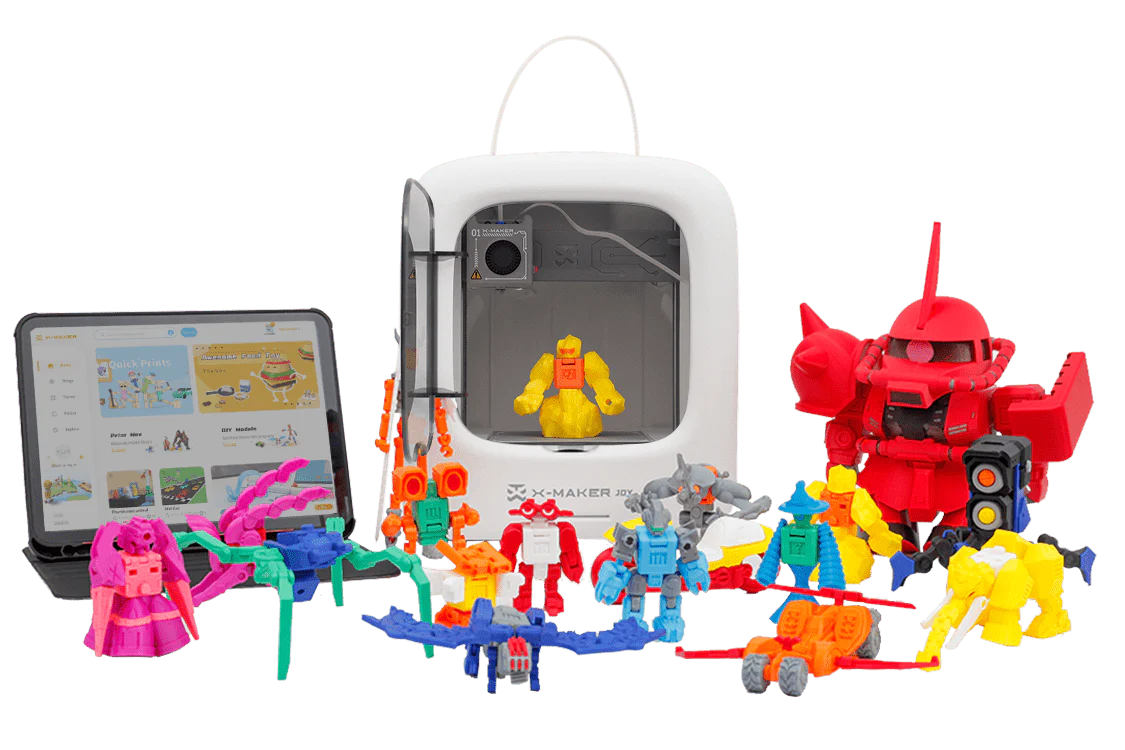
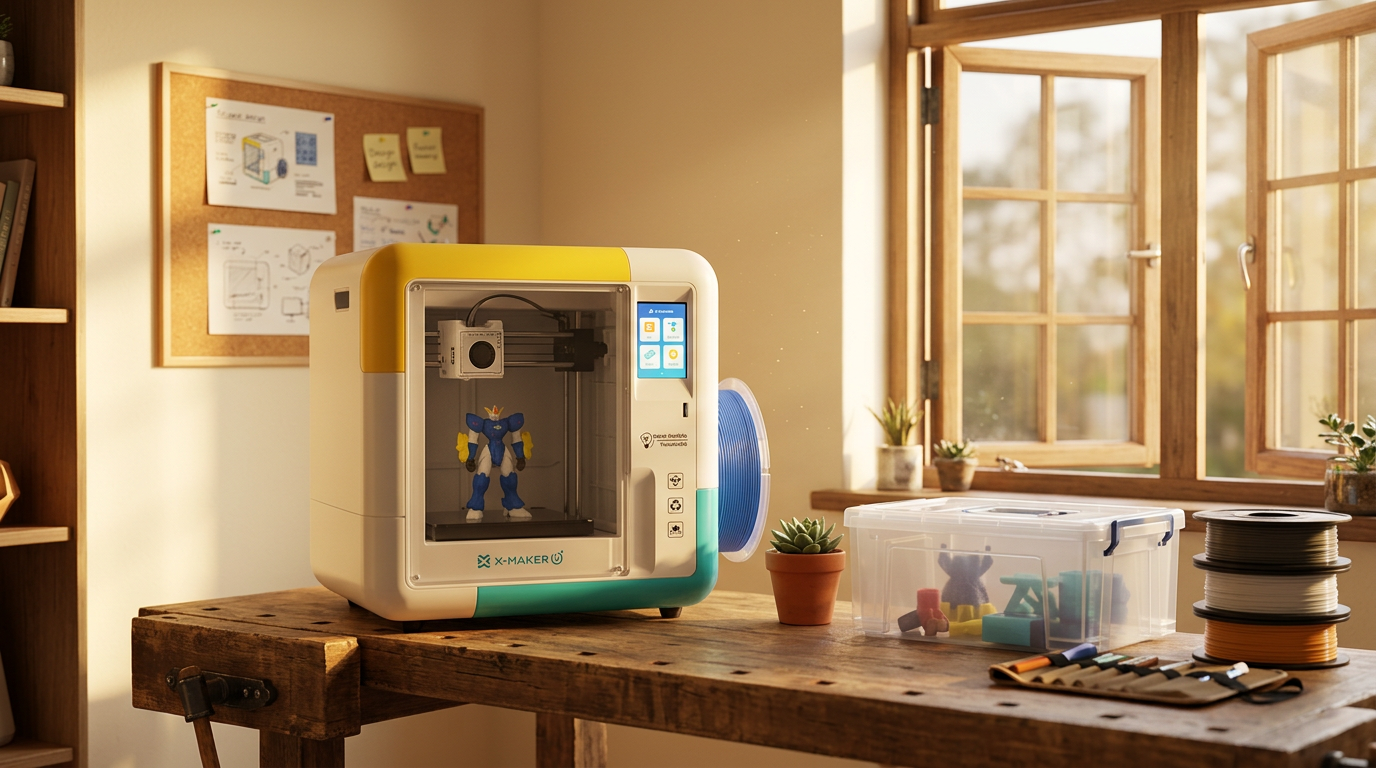
For children aged 4–12, the AOSEED X-MAKER JOY is one of the most fully realized safe-by-design options currently available — fully enclosed, app-guided, PLA-only, and quiet. Browse all safe 3D printers for kids to compare options if you're still deciding.
For older children aged 9–16 who want bigger builds and greater design depth, the AOSEEDX-MAKER scales up the same safe ecosystem with a touchscreen interface and a larger build volume.
Safe 3D Printing Setup — A Simple Checklist
- Before the first print, run through these. Takes about five minutes. Saves a lot of guesswork later.
- Place the printer on a flat, stable surface — not the edge of a shelf
- Ventilate the room: open a window or position a small fan to move air
- Load PLA filament — not ABS, not resin
- Confirm the enclosure is fully closed before starting any print
- Teach one rule clearly: lid stays closed during printing, always
- Wait for the bed to cool before touching the printed object
FAQs
Are 3D printers safe for children?
Yes, with the right setup. Enclosed printers using PLA filament in a ventilated room are safe for home use with children. The main physical risks — burns and fumes — are both effectively managed by choosing an enclosed design and PLA.
Can a 7-year-old use a 3D printer?
On a guided, enclosed system — yes, with an adult present. A seven-year-old can pick models, customize designs, and watch prints through a guided app. The adult handles setup, filament loading, and print removal. The creative work belongs to the child.
Should a 12-year-old have a 3D printer?
Yes. A twelve-year-old can manage most of the 3D printing process independently on an enclosed guided system. They can troubleshoot minor issues, follow in-app guidance, and run sessions without step-by-step adult management. An adult should handle hardware tasks like nozzle changes.
Can kids 3D print safely at home?
Absolutely — and it's one of the more rewarding hands-on activities available. Use PLA filament, keep the room ventilated, choose an enclosed printer, and stay nearby for setup and removal. That's really the full setup for safe home 3D printing with kids.
Are 3D printing pens safe for kids?
Low-temperature 3D pens are safer than standard pens and are appropriate for use from around age eight when an adult is nearby. The main rule: don't touch the tip during or immediately after use. Pens are less inherently safe than enclosed printers — but manageable for the right age group with the right guidance.
What is a good 3D printer for a 10-year-old?
An enclosed, guided printer with a kids' app is the right match for a ten-year-old. The AOSEED X-MAKER JOY is fully enclosed, app-guided, and connected to thousands of models — updated weekly — so there's always a new project to print.
Source
- Reddit Community,PSA About 3D Printing Safety, Especially for Kids, Reddit
- FunTech UK Editorial,3D Printing for Kids: What Parents Need to Know, Is It Safe?, FunTech UK
- Prusa Blog Editorial,Let's Print for Toddlers: Cool Gadgets for Raising Children Safer and Easier, Prusa Blog
- Facebook Community,3D Printing for Beginners and Pros — Safety Post, Facebook


Further reading
AI vs CAD for Kids: Which Design Path Fits Each Age?

AI-Generated 3D Models for Kids: 9 Printability Checks Before You Print

How to Fund a Classroom 3D Printer: Grant Budget and Proposal Checklist