25 AI Prompts to Turn Kids' Drawings Into 3D Models
These 25 AI prompts help turn a child's drawing idea into a simpler reference image for 3D modeling. They do not create a guaranteed printable file. Each prompt asks for large shapes, connected parts, a stable base and limited detail, then gives the adult and child a failure phrase to use when the first output is too thin, floating or unclear.
The library is visual on purpose: every prompt has its own thumbnail, and each group of five has a contact sheet that pairs a doodle with a simplified clay-style concept. Those are AI reference concepts, not photographed 3D prints. Five real AOSEED workflows are still required before the article can claim tested conversion results.

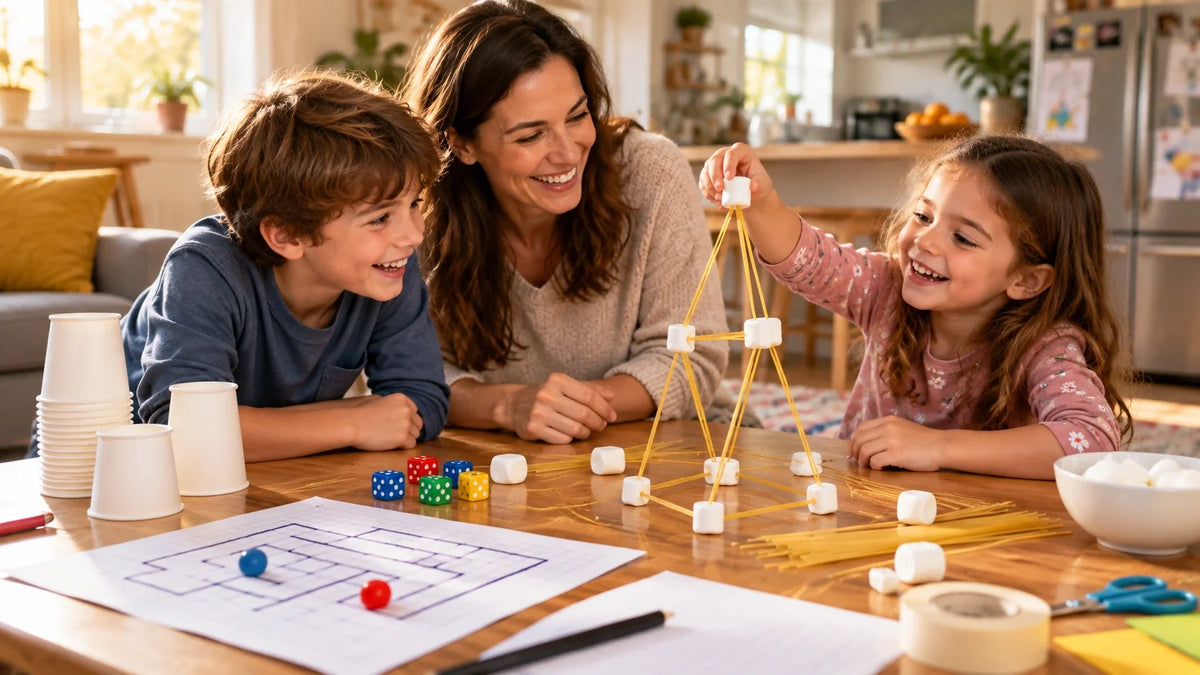
EDITORIAL CONCEPT — Preserved from the source document. Do not present the scene as a tested AOSEED workflow or real finished print.
Before You Copy a Prompt: Adult Account, Privacy and Rights

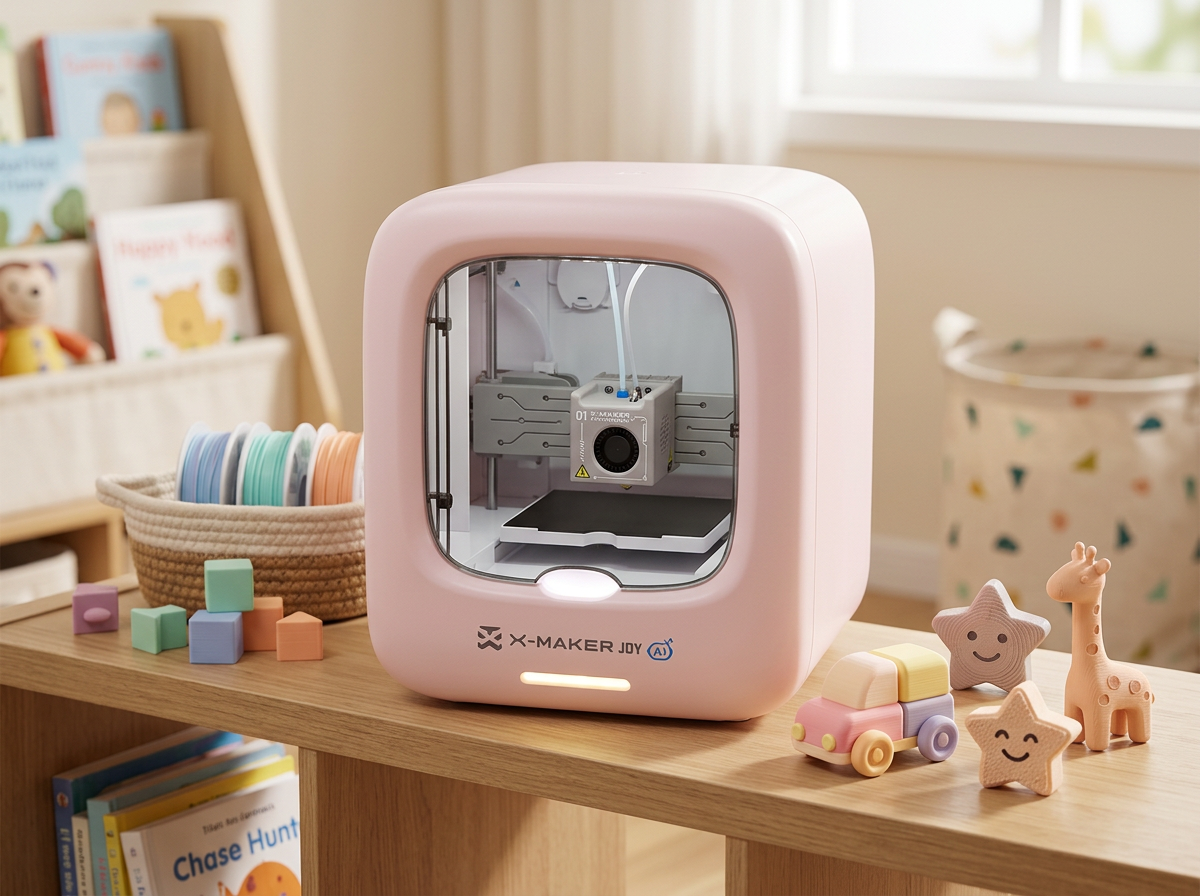
EDITORIAL CONCEPT — Use an adult-managed or school-approved workflow. This image does not certify any platform as suitable for children.
Do not treat a general AI service as child-safe by default. An adult should choose the service, read its current minimum-age, parental-consent, privacy and data-use terms, manage the account, and review both input and output. Record “terms checked on: August 10, 2026” in the publishing notes and update that date whenever the article changes.
- Keep personal information out: no child name, school, address, birthday, phone/email, location, account identifier, private photo, voice recording or classroom roster.
- Use invented subjects: a made-up turtle or robot needs no identifying details. If a child's original drawing is uploaded, the adult should understand how that service stores and uses files.
- Keep the child's authorship visible: ask AI to preserve the drawing's main silhouette and choices, not to replace it with a generic polished character.
- Use work you control: avoid copying protected characters, another artist's work or trademarked product designs, especially for sale or promotion.
- Review every output: reject unclear, inappropriate, cluttered or structurally misleading images before the child models from them.
The FTC's child-privacy guidance explains that COPPA gives parents control over personal information collected online from children under 13 by covered services. This article is practical family guidance, not legal advice or a substitute for a platform's current terms.
Write a Better Drawing-to-3D Prompt

EDITORIAL CONCEPT — A generated picture can guide design, but it does not contain verified hidden geometry, scale or print settings.
Use the seven-part formula

ORIGINAL SOURCE VISUAL — Verify every text label against the visible formula below before publication.
|
Slot |
Write |
Why it helps 3D |
|
1. Subject |
One clear noun |
Prevents a crowded scene |
|
2. Main solids |
3–6 spheres, cubes, cylinders, cones or slabs |
Creates a build order |
|
3. Features |
2–4 large identifying parts |
Preserves identity without detail overload |
|
4. Connections |
attached, overlapping, one-piece |
Reduces floating parts |
|
5. Pose/base |
wide feet, seated, flat base or ground-touching tail |
Creates a stable first layer |
|
6. View/style |
front/side/three-quarter, clean line art, plain background |
Makes shapes readable |
|
7. Avoid |
no thin wires, floating pieces, tiny texture or text |
Prevents common prompt failures |
Check whether the picture is worth modeling

ORIGINAL SOURCE CONCEPT — Use the checklist below as the decision rule; do not assume a polished image is printable.
- Silhouette: Does it remain recognizable when inner details are ignored?
- Connections: Does every intended one-piece part overlap the main body?
- Thickness: Are tails, legs, handles, horns and slots visibly robust at the planned size?
- Base: Is there an intentional first-layer surface or stable support plan?
- Hidden geometry: Do you have enough views to decide the back, underside and depth?
- Text: Can lettering be added later in the modeling tool instead of trusting garbled AI text?
Turn the reference into a validated 3D model

EDITORIAL CONCEPT — This is not an AOSEED test record. The publishable workflow needs current screenshots, files, slicer layers and a photographed finished print.
- Choose the reference with the clearest silhouette and fewest hidden parts. Save the exact prompt and unedited output.
- Build with basic solids, trace/extrude a clean outline, or use an image-to-3D tool as a draft. A single image cannot reveal the true back, underside or scale.
- Rotate the model and repair weak connections, unwanted holes, floating shells, thin walls and an unstable base. Set real dimensions.
- Use the short export decision: STL is widely supported geometry; 3MF can carry units and other structured data when the workflow supports it. Keep the editable source file too.
- Inspect every layer in the slicer. If a feature disappears or starts in mid-air, return to the model rather than hoping the printer will fix it.
- Run a small supervised test print, record the machine/material/settings/time, photograph failures honestly, then revise one cause at a time.
AOSEED's current X-MAKER application documentation describes DrawX as a route from a 2D drawing to a three-dimensional model. Confirm the current app, account, device, printer model and export/print handoff on publication day. Do not extend that owned claim into “voice creates a print-ready model” or imply that the app automatically repairs bad geometry.
25 Copyable AI Prompts for 3D-Model Reference Images
These prompts generate reference pictures, not printable files. Keep the structural phrases, then change color, expression or accessories. After generation, inspect the back, underside, thickness and scale in a modeling or image-to-3D workflow before printing.

EDITORIAL CONCEPT — The library is a starting point. The prompt card and validation steps, not the decorative scene, determine whether a design can move into 3D.
Prompts 1–5: Animals

AI REFERENCE CONTACT SHEET — 1 Turtle • 2 Cat • 3 Elephant • 4 Owl • 5 Whale. Each panel pairs a doodle with a simplified clay concept; none is a tested mesh or photographed print.
1. Round Turtle Toy
|
Reference #1 |
Copy-and-build card |
|
AI REFERENCE CONCEPTNot a mesh or photographed print |
Difficulty: Easy Basic shapes: sphere head, oval body and shell, four short cylinders Flat-base rule: wide flat belly Expected reference: A readable turtle with one connected shell and thick legs Common failure: Shell floats above body or legs become thin Rewrite phrase: Keep the shell overlapping the body; make every leg short, thick and connected. COPY PROMPTCreate a simple doodle of a cute turtle with a round body, a wide oval shell, four short thick legs, and a small round head. Keep every part connected, use large shapes, add a flat bottom, and show the turtle in a centered three-quarter view on a plain background. |

2. Sitting Cat Figure
|
Reference #2 |
Copy-and-build card |
|
AI REFERENCE CONCEPTNot a mesh or photographed print |
Difficulty: Easy Basic shapes: oval body, sphere head, triangle ears, thick tail Flat-base rule: seated body plus wide tail contact Expected reference: A compact cat whose paws and tail support the pose Common failure: Thin whiskers or tail touching at one weak point Rewrite phrase: Remove whiskers; press the wide tail against the body and ground. COPY PROMPTDraw a clean cartoon doodle of a sitting cat with an oval body, a round head, two thick triangle ears, short front paws, and a wide tail attached to its side. Use a bold outline, no fur texture, no thin whiskers, and a stable seated pose. |

3. Chunky Baby Elephant
|
Reference #3 |
Copy-and-build card |
|
AI REFERENCE CONCEPTNot a mesh or photographed print |
Difficulty: Easy Basic shapes: large oval body, cylinders, wide ear discs Flat-base rule: four feet on one level Expected reference: A solid elephant with short legs and a thick trunk Common failure: Trunk curls into a thin unsupported hook Rewrite phrase: Shorten and thicken the trunk; connect its curve back toward the body. COPY PROMPTMake a simple line-art doodle of a baby elephant with a large round body, four short cylinder legs, wide ears, and a thick curved trunk. Join all parts into one solid shape and place the elephant on a flat base. |

4. Friendly Owl Model
|
Reference #4 |
Copy-and-build card |
|
AI REFERENCE CONCEPTNot a mesh or photographed print |
Difficulty: Easy Basic shapes: rounded body, eye discs, wings, wide feet Flat-base rule: wide feet or flattened underside Expected reference: A front-facing owl with wings pressed to the body Common failure: Separate wings or dozens of feather marks Rewrite phrase: Attach both wings to the body; replace feathers with two or three raised shapes. COPY PROMPTCreate a front-view doodle of a friendly owl with a rounded body, two large circular eyes, short thick wings pressed against its sides, and two wide feet. Use simple geometry, a clear silhouette, and no feather details. |

5. Small Whale Toy
|
Reference #5 |
Copy-and-build card |
|
AI REFERENCE CONCEPTNot a mesh or photographed print |
Difficulty: Medium Basic shapes: oval body, thick side fins, short tail Flat-base rule: slightly flattened belly Expected reference: A desk-stable whale with connected fins and tail Common failure: Thin tail tips or a floating water splash Rewrite phrase: Make the tail short and rounded; connect the water spout to the head or remove it. COPY PROMPTDraw a smooth doodle of a small whale with an oval body, two thick side fins, a short tail, and a rounded water spout connected to the head. Keep the bottom slightly flat so the model can sit on a desk. |

Prompts 6–10: Fantasy Creatures and Characters

AI REFERENCE CONTACT SHEET — 6 Dragon • 7 Unicorn • 8 Mushroom Friend • 9 Guardian • 10 Wizard. Each panel pairs a doodle with a simplified clay concept; none is a tested mesh or photographed print.

ORIGINAL SOURCE CONCEPT — Preserved for design continuity; the contact sheet and five cards carry the publishable visual index.
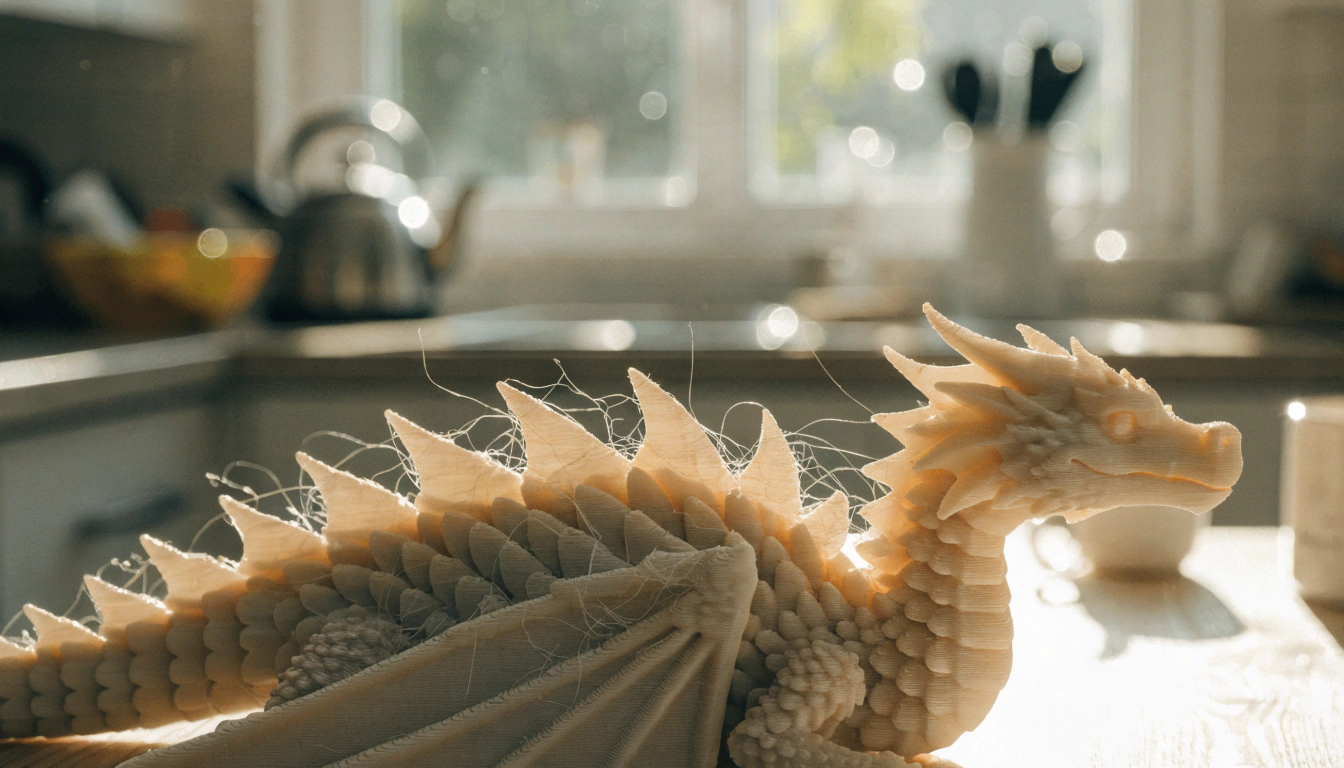
6. Sitting Baby Dragon
|
Reference #6 |
Copy-and-build card |
|
AI REFERENCE CONCEPTNot a mesh or photographed print |
Difficulty: Medium Basic shapes: oval body, sphere head, short cylinders, small wings Flat-base rule: round base under seated pose Expected reference: A compact dragon with tail and wings bracing the body Common failure: Floating wings, thin horns or unsupported tail Rewrite phrase: Press the wings into the back; make the tail wide and touching the base. COPY PROMPTCreate a simple doodle of a baby dragon sitting on a round base, with an oval body, a large round head, short thick legs, small wings attached to its back, and a wide curved tail touching the base. Avoid thin horns and tiny scales. |

7. One-Piece Unicorn
|
Reference #7 |
Copy-and-build card |
|
AI REFERENCE CONCEPTNot a mesh or photographed print |
Difficulty: Medium Basic shapes: rounded body, cylinders, cone horn, three mane masses Flat-base rule: four wide feet Expected reference: A simplified unicorn with attached mane and tail Common failure: Long horn, string-like mane or raised hoof Rewrite phrase: Shorten the horn; turn the mane into three thick pieces touching the neck. COPY PROMPTDraw a clean cartoon unicorn with a rounded body, four short legs, a thick neck, a simple mane made from three large shapes, and one short cone-shaped horn. Keep the tail wide and attached to the body. |

8. Mushroom Forest Friend
|
Reference #8 |
Copy-and-build card |
|
AI REFERENCE CONCEPTNot a mesh or photographed print |
Difficulty: Easy Basic shapes: cylinder body, wide dome cap, short arms and feet Flat-base rule: wide feet and cap centered over body Expected reference: A single mushroom character with a strong silhouette Common failure: Hat floats or overhang becomes paper-thin Rewrite phrase: Lower the cap until it overlaps the body; make the rim thick and rounded. COPY PROMPTMake a cute doodle of a tiny forest character with a cylinder body, a wide mushroom-cap hat, short arms touching its sides, and large flat feet. Use one-piece construction, thick features, and a plain background. |

9. Friendly Castle Guardian
|
Reference #9 |
Copy-and-build card |
|
AI REFERENCE CONCEPTNot a mesh or photographed print |
Difficulty: Medium Basic shapes: cube torso, round head, block limbs, shield Flat-base rule: square base Expected reference: A sturdy guardian with shield fused to one arm Common failure: Separate weapon or shield connected at one point Rewrite phrase: Delete the weapon; overlap the shield with the forearm and body. COPY PROMPTCreate a doodle of a small stone guardian with a cube-shaped body, round head, thick arms, and short legs standing on a square base. Add one large shield attached to its arm and avoid separate weapons. |

10. Moon Wizard Figure
|
Reference #10 |
Copy-and-build card |
|
AI REFERENCE CONCEPTNot a mesh or photographed print |
Difficulty: Easy Basic shapes: cone hat, rounded head/body, wide robe Flat-base rule: robe hem forms the base Expected reference: A wizard whose robe supports the whole figure Common failure: Thin hat tip or floating hands Rewrite phrase: Round the hat tip; connect both sleeves and hands to the robe. COPY PROMPTDraw a simple wizard character with a cone-shaped hat, rounded body, short sleeves, and a wide robe that forms a flat base. Add one large moon symbol on the front and keep both hands connected to the body. |

Prompts 11–15: Robots, Vehicles and Machines

AI REFERENCE CONTACT SHEET — 11 Robot • 12 Rover • 13 Rocket • 14 Submarine • 15 Race Car. Each panel pairs a doodle with a simplified clay concept; none is a tested mesh or photographed print.
11. Boxy Helper Robot
|
Reference #11 |
Copy-and-build card |
|
AI REFERENCE CONCEPTNot a mesh or photographed print |
Difficulty: Easy Basic shapes: cube body, round head, cylinders and blocks Flat-base rule: two wide block feet Expected reference: A symmetrical robot with connected joints Common failure: Ball joints separate or antenna is wire-thin Rewrite phrase: Thicken every joint; shorten the antenna and fuse it to the head. COPY PROMPTCreate a front-view doodle of a friendly robot with a cube body, round head, thick cylinder arms, short block legs, and one large button on its chest. Connect every joint and use wide feet for balance. |

12. Mini Moon Rover
|
Reference #12 |
Copy-and-build card |
|
AI REFERENCE CONCEPTNot a mesh or photographed print |
Difficulty: Medium Basic shapes: rectangular body, four wheel cylinders, short mast Flat-base rule: four wheels share one ground line Expected reference: A side-view rover with wheels overlapping the body Common failure: Floating wheels or a tall weak camera pole Rewrite phrase: Move every wheel inward until it overlaps the body; shorten and thicken the mast. COPY PROMPTDraw a simple moon rover with a rectangular body, four thick wheels attached closely to the sides, a short camera pole, and one wide front light. Use large shapes and show a clear side view. |

13. Cartoon Rocket
|
Reference #13 |
Copy-and-build card |
|
AI REFERENCE CONCEPTNot a mesh or photographed print |
Difficulty: Easy Basic shapes: cylinder body, cone nose, three thick fins Flat-base rule: flat exhaust ring or round base Expected reference: A centered rocket that can stand without smoke/flames Common failure: Thin fins or pointed exhaust touching the plate Rewrite phrase: Widen and thicken the fins; make the exhaust end a flat base. COPY PROMPTMake a clean doodle of a short rocket with a cylinder body, cone nose, three thick fins, and a wide flat exhaust base. Keep the design symmetrical and remove flames, smoke, windows, and tiny panels. |

14. Toy Submarine
|
Reference #14 |
Copy-and-build card |
|
AI REFERENCE CONCEPTNot a mesh or photographed print |
Difficulty: Medium Basic shapes: oval hull, short tower, wide fins, thick rear propeller form Flat-base rule: flattened hull underside or display base Expected reference: A smooth side-view submarine with large connected features Common failure: Thin propeller blades or railings Rewrite phrase: Replace separate propeller blades with one thick attached propeller shape; remove railings. COPY PROMPTCreate a simple side-view doodle of a toy submarine with an oval body, a short tower, two wide fins, and one thick propeller shape attached to the back. Use a smooth outline and no small railings. |

15. Chunky Race Car
|
Reference #15 |
Copy-and-build card |
|
AI REFERENCE CONCEPTNot a mesh or photographed print |
Difficulty: Medium Basic shapes: rounded box body, four wheel cylinders, low spoiler Flat-base rule: all wheels share one level or use a thin base Expected reference: A low car with wide attached wheels Common failure: Spoiler floats or wheel axles are tiny Rewrite phrase: Lower the spoiler into the body; overlap each wheel with the side panel. COPY PROMPTDraw a low-detail race car with a rounded rectangular body, four thick wheels, one simple seat area, and a small rear spoiler connected to the body. Show the car from a clear three-quarter view on a plain background. |

Prompts 16–20: Toys and Game Pieces

AI REFERENCE CONTACT SHEET — 16 Bear Block • 17 Rocket Token • 18 Monster Spinner • 19 Puzzle Star • 20 Castle Token. Each panel pairs a doodle with a simplified clay concept; none is a tested mesh or photographed print.
16. Stacking Animal Block
|
Reference #16 |
Copy-and-build card |
|
AI REFERENCE CONCEPTNot a mesh or photographed print |
Difficulty: Easy Basic shapes: cube, two half-sphere ears, raised face discs Flat-base rule: entire cube bottom Expected reference: A stackable bear block with no engraved hairlines Common failure: Ears float or facial lines disappear Rewrite phrase: Fuse ears into the cube; use raised eyes/nose instead of thin drawn lines. COPY PROMPTCreate a cube-shaped toy block with a simple bear face, two small round ears connected to the top, and a flat bottom. Use raised facial shapes instead of drawn lines and keep every feature thick. |

17. Rocket Chess Piece
|
Reference #17 |
Copy-and-build card |
|
AI REFERENCE CONCEPTNot a mesh or photographed print |
Difficulty: Easy Basic shapes: disc base, short cylinder, cone, thick fins Flat-base rule: wide circular base Expected reference: A centered rocket token with a clear chess-piece silhouette Common failure: Fins reach below the base or make it asymmetrical Rewrite phrase: Join all fins to the base ring and mirror them evenly around the body. COPY PROMPTDraw a simple game piece shaped like a rocket, with a wide circular base, short cylinder body, cone top, and three thick fins joined to the base. Keep the design centered and symmetrical. |

18. Monster Spinner
|
Reference #18 |
Copy-and-build card |
|
AI REFERENCE CONCEPTNot a mesh or photographed print |
Difficulty: Medium Basic shapes: round body, balanced horns, raised eyes, short tip Flat-base rule: centered tip under balanced body Expected reference: A spinning top whose decorations stay symmetric Common failure: Off-center horn/eye mass or long fragile tip Rewrite phrase: Mirror the horns and eyes; shorten the point and center it exactly. COPY PROMPTMake a doodle of a round monster spinning top with one wide body, two thick horns, large raised eyes, and a short point underneath. Keep all features balanced around the center. |

19. Puzzle Star Piece
|
Reference #19 |
Copy-and-build card |
|
AI REFERENCE CONCEPTNot a mesh or photographed print |
Difficulty: Easy Basic shapes: rounded star prism and large ring grip Flat-base rule: even flat back Expected reference: A top-view star with equal thickness Common failure: Sharp tips or grip hole too small Rewrite phrase: Round every star tip; enlarge the center grip and keep wall thickness even. COPY PROMPTCreate a simple five-point star puzzle piece with rounded tips, even thickness, and one large circular grip in the middle. Show it from the top on a plain white background. |

20. Tiny Castle Game Token
|
Reference #20 |
Copy-and-build card |
|
AI REFERENCE CONCEPTNot a mesh or photographed print |
Difficulty: Easy Basic shapes: wide base, joined towers, large door relief Flat-base rule: square base Expected reference: A compact castle token with no separate flags Common failure: Thin roof points or gaps between towers Rewrite phrase: Join all towers into one silhouette; remove flags and widen the roof forms. COPY PROMPTDraw a small castle token with a wide square base, one central tower, two shorter side towers, and large simple door shapes. Join the towers together and avoid flags or thin roof points. |

Prompts 21–25: Useful Desk and Room Objects

AI REFERENCE CONTACT SHEET — 21 Pencil Cup • 22 Cable Holder • 23 Phone Stand • 24 Desk Tray • 25 Nameplate. Each panel pairs a doodle with a simplified clay concept; none is a tested mesh or photographed print.
21. Dinosaur Pencil Holder
|
Reference #21 |
Copy-and-build card |
|
AI REFERENCE CONCEPTNot a mesh or photographed print |
Difficulty: Medium Basic shapes: wide hollow cylinder, head, short legs, ground-touching tail Flat-base rule: broad cup bottom and four feet Expected reference: A functional pencil cup with decoration outside the cavity Common failure: Wall too thin or tail connects weakly Rewrite phrase: Keep a thick cup wall; lower the tail until it touches the desk and body. COPY PROMPTCreate a doodle of a pencil cup shaped like a friendly dinosaur, with a wide hollow cylinder body, four short feet, a thick tail touching the ground, and a simple head attached to the front. Keep the opening large and the base flat. |

22. Cloud Cable Holder
|
Reference #22 |
Copy-and-build card |
|
AI REFERENCE CONCEPTNot a mesh or photographed print |
Difficulty: Medium Basic shapes: flat cloud slab with three wide slots Flat-base rule: flat back/bottom for the mounting plan Expected reference: A one-piece organizer with rounded thick slot walls Common failure: Slots become too narrow after printing Rewrite phrase: Make each slot wider than the target cable and round the slot roots. COPY PROMPTDraw a small cloud-shaped cable holder with a flat back, thick rounded edges, and three wide slots along the bottom. Use one solid piece and show a front and side view. |

23. Cat Phone Stand
|
Reference #23 |
Copy-and-build card |
|
AI REFERENCE CONCEPTNot a mesh or photographed print |
Difficulty: Medium Basic shapes: wide base, angled back, low front lip, thick ears Flat-base rule: full rectangular base Expected reference: A stable stand whose support angle is visible Common failure: Lip blocks screen or back angle is too steep Rewrite phrase: Show the phone envelope; lower the lip and widen the base before adding ears. COPY PROMPTCreate a simple cat-shaped phone stand with a wide flat base, an angled back support, two thick ears, and a low front lip to hold the phone. Keep the structure solid and avoid narrow gaps. |

24. Robot Desk Tray
|
Reference #24 |
Copy-and-build card |
|
AI REFERENCE CONCEPTNot a mesh or photographed print |
Difficulty: Easy Basic shapes: shallow rounded box, raised face, attached handles Flat-base rule: entire tray bottom Expected reference: A usable tray with thick walls and rounded corners Common failure: Handles detach or tray becomes too deep to reach Rewrite phrase: Fuse handles into the side walls; keep the tray shallow with a broad bottom. COPY PROMPTDraw a shallow rectangular desk tray with a friendly robot face on the front, thick raised eyes, and two short side handles connected to the walls. Use rounded corners and a flat bottom. |

25. Moon and Star Nameplate
|
Reference #25 |
Copy-and-build card |
|
AI REFERENCE CONCEPTNot a mesh or photographed print |
Difficulty: Medium Basic shapes: wide rectangular base, thick crescent, two large stars, back panel Flat-base rule: wide continuous desk base Expected reference: A balanced nameplate with an intentionally blank lettering zone Common failure: Thin crescent tips or AI invents garbled letters Rewrite phrase: Keep the center blank; thicken moon tips and add lettering later in the modeling tool. COPY PROMPTMake a doodle of a desk nameplate with a wide rectangular base, one thick crescent moon, and two large stars attached to the back panel. Leave a clear flat area in the center for raised letters. |

Frequently Asked Questions
What prompt can turn a kid's drawing idea into a 3D-model reference?
Describe one subject, its largest basic shapes, two to four identifying features, how every part connects, the stable pose/base, the view and the details to avoid. For example: “Create a clean turtle doodle with an oval body, overlapping shell, four short thick legs, connected round head and wide flat belly; plain background; no thin details.”
Can one AI image become a printable 3D model?
It can become a draft or reference, but one image cannot reveal the true hidden back, underside, depth or scale. The mesh still needs all-side inspection, repair, real dimensions, wall/feature checks and slicer review before a supervised test print.
What makes a child's drawing easier to turn into 3D?
A strong silhouette, five to eight major forms, thick connected parts, limited texture and an intentional base. Front and side views help when depth matters. Thin whiskers, floating accessories, deep fur and tiny text make the conversion harder.
How do I fix an AI doodle with thin or floating parts?
Regenerate with exact repair language: “make the tail short, thick and touching the body,” “connect both wings to the back,” or “place every part on one flat base.” Change one instruction at a time so the child can see which phrase caused the improvement.
Can children use AI prompts for 3D projects?
They can participate through an adult-managed or school-approved workflow that follows the current platform terms. Do not include personal data, private photos or school identifiers; use rights-cleared drawings; and have an adult review outputs, downloads, printer safety and account/data settings.
Conclusion: Preserve the Child's Idea, Then Prove the Print
A good AI doodle prompt does not replace a child's design. It helps expose the shapes, connections and base hidden inside the idea. The useful output is not the prettiest picture; it is the reference a child can explain, simplify and rebuild.
When the family is ready to move from reference to a supervised print, verify the current AOSEED app and download route and compare the current AOSEED 3D printer options against the actual project size and workflow. Avoid deciding from static price, age or feature claims copied into an evergreen article.
|
TRY 5 TESTED PROMPTS WITH AOSEED — DOWNLOAD NOT YET LIVEPublish this CTA only after the five real workflows exist. The download must contain the exact prompts, raw doodles, editable/source files where available, repaired STL/3MF, slicer screenshots, settings/readme, failures and final print photographs shown in the article. |
Sources and Update Notes
- FTC — Protecting Your Child's Privacy Online — US child-privacy background; checked Aug. 10, 2026.
- NIOSH — Approaches to Safe 3D Printing — Safety controls for schools, libraries and makerspaces.
- AOSEED Wiki — X-MAKER Applications / DrawX — Owned feature description; recheck current workflow.
- AOSEED — Downloads — Current app/download route; versions may change.
- Library of Congress — STL Family — Authoritative format description and limitations.
- 3MF Consortium — Specification — Primary standard source.


Further reading

Thanksgiving STEM Activities for Kids: Table Projects and Simple Engineering Challenges

Halloween STEM Activities for Kids: Spooky Builds That Teach Real Science

STEM Crafts for Kids: Build, Decorate and Test