Low-Pressure Creative Projects for Kids Who Don’t Like Open-Ended Crafts
Some children sit down at a craft table and immediately feel overwhelmed. Not because they are not creative — but because the instructions are 'make whatever you like' and their mind goes blank. Others start a project, hit a moment where it does not look the way they imagined, and give up entirely.
These children are not failing at creativity. They are encountering the frustration gap — the distance between what they can imagine and what their hands can currently produce. The right activity does not ask them to close that gap through raw skill. It closes the gap for them, puts a real finished object in their hands, and lets creativity happen around the edges of that success.
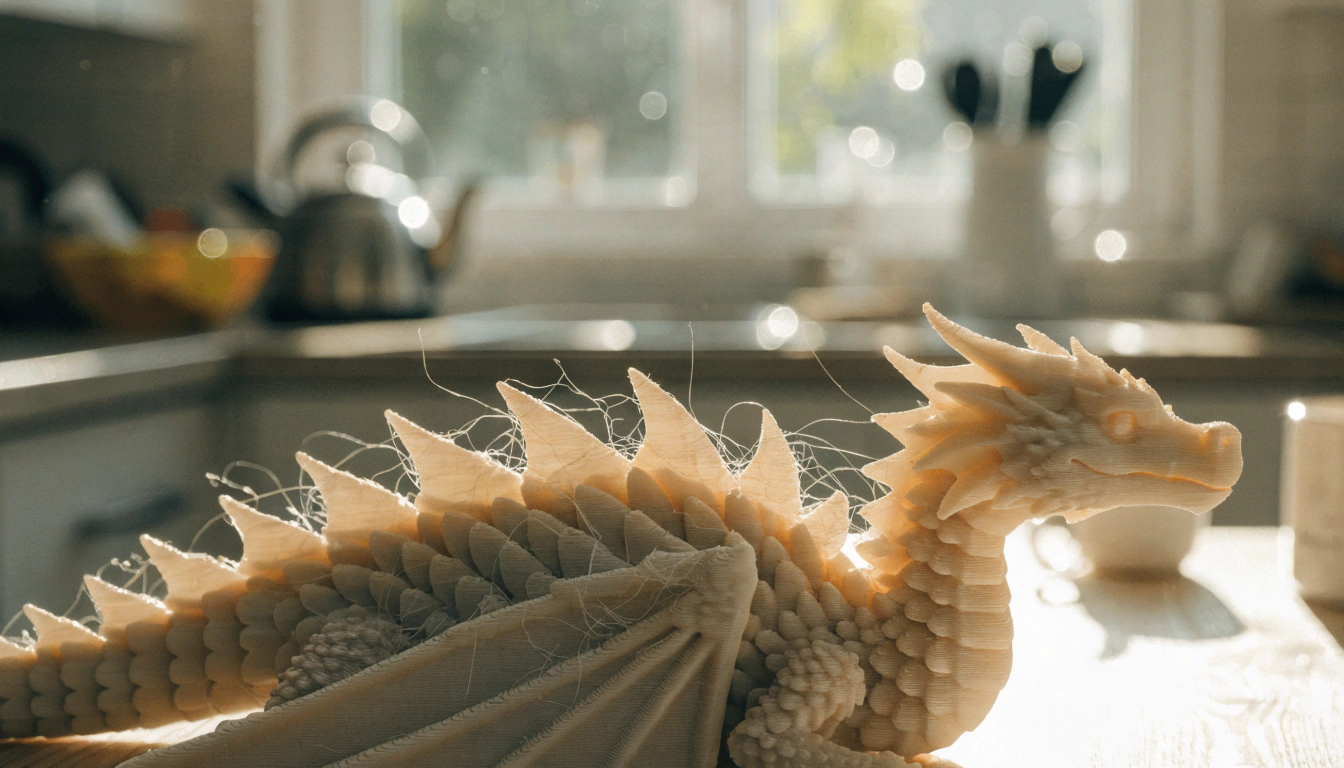
3D printing is one of the most effective low-frustration creative project formats available to families precisely because it reverses this dynamic. At AOSEED, the children who engage most deeply with the printer are often the ones who came from a background of discouraging open-ended craft experiences — because the printer closes the frustration gap automatically and leaves the creative decisions in exactly the bounded space where they can be made confidently.
|
100% Technical success rate — print always finishes |
1–2 Creative decisions per session — no paralysis |
Ages 4+ Full range, same success model |
15 min Fastest satisfying project on this list |
Why Low-Pressure Creative Projects Are Important for Kids

The frustration gap is real, measurable, and specific to the activity type. Understanding where it comes from is the first step to choosing activities that bypass it entirely.
The Frustration Gap — How Different Activities Compare
|
Activity Type |
Frustration Gap |
How 3D Printing Closes It |
|
Drawing or painting |
Child imagines a dragon. Hands produce a wobbly line. Gap is visible and discouraging. |
The printer produces the dragon. Child chose the model — it belongs to them. |
|
Clay / sculpting |
Child imagines a smooth sphere. Clay makes a lumpy one. Gap is tactile and frustrating. |
Print a sphere in 20 minutes. No hand skill required for the base form. |
|
Building with blocks |
Child imagines a castle. Blocks fall. The instability creates frustration cycles. |
Printed interlocking blocks connect reliably. The structure stands. |
|
Open-ended craft kit |
Child receives a bag of materials with no clear outcome. Decision paralysis sets in. |
The model has a defined finished state. The child knows when it is done. |
|
Jigsaw puzzle |
Child knows the answer exists but cannot find the next piece. Frustration builds. |
A print-in-place puzzle arrives solved. The child then learns to solve it. |
The APA's analysis of how frustration leads to creativity distinguishes between productive frustration — the kind that occurs when a child is just beyond their current capability and pushed to grow — and discouraging frustration — the kind that occurs when the gap between imagination and output is too large to bridge incrementally. 3D printing sits firmly in the productive category: the challenge is in the creative decision, not in the technical execution.
Benefits of Low-Frustration Creative Projects
The most important thing a child can build through creative projects is not technical skill — it is creative confidence. A child who has completed twenty successful making sessions will approach the twenty-first with different expectations than a child who has abandoned ten incomplete craft projects.
|
Session 1 → |
Session 3 → |
Session 6 → |
Session 10 → |
Session 15+ ✓ |
|
Press start, watch, hold finished object |
Browses library independently, chooses model |
Chooses and decorates in same session |
Plans next session before current one ends |
Modifies model before printing |
The progression from Session 1 to Session 15 happens naturally when every session produces a successful finished object. The confidence ladder above shows what changes across sessions — not the printer, but the child's relationship to the creative process. By Session 6, most children are planning their next project before the current one finishes.
Encouraging Independence in Creativity
The Child Mind Institute notes in its guide to how to help kids express creativity without overwhelming them that bounded creative decisions — where a child chooses between two or three specific options rather than inventing from scratch — are more likely to produce genuine creative satisfaction than fully open invitations. Choosing between a penguin and an elephant, or between blue and orange filament, is a genuine creative act. The bounded nature of the choice makes it possible, not limiting.
|
🎨 Open-Ended Craft |
🖨 Structured 3D Print Session |
|
|
Starting point |
Blank page or pile of materials — where do I begin? |
Model chosen, color selected, button pressed — clear start |
|
Success measure |
Subjective — is it 'good enough'? |
Objective — the print finishes. Object in hand. Done. |
|
Failure mode |
The art doesn't look like they imagined |
The print always completes — 100% technical success rate |
|
Creative decisions |
Too many — color, shape, theme, style, medium |
One or two — which model, which color, how to decorate |
|
End state |
Unclear — when is a drawing 'finished'? |
Definite — the object is removed from the plate and held |
Best Low-Pressure 3D Printing Projects for Kids
|
✅ What Makes a Project Low-Frustration Two criteria determine whether a project genuinely reduces frustration: (1) there is a clear, objective finished state — the child knows when it is done; (2) the technical success is guaranteed by the tool, not by the child's skill level. Every project below meets both criteria. The creative input is real, but the possibility of technical failure is removed. |
Mini Race Cars and Tracks

|
🚗 Mini Race Cars and Tracks Ages 5+ · 30–60 min |
|
A car that rolls the moment it cools is one of the most satisfying low-frustration projects available because the success is unambiguous. The child does not need to assemble it, fix it, or improve it — it works. The race track built from cardboard during the print wait extends the session into active floor play without adding any technical complexity. |
|
✅ Success signal: The car comes off the print plate with spinning wheels — ready to race immediately 🎨 Bounded choice: Choose between two car models. Choose the filament color. Find it: AOSEED Toy Library |
3D Printed Puzzles

|
🧩 3D Printed Puzzles Ages 6+ · ~30 min |
|
A print-in-place puzzle inverts the typical frustration pattern: instead of arriving in pieces that must be assembled before any play is possible, it arrives complete and ready to solve. The puzzle session has an objective success state — the puzzle is solved. Children can time themselves, compete, or simply experience the satisfaction of a logical challenge that has a correct answer. |
|
✅ Success signal: Print-in-place puzzle arrives assembled — child solves immediately with no assembly required 🎨 Bounded choice: Choose the puzzle type. Choose the filament color. Find it: AOSEED Toy Library |
Customizable Keychains or Magnets

|
🔑 Personalized Keychains and Magnets Ages 6+ · 15–20 min |
|
A name keychain is the fastest low-frustration creative project on this list. Under 20 minutes. Under 4 grams of filament. The personalization is built in — the child's name, in their chosen color, is the creative contribution. The finished object is unambiguously complete and unambiguously personal. It can be given away, which adds a second layer of satisfaction. |
|
✅ Success signal: Name printed in physical form — child holds something with their name on it within 20 minutes 🎨 Bounded choice: Choose the name or initial to include. Choose the color. Find it: AOSEED Toy Library |
3D Printed Animal Figurines

|
🦊 Animal Figurines and Flexi Animals Ages 4+ · 30–60 min |
|
Articulated flexi animals are specifically suited to children who find open-ended crafts frustrating because the model is visually complete before any decoration begins. The child does not need to 'make it look like an animal' — the printer already did that. The decoration phase that follows is genuinely creative and bounded: paint it in a way that pleases you. Nothing about the decoration can break the object. |
|
✅ Success signal: The animal's joints move immediately when it comes off the plate — no assembly, no assembly failure 🎨 Bounded choice: Choose the species. Choose the filament color. Find it: AOSEED Toy Library |
3D Printed Fidget Toys

|
✋ Fidget Toys and Sensory Objects Ages 5+ · 5–20 min |
|
Fidget toys are specifically satisfying low-frustration projects because the test of success is physical and immediate. The ring whistle makes sound when you blow through it. The gear fidget spins when you twist it. The spinning top spins when you flick it. Each of these functional tests provides an unambiguous success signal within seconds of the print cooling. There is no subjective 'is it good enough' — it either works or the printer failed, and the printer does not fail. |
|
✅ Success signal: Functional sensory feedback immediately on removal from plate — no testing required 🎨 Bounded choice: Choose the fidget type. Choose the color. Find it: AOSEED Toy Library |
Personalized Gift Items

|
🎁 Personalized Gift Items Ages 6+ · 15–60 min |
|
Gift-making projects add a second success dimension to low-frustration printing: not only is the object technically complete, but it has a recipient who will appreciate it. Children who find open-ended creativity stressful often find purpose-driven creativity much more manageable. The question is not 'what should I make?' but 'what would this specific person like?' — a bounded creative decision that produces a motivated session. |
|
✅ Success signal: Gift is finished when the print cools and the child chooses to decorate — both steps are clear 🎨 Bounded choice: Choose the gift type and recipient. Choose their favorite color. Find it: AOSEED Toy Library |
The AOSEED Toy Library organizes models by session type and age suitability with weekly additions. For parents seeking low-frustration projects specifically, the session-length filter and age range filter together produce the right starting point for any child on any given day.
How to Choose Low-Pressure Projects for Kids

The right project for a specific child on a specific day is the one that has the smallest gap between what the child imagines and what the activity will produce. Use the table below as an initial filter, then use the interest matcher to find the specific project.
Age and Complexity Matrix
|
Age |
Project Complexity |
Decisions per Session |
Success Rate |
|
Ages 4–6 |
Single-piece, no assembly |
One — color choice |
🟢 100% — printer always finishes |
|
Ages 7–9 |
2–3 parts, simple assembly |
Two — model + color |
🟢 High — clear step sequence |
|
Ages 10–12 |
Multi-part, app modification |
Three — model + color + tweak |
🟢 High — child has more control |
|
Ages 13+ |
Custom design + creation kit |
Four+ — full design ownership |
🟢 High when scoped correctly |
Age-Appropriate Designs
For the youngest children, the single most important rule is: one piece, no assembly. A print that comes off the plate as a complete, usable object — a spinning top, a chunky animal, a whistle — produces immediate satisfaction without any assembly risk. Assembly introduces a second opportunity for the frustration gap to open. For children under 7, removing assembly entirely removes the primary failure mode.
Matching Interests with Projects
|
Child's Current Interest |
Best Low-Frustration Project to Start |
|
|
🦕 |
Loves dinosaurs and animals |
Flexi dinosaur or articulated animal figurine — joints move immediately, no assembly needed |
|
🏎️ |
Loves speed and vehicles |
Pull-back race car in chosen color — rolls immediately, clear success signal |
|
🧩 |
Loves solving things |
Print-in-place puzzle — solve it the same session — arrives assembled, no assembly frustration |
|
🎁 |
Loves giving to others |
Personalized name keychain for a friend or family member — recipient is the creative anchor |
|
⚙️ |
Loves how things work |
Spinning top or gear fidget — functional physics toy — test of success is physical and immediate |
|
🏠 |
Loves building and designing |
Growing interlocking block collection — one per session — incremental growth, always one clear next piece |
Ensuring a Clear Outcome
The single most important criterion for a low-frustration project is that both parent and child can answer the question 'when is this done?' before the session starts. For 3D printing, the answer is always the same: when the print cools and the child holds the object. The AOSEED X-MAKER creation kits extend this to multi-session projects with the same clarity — each session has a defined component to complete (the chassis, the motor mount, the wheel assembly) and a visible finished state for that session's output.
Safety Considerations for 3D Printing with Kids

A low-frustration creative session is one where the parent's attention stays on the child's experience rather than on managing safety concerns. These four rules make that possible.
|
✓ |
PLA for all low-frustration projects: Non-toxic, plant-based, low odor, wide color range. The correct default for every age and every project type in this guide. No ventilation requirements. |
|
✓ |
PETG for active toys and fidgets: More durable and impact-resistant. Good for fidget mechanisms, race cars, and spinning tops that will be used actively every day. |
|
⚠ |
60-second post-print safety check: Surface check, sharp edge inspection, part-size verification for youngest children. Make it a named step in the session, not an adult task. |
|
✗ |
No resin or ABS for family sessions: Both require conditions that disrupt session calm and introduce adult concerns that shift attention away from the child's creative experience. |
Materials to Use
PLA is non-toxic, biodegradable, and produces minimal odor at standard home printing temperatures. These properties mean the creative session does not need to happen in a special room or require the parent to manage air quality concerns. The session can happen in the kitchen, living room, or study — wherever the family spends time — which itself reduces the friction of initiating a session.
Avoiding Small Parts and Sharp Edges
The post-print inspection is most effective when framed as part of the session rather than an adult concern. 'Let's check it together' invites the child to participate in a safety habit that they will eventually perform independently. For the youngest children, verify that no part is smaller than 25mm in any dimension before the object is played with.
Safety Features for 3D Printers
An enclosed printer is the most significant single safety upgrade for family use. The AOSEED X-MAKER JOY's fully enclosed design keeps every hot component inside a sealed chamber — child observes through the window, hands stay outside. For a child who benefits from calm, predictable environments, this physical clarity between 'watching space' and 'machine space' is an organizational feature as much as a safety one.
How to Make 3D Printing Fun for Kids

Low-frustration creative sessions stay low-frustration when the setup is as predictable as the session itself. These four approaches produce the most consistently positive experiences.
|
Start with a single-piece project |
The first session for a child who finds crafts stressful should end in under 20 minutes with a complete, usable object. Spinning top, ring whistle, name keychain — pick one. The first completed session is the reference point for every session that follows. |
|
One decision at a time |
Introduce decisions sequentially: first the model, then the color, then the decoration. Never ask all three questions at once. Sequential decisions feel like a conversation; simultaneous decisions feel like a test. |
|
Keep decoration supplies separate from printing |
The print session and the decoration session are different activities with different energy levels. Print first, let it cool, then bring out the decoration supplies. The transition is a natural break that prevents overstimulation. |
|
Describe what is happening during the print |
'Now it is building the base.' 'That is the wheel being added.' These narrations fill the print wait with purposeful engagement and turn passive waiting into active observation. Children who understand what is happening are less likely to become frustrated during the wait. |
Start with Simple, Structured Designs
Single-piece models with no assembly required are the right starting point for every child who has previously experienced discouraging craft sessions. The confidence built in sessions one through five — watching the object appear, holding it, making it work, deciding what to make next — is more valuable than any specific skill developed in those sessions.
Allow for Customization
Post-print decoration is where open-ended creativity is most safely introduced. The object already exists. It is already correct. Whatever the child paints or draws on it can only add to the object rather than potentially making it wrong. This context — creating on a completed object — is far less anxiety-producing than creating from a blank page, and it produces the same creative engagement.
Keep the Printing Space Organized
A predictable, organized creation station removes the environmental friction that often precedes low-frustration sessions becoming frustrated ones. Same printer location, same supply storage, same session flow every time. Children who know exactly where everything is and exactly what the session involves can initiate sessions independently — which is both the goal and the evidence that the approach is working.
Conclusion
The children who find open-ended crafts overwhelming are not less creative than children who thrive on blank canvases. They have a specific and addressable need: a creative context where the frustration gap is closed before the session starts.
3D printing closes that gap structurally. The printer handles the geometry. The child handles the decisions that matter — what to make, what color, who it is for, how to decorate it. Every session produces a finished object. Every finished object is evidence that the child is a maker.
Start with one of the six projects in this guide. Choose the one that matches the child's current interest. Pick the fastest completion time for the first session. Hold the finished object together.
For families choosing their first printer for a child who benefits from structured, low-frustration creative activities, AOSEED 3D printers for kids shows both current models with age guidance and what each one enables — useful for choosing the right starting point.
FAQs
What are low-frustration creative projects for kids?
Low-frustration creative projects are activities with three defining properties: a clear starting point, a defined finished state, and a technical success rate that does not depend on the child's existing skill level. 3D printing meets all three. The child makes creative decisions — which model, which color, how to decorate — inside a framework that guarantees a finished physical object at the end. The creativity is real; the possibility of technical failure is removed.
How does 3D printing help kids be creative?
3D printing shifts creativity from execution-dependent to decision-dependent. In traditional crafts, the quality of the finished object depends on the child's manual skill. In 3D printing, it depends on their creative choices. A child who chooses an elephant in blue and decorates it with yellow spots has made three genuine creative decisions. The fact that the printer executed the geometry means those decisions produce a result that matches what they imagined — which is what creative confidence is built on.
What are some simple 3D printing projects for beginners?
The five lowest-frustration starting points: a spinning top (5 minutes, functional immediately), a name keychain (15–20 minutes, personally meaningful), a ring whistle (20 minutes, makes real sound), a print-in-place puzzle (30 minutes, solves the same session), and an articulated flexi animal (30–60 minutes, moves immediately off the plate). All five produce a finished usable object in a single session with no assembly required.
Are 3D printers safe for kids?
Yes, when using PLA filament and an enclosed printer design. PLA is plant-based, non-toxic, and produces minimal odor at standard temperatures. An enclosed printer keeps the nozzle, heated bed, and moving belts inside a sealed chamber — children observe through the observation window and their hands stay outside. The post-print inspection is a 60-second safety check that becomes a session habit rather than a parental concern.
What are the benefits of 3D printing for kids?
Across regular sessions, 3D printing develops creative confidence, design decision-making, spatial reasoning, patience through print time, fine motor skill during decoration, and the emotional habit of approaching new projects with the expectation of success rather than the anxiety of possible failure. This last benefit is specifically significant for children who come from backgrounds of discouraging craft experiences.
How does frustration lead to creativity?
The APA identifies a productive form of frustration — controlled challenge that is just beyond the child's current capability — as a genuine driver of creative problem-solving. The key is that the frustration is bounded: the child can see a path through it. Contrast this with discouraging frustration — where the gap between imagination and output is too large to bridge — which shuts down creative engagement. 3D printing is specifically effective at staying in productive frustration territory because the technical ceiling is removed, leaving only the creative challenge.
How long does it take to 3D print a toy?
The fastest project on this list — the spinning top or dual chamber whistle — prints in under 5 minutes. Most beginner low-frustration projects finish in 20 to 45 minutes. A name keychain takes 15 to 20 minutes. A print-in-place puzzle takes around 30 minutes. A flexi animal figurine takes 30 to 60 minutes. Larger STEM builds and creation kit components run 45 to 90 minutes. The session length should be matched to the child's current patience window, not to the complexity of the ideal project.
Can kids design their own 3D prints?
Yes, and for children who have built creative confidence through structured low-frustration sessions, this is the natural next step. Guided design apps let children modify an existing model — adding a name, adjusting a size, changing a detail — before printing. This is genuinely design work without the blank-canvas anxiety of starting from scratch. By the time a child is ready to design from scratch using full CAD tools, they have already developed the creative patience those tools require.
Sources
- The Spruce Crafts — Low-Frustration Craft Ideas for Kids, Low-Frustration Craft Ideas for Kids, 2023.
- Mindful Schools — Mindful Creative Practices for Children, Mindful Creative Practices for Children, 2024.


Further reading

Thanksgiving STEM Activities for Kids: Table Projects and Simple Engineering Challenges

Halloween STEM Activities for Kids: Spooky Builds That Teach Real Science

STEM Crafts for Kids: Build, Decorate and Test