Calm Play Ideas: Low-Frustration Projects Families Can Make Together
There is a particular quality that the best family activities share. They do not require everyone to be in a good mood to begin. They are patient with interruptions. They produce something real at the end. And they leave the room feeling slightly calmer than it was when they started.
These are not easy conditions to meet. Most family activities either need sustained energy or produce frustration when something goes wrong. A 3D printing session, done at the right pace with the right project, meets all four conditions naturally.
The projects in this guide are chosen specifically for their calm play value — their ability to hold a child's focus without tipping into frustration. At AOSEED, the quietest, most sustainable family sessions are always the ones where the project was sized right for the child's current patience and the outcome was visible before they started. This guide is organized around exactly that principle.
|
Low frustration Primary design goal for every project |
5–90 min Session length — child chooses |
Ages 4+ All ages included |
Co-regulation Parent + child making together |
Why 3D Printing Is a Great Calm Play Activity for Families

|
What is 3D printing? |
Why is it a calm activity? |
|
3D printing is additive manufacturing — a digital file is read by a printer that deposits material in thin horizontal layers until a physical object appears. For families, the process matters more than the definition: the child makes creative choices, the printer builds the result, and the object is ready to play with in 20–60 minutes. |
✓ The printer runs quietly — no loud noise, no mess ✓ The session has a visible beginning, middle, and end ✓ The child produces a real object — not a screen outcome ✓ Sessions can be as short as 5 minutes or as long as 90 |
Research from the Harvard Center on the Developing Child confirms that building resilience through play requires activities that balance challenge with predictability — the child needs to be just stretched enough to stay engaged without being pushed into frustration. 3D printing sits in that zone consistently, because the difficulty of the activity is always adjustable: choose a shorter print, simplify the model, or start with just the color choice and let the machine do the rest.
Hands-On Creativity and Learning
A calm creative session is one where the child's hands are busy but their nervous system is not overwhelmed. 3D printing provides tactile engagement at every phase — loading the filament, pressing the start button, watching through the window, removing the cooled print, and decorating at the table. Each of these actions is brief, purposeful, and produces immediate visible feedback.
That feedback loop — action, visible result, next action — is what keeps calm play sessions from drifting into boredom or escalating into frustration. The child always knows what just happened and what comes next.
Fostering Problem-Solving Skills — Without Frustration
The Child Mind Institute notes in its guide to emotional regulation for kids that the most effective learning activities for children who struggle with frustration tolerance are those where the steps can be pared down when needed. 3D printing has this built in: a session that starts with just 'choose the color and press start' is just as valid as a full session that includes model selection, filament loading, and decoration. The steps can shrink to meet the child where they are.
A Screen-Light Alternative to Traditional Play
The most important thing about 3D printing as a calm activity is what it does not include. There is no scrolling, no comparison, no algorithm pushing the next stimulus. The printer runs. The child watches. Something is being made. This quality — the focused, purposeful quality of watching something appear — is one of the rarest sensory experiences a child can have in a home full of instant gratification.
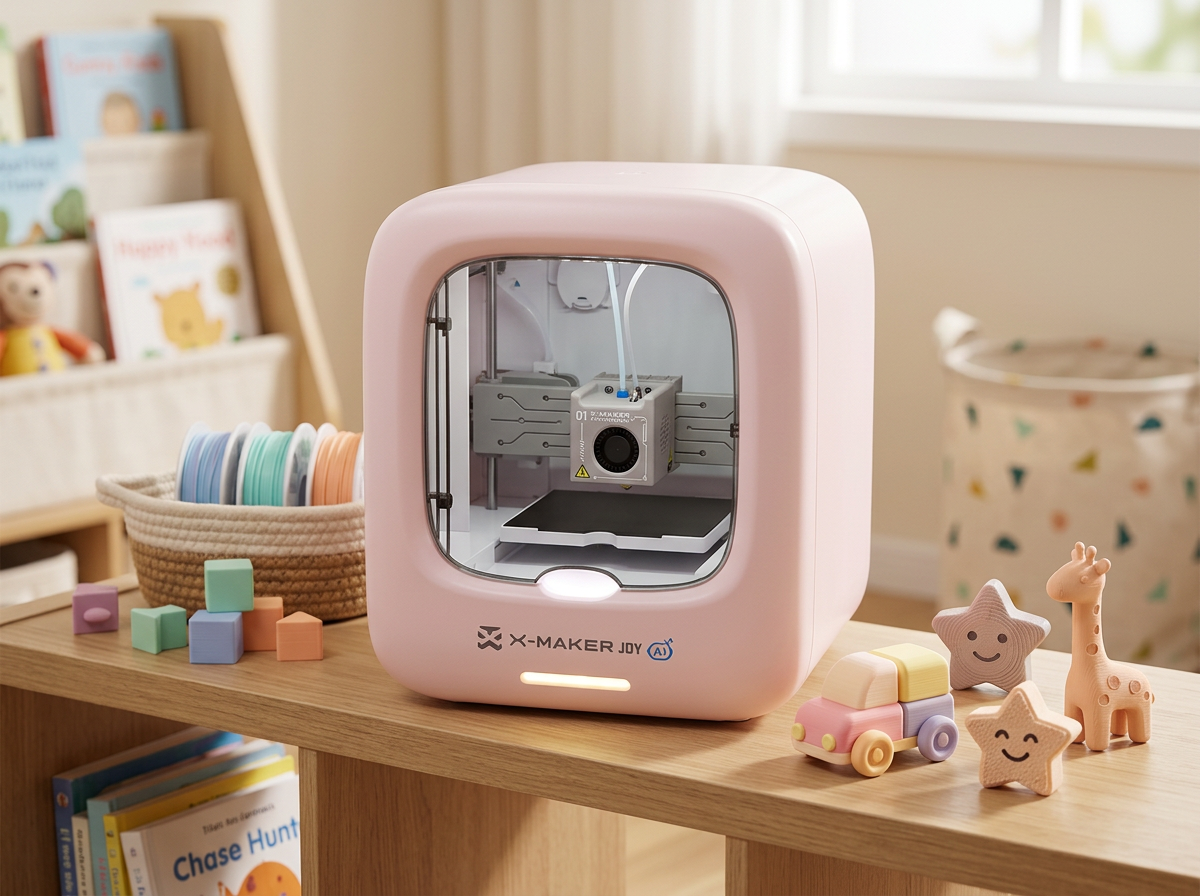
The AOSEED X-MAKER JOY's enclosed design keeps the whole process self-contained. The observation window is the focus. The door stays closed. The child's job is simply to wait, watch, and plan what they will do with the finished object — which is some of the most naturally creative thinking the session produces.
Calm Activity Rating — All 8 Project Types
|
Activity |
Calm Level |
Frustration Risk |
Repeat Value |
Best For |
|
Spinning top (3D print) |
🟢 Very high |
🟢 Very low |
🟢 High |
All ages, first sessions |
|
Whistle / ring toy |
🟢 Very high |
🟢 Very low |
🟡 Medium |
Ages 4–8, sensory play |
|
Print-in-place puzzle |
🟢 High |
🟡 Low–medium |
🟢 High |
Ages 6+, focused play |
|
Animal figurine + paint |
🟢 High |
🟢 Low |
🟢 Very high |
Ages 4–10, creative |
|
Building block set |
🟡 Medium |
🟡 Low–medium |
🟢 Very high |
Ages 5+, constructive |
|
Race car (print + race) |
🟡 Medium |
🟡 Low–medium |
🟢 High |
Ages 5+, competitive |
|
STEM gear model |
🟡 Medium |
🟠 Medium |
🟡 Medium |
Ages 8+, curious minds |
|
Creation kit RC car |
🔴 Active |
🟠 Medium–high |
🟢 Very high |
Ages 10+, longer sessions |
The calm level column rates how much the activity tends to lower arousal during the session. Low frustration risk means the activity rarely produces 'give up' moments. High repeat value means children return to the same session type across multiple weeks without losing interest.
Best 3D Printing Projects for Calm Family Pla

|
🌿 What Makes a Project Low-Frustration Three things keep a project in the calm zone: (1) the outcome is visible before the session starts — the child knows what they are working toward; (2) the print time matches the child's current patience window — start under 20 minutes for younger children; (3) the child has at least one real creative decision in every session — color, decoration, or model choice. |
Mini Race Cars and Tracks

|
🚗 Mini Race Cars and Tracks · Ages 5+ · 30–60 min |
|
Parent: Load the filament, confirm the model is correct, start the print. Sit beside the child at the window. Name what you see happening. |
|
Child: Choose the car color. Watch the layers appear. Plan where the race will happen before the print finishes. |
|
Calm note: The anticipation phase — watching the car appear layer by layer — is where the calm play value lives. The race at the end is the reward for patient waiting. |
3D Printed Puzzles and Brain Games

|
🧩 Print-in-Place Puzzle · Ages 6+ · ~30 min |
|
Parent: Set up the print, then sit with the child and take turns describing what the puzzle might feel like to solve — before the print finishes. |
|
Child: Choose the filament color. Watch the print. Solve the puzzle as soon as it cools. Try to beat yesterday's time. |
|
Calm note: A puzzle that the child helped make is a puzzle they approach differently — with more patience, more curiosity, and less willingness to give up. Model: Birdy Family 3D Art Project |
Board Games and Interactive Toys

|
🎲 Custom Game Tokens + Board Night · Ages 6+ · 15–40 min per piece |
|
Parent: Help design the token character using the app. Print during the afternoon. Set up the board game for after dinner. |
|
Child: Choose what their token looks like. Decorate it while the next one prints. Deal out cards for game night as the last token cools. |
|
Calm note: The child who made the game piece is more patient during the game — they have creative investment in the object, which transfers to the activity using it. |
Animal Figurines and Action Figures

|
🦊 Flexi Animal Figurine · Ages 4+ · 30–60 min |
|
Parent: Start the print. While it runs, ask the child which habitat the animal lives in. Draw it together on paper — the printed animal will live there. |
|
Child: Choose the species and color. Draw the habitat while waiting. Give the animal a name the moment it cools. |
|
Calm note: The drawing activity during the print window keeps the waiting period calm and purposeful. Children arrive at the decoration phase already invested in the character. Model: Birdy Family 3D Art Project |
Educational STEM Models

|
⚙️ Gear Mechanism / Simple Machine · Ages 8+ · 30–60 min |
|
Parent: Start the print. Ask one question about how gears work — not a test, a genuine question. Wait for the answer together as you both watch. |
|
Child: Watch the gears print. Turn the mechanism by hand the moment it comes off the plate. Ask the parent what they notice. |
|
Calm note: STEM models work as calm play when the child's role is observer and experimenter rather than student. The gear that turns another gear teaches without explaining. |
Building Blocks and Construction Sets

|
🏗️ Growing Block Collection · Ages 5+ · 25–45 min per piece |
|
Parent: Print one new block each session. Store them in a visible collection. Let the child see the set grow week by week. |
|
Child: Choose each new block's color and shape. Add it to the collection. Build with all blocks collected so far. |
|
Calm note: The incremental growing collection is one of the most quietly motivating calm play structures available — each session adds one piece to something the child can see becoming more complete. |
The AOSEED Toy Library includes all six categories above with session-length filters — making it straightforward to find a model that fits the child's available patience window on any given day. Weekly additions mean there is always a new option without needing to search outside the ecosystem.
How to Choose the Right 3D Printing Projects for Your Child

Matching a calm play project to the child's current state is the most important variable. The same child who successfully manages a 60-minute STEM build on a calm Sunday will not manage the same project on a difficult Tuesday after school. The project should flex to the child's state, not the other way around.
|
Current state: calm |
Current state: restless |
Current state: frustrated |
Current state: curious |
Current state: tired |
|
Any project — match to interest |
Under 20 min — spinning top or whistle |
Colour choice only — let machine do rest |
STEM model or puzzle — feed the question |
Animal figurine — quiet colour + watch |
For Kids Who Love Cars
Vehicle projects are naturally engaging for kinetic, action-oriented children, but they can also be among the calmest sessions when framed correctly. A pull-back car that prints in 45 minutes gives the child 45 minutes of anticipation. The race at the end is the payoff for the patient session. If the child is struggling with patience that day, print a spinning top first — same interest area, shorter session — and save the car for the following day.
For Animal Lovers
Animal prints are the most reliably calm project category for children who find uncertainty difficult. The animal has a known visual identity before the print starts. The child can hold the image in mind throughout the session. When the print comes off the plate, it looks like what they expected — which is a small but meaningful experience of the world behaving as anticipated. Follow the print with decoration time: paint the animal, give it a name, place it in its drawn habitat. The session's calm extends naturally into open-ended imaginative play.
For STEM-Focused Kids
STEM models are best for children who regulate well through intellectual engagement — the curiosity about how something works overrides the restlessness of waiting. For these sessions, the wait is part of the activity: predict what will happen, observe whether it does, adjust the prediction. The AOSEED X-MAKER creation kits extend this into multi-session engineering builds — a chassis, a motor mount, a wheel assembly — across several calm Sunday mornings. The incremental nature of the build makes each session feel like progress rather than starting from scratch.
For Kids Who Enjoy Customization
|
🔤 Name Projects |
🎨 Color Decoration |
📐 Size Choice |
🌍 Habitat Building |
|
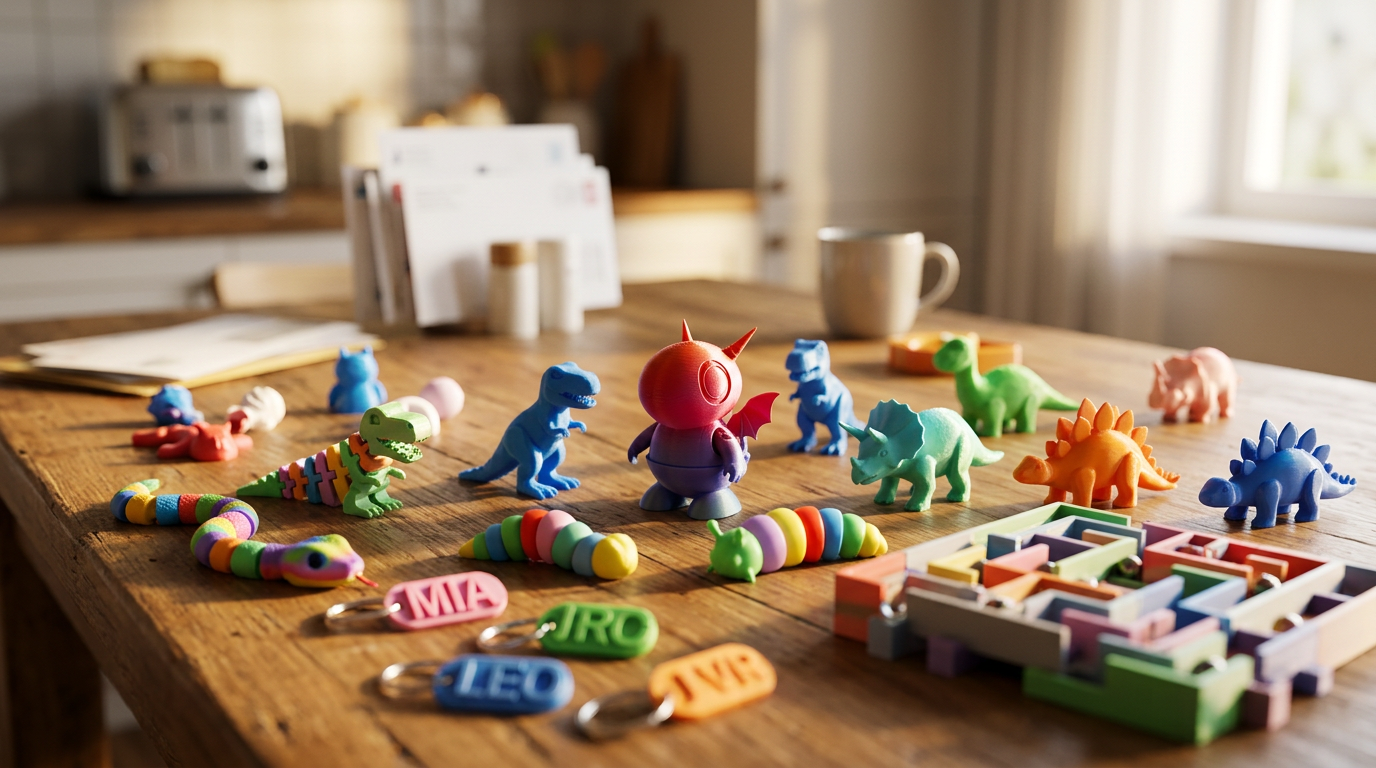
Personalized keychain or name tag. One decision — the name — with a beautiful visible result. Best for children who want full ownership. |
Print in white or light PLA, decorate after with paint markers. Two distinct calm phases: watching + creating. |
Let the child choose between two printed sizes in the app. Bounded decision, clear consequence, visible result. |
Print the animal, draw the habitat, place the animal inside. Three connected calm sessions that build on each other. |
Safety Considerations for 3D Printing Calm Play

Safe materials and an enclosed printer design are the two things that let a calm session stay calm. One unexpectedly sharp edge or one moment of hot nozzle proximity is all it takes to end an otherwise peaceful afternoon.
|
✓ |
PLA for all calm play sessions: Plant-based, non-toxic, low odor, wide color range. The right default for every project in this guide. No ventilation requirements means the session can happen in any family room. |
|
✓ |
PETG for active toys and competitive play: Higher impact resistance and durability. Good choice for race cars and puzzle mechanisms that will be used daily. Same non-toxic profile as PLA with better performance. |
|
⚠ |
Make the inspection part of the session ritual: A brief surface check before decoration time is a predictable, calm transition step. Run a finger along surfaces, sand any rough edges. For children under 3, verify no part under 25mm. |
|
✗ |
No resin or ABS in calm family sessions: Resin requires chemical handling that disrupts session calm immediately. ABS requires ventilation. Neither belongs in a session designed around low-frustration predictability. |
Best 3D Printing Materials for Kids
PLA is specifically the right material for calm play sessions because it removes a layer of concern from the parent's mind. Non-toxic, low-odor, and plant-based — the parent can be fully present with the child during the session without managing environmental worry about material safety. That parent-present calm is itself one of the most regulating inputs a child can receive during a making activity.
Avoiding Sharp Edges and Small Parts
The post-print inspection is most effective when it is part of the session ritual rather than an adult task the child watches. Invite the child to help: 'Let's check it together before you decorate it.' This brief inspection step teaches safety habits while keeping the child engaged and the session moving forward.
Why an Enclosed 3D Printer Is Safer for Calm Sessions
An enclosed printer is not just a physical safety feature — it is a session management tool. The clear physical boundary between child and printer means the parent does not need to maintain a separate supervision mode during the print. Both parent and child can sit together, watch through the window, and talk about the print in progress. The printer's enclosure makes the session fully shared rather than half-monitored.
How to Make 3D Printing a Reliably Calm Activity for Kids

The five most common reasons a 3D printing session stops being calm and starts being difficult are all preventable with small setup choices made before the session begins.
|
1 Match print time to mood |
2 Decide the project before the session |
3 Keep the decoration phase always ready |
4 Offer only two options at each decision point |
5 Celebrate the process, not just the object |
|
A restless child needs a 5-minute whistle print, not a 60-minute car. Judge the session length by the child's state that day, not by the project you planned. |
Decision fatigue turns calm sessions into difficult ones. Browse the Toy Library the evening before. The model and color are chosen before the printer is approached. |
Paint markers and stickers in the same spot every session. When the print cools, the next phase starts immediately with no hunting for supplies. |
'This one or this one?' is a calm-play question. 'Pick anything from the whole library' is not. Bounded choices lower decision stress for children and parents equally. |
'You watched the whole print' is worth saying. The habit of patient waiting is being built, and naming it helps the child recognize it in themselves. |
Start with Simple, Structured Projects
The first calm play session should end with a child holding a finished object before anyone is tired. A spinning top prints in under 5 minutes. A ring whistle prints in under 20. These quick wins establish the session pattern — and the child's memory of a completed session is the most powerful motivator for the next one.
Encourage Creativity Through Customization
Post-print decoration extends the calm quality of the session into a different creative mode. The printing phase is watching and waiting — calm, focused, low-decision. The decoration phase is active, expressive, and child-directed. Together they cover the full calm play spectrum: regulatory waiting followed by free creative expression. Both phases are valuable and both belong in the session.
Create a Dedicated Printing Space
|
1 |
Place the printer at the child's eye level The session is naturally calmer when the child can see the observation window without being lifted. Eye-level means independent observation without adult involvement in the watching phase. |
|
2 |
Keep one 'next project' card visible A small card or note with the next session's chosen project removes the gap between sessions — the child knows what they are working toward, which sustains engagement between sessions. |
|
3 |
Establish a calm ritual before each session Two slow breaths together before pressing start. One deliberate color choice. A brief description of what the object will be used for. These small rituals frame the session as intentional, not impulsive. |
|
4 |
Maintain the decoration station consistently Same supplies, same location, same ritual for cleaning up after. The predictability of the decoration phase is part of what makes it reliably calming rather than occasionally chaotic. |
|
5 |
End every session with a display moment Place the finished object somewhere visible. Name it. Tell someone else in the household about it. The social recognition of having made something provides closure and builds the confidence needed to start the next session. |
Conclusion
A calm play idea is not just an activity without conflict. It is an activity that creates the conditions for connection — between parent and child, between intention and result, between a child's current state and the steady rhythm of something being made.
3D printing meets these conditions when it is approached with the right project, the right session length, and the right level of creative ownership for the specific child on the specific day. Start with the spinning top. Watch it appear. Race it at the kitchen table. Notice the room.
Then ask what they want to make next.
For families exploring calm, low-frustration maker activities, AOSEED 3D printers for kids shows both current models with age guidance — useful when choosing the printer that best fits the calm session structure in this guide.
FAQs
What are calm activities?
Calm activities are those that lower arousal, support focus, and produce a sense of completion without requiring sustained high energy. The most effective calm activities for children have predictable outcomes, involve physical engagement with materials, and have a natural start and end. 3D printing qualifies on all three: the outcome is visible before the session starts, every step is hands-on, and the finished object signals clear completion.
How do you calm kids down after recess?
Brief hands-on activities with visible, controllable outcomes are among the most effective transition tools. A child who can immediately focus on choosing a filament color, pressing a start button, and watching a 5-minute print shifts from high arousal to quiet focus more reliably than a child who is asked to sit still and be calm. The activity does the transitioning — the child does not have to do it alone.
What activities calm you down?
Activities that calm children tend to share three qualities: predictable sensory input, a clear end state, and a personal decision embedded somewhere in the process. 3D printing provides all three. So does baking, painting, and building with familiar materials. The key is that the activity is well-matched to the child's current state — a child who needs to wind down benefits from a shorter, quieter session rather than an ambitious project.
What are 10 ways to calm down?
Ten reliable calm-down approaches for children: slow deliberate breathing, a focused hands-on task with visible progress, sensory engagement with a known texture, a predictable routine that the child has done before, a brief walk, a quiet five-minute making activity, choosing something from a limited set of options, watching something being built (including watching a 3D print through an observation window), a gentle conversation with an adult who is also calm, and access to a familiar object that the child finds comforting.
What is 3D printing?
What is 3D printing in family terms: a printer reads a digital file and deposits material in thin horizontal layers until a physical object appears. The process takes between 5 minutes and several hours depending on the object's size. For family use, the relevant version is FDM printing — which uses spools of plastic filament, requires no special ventilation with PLA material, and produces objects children can hold, play with, and decorate immediately after the print cools.
What are calm activities for preschoolers?
For preschool-aged children, the most effective calm activities are those with strong sensory engagement and very brief active phases. A 5-minute spinning top print, followed by watching it spin and then decorating it with one color of marker, covers the full calm play session for a 3 to 5-year-old. The color choice is the creative decision, the watching is the regulatory phase, and the spinning is the play reward. All three fit within a preschooler's available patience window.
What are the 5 main relaxation techniques?
For children, five consistently effective relaxation approaches are: slow deliberate breathing (deep breath in, slow exhale — the physiological basis that HealthyChildren.org recommends as a foundation for all calm-down work), progressive muscle release, sensory grounding (naming what you can feel, see, and hear), purposeful slow movement, and focused low-demand creative tasks. 3D printing session watching — sitting still and observing the printer through the window — functions as a form of focused sensory attention that draws on the same mechanism as the last category.
How can structured 3D printing projects help kids?
Structured 3D printing projects with predictable steps and clear outcomes support children's calm regulation by giving them exactly what the research on low-frustration activities identifies as most important: knowing what comes next, having a real decision that belongs to them, and experiencing a reliable relationship between their effort and the result. A child who has completed ten structured printing sessions has practiced these regulatory habits ten times — which is the kind of repetition that builds lasting emotional skill.
Sources
- HealthyChildren.org — Just Breathe: The Importance of Meditation Breaks for Kids (AAP), Just Breathe: The Importance of Meditation Breaks for Kids, 2023.
- Harvard Center on the Developing Child — Building Resilience Through Play, Building Resilience Through Play, 2022.
- Child Mind Institute — Emotional Regulation for Kids: How to Help, Emotional Regulation for Kids: How to Help, 2025.
- ZERO TO THREE — Your Calm Is Their Calm: Co-Regulation Strategies for Infants and Toddlers, Your Calm Is Their Calm: Co-Regulation Strategies, 2025.
- Autodesk — What is 3D Printing? (additive manufacturing, plain language definition), What is 3D Printing, 2026.
- Tinkercad — Birdy Family 3D Art Project (all-ages family 3D art session), Birdy Family 3D Art Project, 2021.
- PBS KIDS for Parents — How To Make A Glitter Jar To Help Kids Stay Calm, How To Make A Glitter Jar To Help Kids Stay Calm, 2023.


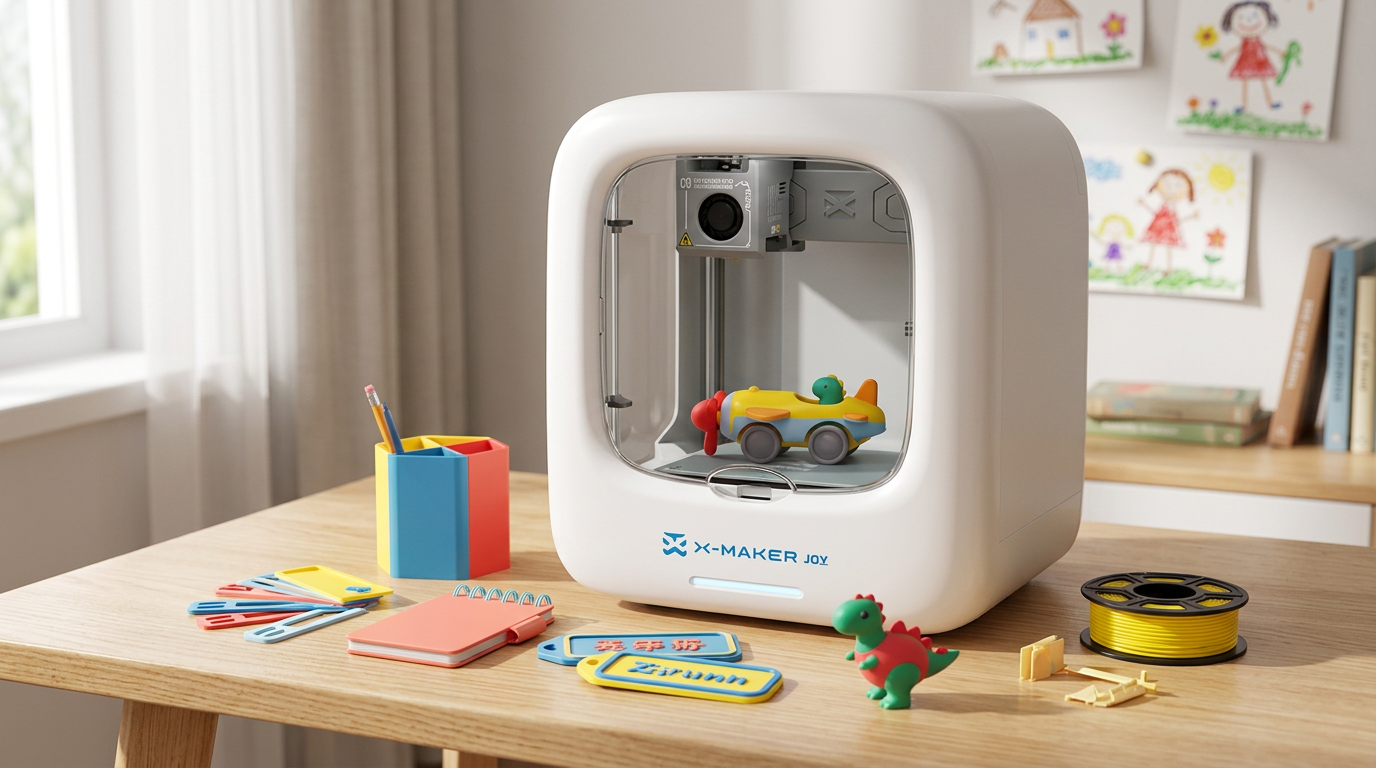
Further reading
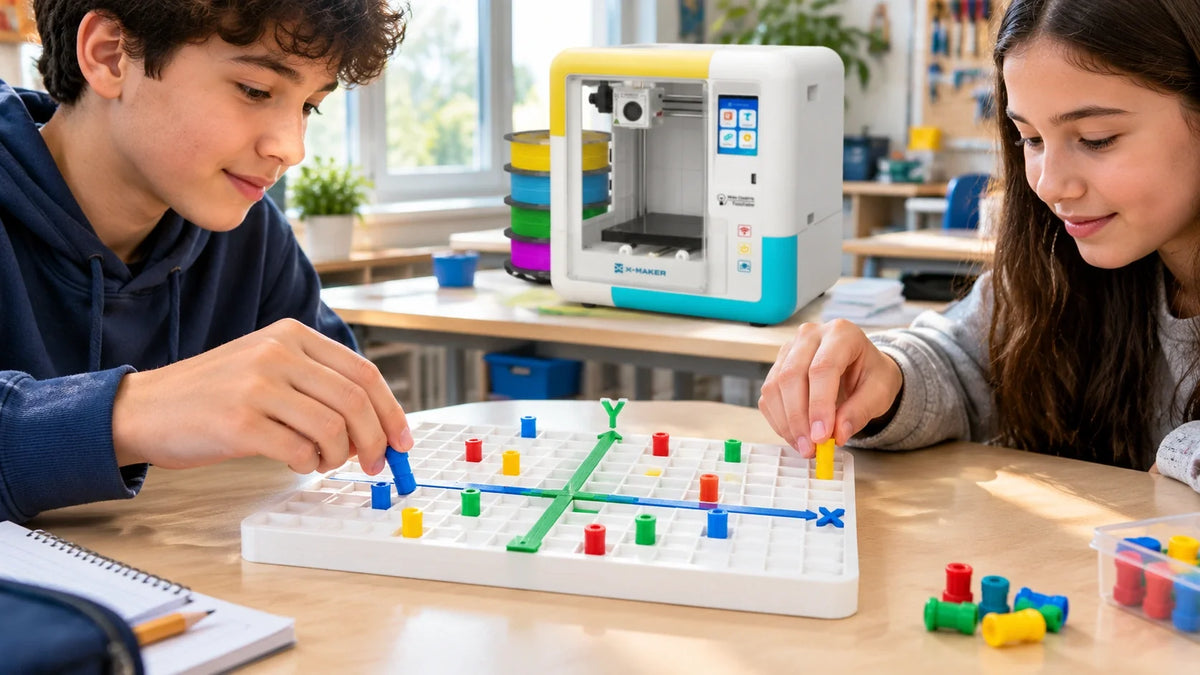
3D Printed Cartesian Plane Lesson Plan: Math and Technology Integration for Grades 5 to 8
STEM Education for Kids: What It Means and How Parents Can Support It at Home
Small Gifts for Kids: Party Favors and Little Presents Kids Can Make