STEM Education for Kids: What It Means and How Parents Can Support It at Home
A paper airplane that keeps veering left. A block tower that falls at the same height every time. A kid asking why the ice in their juice melted faster than the cube on the counter.
Small questions. Real ones.
That is STEM. Most children do it long before anyone gives it a name.
STEM stands for science, technology, engineering, and math. At school it can look like a formal program. At home it looks like questions, small tests, and second attempts. Parents do not need an engineering degree to support it. They need a few good questions, a box of cardboard, and the patience to let a design fail once.
|
QUICK ANSWER STEM education for kids connects science, technology, engineering, and math through problems a child can actually test. The loop is short: ask, predict, build, test, change one thing, test again. Start with play as early as age 2. Add measuring and simple records around 5 to 7. Hand over more of the planning from about age 8. |
STEM at a glance, by age
|
Age |
What STEM looks like |
Try this first |
Your role |
|
2 to 4 |
Pouring, stacking, sorting, rolling things down ramps |
Which cup holds more water? |
Name what they notice |
|
5 to 7 |
Predictions, simple measuring, drawings of results |
Sink or float with 8 objects |
Ask for a guess before each test |
|
8 to 10 |
Repeated trials, tables, simple coding, limits on materials |
A paper bridge that holds coins |
Let them plan the test |
|
11 and up |
Variables, data, digital design, longer projects |
Design a part, print it, test it |
Review their evidence, not their answer |
What Is STEM Education for Kids?
 STEM education teaches science, technology, engineering, and math, and it teaches kids to connect them. The four subjects keep their own methods. What changes is the reason to use them.
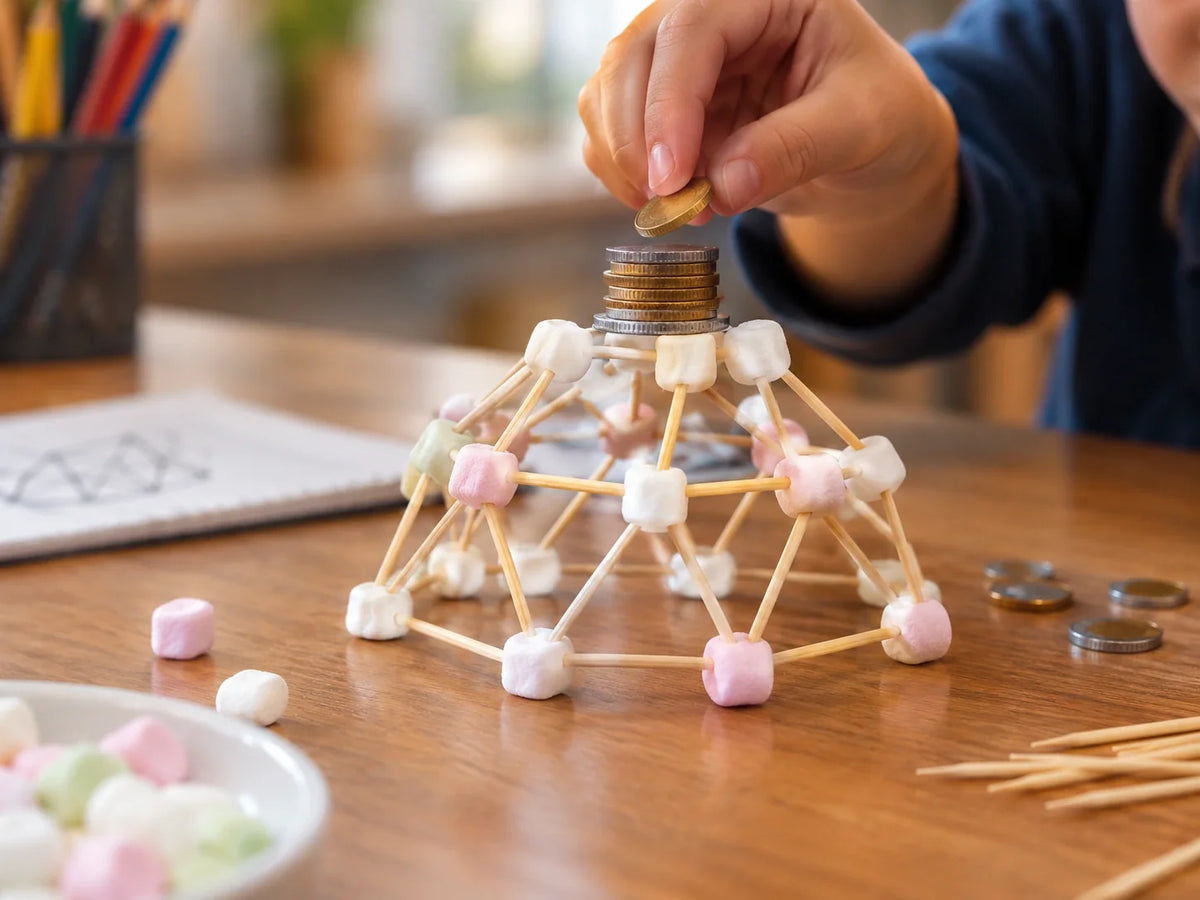
Take a paper bridge. A child tests how folded paper behaves, designs a span between two books, measures the gap, and counts coins until the middle sags. Science, engineering, and math in about 20 minutes. No worksheet needed.
Those links do not appear on their own. A National Academies review of integrated STEM programs found that putting several subjects into one activity does not guarantee a child sees how they relate. Someone has to make the connection visible. Usually that is an adult asking one good question at the right moment.
|
Letter |
What it means for a child |
Kitchen table example |
Question to ask |
|
Science |
Noticing, questioning, testing with evidence |
Why does one ice cube melt faster? |
"What do you think will happen?" |
|
Technology |
Tools people make to solve problems, from scissors to apps |
Using a timer to race two toy cars |
"What problem does this tool solve?" |
|
Engineering |
Designing something that has to work within limits |
20 cups stacked to stand for 30 seconds |
"What would make it stronger?" |
|
Math |
Measuring, counting, patterns, comparing results |
Measuring five paper airplane flights |
"Which number tells you the most?" |
STEM vs. STEAM Education
STEAM adds the arts. The STEAM version of the bridge project might ask a child to make it look like a bridge from a favorite story, or to sketch it before building. Neither is better. STEAM simply makes drawing, music, or storytelling an explicit part of the task, and many families end up doing both without planning to.
|
WORTH KNOWING A craft is not automatically a STEM activity. If the child copies every step and the result is fixed in advance, nothing gets tested. Add one prediction or one redesign and the same craft becomes an investigation. |
Why STEM Education Matters for Kids
 A good STEM task rarely asks a child to recall a fact. It asks them to decide what to try, look at what happened, and change course. NSTA's position on STEM teaching describes the approach as interdisciplinary and experiential, built around relevant problems rather than isolated drills.
That shows up in five specific ways.
It Builds Problem Solving Through Testing
A tower keeps falling. Base too narrow? Top too heavy? A child who changes one thing and checks the result is reasoning from evidence instead of guessing. That habit carries over to homework and to a loose bike chain. Most things.
It Turns Failure Into Information
The paper bridge collapses at seven coins. Fine. Now there is a number to beat and a visible weak spot in the middle.
Kids who get used to this stop reading a failed attempt as "I'm bad at this." They read it as data, which is the shift psychologist Carol Dweck describes as a growth mindset.
It Gives Math a Reason to Exist
Fractions make sense when a recipe has to be halved. Measuring matters when a cardboard roof has to fit a model house. STEM hands kids the problem first. Numbers show up later, as tools.
It Makes Technology a Tool, Not a Habit
Watching a video and coding an animation both use a screen. Only one asks the child to make decisions. That gap matters. STEM pushes screen time toward making things: photographing plant growth, graphing race times, designing a part on a tablet.
It Opens Doors Later
STEM is not only career prep. Most kids who build paper bridges will not become engineers.
The numbers still matter to parents. Bureau of Labor Statistics projections put STEM job growth at 7.4% from 2025 to 2035, about double the 3.5% expected across all occupations. The 2025 median STEM wage was $106,360, against $49,050 outside STEM.
When Should Kids Start STEM Education?
There is no start date. A toddler who drops a spoon off the high chair six times is running an experiment. That counts.
A 2022 National Academies report on preschool and elementary science concluded that young children can learn sophisticated ideas and take part in real science and engineering practices when the work fits their stage. The same report noted that many elementary classrooms give science about 20 minutes a day, a few days a week. So home matters. A lot of the extra practice happens there.
|
Stage |
What they can handle |
Good starter activity |
Step back when... |
|
Toddlers and preschool (2 to 4) |
Sensory play, sorting, simple cause and effect |
Toy cars on ramps at two heights |
They start predicting which car wins |
|
Kindergarten and 1st grade (5 to 7) |
Predictions, measuring with familiar units, picture records |
Two paper bridges: which holds more coins? |
They can explain why one was stronger |
|
Elementary (8 to 10) |
Several trials, tables, material limits, unplugged coding |
Balloon car with measured runs |
They plan the test without prompting |
|
Tweens (11 and up) |
Variables, averages, digital design, longer builds |
Design a part, print it, test it, revise it |
They argue from their own data |
|
FOLLOW READINESS, NOT AGE Two seven year olds can look very different at the same table. One redesigns a marble run for an hour. The other is done in ten minutes. Start with whatever holds attention. When the task feels easy, add one limit, one measurement, or one more round of testing. |
What STEM Skills Can Kids Develop?
Mostly thinking habits. Code and equations come later, and they come easier once these are in place.
|
Skill |
What it looks like |
Prompt that builds it |
|
Observation |
Noticing texture, timing, color, change |
"What exactly do you see?" |
|
Prediction |
Committing to a result before the test |
"What will happen, and why?" |
|
Designing |
Choosing materials and shape to meet a goal |
"What does it need to do?" |
|
Measuring and data |
Counting coins, timing runs, filling a simple table |
"What does your data show?" |
|
Logical reasoning |
Spotting patterns, checking if an answer makes sense |
"How did you decide how many?" |
|
Coding logic |
Writing ordered steps and finding the broken one |
"Which instruction went wrong?" |
|
Persistence |
Testing a third or fourth version |
"What did that test tell you?" |
|
Communication |
Explaining a design and its results |
"How would you teach a friend to build it?" |
None of these grow from one volcano experiment. They grow from repeated rounds where the child makes more of the decisions each time.
How Parents Can Support STEM Learning at Home
You do not have to be the expert. Think mentor, not teacher.
A parent who says "I don't know. How could we find out?" does more for a child's STEM thinking than one who explains everything. The question keeps the child in charge of the problem.
Ask Open Questions, One at a Time
Questions with one right answer have their place. Open ones show you how a child is thinking. Pick one of these, then wait:
• "What do you notice?"
• "What do you think will happen?"
• "How could we test that?"
• "What changed from last time?"
• "What would you try differently?"
Five questions in a row feels like an interview. One question and a pause feels like interest.
Get a Prediction Before the Test
 Before anything drops, rolls, or sinks, ask for a guess and the reason behind it. The guess can be wrong. That is fine. A surprise usually produces a better follow up question than a correct guess does.
Let the Weak Design Fail
You can probably see why the tower will tip. Let it. Unless safety is involved, stay out of the way.
A falling tower teaches something no explanation can match. Then ask for the next move: "Where did it start to lean?"
|
WHEN TO STEP IN Step in for safety, not for speed. Supervise anything hot, sharp, or electrical, and keep young children away from taking apart powered devices. If frustration stops being useful, simplify one part of the problem. Leave the core challenge for the child. |
Start With What They Already Love
A dinosaur fan can measure model dinosaurs and build habitats. A car kid can race toys down ramps at three angles. Sports bring angles and statistics; baking brings ratios and heat. Find the STEM question inside the interest instead of pitching a random experiment.
Praise the Process, Specifically
"Great job" tells a child nothing. "You tested three versions before picking that one" tells them exactly what mattered. The tower ends up in the recycling bin. The habit stays.
Model It Yourself
When a lamp won't turn on, think out loud. The bulb? The switch? The outlet? Checking possibilities in order shows kids that adults investigate, guess wrong, and revise too.
8 Easy STEM Activities for Kids at Home
 None of these need a kit. Keep it cheap. Each works better with a prediction at the start and a second attempt at the end. The redesign is the step families skip most often, and it is where most of the learning happens.
|
Activity |
Supplies |
Time |
STEM focus |
Level it up |
|
1. Paper airplane flight test |
Paper, tape measure, tape start line |
20 min |
Measuring, variables |
Change one fold, fly each design 3 times |
|
2. Sink or float |
Tub of water, 8 to 10 household objects |
15 min |
Prediction, patterns |
Shape foil into a boat that carries coins |
|
3. Tallest tower |
20 cups or index cards |
15 min |
Structure, balance |
Must stand 30 seconds with fewer pieces |
|
4. Paper bridge |
One sheet of paper, 2 books, coins |
20 min |
Engineering, counting |
Widen the gap between books |
|
5. Nature observation walk |
Notebook, pencil |
30 min |
Observation, sorting |
Return to the same spot next week |
|
6. Balloon car |
Cardboard, straws, bottle caps, skewers, balloon |
45 min |
Forces, motion, design |
Measure distance, fix the veer |
|
7. Unplugged coding grid |
Floor tape, a toy as the target |
15 min |
Sequencing, debugging |
Add a rule: right turns only |
|
8. Design your own challenge |
Whatever solves the problem |
Open |
Full design process |
Write success criteria before building |
How to run any of them: get a prediction, test and record one number, change one thing, test again, then have your child explain what changed.
How to Turn Play Into a STEM Challenge
 Free play does not always need a goal. When a child is already building, though, a few added questions turn it into engineering.
The National Academy of Engineering's review of K-12 engineering puts design, testing, and redesign at the center of how children learn the subject. At home it runs as a simple loop.
|
Step |
What the child does |
What you can say |
|
1. Define the problem |
States a goal with a limit |
"Can you build a straw tower that holds this ball?" |
|
2. Brainstorm |
Lists or sketches a few ideas |
"What's another way it could work?" |
|
3. Plan |
Draws or describes the chosen idea |
"Why did you pick that one?" |
|
4. Build and test |
Builds, then checks it against the goal |
"Does it do what it needed to?" |
|
5. Measure |
Counts, times, or measures the result |
"How many coins before it bent?" |
|
6. Improve |
Changes one or two features only |
"Which one change is worth trying?" |
|
7. Explain |
Tells the story of each version |
"What did version one teach you?" |
The paper bridge, twice. Version one is a flat sheet. It might hold 4 coins and sag in the middle. Your child folds the sheet like an accordion and tests again. Version two can hold 20 or more.
Nobody had to explain beam strength. The coins did.
Where 3D Printing Fits Into STEM at Home
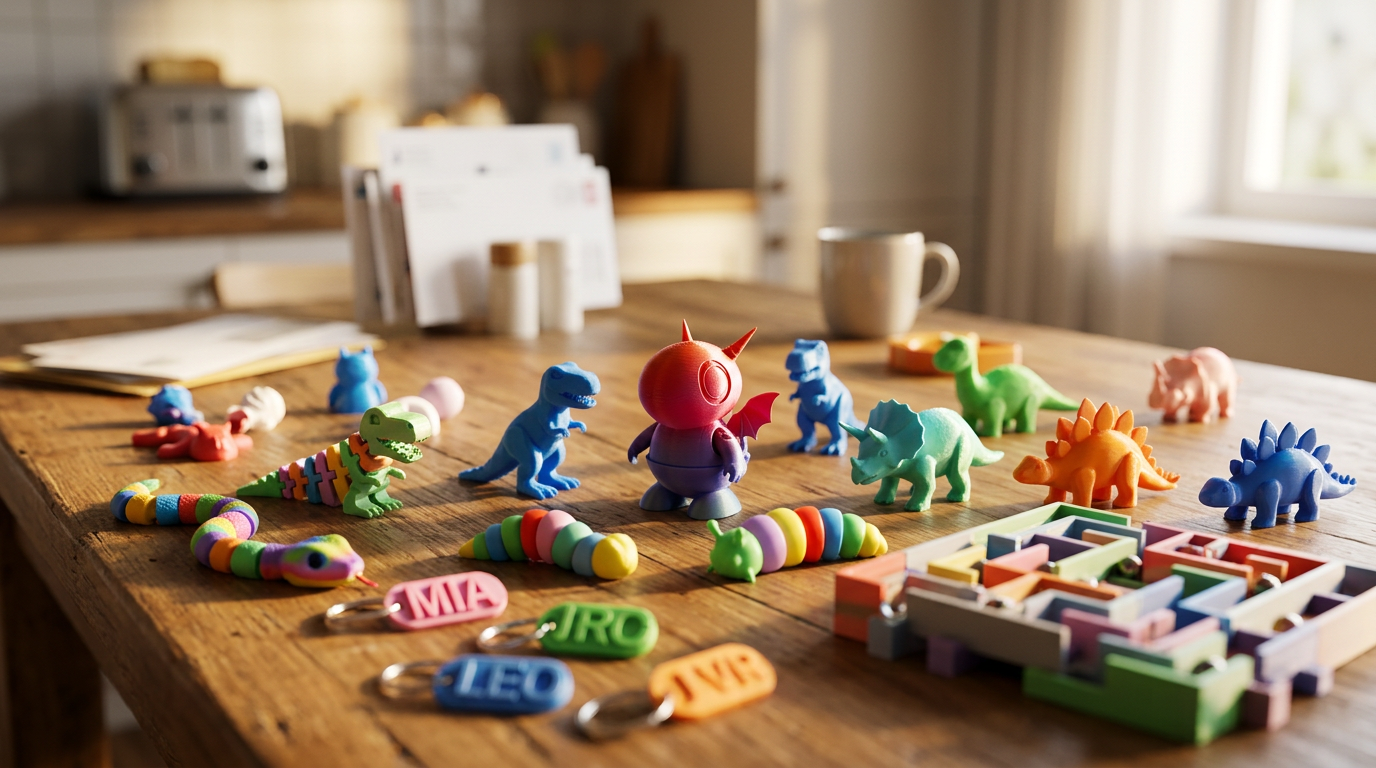
Cardboard and tape carry a child a long way. At some point many kids want parts that scissors cannot make: a wheel that spins true, a gear with even teeth, a bridge they can reprint three times with one change each time.
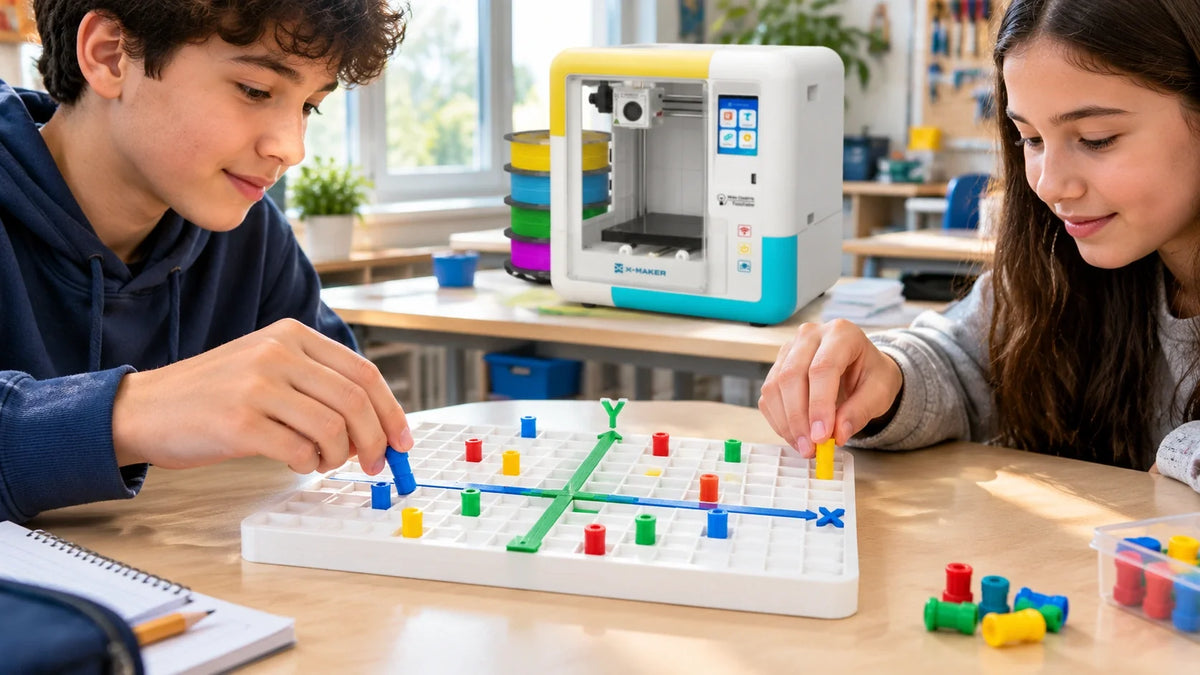
That is where a 3D printer built for kids fits. It does not replace the design loop. It shortens it. Same steps, faster rounds. A child designs on a tablet, prints, tests, spots the weak point, edits the file, and prints version two. The math comes along too: millimeters, scale, angles, print time.
The AOSEED app is built around that loop in three stages. Kids start with AI assisted ideas and simple edits to existing models. Next come themed mini apps that feel like games and let kids design toys with no prior experience. Then beginner 3D design tools open up more custom builds. The model library lists 8,000+ printable models, so a finished project is rarely the last one.
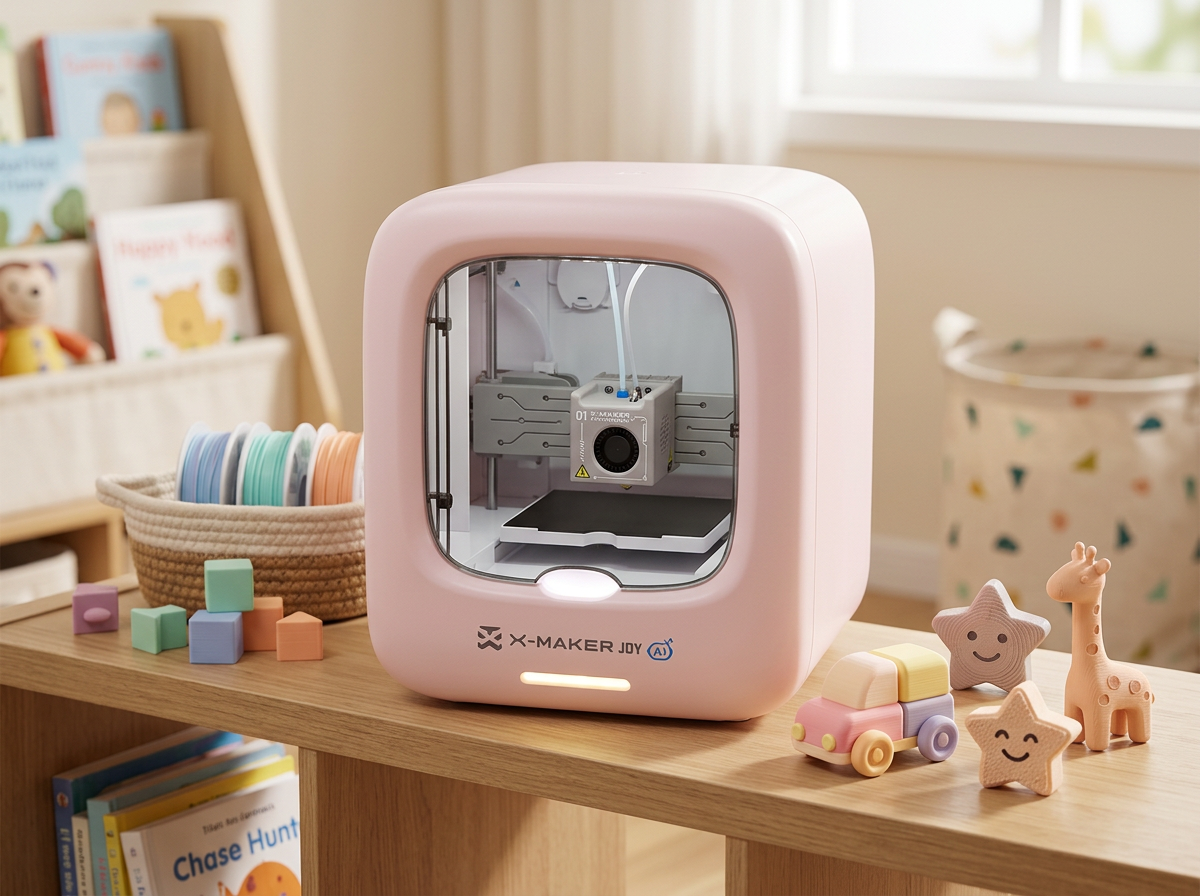
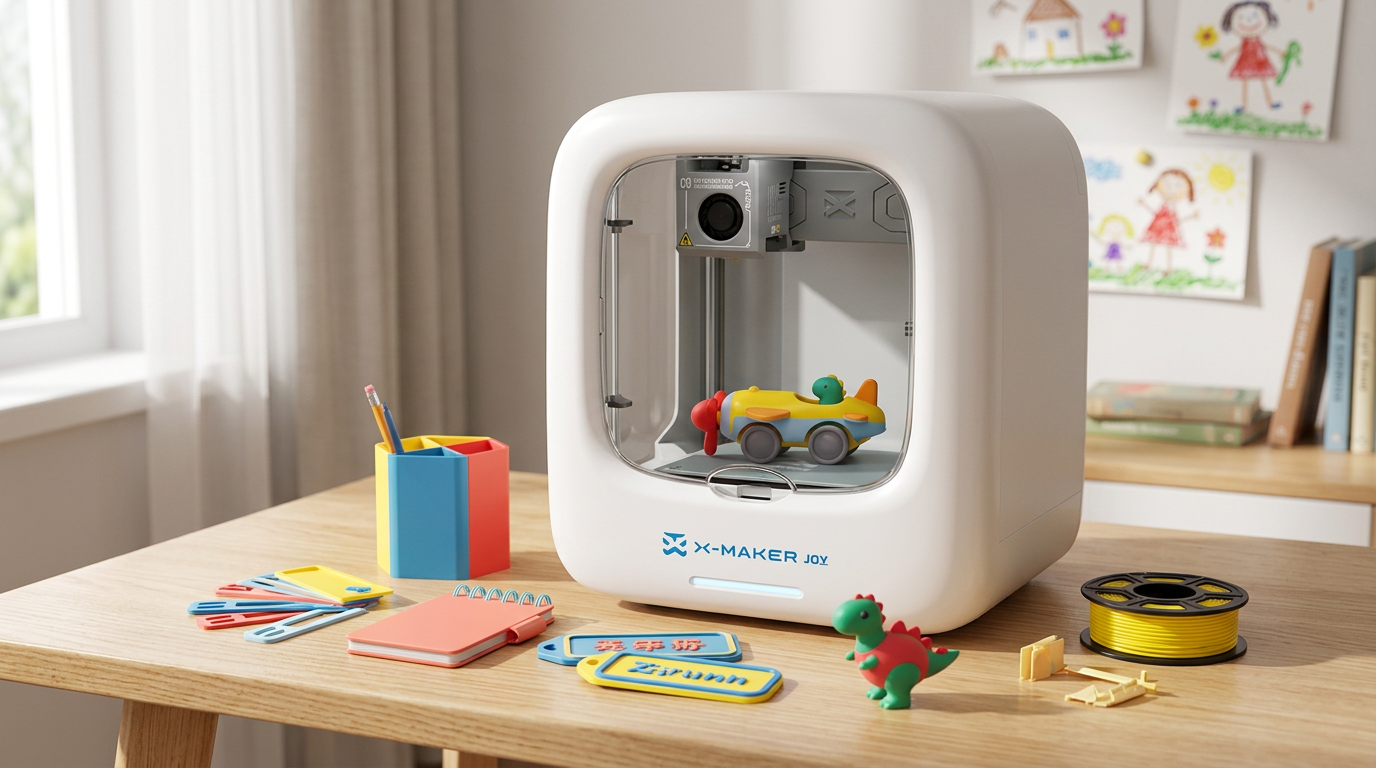
For kids around 9 and up who want bigger builds, a STEM 3D printer for older kids like the X-MAKER adds a 150 x 150 x 150 mm build area, 0.05 mm precision, a motor rated under 50 dB, and a camera for watching prints from the app. Younger beginners usually start on the X-MAKER JOY, a fully enclosed printer recommended for ages 4 to 12.
|
Feature |
X-MAKER JOY |
X-MAKER |
|
Best for |
First time makers, younger kids |
Older kids, bigger STEM projects |
|
Recommended age |
4 to 12 |
9 to 16 |
|
Build volume |
120 x 120 x 120 mm |
150 x 150 x 150 mm |
|
Model library |
8,000+ models |
8,000+ models |
|
Design in the app |
16 mini design modules, 2 premium modules |
15+ in app design games |
|
Stand out detail |
Fully enclosed printing |
Under 50 dB motor, camera, 0.05 mm precision |
|
Price (Sept 2026) |
$239 (was $339) |
$359 (was $509) |
The parent job stays small: set up the printer, load filament, and watch the first print. The child does the designing.
|
NOT SURE WHICH PRINTER FITS YOUR CHILD? Age, patience, and project size matter more than any single spec. You can compare kids' 3D printers side by side, including which one suits a first build and which one handles longer STEM projects. |
When to Keep It Simple and When to Add a 3D Printer
Stick with household materials when:
• Your child is under 5 and still learning through pouring, stacking, and touch
• STEM time at home is new and you want to see what holds their interest
• You need a weekday activity that fits in under 30 minutes
• Most of the fun is in building, not in keeping the finished object
Consider adding a 3D printer when:
• Your child keeps redesigning the same project and wants more precise parts
• They ask to make their own toys, game pieces, or replacement parts
• They are ready to measure in millimeters and think about scale
• You want a STEM routine that is still going three months from now
Conclusion
STEM education for kids does not start with a robotics kit. It starts with a question, a guess, a test, and a second try.
Ask one open question this week. Let the first design fail. Measure something, then let your child explain what changed. That part is free.
When projects outgrow cardboard, AOSEED's family-friendly 3D printing platform gives kids a design, print, and test loop they can run largely on their own. For older kids ready for bigger STEM builds, the X-MAKER is currently $359.
FAQs
What Is STEM Learning for Kids?
Problem solving across four subjects at once. Kids use science, technology, engineering, and math together on one task they can test, such as a paper bridge they design, measure, and load with coins.
Tip: ask, "How could we test that?"
What Is the Best Age to Start STEM?
Earlier than most parents expect. Toddlers already sort, pour, and test cause and effect. What grows with age is complexity, from comparing two ramps at 3 to measuring five ramp angles at 10.
Tip: match the activity to your child's attention span today.
What Are Some STEM Activities for Kids?
Anything with a question to test and a result to measure. Paper airplanes, sink or float, cup towers, paper bridges, balloon cars, and floor coding grids all work at home.
Tip: after any activity, ask, "What would you change next time?"
What Are Some STEM Skills?
Mostly thinking habits. Observing, predicting, measuring, recording data, designing within limits, testing, and explaining results. Coding logic and teamwork belong on the list too.
Tip: ask how your child reached an answer, not only whether it is right.
Is STEM the Same as Montessori?
No. STEM names four subject areas. Montessori is a broader teaching philosophy, and a Montessori classroom can include plenty of STEM work.
Tip: judge a program by what children actually do each day.
What Are the Top 5 Strategies for Teaching STEM?
There is no official list, but these hold up. Tie learning to a real problem, let questions lead, keep it physical, run design and test cycles, and ask kids to explain their evidence.
Tip: give a goal and materials, not step by step instructions.
What Are 5 STEM Careers?
Software developer, civil engineer, data scientist, medical scientist, and mechanical engineer. The Bureau of Labor Statistics projects STEM jobs to grow 7.4% from 2025 to 2035, about twice the rate for all jobs.
Tip: when your child enjoys a project, name a real job that uses that skill.
What Is STEM for 1st Graders?
Short, concrete, and testable. Think 15 to 30 minute activities a 6 or 7 year old can touch, count, or test, such as floating objects or a toy bridge, recorded with drawings.


Further reading
3D Printed Cartesian Plane Lesson Plan: Math and Technology Integration for Grades 5 to 8
STEM Education for Kids: What It Means and How Parents Can Support It at Home
Small Gifts for Kids: Party Favors and Little Presents Kids Can Make