

STEM Games for Kids: Logic, Math and Building Games to Play Together
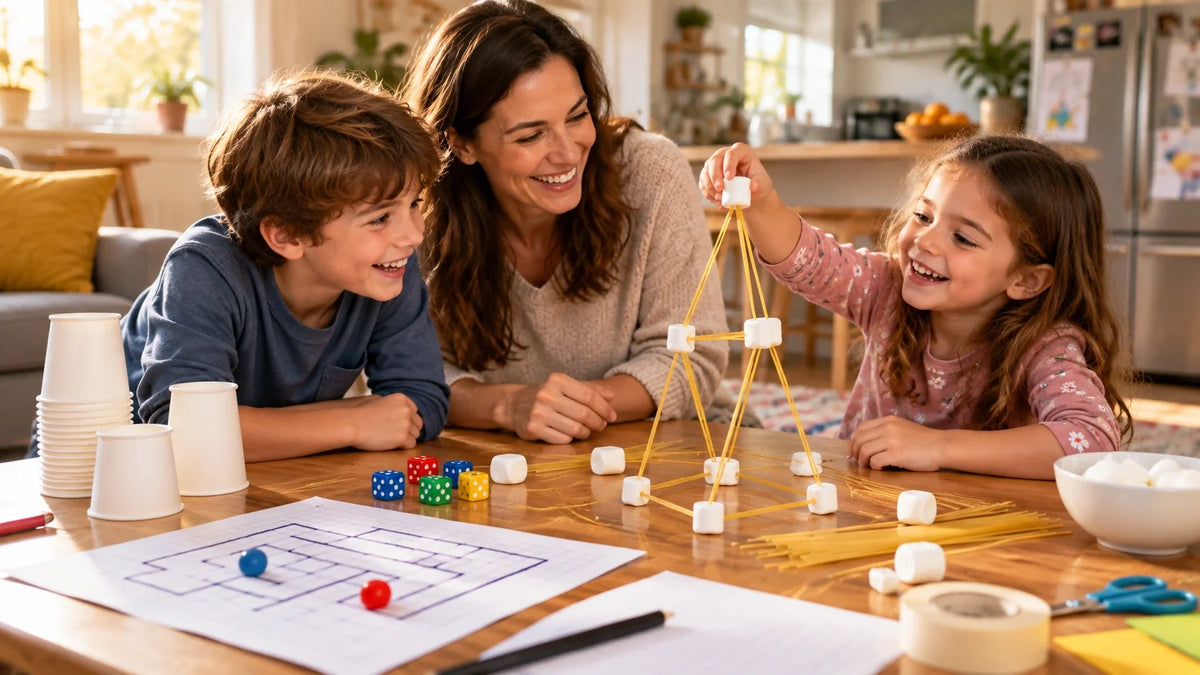
Give a seven year old a worksheet and you get ten minutes of sighing. Give the same kid 20 sticks of spaghetti, some tape and a marshmallow, then say the tallest tower wins. Different afternoon.
STEM games work because the learning sits inside the rules. Kids count, measure, predict and fix designs to win. Most need nothing special: dice, cups, coins, paper, a deck of cards.
Below are 28 of them, sorted into logic, math, building, science, coding and team play. Each lists the supplies, time and ages, plus one way to make it harder.
Short on time? Start here.
|
If you have... |
Try this game |
Skill it builds |
Best ages |
|
5 minutes |
Math Dice Challenge (#6) |
Fast arithmetic |
5 and up |
|
15 minutes |
Code Breaker (#2) |
Logic and deduction |
6 and up |
|
30 minutes |
Paper Bridge Challenge (#12) |
Engineering, measuring |
6 and up |
|
An afternoon |
Marble Run Challenge (#15) |
Design and testing |
7 and up |
|
A group of 6 or more |
STEM Relay (#27) |
Teamwork |
8 and up |
|
A space fan |
NASA Space Place games |
Earth and space science |
Upper elementary |
What Are STEM Games for Kids?
Games where science, technology, engineering or math decides who wins. Kids crack a code, build something that has to hold weight, or call a result before testing it.
The four subjects mix in practice. A paper bridge starts as engineering. Counting the coins it holds is math. Working out why it sagged is physics.
What Turns an Activity Into a Game
A goal and one or two rules. Folding a paper plane is an activity. Flying it farther than your brother, then refolding to beat your own record, is a game.
|
Plain activity |
Game version |
What changes |
|
Fold a paper airplane |
Farthest flight after three redesigns |
Kids measure and compare |
|
Stack cups |
Tallest tower in 2 minutes, one hand only |
Time and a limit force planning |
|
Drop objects in water |
Call sink or float first, 1 point per correct call |
Prediction comes before the test |
|
Draw a maze |
Solve it in 8 moves or fewer |
Kids count and plan ahead |
Physical Games vs Online Games
Physical games put cards, blocks, magnets and rulers in kids' hands. Online games cover what a kitchen can't, like Mars rovers or ocean currents. Use both. A short online game introduces the idea, and a table challenge afterward tests it.
What Skills Do STEM Games Help Kids Practice?
Each game trains something different. Logic puzzles build pattern spotting. Tower challenges build planning and repair. The American Academy of Pediatrics report The Power of Play ties play to executive function (planning, focus, switching strategies) and to the teamwork kids learn by negotiating with each other.
|
Skill |
What it looks like at the table |
Games that train it |
|
Logical reasoning |
Using clues instead of guessing |
Code Breaker, Logic Maze, Mystery Bag |
|
Number sense |
Adding, estimating, hitting a target |
Math Dice, Make the Target Number, Card Race |
|
Measurement |
Rulers, timers, coins counted as load |
Measurement Hunt, Paper Bridge, Ramp and Roll |
|
Engineering design |
Build, test, fix, test again |
Spaghetti Tower, Egg Drop, Marble Run |
|
Prediction |
Calling the result before the test |
Sink or Float, Coin Toss, Shadow Guess |
|
Sequencing |
Exact instructions in the right order |
Human Robot, Grid Maze Programming |
|
Teamwork |
Sharing ideas and splitting roles |
Build Without Talking, STEM Relay |
|
Tip: one skill per game Kids learn a single clear goal fast. They also notice when they improve at it, and that is what brings them back for round three. |
Logic and Problem Solving STEM Games
These reward clues over guesses. All five work at a table or in the car. After each round, ask one question: how did you know?
1. Pattern Detective
You need: blocks, coins, colored paper or toy cars · Time: 5 to 10 minutes · Ages: 4 and up
How to play: Lay out red, blue, blue, red, blue, blue. Ask what comes next. Young players get one rule only, such as color.
Make it harder: Stack two rules, like color plus size. Or let your child build a pattern meant to stump you.
2. Code Breaker
 You need: paper, pencil, colored counters · Time: 10 to 15 minutes · Ages: 6 and up
How to play: One player hides a code of three or four colors. The other guesses. After each guess, the code maker reports right color in the right spot, and right color in the wrong spot.
Make it harder: Allow eight guesses, no more. With a cap, kids stop guessing at random and start using earlier clues.
3. Mystery Bag
You need: a cloth bag, household objects · Time: 10 minutes · Ages: 4 and up
How to play: Hide an object in the bag. Give one clue at a time: it's metal, it rolls, it lives in the kitchen. Fewer clues used means more points.
Make it harder: Before the reveal, ask which clue gave it away. Kids have to explain their reasoning out loud.
4. Logic Maze
You need: graph paper or blocks, a small toy figure · Time: 15 minutes · Ages: 6 and up
How to play: Draw a maze on graph paper and add a rule. Only two turns. No red squares. Exactly eight moves to the exit.
Make it harder: Switch roles and have your child design the maze. Checking that it can be solved means planning backward from the exit.
5. STEM Scavenger Hunt
You need: a written clue list, a fridge magnet · Time: 15 to 20 minutes · Ages: 5 and up
How to play: Clues describe properties, not names. Something magnetic. A cylinder. Anything longer than 12 inches. An object that rolls down a ramp.
Make it harder: Add a bonus point for explaining each find. When a child swears the spoon is magnetic, test it with the fridge magnet.
Math STEM Games for Kids
Numbers stick when they decide what happens next. Start with math your child already handles, then add a bigger target or a second operation.
6. Math Dice Challenge
You need: two to four dice · Time: 5 minutes · Ages: 5 and up
How to play: Roll two dice and make a problem. Younger kids add. Older kids multiply or roll four dice and combine them.
Make it harder: Set a target, say 20. Players use their rolled numbers and any operation to get closest.
7. Make the Target Number
You need: four number cards, scrap paper · Time: 10 minutes · Ages: 8 and up
How to play: Deal four numbers and pick a target, often 24. Players must use all four numbers once. With 2, 3, 4 and 6, one answer is 6 times 4 times (3 minus 2).
Make it harder: Give a bonus point for a second solution with different operations. Most sets have more than one.
8. Measurement Treasure Hunt
You need: a ruler or tape measure, clue cards · Time: 15 minutes · Ages: 6 and up
How to play: Clues ask for sizes. Something about 6 inches long. Something wider than your hand. Players guess, then measure.
Make it harder: Score a second point when the estimate lands within an inch. Estimates tighten fast once points are on the line.
9. Probability Coin Toss
You need: a coin, a tally sheet · Time: 10 minutes · Ages: 7 and up
How to play: Everyone predicts the number of heads in 10 tosses. Flip, tally, compare.
Make it harder: Repeat with 50 tosses. Fifty flips land much closer to half than ten.
10. Math Card Race
You need: a standard deck with face cards removed · Time: 5 to 10 minutes · Ages: 6 and up
How to play: Flip two cards. First correct sum wins the pair.
Make it harder: Switch to subtraction or multiplication each round. Give younger siblings a two second head start.
Building and Engineering STEM Games
No single right answer here. The learning shows up in round two, after kids see what broke. Give out the same supplies every round so a better score comes from a better design.
11. Spaghetti Tower
You need: 20 sticks of dry spaghetti, 1 yard of tape, 1 yard of string, a marshmallow · Time: 18 minutes · Ages: 7 and up
How to play: Build the tallest tower that stands alone with the marshmallow on top. Measure after all hands are off.
Make it harder: Before round two, ask your child to find the weakest joint. Wider bases and triangles show up soon after.
12. Paper Bridge Challenge

You need: 2 sheets of paper, 2 books, a pile of coins · Time: 15 to 20 minutes · Ages: 6 and up
How to play: Set two books 6 inches apart. Span the gap with paper only, no tape on the books. Add coins to the middle one at a time.
Make it harder: Fold the sheet like an accordion and test again. It holds far more than the flat sheet, because shape matters as much as material.
13. Cup Tower Strength Test
You need: 20 paper cups, index cards, a paperback book · Time: 15 minutes · Ages: 5 and up
How to play: Round one: tallest tower in two minutes.
Make it harder: Round two: which tower holds a paperback on top? The tallest design is rarely the strongest, a tradeoff engineers deal with constantly.
14. Egg Drop Challenge
You need: one raw egg per team, paper, straws, cotton balls, tape · Time: 30 to 45 minutes · Ages: 8 and up
How to play: Each team gets the same bag of materials and builds a case to protect a raw egg. An adult runs the drop from a step stool or low porch.
Make it harder: Compare survivors and broken eggs. Padding or shape? Did the egg slide inside? Everyone washes hands afterward.
15. Marble Run Challenge
You need: cardboard tubes, paper, tape, a marble · Time: 30 to 60 minutes · Ages: 7 and up
How to play: Get the marble from start to finish with no touching after release.
Make it harder: Add a turn, a tunnel or a minimum run time of 10 seconds. Slowing a marble down is harder than speeding it up.
16. Foil Boat Challenge
You need: a 12 inch square of foil per player, a tub of water, pennies · Time: 20 minutes · Ages: 6 and up
How to play: Everyone shapes a boat from an identical foil square. Float it and add pennies until water pours in.
Make it harder: Try wide and flat against tall and narrow. Then spread the pennies evenly and count again.
Science STEM Games to Play Together
Kids call the result before every test. That one step turns a demo into a real question. Wrong guesses are fine, since each one points to the next test.
17. Magnetic Maze
You need: thin cardboard, a marker, a paper clip, a magnet · Time: 15 minutes · Ages: 5 and up
How to play: Draw a maze on thin cardboard. Steer a paper clip through it with a magnet held underneath.
Make it harder: Race a timer and count wall touches as penalties. Then swap in thicker cardboard until the magnet stops working.
18. Sink or Float Prediction Game

You need: a tub of water, 10 household objects, a towel · Time: 15 minutes · Ages: 4 and up
How to play: Line up a crayon, a coin, a cork, a grape and a foil ball. Players call sink or float, with a reason, before each drop.
Make it harder: Afterward, sort everything by material. A grape and a peeled orange slice start the best arguments.
19. Balloon Rocket Race
You need: string, a drinking straw, a balloon, tape · Time: 15 minutes · Ages: 6 and up
How to play: Thread string through a straw and tie it tight between two chairs. Tape a blown up balloon to the straw, release it and time the run.
Make it harder: Change one thing per round: balloon size, string angle or number of breaths. Only one.
20. Ramp and Roll
You need: a board or stiff cardboard, books, three rolling objects, a tape measure · Time: 15 minutes · Ages: 6 and up
How to play: Lean a board on books. Players predict which rolls farthest past the end: a toy car, a ball or a soup can. Mark and measure each stop.
Make it harder: Add one book to the stack and predict again. Nothing else changes.
21. Shadow Guess
You need: a flashlight, a blank wall, small objects · Time: 10 minutes · Ages: 4 and up
How to play: Dim the room and cast an object's shadow on the wall. Players name it from the outline.
Make it harder: Ask whether the shadow grows or shrinks before you move the object toward the light.
Coding and Technology STEM Games
Coding means exact steps in order, plus fixing the step that failed. Kids can practice both with no screen at all.
22. Human Robot
You need: cups, a chair, a willing adult · Time: 10 minutes · Ages: 5 and up
How to play: One player is the robot and follows only exact commands. Tasks: walk to a chair, stack three cups, draw a square.
Make it harder: "Pick up the cup" fails when the robot stands three steps away. Kids laugh, then rewrite the command. Swap roles each round.
23. Grid Maze Programming

You need: masking tape, arrow cards · Time: 15 minutes · Ages: 6 and up
How to play: Tape a 5 by 5 grid on the floor. The programmer lays out arrow cards (forward, left, right) before the robot moves.
Make it harder: When the robot lands on the wrong square, the programmer changes only the faulty card. That is debugging.
24. Binary Bead Code
You need: beads or paper squares in two colors, a key card · Time: 15 minutes · Ages: 8 and up
How to play: One color means 0, the other means 1. Kids use a key to turn short binary strings into letters and decode a message.
Make it harder: Hide coded clues around the house. Each one leads to the next, and the last leads to a small prize.
Free Online STEM Games Worth Bookmarking
All three are free and built by educators.
|
Resource |
What kids do |
Best for |
|
Games with stated learning goals, such as Tami's Tower for engineering design (grades K to 2) and BumperDucks for collisions and mass (middle school) |
Matching a game to grade and topic |
|
|
Browser games on Mars rovers, ocean currents, eclipses, CubeSats and space communications |
Space and Earth science fans |
|
|
Block coding for grades K to 5, then self paced app, game and animation projects from grade 6 up |
Structured coding practice |
|
Editor's note Pair each online game with a physical one. After a NASA rover game, build a cardboard rover and send it down the ramp from game 20. |
Team STEM Games for Groups and Clubs

Teams of three or four work best, so nobody just watches. Rotate jobs every round: designer, builder, tester, timer, recorder.
|
# |
Game |
The rule that forces teamwork |
Group size |
|
25 |
Build Without Talking |
Copy a pictured structure in silence. Gestures only. |
3 to 4 |
|
26 |
Cooperative Tower |
One shared height target. Every player places at least one piece. |
3 to 6 |
|
27 |
STEM Relay |
Stations for a number puzzle, a measurement and a quick build. Scored on time plus accuracy. |
Two teams of 3 or more |
|
28 |
Mystery Materials |
The bag opens when the clock starts. Bridge a 6 inch gap with only what is inside. |
2 to 4 |
|
Tip: run every team challenge twice The planning talk between rounds (what failed, what stays, what changes) is where most of the teamwork happens. |
Print and Play: Designing Your Own STEM Game Pieces
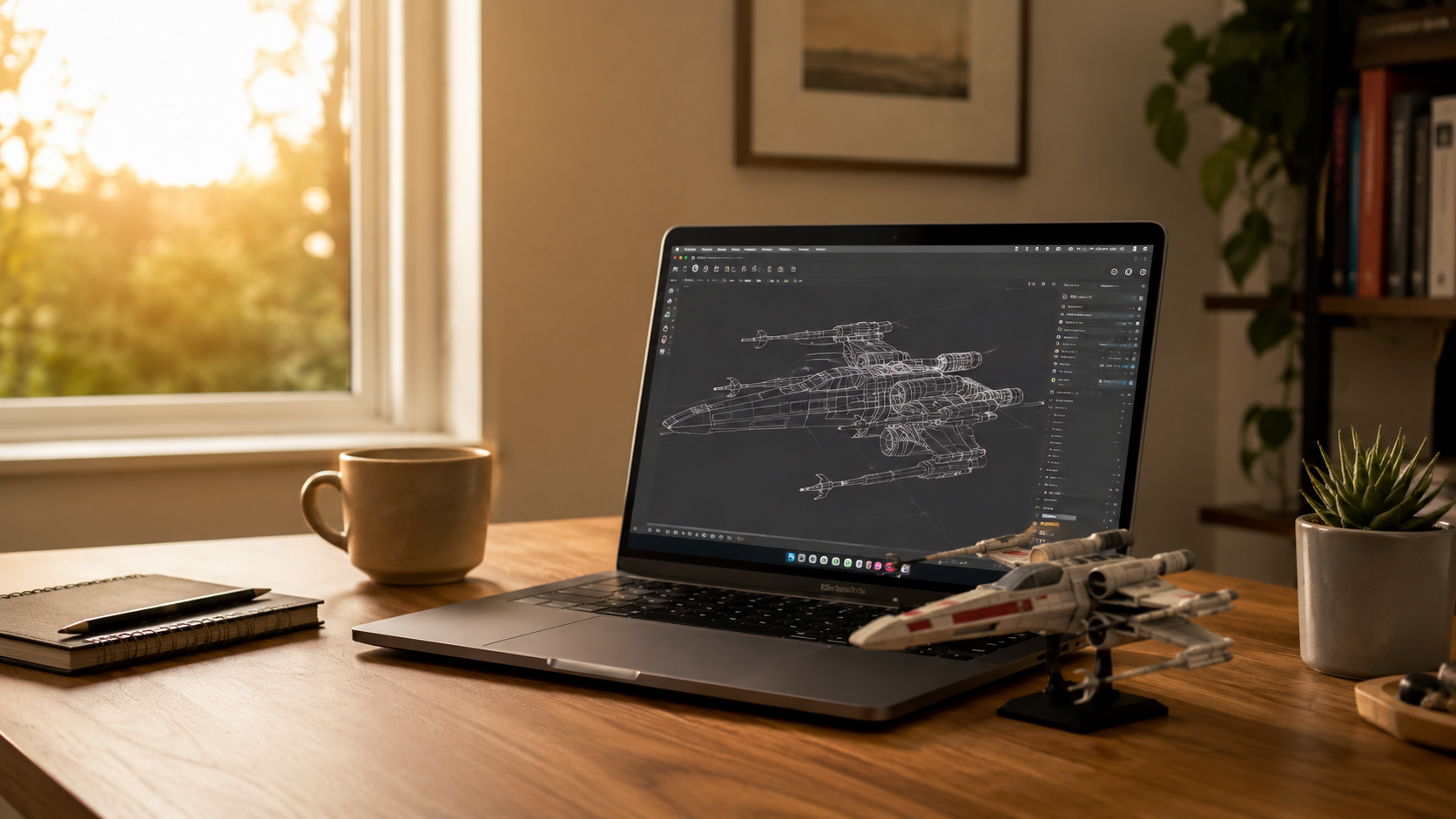
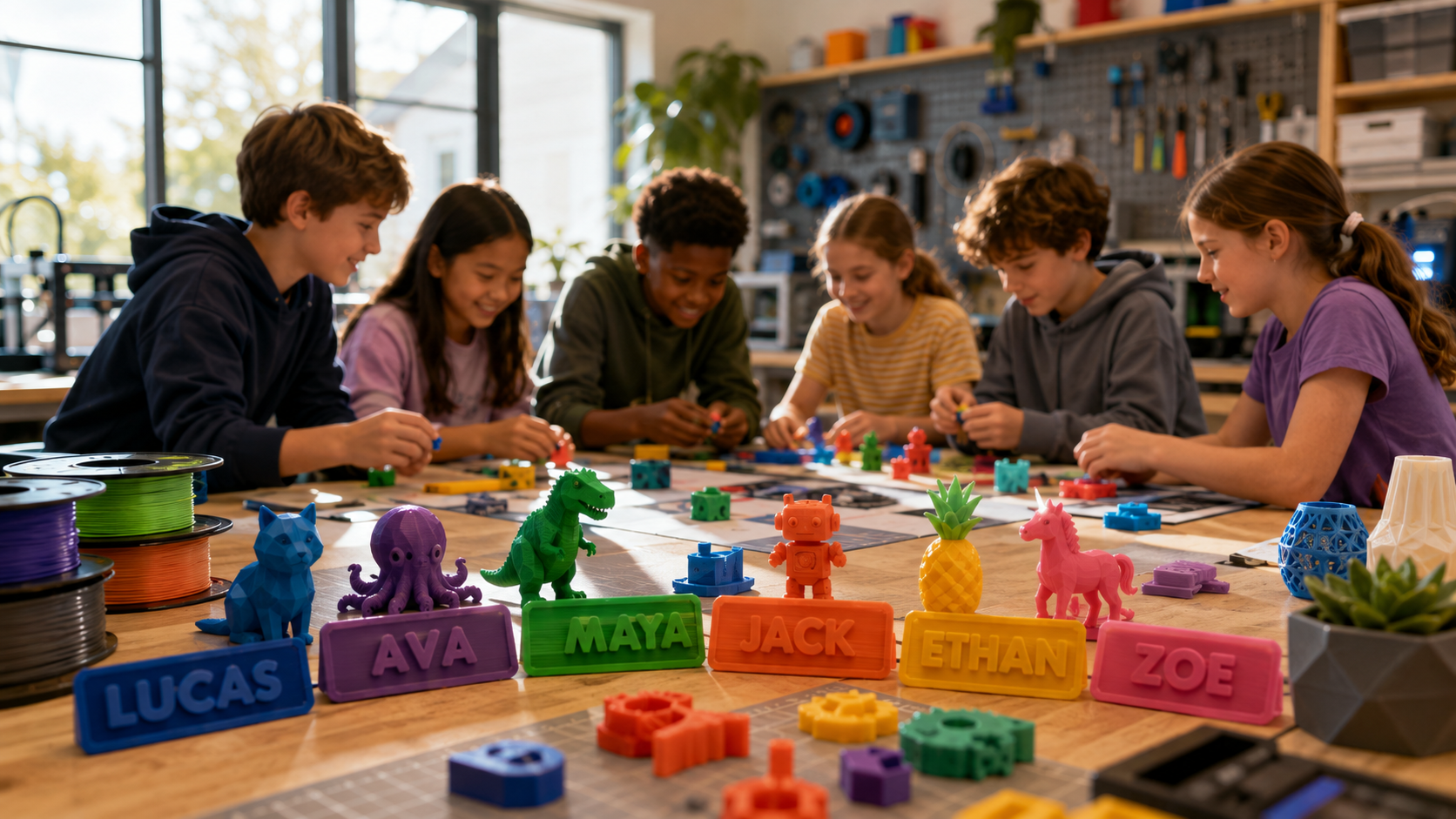
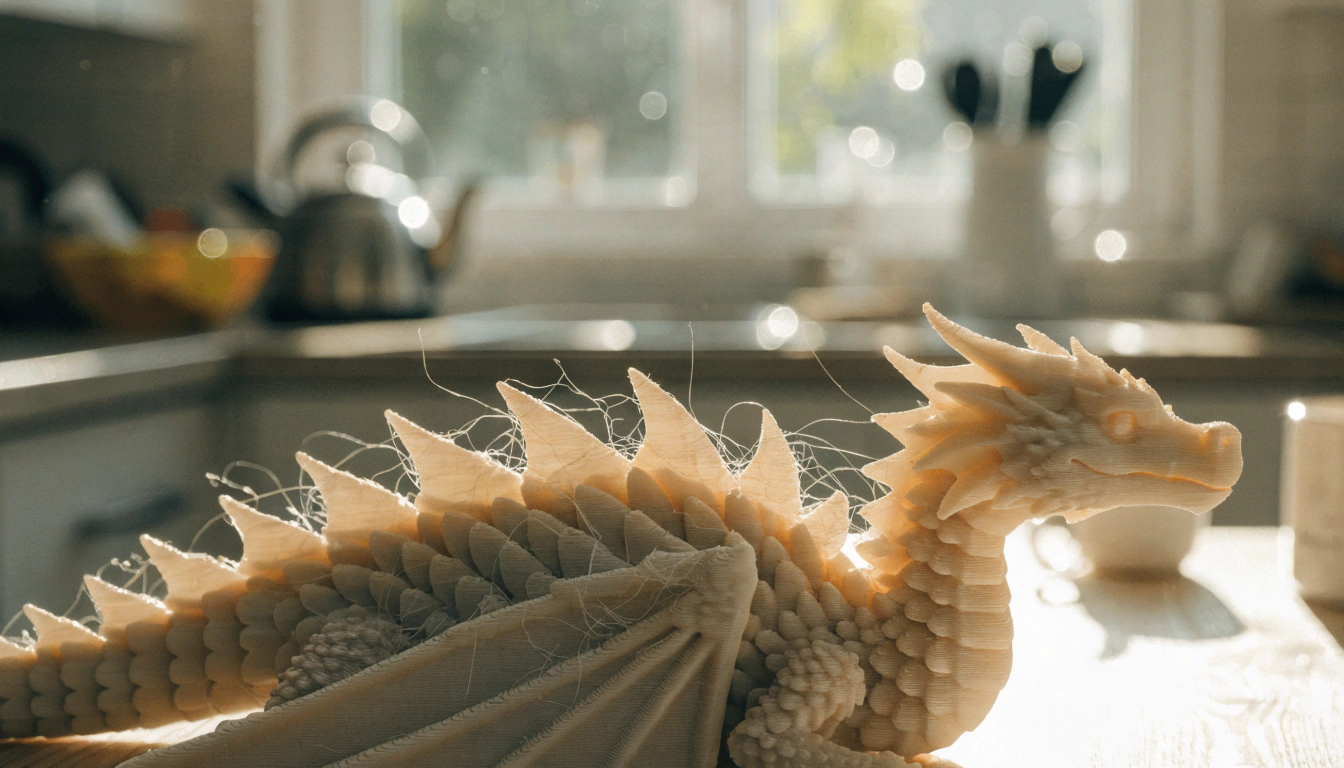
A few weeks in, the dice go missing and the paper maze tears. Designing and printing their own pieces fixes both and adds a design step to most games here.
The cycle: design, print, play, fix. A die with dots in the wrong places gets caught in round one. A maze tile that won't connect gets redrawn before round two.
|
Game from this list |
What kids can design and print |
What the print adds |
|
Math Dice Challenge (#6) |
Custom dice with 8 or 12 faces |
New number ranges and harder targets |
|
Logic Maze (#4) |
Snap together maze tiles |
A maze that changes every game |
|
Spaghetti Tower (#11) |
Printed joint connectors |
A new variable to test: connector shape |
|
Marble Run (#15) |
Curved chutes and funnels |
Parts that cardboard cannot make |
|
Code Breaker (#2) |
Colored code pegs and a peg board |
A game set that lasts |
|
PARENT TIP: START WITH A PRINTER BUILT FOR YOUNG DESIGNERS If your kids will print game pieces, compare 3D printers for kids on three points: a fully enclosed print area, app based design tools, and a library of models ready to print. First prints succeed more often, and the next idea is already waiting. |
For a first printer, a beginner 3D printer for kids like AOSEED's X-MAKER JOY keeps the steps short. Kids pick or edit a model in the app and print with one tap. The enclosed build area keeps fingers away from moving parts. Its product page lists ages 4 to 12, and the model library runs into the thousands. Older kids who want bigger builds move up to the X-MAKER, listed for ages 9 to 16.
How to Choose STEM Games by Age and Skill Level
Treat the age on a box as a rough guide. Pick a game your child understands in under a minute, then add difficulty once it clicks.
|
Age |
What works |
Try first |
The adult's job |
|
Under 4 |
Sorting, stacking, water play, one simple rule |
Pattern Detective with 2 colors, Sink or Float |
Close help and full supervision |
|
4 to 7 |
One goal, few rules, big pieces |
Mystery Bag, Magnetic Maze, Cup Tower |
Read the rules and ask questions, but let the child build |
|
8 to 10 |
Several steps and recorded results |
Paper Bridge, Marble Run, Make the Target Number, Grid Maze |
Bring out rulers, timers and score sheets |
|
11 to 13 |
Tight limits, more than one right answer |
Egg Drop, Binary Bead Code, online simulations |
Ask them to defend a design with numbers |
Match the Game to What the Child Already Loves
Space fans will measure all day if the target is a crater. Animal lovers will sort and classify by habitat. Start with the interest and let the game add the skill.
Check Setup Time and Materials
A card race takes five minutes. An egg drop takes 45 plus cleanup. A stocked STEM box (dice, cards, craft sticks, tape, string, a ruler, paper, straws, cups, cardboard) lets most games start in under a minute.
Pick Solo, Cooperative or Competitive Play
Solo play sets its own pace. Cooperative play chases one shared goal. Competitive play adds scores and races. Most games here work all three ways.
How to Turn Any STEM Activity Into a Game
Most activities are one or two rules away from being a game. Add structure, but keep the instructions shorter than the play.
1. Set a clear goal. Not "build something with paper." Try "build a bridge that holds 20 coins."
2. Add two or three limits. Fewer materials, a size cap, or a ban on the obvious solution.
3. Decide how to score. Height, load, distance, accuracy or fewest materials. Speed is only one option.
4. Measure it. Ruler for distance, stopwatch for time, coins for load. Write each number down.
5. Change one thing and replay. A wobbly tower needs a wider base. A slow marble run needs a steeper drop.
6. Ask what changed. Keep the talk on the thinking, not only the winner.
Sample scorecard: Paper Bridge Challenge (#12)
|
Result |
Points |
|
Bridge stands with no load |
2 |
|
Every 5 coins held |
1 |
|
Built from a single sheet |
3 bonus |
|
Beats its own round one score |
2 bonus |
Keep STEM Games Safe and Screen Light
Most of these games carry little risk. Three materials need an adult watching.
|
Safety check before you start Balloons, marbles and small balls carry choking warnings. The U.S. Consumer Product Safety Commission requires choking hazard labels on products with small parts, balloons, small balls and marbles. Keep uninflated balloons and broken pieces away from young children. Skip the marble run while toddlers are nearby. Egg drops need a low drop spot and hand washing after. Water games need a towel and an adult close by. |
Online STEM games still count as screen time. The American Academy of Pediatrics offers a free Family Media Plan for deciding when and where screens fit. One simple rule: one online game, then one physical game on the same topic.
When to Choose Physical Games vs When to Choose Online Games
Choose a physical STEM game when:
• Kids need to move, build or handle real materials
• The whole family is playing at one table
• Forces, balance or strength are the topic, and feeling the result helps
• Screen time is already high that day
Choose an online STEM game when:
• The topic is too big, far or fast for a kitchen, like Mars, weather or collisions
• Your child wants coding practice with instant feedback
• One child needs a quiet activity with clear levels
• A new topic needs an introduction before the physical follow up
Conclusion
Good STEM games are small. A deck of cards or a roll of tape, a clear goal, a second round. Choose one that fits your time and your child, then add a target, a timer or a design limit once it clicks.
Online and physical play feed each other. A NASA game leads to a cardboard rover. A spaghetti tower leads to printed connectors. For kids ready to design their own pieces, AOSEED's family-friendly 3D printing platform offers a guided start. At the time of writing, the X-MAKER JOY is listed at $239 (regularly $339). It comes with an enclosed printer, a guided design app and a model library that keeps growing.
FAQs
What Are Some STEM Activities for Kids?
Building challenges, science tests, math games, coding games and logic puzzles. Easy starters: a paper bridge, a marble run, a sink or float test and a cup tower.
Pick activities that give kids a problem, not a recipe. They predict, build, check the result and change one thing. For free online options, NASA Space Place covers space and Earth science, and the Smithsonian Science Education Center sorts its games by grade.
Practical tip: Use supplies you already own and keep the first challenge under 30 minutes.
What Are Some Popular STEM Games?
The egg drop, spaghetti tower, magnetic maze, math dice, marble run and code breaker. All run on paper, tape, dice or cups.
Online, stick to sources built by educators. NASA Space Place has games on Mars, eclipses and the Sun. The Smithsonian Game Center groups games by subject and grade. Balance based tower games and programming card games also suit a family game night.
Practical tip: Choose by interest first. A space fan and a puzzle lover rarely want the same game.
What Are Some 30 Minute STEM Activities for Elementary School Students?
Paper bridges, cup towers, magnetic mazes, balloon rockets, measurement hunts, math card races and sink or float tests all fit in half an hour.
Split the time three ways: 5 minutes to explain and predict, 10 to 15 to build, the rest to test and improve. Protect the last block. The second attempt is where kids use evidence from the first.
Practical tip: Lay out every material before the timer starts.
What Are Some Fun Activities for STEM Clubs?
Team challenges: spaghetti towers, paper bridges, egg drops, marble runs, foil boats, coding mazes, STEM relays and mystery materials builds.
Keep it fair with the same materials, time and test for every team. Rotate roles so one builder doesn't run every round. Mix in Code.org courses or Smithsonian games, each followed by a matching build. Year long clubs often add 3D design so members print their own parts.
Practical tip: Run each challenge twice, with a 5 minute huddle between rounds.
What Is the Easiest STEM Project to Do?
A paper bridge. You need paper, two books and some coins. Span the gap between the books and count the coins it holds.
Then compare designs. A flat sheet sags right away. Folded, rolled or layered paper holds far more, which shows that shape matters as much as material. Cup towers, paper airplanes and math dice are other low prep picks.
Practical tip: Stay quiet during round one, then ask what your child would change.
What Are Some Fun and Easy STEM Activities for 5th Grade Students?
Paper bridges, marble runs, balloon rockets, foil boats, probability games, target number puzzles and beginner coding.
The step up at this age is data. Kids record distances, times or loads and use the numbers to justify the next design. "The wider base held 14 more coins" is real engineering talk. NASA Space Place is written for upper elementary students, and simple 3D design fits well here too.
Practical tip: Add one measurable goal to any open ended project.
What Are Some Fun STEM Activities for the Summer?
Anything that needs space, water or time: balloon rocket races, foil boat contests in a kiddie pool, shadow measuring, outdoor scavenger hunts and cardboard ramps.
Mix short and long projects. A 15 minute measurement hunt fits a busy day, while a marble run can grow for a week. For rainy days, NASA Space Place pairs its browser games with printable activities.
Practical tip: Keep a summer STEM box stocked so no challenge waits on a store trip.
What Are Some Fun STEM Team Building Activities?
Cooperative towers, paper bridge contests, mystery materials builds, STEM relays and build without talking challenges. The best ones force players to share information and decide together.
Rules create the need to cooperate. A silence rule makes kids watch each other closely. Assigned roles give quieter children a clear job. "Everyone places a piece" stops one builder from taking over. The AAP report on play links peer play to negotiation and teamwork.



Further reading

Thanksgiving STEM Activities for Kids: Table Projects and Simple Engineering Challenges

Halloween STEM Activities for Kids: Spooky Builds That Teach Real Science

STEM Crafts for Kids: Build, Decorate and Test


