6 Best 3D Pens for Kids, and When to Upgrade to a 3D Printer
The best 3D pen for kids mostly comes down to how hot it runs. The myFirst 3dPen Make, a low-temperature pen, works at 90 to 100°C with soft PCL filament. Pens sold for teens push PLA to around 190°C, sometimes more, through a metal tip nobody should touch.
We lined up six 3D pens for kids by age range, temperature and filament type, taking every figure from the maker’s own listing on October 25, 2026. Half are low temperature pens for younger children. The rest run hot, and we’d keep those for 12 and up.
The last section is about outgrowing a 3D printer pen for kids, which tends to happen once a child wants exact sizes, parts that move, or ten copies of the same thing.
6 Best 3D Pens for Kids at a Glance
Temperatures are the maker’s own figures, with Fahrenheit added. Where a maker doesn’t publish one, we’ve said so rather than guess.
|
3D pen |
Type |
Age range |
Temperature |
Filament |
Power |
|
1. myFirst 3dPen Make |
Low temperature |
5 and up (one line on the page says 6+) |
90 to 100°C (194 to 212°F) |
PCL, 1.75 mm |
Built in battery |
|
2. 3Doodler Start+ |
Low temperature, no external hot parts |
6 to 13 |
Not published |
3Doodler Start+ Eco-Filament only |
Battery, USB-C |
|
3. MYNT3D Junior2 |
Low temperature |
6 to 12 |
Not published |
PCL only, 1.75 mm |
Battery, Micro USB |
|
4. myFirst 3dPen Artist |
Hot nozzle |
12 and up |
130 to 230°C (266 to 446°F), 190°C for PLA |
PLA, 1.75 mm |
Plugs in, 5V |
|
5. 3Doodler Flow |
Hot nozzle |
14 and up |
Adjustable, no figure published |
PLA or ABS, 1.75 mm spools |
Wall adapter or battery pack |
|
6. MYNT3D Pro |
Hot nozzle |
No age published (we’d say 14+) |
130 to 230°C in 1° steps |
PLA, ABS and similar filaments |
AC adapter |
A few of these kids’ pens showed as sold out on their makers’ own stores when we checked, which is common before the holidays. It’s worth looking at two or three retailers.
|
WHEN A PEN ISN’T ENOUGH ANYMORE Some kids start asking for things a pen can’t do, like parts that fit together or ten matching pieces. That’s when it’s worth a look at 3D printers made for kids. |
How to Choose a Safe 3D Pen for Your Child
Before features or colors, we’d look at four things. The age on the box comes first, then the heat, the filament, and the room your child will use it in.
Start With the Age on the Box
Makers set age ranges with their own pen’s heat and parts in mind, and the AAP’s guide to buying safe toys says to follow them. A label isn’t a promise that every child that age can use it alone, though.
Low Temperature vs Hot 3D Pens
PCL is the soft plastic inside most low temperature pens for kids, and it melts at about 60°C (140°F), close to very hot tap water. PLA and ABS pens need something nearer 200°C, and at that heat the metal tip can burn.

“Low temperature” still means warm. The myFirst Make, for example, runs at 90 to 100°C inside, so even the gentlest pens need an adult around.
Check Which Filament It Takes
You can’t mix and match filament. PLA won’t melt properly in a PCL pen (MYNT3D says it can break the Junior2), and a few pens take only their own brand. For hot pens we’d start with PLA, and NIOSH’s short list of 3D printing safety questions makes a handy checklist.
Cordless or Plug In
Battery pens are easier for young kids, since there’s no cord to tangle around a pile of stencils. Plug in pens hold their heat more steadily, which helps on long builds.
Ventilation Matters for Every Pen
A 2019 study of children’s 3D pen and printer toys found they release very fine particles and some vapors, and nozzle temperature was one of the things that changed how much. An open window and shorter sessions make sense with any pen.

Best Low Temperature 3D Pens for Kids Ages 5 to 13
These three run cooler and use softer filament. They’re the ones we’d look at first for a child under 12.
1. myFirst 3dPen Make: Best Low Temperature Pen for First Timers
myFirst lists the Make for ages 5 and up, though one line on its own page says 6+. It runs at 90 to 100°C inside and draws with 1.75 mm PCL, which myFirst says won’t burn skin as it comes out. The battery is built in, so there’s no cord.
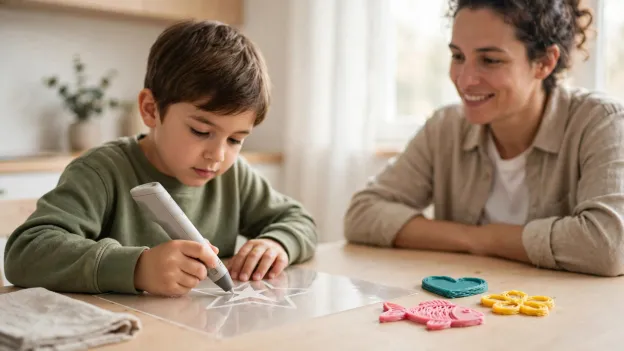
It has two feed speeds and comes with a booklet of templates. A star or a fish is the usual first tracing. After a few of those, kids start peeling shapes up and joining them into things that stand.

The heat is still inside the pen. We’d keep an adult close and show kids how to hold it like a pencil, well back from the tip. PCL pieces also stay a bit bendy, so they’re better as decorations than as parts that carry weight.
2. 3Doodler Start+: Best for Ages 6 to 13 With No External Hot Parts
3Doodler says the Start+ is safe for kids 6 to 13 because nothing on the outside gets hot. It takes only 3Doodler’s own Start+ Eco-Filament, which the company calls compostable, and charges over USB-C. No operating temperature is published.
In the Essentials box you get 72 strands and an activity guide with more than 10 projects, and 3Doodler keeps hundreds of free stencils online. Most kids head straight for their own name.
Because refills are brand only, you’ll always buy filament from 3Doodler. The set also showed as sold out on the brand’s US store on October 25, so other toy retailers may be the easier route.
3. MYNT3D Junior2: Best Low Temperature Pen for Standard PCL
MYNT3D lists the Junior2 for ages 6 to 12. It has a low temperature nozzle, with no figure published, and uses 1.75 mm PCL from MYNT3D or any other brand. It runs on a rechargeable battery that charges by Micro USB.
Three rolls of PCL and some starter stencils come in the box. It handles the same flat shape and build up projects as the Make, and you aren’t tied to one brand of refill.
One warning matters a lot here. MYNT3D says PLA or ABS will break the pen, so keep those filaments well away. It was also sold out on MYNT3D’s own store when we checked.
Best 3D Pens for Older Kids and Teens
These three heat the nozzle enough to burn, and they give back more control in return. We’d save them for 12 and up, with ground rules set before the first session.
4. myFirst 3dPen Artist: Best Step Up at 12 and Up
The Artist heats from 130 to 230°C (266 to 446°F) and uses 1.75 mm PLA at a 190°C setting. It plugs into a 5V USB supply. The product title says 8+, but myFirst’s own safety section recommends it for 12 and older, and we’d go with that.
An OLED screen shows the temperature, and the feed speed adjusts, slower for fine lines and faster for filling in. That control is what lets an older kid build a standing shape instead of a flat tracing.
A silicone mat, a clear desk and an adult nearby for the first few sessions all help. If a burn does happen, the AAP’s first aid for burns is cool running water for about five minutes, and no ice.
5. 3Doodler Flow: Best for Teens Who Want More Control
3Doodler designed the Flow for creators 14 and up, because the nozzle is exposed and runs hot. It feeds 1.75 mm PLA or ABS from small spools, and the temperature goes up or down with plus and minus buttons, though 3Doodler doesn’t list it in degrees.
There’s an LCD for the settings, and it runs from a wall adapter or a compatible battery pack. Nozzles in other sizes and shapes are sold separately, which teens use for thick outlines or textured fills.
We’d start with PLA. The Flow manual warns about styrene from ABS and says to work somewhere well ventilated, and UL’s Chemical Insights team gives the same advice for 3D printers.

6. MYNT3D Pro: Best for Advanced Freehand Art
The Pro adjusts in 1 degree steps from 130 to 230°C and shows the number on an OLED screen. It comes with PLA and works with ABS and other filaments that melt in that range, including wood and bronze filled ones. Power comes from an AC adapter.
MYNT3D doesn’t publish an age. With a hot nozzle and this many settings, we’d think of it as a pen for teens 14 and up, with an adult nearby at first.
It suits a kid who already draws well and wants finer control over line width and texture. What it can’t do is make two pieces exactly alike, and that’s where a printer comes in.
Which 3D Pen Is Best for Your Child’s Age?
Ages 5 to 7
A low temperature pen like the myFirst Make or the 3Doodler Start+, used with stencils in short sessions. Little hands tire quickly, and 15 minutes is often plenty.
Ages 8 to 11
Stay with low temperature pens. Kids this age can move from tracing to joining pieces into boxes, bridges and animals that stand up, and there’s no need to rush them into a hot pen.

Ages 12 and 13
The myFirst Artist is a reasonable first hot pen, with house rules about the tip and where it rests between strokes.
Ages 14 and Up
The 3Doodler Flow or the MYNT3D Pro, for teens who want to choose their own filament, temperature and speed.
3D Pen vs 3D Printer: The Short Version
With a pen, your child’s hand is the machine, so no two pieces match. A printer reads a file and builds it layer by layer, and it’ll make the identical piece again tomorrow.
Neither is better for every child. Our full 3D pen vs 3D printer guide compares cost, safety and learning side by side, so here we’ll stick to the signs that a child is ready to move on.
When to Upgrade From a 3D Pen to a 3D Printer
Plenty of kids are happy with a pen for years. These four signs, though, usually mean the pen has become the wrong tool for what they want to make.
They Want Exact Sizes
A phone stand that fits their phone, or a bracelet that fits a wrist, needs measurements a hand can’t hold steady. A printer works from sizes set in the file, in millimeters, though the result still depends on the printer and its settings.
They Want Parts That Move
Wheels on axles, hinges and gears only work with a small, even gap between the parts. Drawing that gap by hand is close to impossible. A printer can follow a model that already has the gap designed in.
They Want Several Copies
A chess set, party favors for a whole class, or keychains for every cousin. With a pen, each one is drawn from scratch. With a printer, the same file prints again, and our guide to how long kids’ prints usually take helps with planning.

They Want to Design, Test and Improve
Once a child starts asking why something broke and how to fix it, they’re doing the engineering design process NASA teaches: plan it, build it, test it, improve it. A printer lets them change the design and print version two.
A Kid Friendly Next Step: AOSEED X-MAKER JOY
This is the point where we’d suggest a kids 3D printer as the next gift, not a fancier pen. The AOSEED X-MAKER JOY kids 3D printer is made for ages 4 to 12, prints PLA, and is enclosed, so hands stay away from the hot parts.

Your child picks or adjusts a model in the AOSEED app, from thousands of ready to print designs, and sends it over Wi-Fi. You load the filament and lift the finished piece out once it cools.
It isn’t instant. Prints take time, and a parent is still part of setup. But it can do the three things a pen can’t: exact sizes, moving parts and matching copies.
Buying a 3D Pen as a Christmas Gift
Searches for kids’ 3D pens jump every December, and stock gets thin. Order the right filament with the pen, since a PCL pen won’t take PLA, and charge battery pens before wrapping them.
A silicone mat and a printed stencil or two make the first session on Christmas morning go a lot smoother. For more ideas, our list of Christmas gifts for kids who love to build has picks beyond pens.
Final Thoughts on the Best 3D Pens for Kids
The best 3D pen for kids is the one that matches their age and how much heat you’re comfortable with. For most children under 12, that means a low temperature PCL pen and a stack of stencils.
When the projects start needing exact sizes or matching parts, a printer is the natural next step, and you can see how ours fit together at AOSEED’s printers, app and creation kits.
FAQs
What is the best 3D pen for a 6 year old?
A low temperature pen. The 3Doodler Start+ is made for ages 6 to 13 with no external hot parts, and the myFirst 3dPen Make is listed for 5 and up. Stencils and an adult nearby help either way.
Are 3D pens safe for kids?
They can be, with the right pen and supervision. Low temperature PCL pens are gentler, while PLA and ABS pens have hot tips that can burn. Use them in a ventilated room and follow the age on the box.
What age can a child start using a 3D pen?
Around 5 or 6, with a low temperature pen. Hot pens are usually rated 12 or 14 and up. Keep filament scraps from toddlers too, since CPSC’s small parts rules cover anything a child under 3 could swallow.
What is the difference between PCL and PLA 3D pens?
Mainly heat. PCL melts at about 60°C, so PCL pens run cooler and suit younger kids. PLA needs around 190°C or more, which gives firmer, more detailed pieces but a hotter tip.
Can kids use a 3D pen without a computer?
Yes. A 3D pen works by hand, with no app or software. Kids draw freehand or trace paper stencils, which is a big part of the appeal for younger children.
What can kids make with a 3D pen?
Name signs, ornaments, bugs, flowers, small animals and simple frames. Older kids build boxes and little buildings from flat pieces. Exact or moving parts are much harder by hand.
Is a 3D pen better than a 3D printer for kids?
Not better, just different. A pen is quick and freehand, while a printer makes accurate, repeatable parts from a file. Our list of things kids can 3D print shows what the printer side looks like.
When should a child upgrade from a 3D pen to a 3D printer?
When they want exact sizes, moving parts or matching copies. The X-MAKER JOY suits ages 4 to 12, and the larger X-MAKER for tweens and teens covers 9 to 16.


Further reading
3D Printed Dollhouse Furniture Kids Can Make: 10 Projects With Sizes and Scale

Articulated 3D Printed Animals for Kids: 10 Prints That Move

Articulated 3D Printed Animals for Kids: 10 Prints That Move