

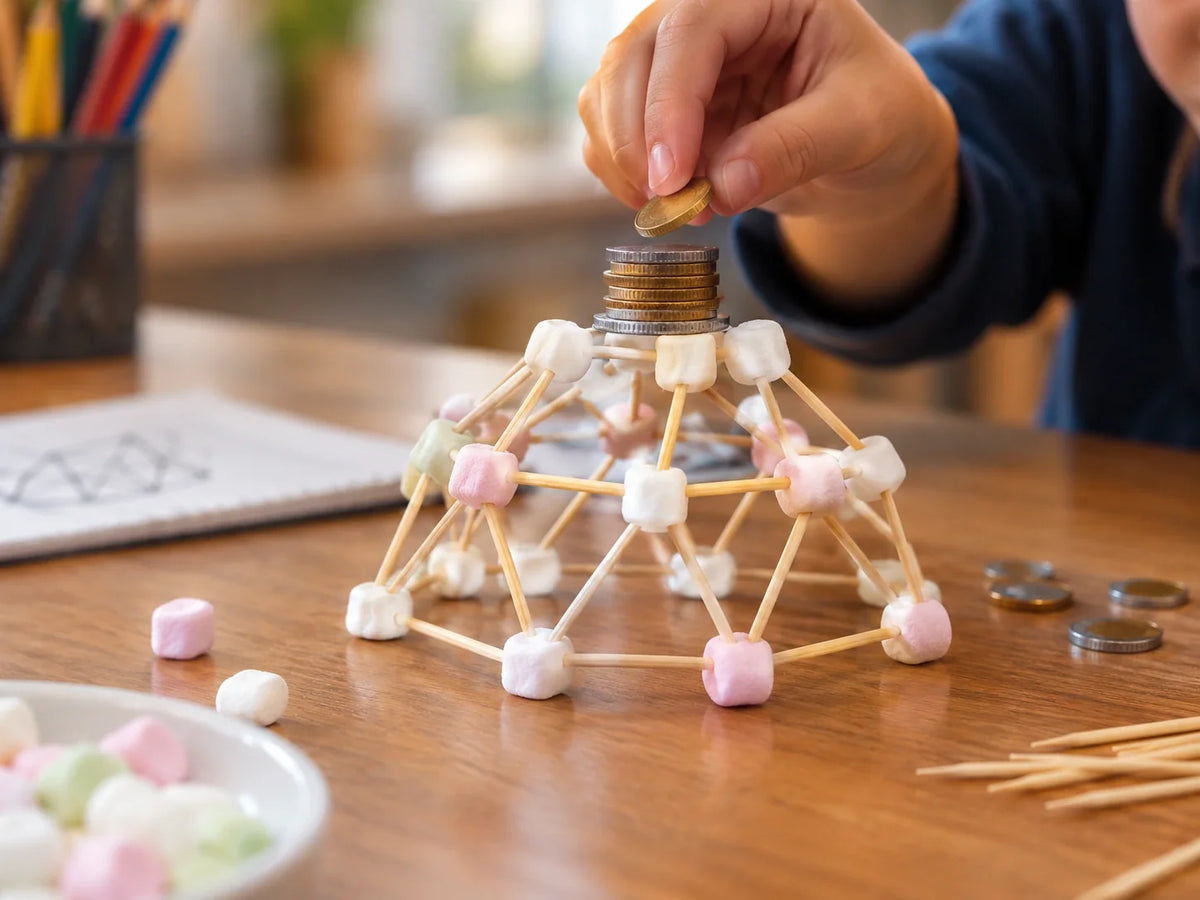
Christmas Gifts for Kids Who Love to Build and Create
Some kids open a finished toy, play for ten minutes, and wander off. Others ignore the toy and build something out of the box it came in. If you are shopping for the second kind, start here.
This list covers building sets, STEM kits, craft supplies, and a few gifts that are not toys at all. Each pick is grouped by how a child actually likes to make things, with notes on age fit, setup, and what keeps it in use long after December 25.
Quick Picks: Match the Gift to the Maker
|
If your child loves... |
Start with |
Typical starting age |
Why it lasts past Christmas |
|
Stacking and rebuilding |
Magnetic tiles or wooden blocks |
3+ |
No fixed result, so every session starts fresh |
|
Watching things move |
Marble runs, gear sets, track builders |
4+ |
Each test shows the child what to change next |
|
Asking how things work |
Science, robotics, or circuit kits |
6+ |
New variables to try after the first experiment |
|
Designing their own toys |
A kid friendly 3D printer |
4 to 12 (X-MAKER JOY) |
Kids design a toy, print it, then play with it |
|
Painting, sculpting, sewing |
Clay, art, or textile kits |
4+ |
Reusable tools outlast the featured project |
|
Doing more than owning |
Classes, memberships, maker workshops |
Any |
Builds a skill without adding clutter |
What Makes a Building Gift Worth Giving?
 A good maker gift hands the child a problem, not a finished answer. The pieces go together one way today and another way next week. That open outcome is what separates a gift that gets used from one that lands on a shelf by January.
Pediatricians agree on the basics. The American Academy of Pediatrics lists blocks, puzzles, art supplies, and clay among the toys that build fine motor skills and imagination, and it ranks an adult playing alongside the child above any app.
Watch How They Already Play
Spend one weekend noticing. Does your child build tall and knock it down? Sort pieces by color? Draw on every scrap of paper? The habit you see most often is the best shopping list you have.
Check the Challenge Level
An age label marks the safety floor. It does not promise fun. A kit with 800 tiny pieces can frustrate a patient 7 year old and thrill an impatient 11 year old, so look at reading level, hand control, and how much adult help the instructions assume.
Ask What Happens After the First Build
Piece count sells boxes. Replay value decides whether the box comes back out. Before buying, ask one question: what can my kid change once the pictured model is done?
The 5 Point Gift Check
|
Check |
Green light |
Red flag |
|
Outcome |
Several possible builds from the same parts |
One model, then the shelf |
|
Challenge |
First project doable alone or with light help |
An adult has to finish it |
|
Parts |
Sturdy, easy to store, sized for everyone in the house |
Tiny loose parts in a home with a toddler |
|
Setup |
Ready to play within about 15 minutes |
Needs tools or batteries you do not own |
|
Growth |
Harder projects or expansion parts exist |
Nothing new to try after day one |
Best Building Gifts for Kids Who Like to Construct
 These gifts put the child in charge of the object itself. Build it, test it, pull it apart, try again.
Magnetic Building Tiles
Squares and triangles snap together in seconds, so a flat pattern can become a garage, a rocket, or a castle before the idea fades. Sets made mostly of basic shapes give more freedom than sets padded with specialty pieces.
|
Check the seams Magnets sealed inside tiles are a different product from loose, high powered magnets. Still, CPSC warns that swallowed magnets can pull together inside the body and often need surgery. Inspect tiles after rough play and throw out any piece with a cracked edge. |
Blocks and Interlocking Bricks
Plain blocks have almost no rules, which is exactly why kids keep coming back to them. Larger blocks suit small hands. Smaller bricks suit detailed builds with hinges and wheels. If your child already owns a brick system, compatible extra parts beat starting a new collection.
Marble Runs and Gear Sets
Both give instant feedback. A marble that stalls halfway is a design problem to fix, not a broken toy. Gears do the same with motion: turn one crank and see whether the whole chain moves. Choose sets that rearrange into many layouts rather than one fixed course.
Track, Domino, and Straw Builders
Track and domino sets suit kids who love setting something up and watching it run. Straw and connector sets go big. Think forts, tunnels, and frames a child can crawl inside.
Building Gifts Compared
|
Gift type |
Best for |
Mess and space |
Solo or shared |
|
Magnetic tiles |
Fast rebuilders |
Low |
Both |
|
Wooden blocks |
Younger kids and pretend play |
Low |
Both |
|
Interlocking bricks |
Kids who love detail |
Medium, many small parts |
Mostly solo |
|
Marble runs |
Testers and fixers |
Medium |
Great shared |
|
Gear sets |
Kids who ask how machines work |
Low |
Mostly solo |
|
Straw and connector sets |
Room sized builds |
High floor space |
Great shared |
STEM Gifts for Kids Who Test and Tinker
Some kids build mainly to see what happens next. Change one thing. Test again. A STEM gift works when there is still something to change after the instructions run out.
Science and Microscope Kits
Count the distinct experiments listed on the box, then check which ones need supplies you will have to buy. A beginner microscope with simple focus and prepared slides beats a bigger kit stuffed with accessories nobody opens.
Robotics and Coding Kits
These combine assembly with control. Before buying, confirm three things:
• Coding style: visual blocks for beginners, typed code for kids with experience
• Device needed: phone, tablet, or computer, and whether yours is supported
• What is in the box: batteries, cables, and any sensors the projects require
Mechanical Model Kits
Wooden or snap together models powered by rubber bands, springs, or gears reward focused kids. The finished model moves, which doubles as a built in test. If it runs, the assembly worked.
Kid Friendly 3D Printers
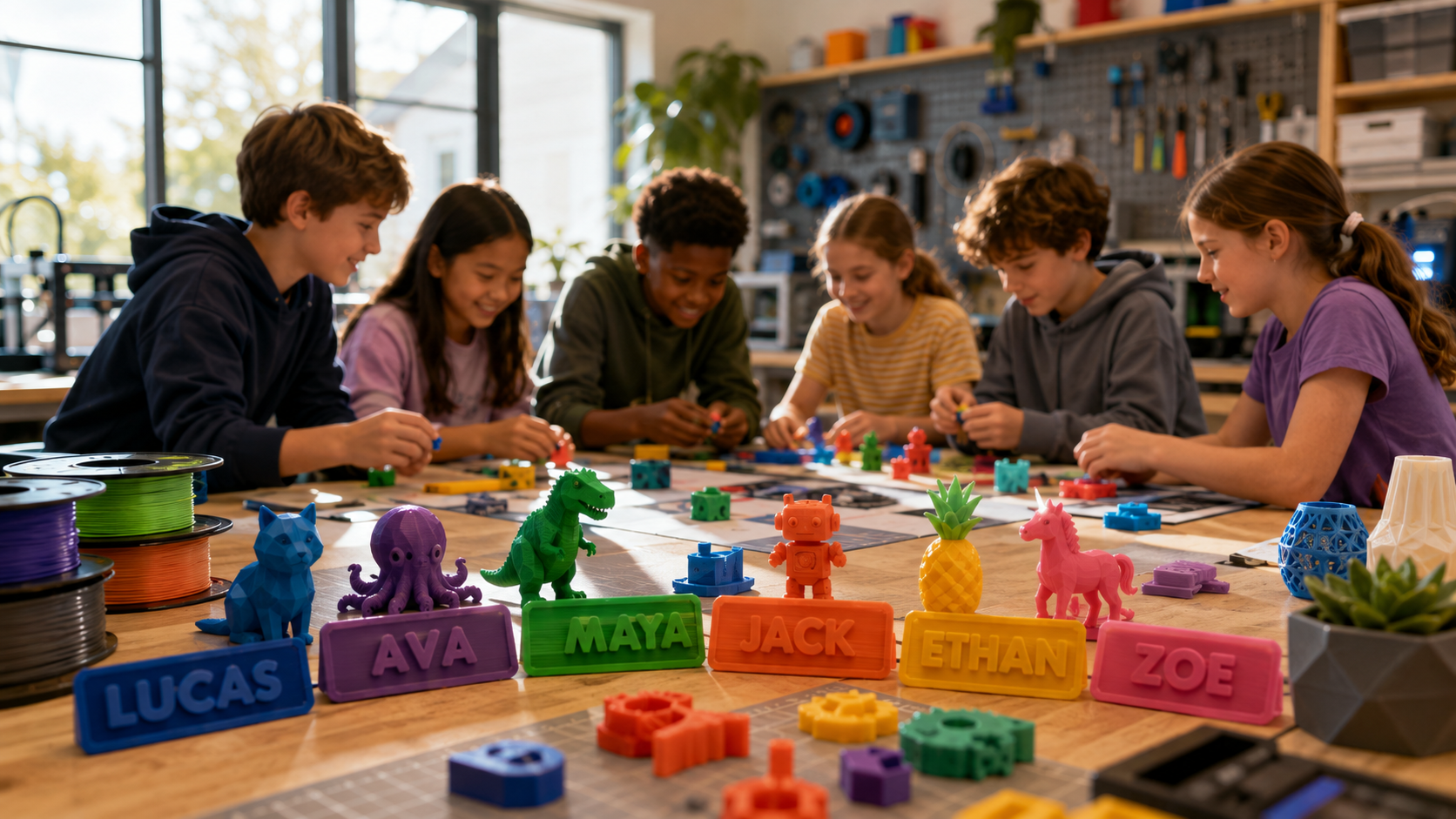
A 3D printer takes the maker gift one step further. The child designs a toy, prints it, and then plays with it. Parents new to 3D printing usually ask two things first: is it safe to run at home, and will my kid still use it in March?
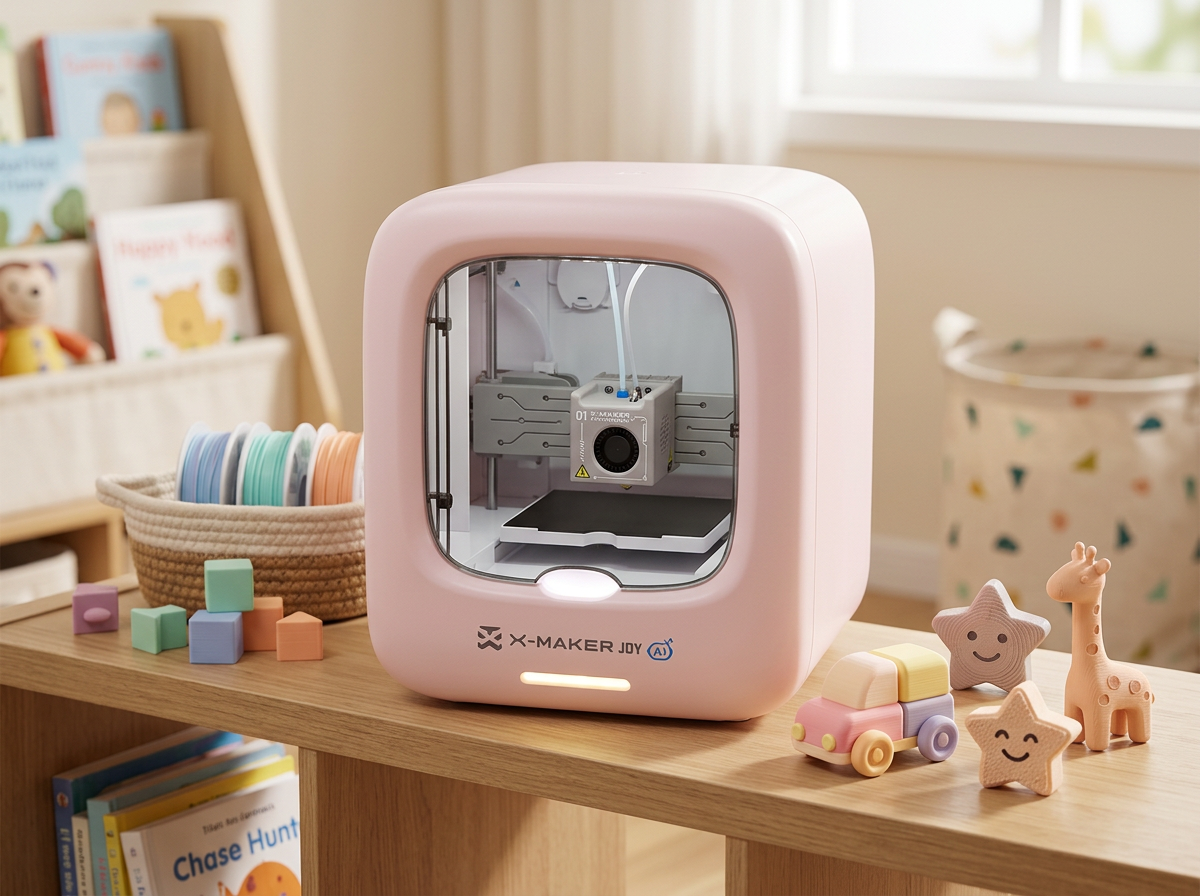
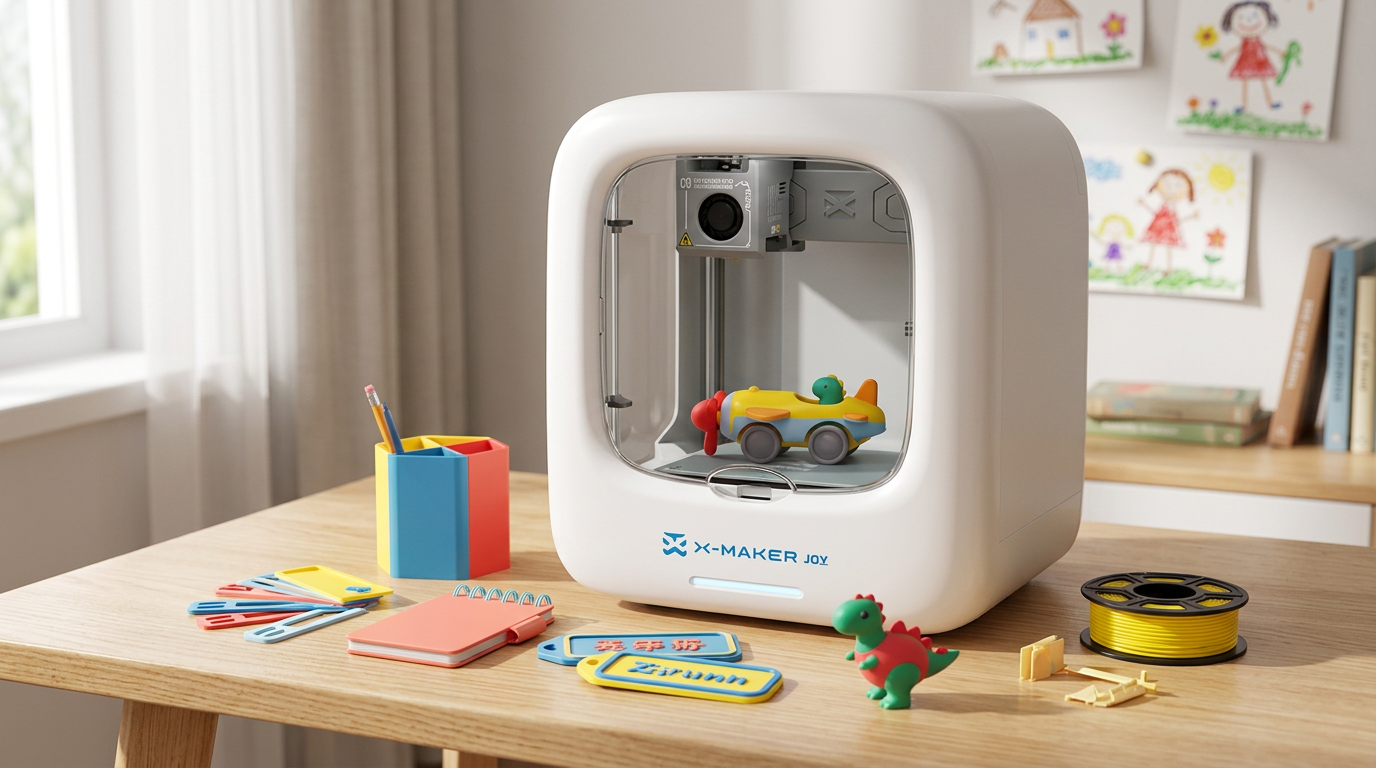
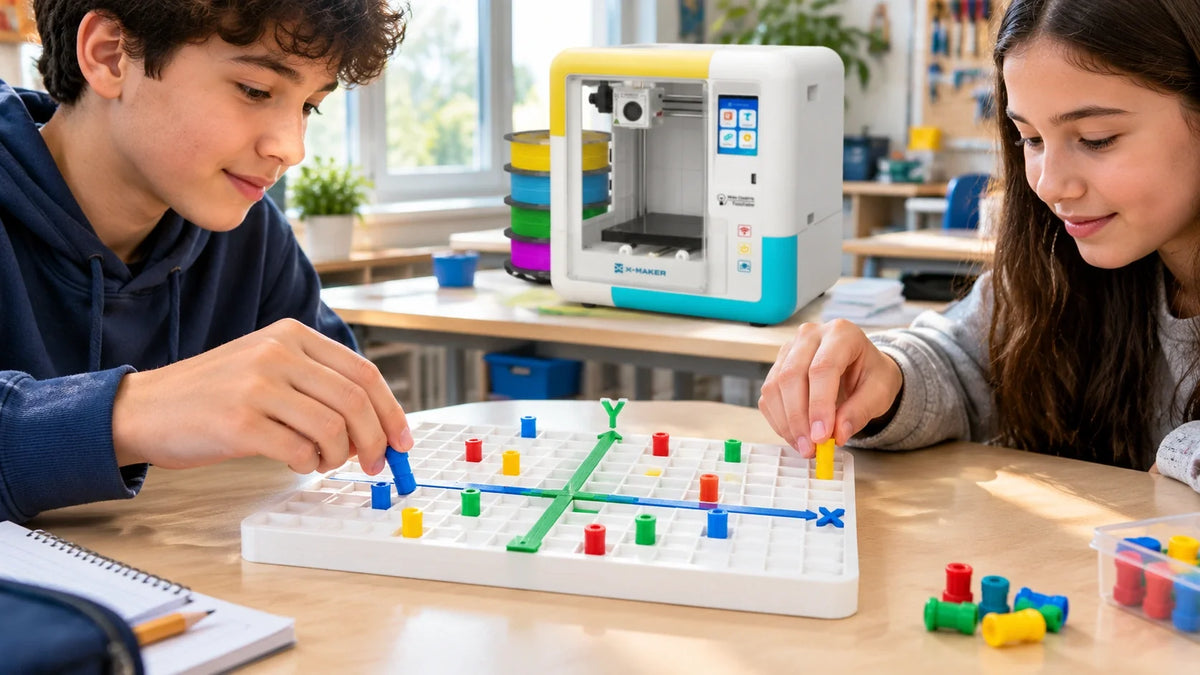
The X-MAKER JOY, AOSEED's beginner 3D printer for younger kids, is built around both questions. It has a fully enclosed print area, a magnetic build plate, and a built in camera, and it prints in PLA filament. The product page lists it for ages 4 to 12. Your child does most of the creative work in the app, while you handle setup and filament changes.
The app moves kids through three stages:
• Idea: AI assisted suggestions and simple personalization of ready made models
• Play: game style toy design through themed mini apps, no design experience needed
• Build: beginner friendly 3D design tools for blocks, cartoon shapes, and custom models
A Toy Library with thousands of models and weekly updates means the first print is rarely the last one. Older kids ready for bigger projects can step up to the X-MAKER, listed for ages 9 to 16, with a larger 150 mm build area and a touchscreen.
|
|
X-MAKER JOY |
X-MAKER |
|
Listed ages |
4 to 12 |
9 to 16 |
|
Build volume |
120 x 120 x 120 mm |
150 x 150 x 150 mm |
|
Enclosed print area |
Yes |
Yes |
|
Controls |
Guided app |
Guided app plus touchscreen |
|
Best first project |
Name tag or small toy car body |
Multipart toy or classroom model |
|
Price (Sept 2026) |
$239 (listed at $339) |
$359 (listed at $509) |
|
Parent tip Pick the first project before Christmas morning. A small, quick print gets a finished object into your child's hands on day one, and that early win carries them into the next design. |
Creative Gifts for Kids Who Make Things by Hand
 Making does not always mean bricks and gears. Plenty of young builders would rather sculpt, paint, sew, or furnish a room the size of a shoebox.
Clay and Modeling Kits
Reusable modeling clay suits kids who like to squash and restart. Air dry or oven bake clay lets them keep the finished figure. Add two or three sculpting tools and skip the giant accessory bundle.
Art and Craft Kits
Judge a craft kit by what is left after the featured project. Brushes, templates, scissors, and a storage box support the next ten projects. A sheet of stickers you can only use once supports none.
Miniature House and Book Nook Kits
These mix construction with decorating, and many include tiny lights. They suit patient, usually older kids, because the parts are small and assembly stretches over several evenings. The finished scene becomes room decor they made themselves.
Sewing and Textile Kits
Precut felt and marked stitch holes help first timers finish. Confident makers enjoy picking fabric and changing the pattern halfway through.
Gifts That Turn a Build Into Play
A finished project should not retire to a shelf. The gifts in this group start with building and end with a race, a game, or a story.
|
Gift |
What happens after the build |
|
Buildable robots |
Program it, send it through a challenge, rebuild it in a new form |
|
Build and race cars |
Test it on a ramp, change the wheels, race a sibling |
|
Transforming sets |
Take the robot apart and rebuild it as a vehicle |
|
Fort kits |
Poles and connectors become a reading den or a castle |
|
Build your own games |
Kids design the maze or obstacle course, then play it |
|
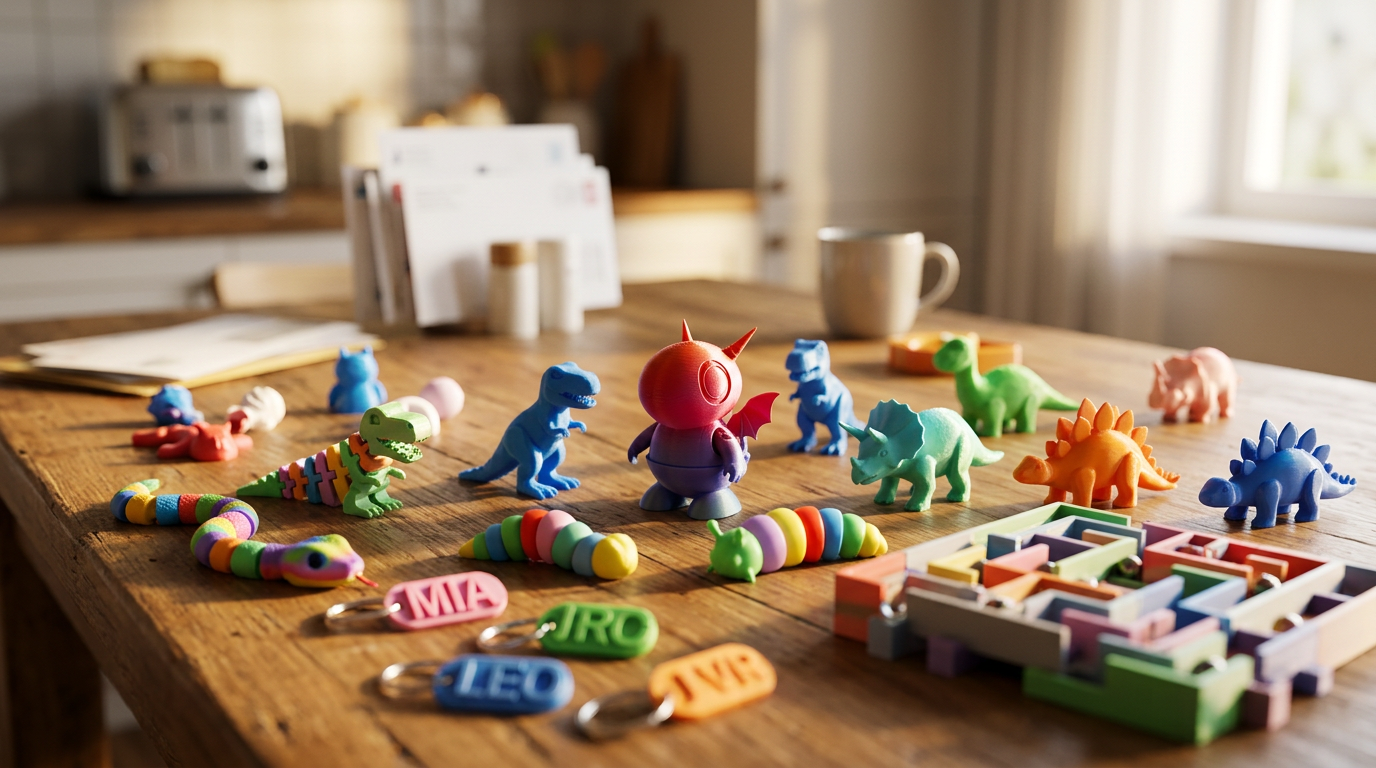
3D printed toys with a creation kit |
Printed parts become a remote control car, music box, or carousel |
That last row is the loop AOSEED is built on: print, play, share, then print again with a new idea.
|
AOSEED CREATION KITS: PRINTED PARTS THAT BECOME WORKING TOYS AOSEED creation kits give a printed design a job to do. X-Racer builds a customizable remote control car ($34.99). X-Auto is a toy car kit ($13.99), X-Music turns a print into a music box ($12.99), and X-Fun adds parts for toy customization ($21.99). Browse kid friendly 3D printers and creation kits to see which printer fits your child's age and how each kit pairs with it. |
Gifts Beyond the Toy Box
Kids who already own every block set may get more from a skill or an outing than another box.
• Maker subscriptions: one project a month spreads Christmas across the year. Compare the age range, subscription length, and what extra supplies each delivery needs.
• Classes and workshops: pottery, woodworking, coding, or robotics. A single workshop is a cheap way to test a hobby before paying for a term.
• Museum or science center memberships: worth it if the venue is close enough for three or four visits a year.
• Better supplies for an existing hobby: real sculpting tools, quality markers, a parts organizer.
• A family project: a birdhouse, a cardboard city, or one big model for the whole holiday break.
|
Give them something to unwrap Wrap a small item with any experience gift. A sketchbook for an art class. Safety goggles for a woodworking workshop. Kids still get to tear paper on Christmas morning. |
Safety Checks Before You Wrap It
 Building gifts carry more loose parts than most toys, so a two minute label check matters. The U.S. Consumer Product Safety Commission advises parents to follow the age guidance on toy packaging and keep small parts away from children under 3. The AAP's checklist for buying safe toys also puts reading the label first.
|
Risk |
What to check |
Matters most for |
|
Small parts |
Choking hazard warning on the box |
Homes with a child under 3 |
|
Magnets |
Magnets fully sealed inside pieces, no cracked tiles |
Every age |
|
Batteries |
Screw closed battery doors, especially for button cells |
Every age |
|
Heat and tools |
Age rating, and whether an adult must supervise |
Woodworking kits, glue guns, 3D printers |
|
Craft materials |
Nontoxic labels on paint, clay, and glue |
Younger crafters |
In the United States, toys meant for children 12 and under must meet the ASTM F963 toy safety standard. CPSC's toy safety guidance explains what that testing and certification cover.
|
Heat and supervision with 3D printers Every 3D printer has a hot nozzle and moving parts. An enclosed design keeps small fingers away from both during a print, but an adult should still handle setup, filament loading, and nozzle care. Place the printer on a stable surface in a room with normal airflow. |
Building Kit or Creative Kit? How to Decide
Still stuck between two directions? Use the lists below.
Choose a building or STEM set when your child:
• Rebuilds the same pieces into new shapes without being asked
• Asks why something moves, falls, or breaks
• Enjoys testing a design and fixing what failed
• Wants to design their own toys and see them become real objects
Choose a creative or craft kit when your child:
• Draws, paints, or decorates whatever is within reach
• Cares how a finished piece looks more than how it works
• Likes calm, step by step projects spread over several days
• Keeps and displays what they make
Many kids sit in both groups. A 3D printer bridges them, because the child designs the look and then tests how the printed toy works.
Conclusion
The best Christmas gift for a young builder is rarely the biggest box. It is the one that matches how they already play, sits just above their current skill, and still has something new to offer in February.
Before you wrap anything, check the age label, look for small parts and magnets, and picture the second project as well as the first.
For families ready to design and print their own toys, AOSEED's family friendly 3D printing platform pairs a guided app with an enclosed printer. The X-MAKER JOY is currently $239 (listed at $339) and comes with a 30 day return window and a one year warranty.
FAQs
What Is the Best Gift for Children for Christmas?
The best Christmas gift matches the child's age, interests, and the way they already like to play. For a young builder, that could be magnetic tiles, a marble run, a robotics kit, a clay set, or a kid friendly 3D printer.
Skip the toy with the longest feature list and think about free time instead. What does your child reach for when nobody is directing them? AAP guidance favors simple toys that invite pretend play and building with their hands, played alongside an adult, over gadgets that do the playing for the child. Replay value is the tiebreaker between two good options.
Practical tip: write down three things your child did last weekend without being asked, then buy something that extends one of them.
What Are the 5 Things to Get Children for Christmas?
There's no official list, but many families use a five part plan so gifts don't overlap. For a child who loves making things, the five could be something to build, something to create, something to read, something to experience, and something for a hobby they already have.
The building gift might be blocks or a gear set. The creative gift could be clay or a sewing kit, the book could explain how machines work, and the experience might be a pottery class or a science center visit. The framework earns its keep by forcing variety, so you don't end up with three presents that all do the same thing.
Practical tip: give each slot a job before you shop, then fill it.
What Are the Top 10 Christmas Presents for Kids?
No single top 10 fits every child, because age, skill, and interest vary so much. For kids who build and create, ten strong categories are magnetic tiles, blocks or bricks, marble runs, gear sets, science kits, robotics kits, mechanical models, clay and art kits, miniature house kits, and kid friendly 3D printers.
Difficulty matters as much as category. A robotics set that thrills an experienced 10 year old can stall a beginner, while plain blocks stay useful from preschool into early grade school. CPSC recommends following the age guidance printed on each box, which also flags small parts.
Practical tip: use any top 10 list to find categories, then pick the specific gift for the child in front of you.
What Are Some Cool Christmas Gifts for Kids?
Cool gifts usually let a child do something they couldn't do yesterday. Building a robot that drives, running a marble through a course they designed, seeing an onion skin under a microscope, or printing a toy car they drew in an app all qualify.
For creative kids the process is the exciting part. Pieces that move, connect, light up, or transform tend to beat a screen full of features. Think about the week after Christmas too. A gift stays cool longer when kids can rearrange it, set their own challenges, or add compatible parts later.
Practical tip: ask one question in the store: "What can they change after they build it?" Several answers means strong replay value.
What Will a 7 Year Old Want for Christmas?
Most 7 year olds are ready for construction sets with instructions, beginner science kits, marble runs, craft kits, simple coding toys, and board games. Interest matters more than age. One child wants magnetic tiles and vehicles, another wants clay, drawing supplies, and a sewing kit.
Age labels still count. The AAP advises reading toy labels to judge safety, whether a child can understand the toy, and whether it fits their stage. At seven, many kids can also start guided 3D design, since the app walks them through each step and a parent only handles setup and filament.
Practical tip: pick something one small step above what they can do now, never so hard that you end up finishing it for them.
What to Give Kids for Christmas Instead of Toys?
Experiences, classes, memberships, subscriptions, books, and hobby supplies all work. For kids who like making things, think pottery or woodworking classes, a maker workshop, a science center pass, a monthly STEM box, or better materials for a hobby they already love.
Non toy gifts still need something to open. Wrap a sketchbook for an art course, a project notebook for a maker membership, or a printed ticket for a planned outing. Match the gift to what the child wants to do, not what sounds educational to an adult, or it can feel like homework.
Practical tip: pair every experience with one small physical item tied to it, so Christmas morning still has a moment of unwrapping.
What Can I Buy for Kids for Christmas?
Start from the child's interests instead of a product list. Builders tend to enjoy blocks, magnetic tiles, marble runs, engineering sets, robots, and model kits. Creative kids lean toward clay, paint, sewing kits, miniature houses, and craft projects.
You can also upgrade something they already do: more bricks for an existing set, real sculpting tools, a parts organizer, or a book about their favorite subject. Price is a poor guide here. A $15 craft kit used every week beats a $150 set used once.
Practical tip: decide the gift's job first (building, creating, experimenting, or family time), then compare only the options that do that job.
What Are the 5 Main Gifts for Christmas?
There is no official set of five main gifts. Many families use a version of the want, need, wear, read rule and add a fifth slot for an experience or something to make.
For kids who love building, that fifth slot might be a construction set, a robotics kit, a woodworking project, or a 3D printer they can design toys on. The goal is variety over volume. Five gifts with different jobs usually get more use than ten similar toys that compete for the same afternoon.
Practical tip: treat the five slots as a flexible frame rather than a rule, and swap one category for whatever matters most to your child this year.


Further reading
3D Printed Cartesian Plane Lesson Plan: Math and Technology Integration for Grades 5 to 8

STEM Education for Kids: What It Means and How Parents Can Support It at Home

Small Gifts for Kids: Party Favors and Little Presents Kids Can Make


