What Is Parallel Play? 12 Side-by-Side Activities for Kids
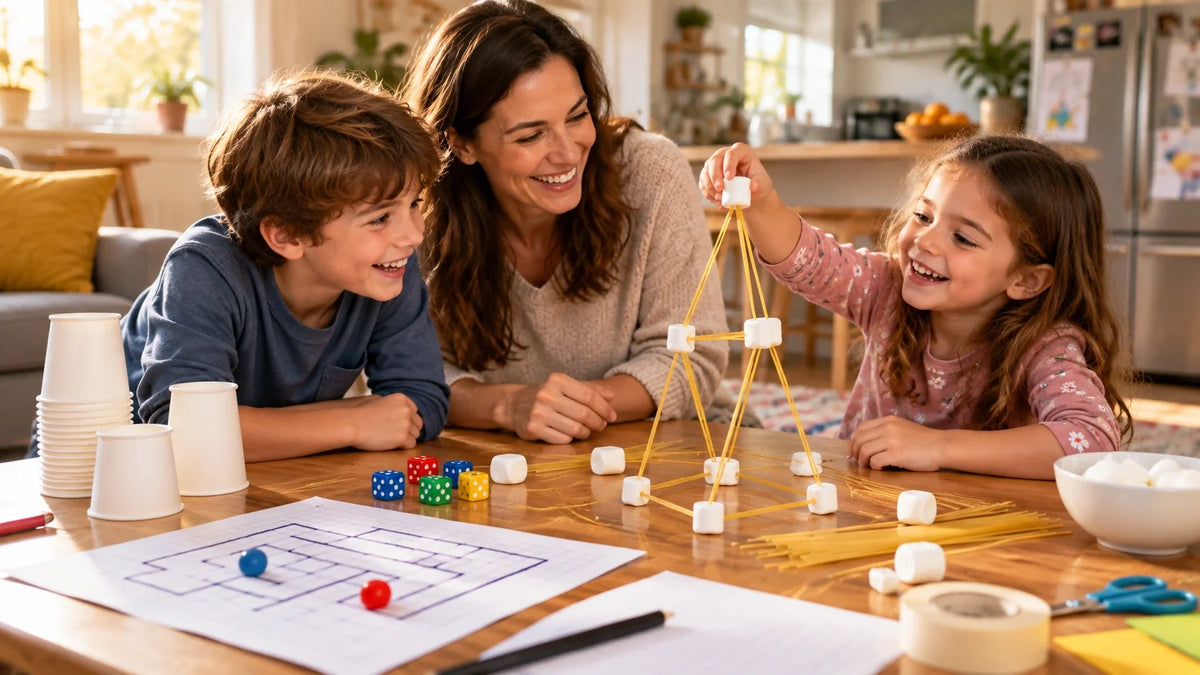
Parallel play is when children play near one another while following separate ideas. They may use similar materials, watch or copy each other, and exchange an occasional word, but they are not coordinating one shared goal.
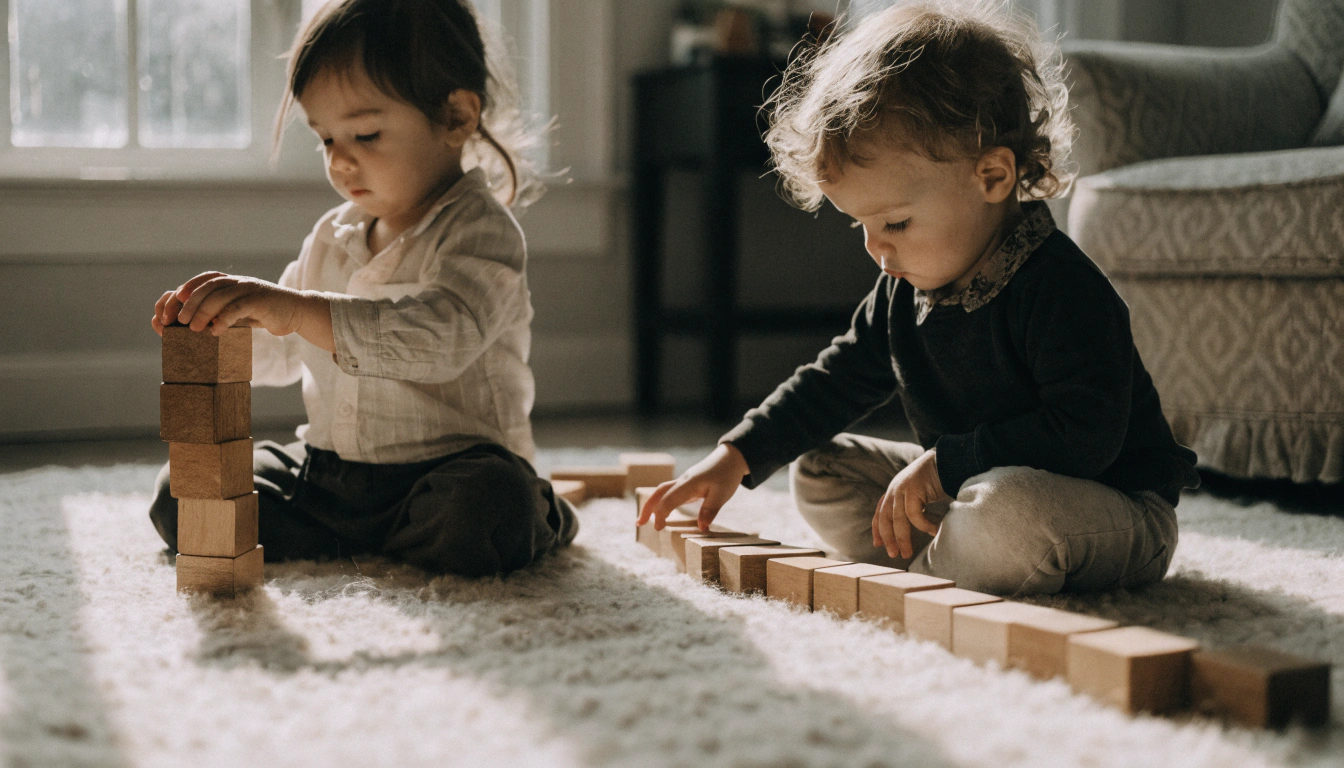
A child building a tower beside another child's road is parallel play. So are two children coloring different pictures at one table, solving separate puzzles on one rug, or testing their own toy vehicles on neighboring tracks. The children share space and attention without needing to share a plan.
Direct answer: Parallel play often becomes easy to notice around age 2. The CDC lists 'plays next to other children and sometimes plays with them' as a 30-month social-emotional milestone. Timing varies, and one play observation cannot diagnose a delay or condition.
Parallel Play at a Glance
|
Question |
Practical answer |
|
What defines it? |
Children play close together but follow separate activities or ideas. |
|
Does it have to be silent? |
No. Brief comments, watching, and copying can all occur. |
|
When is it common? |
Often visible from about age 2 through the preschool years; patterns overlap. |
|
What should adults do? |
Prepare safe space, duplicate bottleneck materials, observe, and help briefly when needed. |
|
Should sharing be forced? |
No. Make ownership clear and invite interaction without requiring it. |
|
When should I ask for support? |
Raise lost skills, several missed milestones, or persistent concerns with a pediatrician. |
How to Recognize Parallel Play

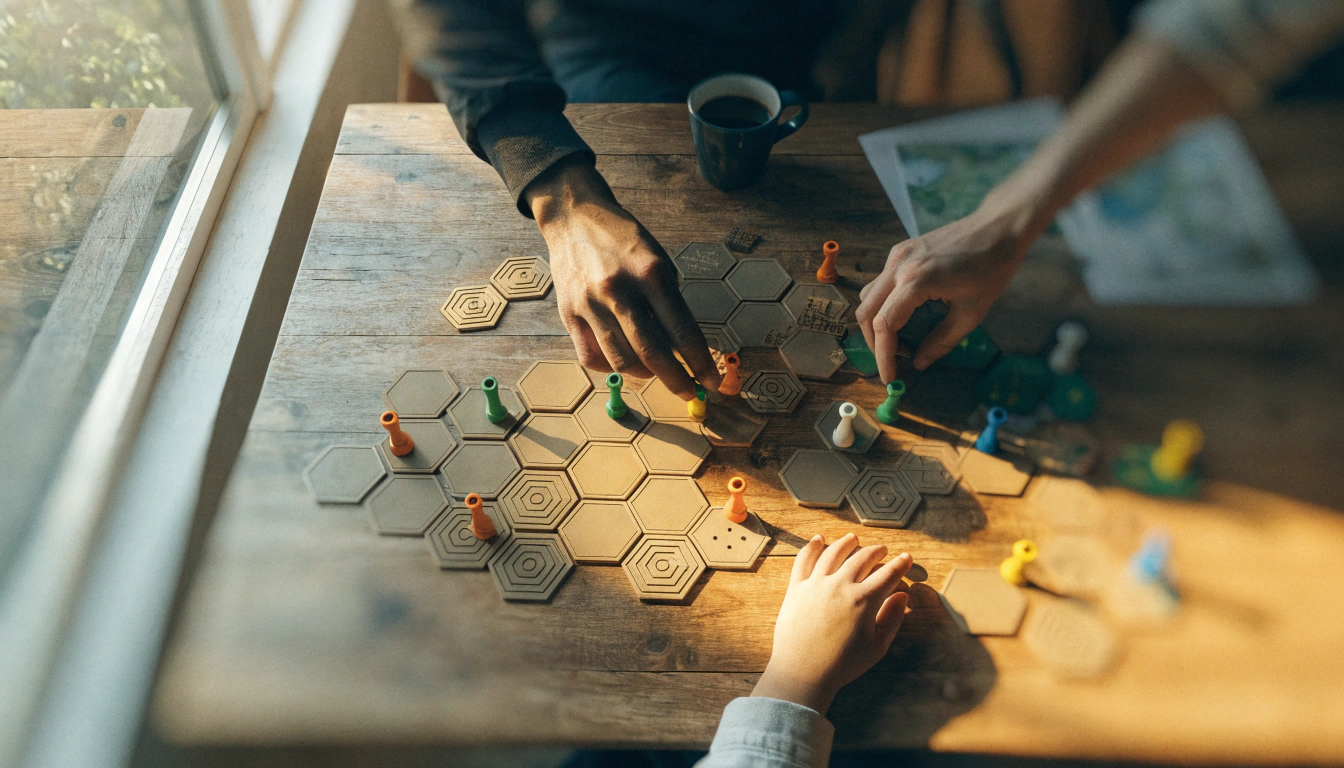
Separate materials keep ownership clear while the children remain close enough to observe one another.
Look for several signs together rather than treating one quiet moment as a category:
- Each child follows an independent plan.
- The children stay within sight or reach of one another.
- Materials are similar or related, but the results do not need to match.
- Talking is brief, optional, or object-focused.
- Watching, copying, and moving closer may happen without joining the other project.
- No single outcome depends on both children performing assigned roles.
Watching is participation, not wasted time
A child may watch a peer rotate a puzzle piece, steady a block base, or roll playdough into a thin line, then try the same method on their own materials. The copying may happen immediately or much later. Adults often miss this because no one announces the learning.
Avoid turning observation into a demand: 'You watched Mia build a bridge' is a neutral description. 'Now go build with Mia' changes the social task and may end the useful watching.
Parallel Play vs. Other Types of Play
|
Play pattern |
Proximity and awareness |
Shared plan? |
Example |
|
Solitary |
Child mainly plays alone |
No |
Completes a puzzle in a quiet corner |
|
Parallel |
Children are near and aware |
No |
Build separate towers with similar blocks |
|
Associative |
Children talk or exchange materials |
Not consistently |
Swap figures while keeping separate stories |
|
Cooperative |
Children coordinate roles or rules |
Yes |
Build one town with agreed jobs |
These descriptions are not grades. Children can move among them in one session. A cooperative game may become parallel play when one child needs space; a solitary activity may become associative when another child asks a question.
At What Age Does Parallel Play Begin?

In the toddler years, children may play close together before they consistently coordinate a shared game.
Parallel play often becomes noticeable around age 2. A more defensible public-health anchor is the CDC 30-month developmental milestone that children play next to other children and sometimes play with them. The wording matters: beside and with can appear in the same period.
Ranges such as ages 2–3 or 2–4 are approximate windows, not deadlines. Temperament, familiarity, communication, energy, culture, room size, group size, and the activity itself all affect what an adult sees. Follow patterns across time and settings instead of using one playdate as a test.
What to track instead of a strict age cutoff
- Does the child notice other people in the space?
- Can the child remain near a peer for a short, workable period?
- Do watching, copying, gestures, brief comments, or shared attention appear over time?
- Can the child communicate a need for help, ownership, a turn, or more space in any reliable way?
- Are difficulties limited to one busy setting, or do they affect participation across home, school, and community routines?
Where Parallel Play Fits in Parten's Six Categories

Several play patterns can appear in one classroom at the same time.
Mildred Parten's 1932 social-participation study described forms of participation during preschool free play. The categories remain useful vocabulary, but they should not be treated as a universal one-way ladder. Children can combine them, revisit them, and show different patterns with different partners.
|
Category |
Observable description |
Approximate timing—not a deadline |
|
Unoccupied behavior |
Looks around, moves, or explores without a sustained play plan |
Infancy and beyond |
|
Solitary play |
Plays independently with little attention to nearby children |
Common in infancy and toddlerhood; possible at any age |
|
Onlooker behavior |
Watches closely and may ask questions without joining |
Often visible in toddler and preschool settings |
|
Parallel play |
Plays beside peers while following a separate plan |
Often noticeable around age 2 through preschool |
|
Associative play |
Talks or exchanges materials without a stable shared goal |
Often increases during preschool |
|
Cooperative play |
Coordinates roles, rules, or a shared outcome |
Often becomes more frequent in later preschool |
What May Come After Parallel Play?
Associative play may become more frequent: children talk more, exchange materials, or briefly enter one another's ideas without maintaining one group plan. Cooperative play adds shared rules, roles, or an outcome that depends on the group. Neither change happens on a fixed date, and children can keep choosing parallel play in unfamiliar or demanding settings.
A longitudinal preschool study examined one 3-year-old classroom (N=25) and one 4-year-old classroom (N=28). A parallel-play relationship between two specific children predicted a later social-play relationship between that same pair, while the reverse pattern was not found. The finding is pair-specific evidence from two classrooms, not proof of a universal sequence. Read the Neal et al. preschool study (DOI 10.1037/dev0001837).
What Parallel Play Can Offer
Parallel play gives children a lower-demand way to remain near peers. It can create opportunities to observe techniques, practice using materials in shared space, hear short functional language, and experience predictable boundaries without the full load of group planning.
The evidence base for play in general is stronger than the evidence for parallel play as the cause of one particular skill. The AAP Power of Play clinical report describes play as an opportunity for language, social-emotional, cognitive, motor, and self-regulation development. The report was reaffirmed in January 2025. That supports protecting varied play opportunities; it does not mean one parallel-play activity guarantees an outcome.
- Observation: a child can see how another person approaches the same material.
- Agency: each child can choose a plan, pace, color, model, or stopping point.
- Shared-space practice: children can learn boundaries and ownership without one shared project.
- Functional communication: short phrases such as 'I'm using this' or 'I need more space' have an immediate purpose.
- Flexible entry: a child can watch, begin nearby, move closer, speak briefly, or leave without failing the activity.
Evidence boundary: Use parallel play as one participation option. Do not present it as treatment, a developmental test, or the only acceptable route toward social play.
12 Parallel Play Activities for Home, Preschool, and Siblings

Open-ended materials allow separate decisions inside one shared space.
A strong parallel-play activity answers four questions quickly: Can each child begin without waiting? Is ownership obvious? Can the children make different choices? Can an adult repair a problem without taking over the whole session?
-
Build in separate block zones
Place two trays of blocks on one rug and mark two work areas with mats or tape. One child may build vertically while the other makes a road, enclosure, or pattern.
- Setup: duplicate wheels, doors, long bricks, and any piece that regularly becomes a bottleneck.
- Adult role: describe ownership once, then observe; rebuild only after asking if a tower falls.
- Reset: photograph each build or place unfinished work on a named tray.
-
Draw side by side with separate paper
Give each child a full sheet and a personal drawing set. Put backup colors in the center, but do not require the children to create the same picture or discuss it.
- Setup: provide duplicates of the most popular colors and one container per child.
- Adult role: comment on choices or actions rather than judging whose picture is better.
- Reset: save unfinished work in separate folders so the next session has a clear starting point.
-
Solve individual puzzles on one rug
Choose two puzzles with a similar challenge level and give each child a separate board and piece tray. Side-by-side rotation, sorting, and edge-finding can create useful observation without requiring sharing.
- Setup: match difficulty to each child instead of insisting on identical puzzles.
- Adult role: offer one clue or easier board before frustration becomes the whole activity.
- Reset: keep missing-piece checks separate so one child's puzzle is not blamed on the other.
-
Use twin playdough trays
Prepare two tubs, two rollers, and two sets of simple cutters. The children can repeat similar motions while producing unrelated objects.
- Setup: choose tools and textures that each child can tolerate; avoid one unique high-interest cutter.
- Adult role: supervise age-appropriate use and keep small accessories away from children who mouth objects.
- Reset: return each color to a separate tub or agree in advance that colors may mix.
-
Create two contained scooping stations
Use two shallow bins with cups, scoops, funnels, and a towel under each station. Choose a developmentally appropriate filler and keep the amount small enough to manage.
- Setup: use separate tools and clear physical boundaries; skip loose fillers when mouthing or choking is a concern.
- Adult role: monitor safety and model one cleanup action without demanding a shared sensory game.
- Reset: stop early if spilling or sound becomes the dominant stressor, then switch to larger objects or water-free sorting.
-
Offer separate story or small-world baskets
Place two books, animal sets, or pretend-play baskets in one calm area. Children can create different stories while remaining close enough to notice gestures, sound effects, and repeated themes.
- Setup: duplicate the character or accessory that children most often compete for.
- Adult role: join only when invited; do not merge the stories to make the activity look more social.
- Reset: store each story world in its own basket with a photo of the starting arrangement.
For first sessions that move from digital choice to a physical object, use AOSEED's beginner 3D printing projects for kids guide to choose a short, visible finish instead of starting with a long build.
-
Print and test separate spinning tops
Each child chooses a top and a color, then tests it in a personal circle. AOSEED's beginner guide places small tops in a 5–15 minute target band, although model size and settings change the estimate.
- Setup: prepare one launch area per child and inspect every cooled piece for sharp edges or loose fragments.
- Adult role: handle printer setup, hot components, removal, and troubleshooting.
- Reset: if a top wobbles, change one factor—scale, balance, or surface—rather than reprinting everything.
-
Make personalized name keychains
A keychain gives each child an obvious ownership cue and a short design decision: name, color, icon, and attachment shape. AOSEED's beginner guide places name keychains in a 15–30 minute target band.
- Setup: verify spelling and preview the attachment hole before printing.
- Adult role: confirm the model is age-appropriate and remove it only after cooling.
- Reset: if one letter fails, repair or reprint the smallest affected part instead of discarding the design.
-
Choose separate animal figures
Each child selects a species and color. The figures can remain separate or later enter one shared habitat if both children choose that change.
- Setup: choose stable models with sturdy limbs and no small detachable features for younger children.
- Adult role: compare the app estimate with the available session time; do not promise a finish the printer cannot meet.
- Reset: a figure that does not stand can become a base-design test rather than a failed project.
-
Create personal game-token sets
Print separate colors or symbols so ownership remains visible. Children can sort, stack, count, or invent separate rules before deciding whether they want one shared game.
- Setup: inspect token size carefully; small pieces are not appropriate for children who mouth objects.
- Adult role: print a small test set before committing to many pieces.
- Reset: store each set in a labeled container and reprint only missing pieces.
-
Print two puzzle boards at matched difficulty
Give each child a complete board rather than one half of a shared puzzle. Adjust piece count, grip size, and fit to the individual child.
- Setup: test one piece and one opening before printing a full board.
- Adult role: enlarge or simplify a tight piece instead of forcing it into place.
- Reset: photograph the finished board and store pieces in separate bags.
-
Test mini vehicles on separate lanes
Each child chooses a vehicle, color, and lane. AOSEED's sibling guide lists mini race cars for ages 5+ with a 30–60 minute project range; check the current model estimate before the session.
- Setup: mark two lanes and prepare one safe starting area for each child.
- Adult role: inspect wheel attachment, axle fit, and cooled surfaces before play.
- Reset: test one axle first; if a car pulls sideways, change alignment before printing a second version.
Families moving from separate builds toward an optional shared challenge can use AOSEED's 3D printing projects for siblings guide. Keep roles optional and age-appropriate; a younger child can choose color or decorate while an adult manages settings and safety.
When Design-and-Make Activities Fit Parallel Play

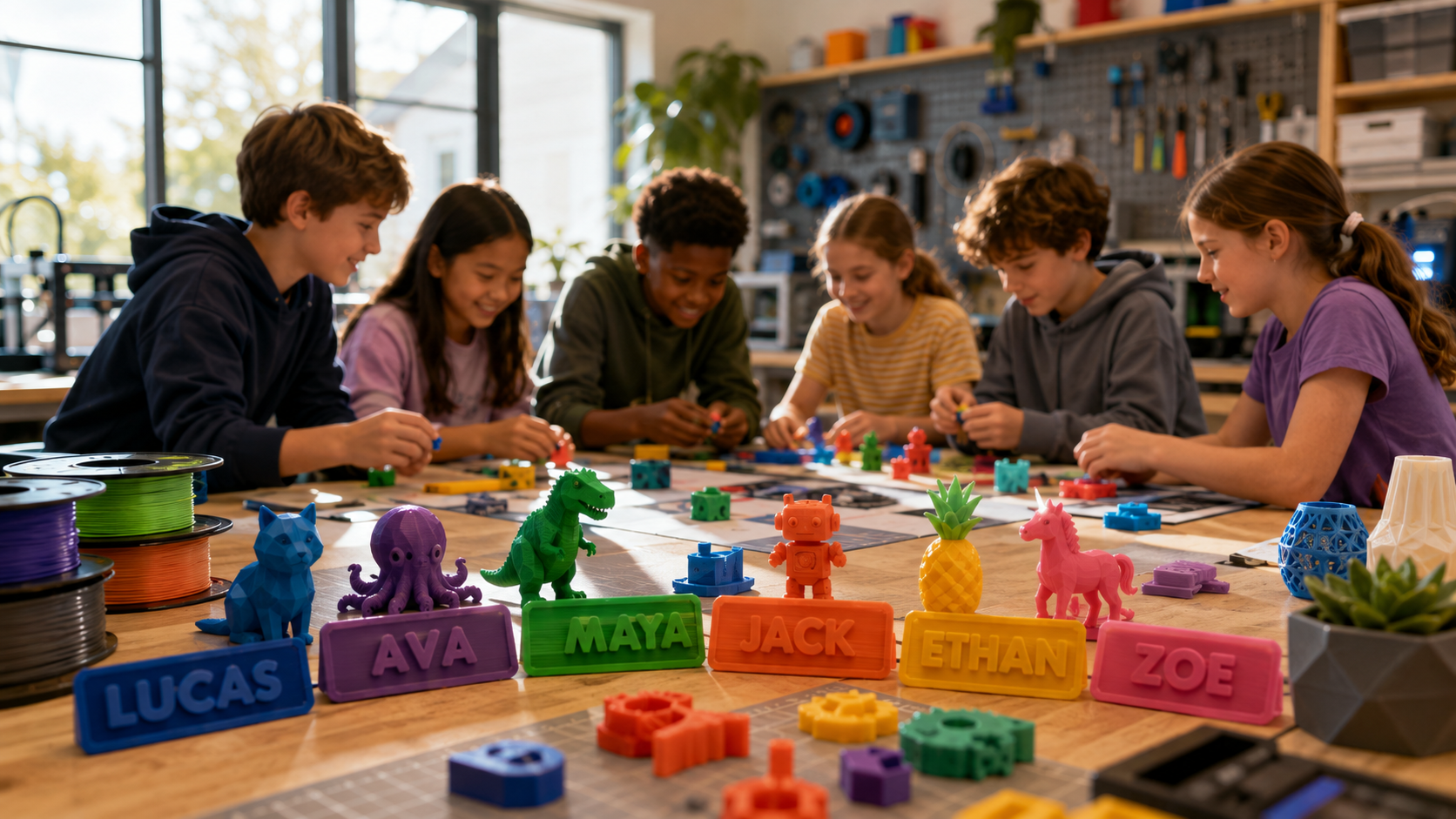
Children can make separate design choices while an adult manages printer setup, hot components, removal, and troubleshooting.
A printer is useful when the activity benefits from repeatable pieces, visible ownership, custom names, matched difficulty, or one-variable revision. It is unnecessary when paper, cardboard, clay, or blocks can answer the same question faster.
- Child choice: model, color, icon, decoration, play rule, and whether to continue.
- Adult responsibility: setup, ventilation decisions, filament loading, hot components, print removal, inspection, and troubleshooting.
- Parallel-play boundary: each child has a separate design or test area; one shared result is optional.
- Failure recovery: change one factor, make a small test, and preserve the child's original decision where possible.
The current official page positions the AOSEED X-MAKER JOY 3D printer for kids ages 4–12 as a guided, enclosed PLA system and recommends adult supervision, especially during early sessions. Verify product details again at publication because variants and app features can change.
How Parents Can Support Parallel Play at Home
- Choose one activity with an obvious personal workspace for each child.
- Duplicate the item most likely to create a bottleneck; the sets do not need to be identical, only comparably appealing.
- State ownership and safety boundaries before the activity starts, then stop explaining.
- Sit nearby and work on your own small task. Model shared space without directing every move.
- Offer one low-pressure bridge—showing a finished object, choosing music, or comparing colors—then accept no response.
- End while the session is still workable. Save a photo or next-step note if the children want to return.
How Teachers Can Set Up Parallel Play Stations

Clear zones and visible materials reduce the negotiation required to enter an activity.
- Choose one open-ended activity and define capacity with a picture or number card.
- Provide one tray, board, basket, or floor marker per child.
- Duplicate bottleneck items and rotate materials rather than displaying everything at once.
- Leave room for an edge seat or a quieter entry point without treating it as a punishment.
- Teach short functional phrases and support gestures, picture cards, or other reliable communication methods.
- Observe across several days before changing the station. Record proximity, watching, copying, brief communication, and recovery after conflict.
Useful phrases to model
- Can I sit here?
- I'm using this.
- Can I have it next?
- I need help.
- Please give me more space.
- I'm finished.
Common Parallel Play Challenges
|
What happens |
Possible reason |
What to try next |
|
Grabbing |
Ownership or waiting is unclear |
Block gently, name who is using it, identify the next turn, and duplicate the item when possible |
|
One child cannot settle |
Too many materials, noise, unfamiliar people, or an activity mismatch |
Offer two choices, reduce visual clutter, or switch to a familiar task |
|
Frustration over sharing |
The waiting demand is too high |
Share the room before sharing the object; use separate sets |
|
Hitting or pushing |
Overload, frustration, unsafe proximity, or limited communication |
Create space, keep everyone safe, use few words, and revise the setup later |
|
Watching without joining |
Watching may be the child's chosen participation level |
Offer an edge seat and optional materials; stop repeating the invitation |
|
Adult dependence |
The task has too many hidden steps |
Prepare the first action, offer two choices, and reduce help after the child begins |
Parallel Play, Autism, and Neurodivergence
Parallel play by itself is not an autism diagnosis. Autism is identified through a broader developmental pattern of social-communication differences and restricted or repetitive behaviors or interests across settings. The CDC autism diagnosis overview states that no single tool or behavior should be the basis for diagnosis.
Some children—including some autistic and otherwise neurodivergent children—may prefer side-by-side activity because it can reduce the demand for rapid conversation, eye contact, negotiation, or unpredictable turn-taking. Others actively seek cooperative play. Preferences vary by person, partner, activity, sensory environment, and day.
- Start with the child's interests and existing communication methods.
- Offer proximity, watching, gesture, speech, picture communication, and movement as valid ways to participate.
- Adjust light, noise, seating, textures, waiting, and visual clutter before increasing social demand.
- Do not require eye contact, sharing, public praise, or a group reveal as the price of finishing.
- Treat sensory and communication adjustments as participation supports, not therapy claims.
When to Ask for Extra Support
Children develop on different timelines. Raise questions with a pediatrician when a child loses a skill they once used, when several milestones are missed, or when communication, movement, hearing, play, behavior, or sensory concerns persist across settings and affect daily participation. Use the CDC developmental milestone checklists to record examples, not to diagnose a child.
Before an appointment, note what happened, how often, who was present, what the environment was like, and what helped. Examples from both home and school are more useful than a broad statement such as 'doesn't play well.' Families do not need to wait for an annual checkup to raise a concern.
Conclusion
Parallel play is side-by-side play without one shared plan. It often becomes noticeable around age 2, remains common through the preschool years, and can reappear when a person wants company with less social demand. Its value is not that it forces the next stage. It gives a child a workable way to participate now.
Start with one clear space, enough materials, and one activity that can produce separate results. Watch how the children use the setup. If conflict rises, reduce waiting or ambiguity before asking for more sharing. If interest grows, offer one optional bridge. Let the children's behavior—not an adult's stage chart—decide the next step.
Parallel Play FAQs for Parents and Educators
Is parallel play still normal at age 3 or 4?
Yes, parallel play can still be part of a typical preschooler's play at age 3 or 4. Children often use it more in a new home, busy classroom, unfamiliar group, or activity that requires concentration. Look at the child's broader pattern across time and settings rather than judging one playdate. A child may use parallel, associative, and cooperative play in the same day.
What is the difference between parallel, associative, and cooperative play?
The main difference is how much the children coordinate. Parallel play shares space, associative play adds loose interaction, and cooperative play depends on a shared plan or outcome.
|
Play pattern |
What the children share |
What remains separate |
|
Parallel |
Space, similar materials, observation |
Plans and outcomes |
|
Associative |
Conversation or materials |
A stable group goal |
|
Cooperative |
Roles, rules, or one outcome |
Individual choices within the group plan |
How can I set up a low-pressure parallel-play playdate?
Use one familiar activity, clear boundaries, and enough materials for each child to begin without waiting. The goal is a workable shared space, not a performance of friendship.
- Choose a calm room or outdoor area with an obvious place for each child.
- Offer two comparable sets of blocks, art supplies, figures, vehicles, or puzzles.
- Put away one-of-a-kind toys that regularly cause conflict.
- Let watching, brief comments, and separate projects count as participation.
- End or switch activities before hunger, fatigue, noise, or repeated conflict takes over.
Should toddlers be required to share during parallel play?
No. Do not make immediate sharing the price of staying in the activity. Toddlers can practice ownership, asking, waiting, and exchanging without surrendering an item the moment another child wants it.
- Use duplicates for high-interest materials when possible.
- State who is using an item and what the next available option is.
- Protect comfort objects or clearly designated personal toys from forced sharing.
- Offer a turn only when the current child is finished or a short, predictable wait is workable.
Does parallel play mean a child has autism or a social delay?
No. Parallel play by itself does not diagnose autism or a social delay. Developmental assessment considers a broader pattern of communication, behavior, play, sensory responses, daily participation, and change over time.
Discuss the pattern with a pediatrician when:
- a child loses language, social, movement, or play skills they previously used;
- several developmental milestones are missed; or
- concerns persist across settings and interfere with everyday participation.
What should I do if grabbing or hitting interrupts parallel play?
Stop the unsafe action first, create space, and use few words. Treat the incident as a setup or regulation problem to solve—not as proof that a child is unwilling or unable to play near others.
Possible causes include:
- unclear ownership or an unexpected wait;
- one unique, high-interest object;
- noise, crowding, fatigue, hunger, or sensory overload; and
- a task that is too difficult or has too many hidden steps.
Try this sequence:
- Block the unsafe action and check that everyone is safe.
- Name the immediate problem: 'Sam is using the red car' or 'You need more space.'
- Offer a duplicate, an acceptable alternative, or a clear next turn.
- Reduce the number of children, materials, or minutes before restarting.
- Record repeated triggers and seek professional guidance when aggressive or unsafe behavior is frequent, severe, or difficult to manage across settings.
Sources
- Parten (1932), Social Participation among Pre-School Children, DOI 10.1037/h0074524
- CDC, Milestones by 30 Months
- CDC, Developmental Milestones / Learn the Signs. Act Early.
- Yogman et al. (2018), The Power of Play, Pediatrics 142(3):e20182058, DOI 10.1542/peds.2018-2058; reaffirmed January 2025
- Neal & Neal, Understanding the Developmental Transition Between Parallel and Social Play During Preschool, PMID 39298253, DOI 10.1037/dev0001837
- CDC, Clinical Testing and Diagnosis for Autism Spectrum Disorder




Further reading

Thanksgiving STEM Activities for Kids: Table Projects and Simple Engineering Challenges

Halloween STEM Activities for Kids: Spooky Builds That Teach Real Science

STEM Crafts for Kids: Build, Decorate and Test