


Sensory Gifts for Kids: Textures, Fidgets and Calm Hands-On Projects
If you've ever watched a kid squeeze a stress ball until it split, or chew a hoodie drawstring through an entire movie, you already know more about sensory gifts than most product pages do. Kids are pretty good at telling you what they need, it just tends to come out through their hands and feet rather than in words.
We've laid this guide out around those everyday habits, the squeezing and fidgeting and bouncing and staring at the washing machine, and the last part covers a few calm projects kids can make on their own.
|
If the child often... |
Gift to try |
Why it tends to work |
|
Squeezes, pokes or kneads things |
Putty, kinetic sand, modeling dough |
Steady resistance under the fingers |
|
Keeps hands busy in class or the car |
Quiet fidgets, linked tangle toys |
Small motion that makes no noise |
|
Bounces, climbs or crashes into cushions |
Balance board, hopper ball, tunnel |
Whole body movement in a set space |
|
Loves making and fixing things |
Craft kit or a kids' 3D printer |
Building the toy is half the fun |
How to Pick a Sensory Gift That Gets Used

The best research here is free. Pick a normal weekday afternoon and pay attention. One kid will roll dough into snakes for twenty minutes straight, another walks out of the room the second her brother's toy starts beeping, and those two would want completely different presents.
Seeking or Avoiding
Some kids chase big sensations, spinning until they're dizzy or throwing themselves at the couch cushions, and others back away from all of it. The CDC does mention unusual reactions to sensory input in its autism diagnostic criteria, but it's one line among many and it doesn't diagnose anything on its own. For buying a present you honestly don't need a label.
Check Age Labels and Small Parts
|
SAFETY CHECK If you've got a toddler at home, the small stuff is what to watch, beads and marbles and magnets and even little printed pieces. There's actually a federal rule that bans small parts in toys made for children under 3, and cheap fidgets do come apart. |
Texture Gifts for Hands That Want to Squeeze

Most families start here and we think that's the right call. Texture toys are cheap, they don't make noise, and nobody has to explain kinetic sand to a four year old.
|
Gift |
What hands do |
Mess |
Adult help |
|
Kinetic sand |
Pack, slice, mold |
Medium, stays clumped |
Low |
|
Therapy or discovery putty |
Stretch, pinch, hunt for beads |
Low |
Low |
|
Modeling dough |
Roll, cut, press tools in |
Low |
Low |
|
Sensory bin |
Scoop, pour, hide small toys |
High |
Setup and cleanup |
One thing about putty: harder isn't better. If it's so stiff that small hands get tired after a minute, that tub is going to live in a drawer.
Fidget Gifts for Busy Hands

Fidgets end up in backpacks and car door pockets for a reason. They're small and there's nothing to set up, and the quiet kind (tangle toys, smooth stress balls, a silicone popper) can usually go to school, though it's worth asking the teacher first.
We'd push back a little on the idea that a fidget fixes focus. For one thing, ADHD looks different from one child to the next, since some kids drift off while others can't sit still. And a classroom study of young kids with ADHD found fidget spinners were linked to poorer attention. So we'd call a fidget a comfort item and keep an eye on how it actually goes.
|
TRY THIS FIRST Buy a couple of cheap ones that work differently, say a squishy one and a twisty one. Whichever is still rattling around the car a week later is your answer. |
Movement and Calming Gifts
For Kids Who Bounce and Climb

Some kids just need to move. Hopper balls, stepping stones and crawl tunnels give all that energy a place to go besides the sofa. Our favorite is the curved wooden balance board, since it's a rocker one day and a bridge for toy cars the next. Measure your floor and look at the weight limit before you order one.
For Quieter, Slower Play

Slower stuff suits children who calm down when things are predictable, like a liquid timer on the desk, a sealed sensory bottle, one of those sand pictures you flip over, or a little play tent in a corner. We'd skip anything that flashes if bright light bugs your child.
Calm Hands-On Projects Kids Can Make
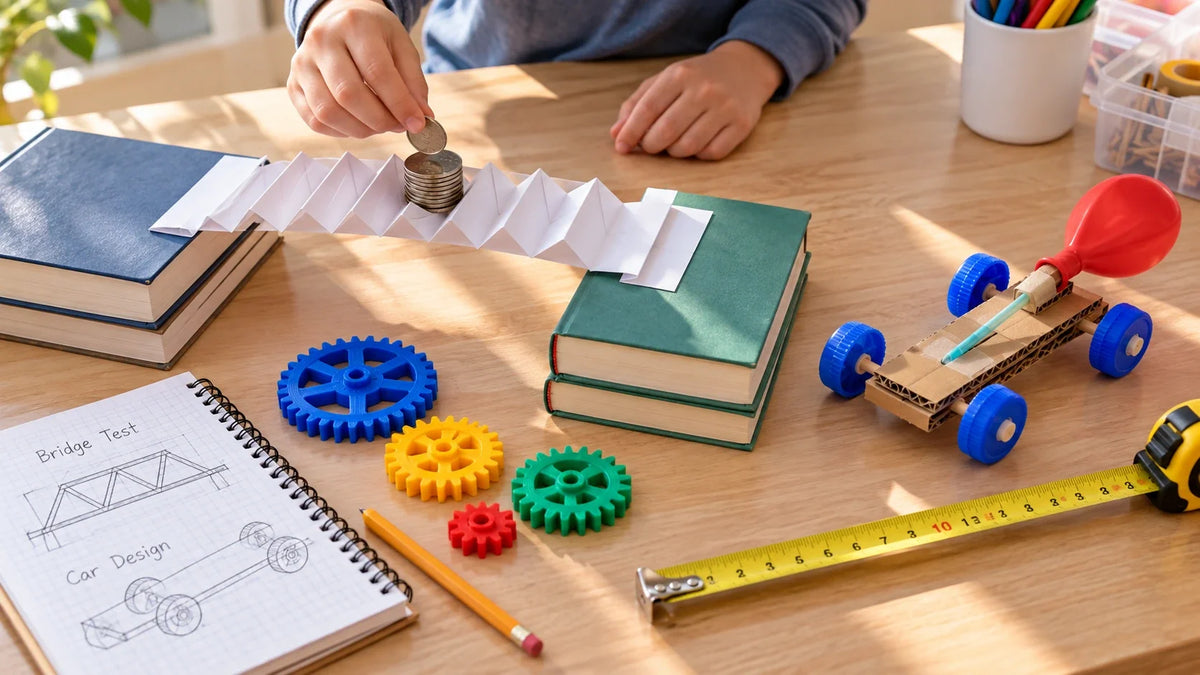
When a kid makes the thing, they get to decide how it feels, and for children who are picky about textures that's kind of the whole point.
Low Tech Projects for a Rainy Afternoon
• Sensory bottle. The kid picks the glitter and beads; an adult glues the lid, because nobody wants glitter water on the rug.
• Texture board. Scraps of felt, foil, corrugated card and yarn, glued down on a cereal box, make a decent touch panel.
• Homemade dough. Make a few small batches in different colors and let them mix however they like.
Designing and Printing Their Own Fidget
This one we know best, obviously. With an easy 3D printer for younger kids, a child opens the AOSEED app, picks a fidget or a bumpy texture tile or a puzzle piece, stretches the shape or adds their name, and hits print. The X-MAKER JOY is fully enclosed and quiet, so a parent takes care of setup and filament and the kid gets the fun part.
Then the piece comes out and goes straight into play. A lot of kids who like routine really enjoy that loop of pick, print and test, and with thousands of ready to print models there's pretty much always another shape for next Saturday.
|
WHY A KIDS' 3D PRINTER WORKS AS A SENSORY GIFT A pop toy gives one feeling and then usually gets forgotten. With a printer the kid makes the next fidget or puzzle themselves, so the gift sort of keeps going. AOSEED's 3D printers for kids come with guided design apps and a weekly updated model library, starting with X-MAKER JOY for ages 4 to 12 and going up to X-MAKER for ages 9 to 16. |
When to Choose a Toy and When to Choose a Project
Pick a ready made sensory toy when:
• your kid needs something calming right now, in the car or at a desk
• you're still figuring out which textures they like
• it has to travel, fit in a stocking or stay quiet at school
Pick a hands-on project when:
• they're already the kid who builds things and takes them apart
• doing things in the same order helps them settle
• you'd like the present to still be making new toys months from now
Conclusion
Nine times out of ten, the sensory gift that works is a safer, sturdier take on something your kid already does. Watch for a bit, read the label, and go with one thing that fits instead of a giant mixed bag. If your child would rather make the fidget than unwrap one, have a look at AOSEED's creative tech for kids. We'd start with the X-MAKER JOY, which is $239 at the moment instead of the usual $339.
FAQs
What is the best gift for a sensory seeking child?
The one that matches what they already go after. The couch jumper in your house will likely ignore putty and spend hours on a hopper ball, and the squeezer is the opposite. Watch a few days of free play and buy a sturdier version of whatever keeps ending up in their hands.
What are the top 10 sensory toys?
There's no official top 10, and every kid's list would look different. For a starter spread we'd go with kinetic sand, modeling dough, therapy putty, a quiet fidget, a sensory ball, a balance board, a hopper ball, a sensory bottle, a little percussion set and a chew tool that's actually made for mouths.
What toys do kids with ADHD like?
Usually the same things their friends like, building sets and art supplies and anything they're allowed to climb on. ADHD isn't one single thing, so interests matter more than the label. Fidgets are hit or miss. In our experience, a project where the steps are clear and there's a real object at the end, like a toy they designed and then printed, keeps attention longer than people expect.
Are sensory seeking kids autistic?
Not necessarily. Sensory seeking is common in autistic kids, but you'll find it in kids who aren't autistic as well, and in children with other developmental conditions. An autism diagnosis takes a lot more than one behavior, and communication and social skills come into it too. If sensory stuff starts messing with sleep, meals or school, mention it to your pediatrician.
Can a kid have sensory issues and not be autistic?
Yes. A review of sensory processing research found these difficulties across several neurodevelopmental groups, not just autism. It doesn't change much when you're shopping. A child who can't stand noisy toys but will knead clay for half an hour should get clay, more or less, and the bigger questions can go to their doctor.
How do you calm down a sensory seeking child?
That really varies from kid to kid. Ten minutes of jumping, or pushing a laundry basket full of books down the hall, settles some kids, while others need a quiet corner and a lump of putty. A meta-analysis of 55 studies found big differences between children in seeking, over responsivity and under responsivity. So offer a couple of options and drop the ones that make things worse.
What are some thoughtful gift ideas for kids with autism?
Think about the actual child first. A kid who's obsessed with trains will probably be happiest with something train related, and a builder will go for a building set or a making project. Check with a parent about any sounds or textures they can't stand. Toys sold specifically as autism toys tend to miss the point, in our view.



Further reading

Graduation Gifts for Kids: Keepsakes for Kindergarten to Fifth Grade

How to Clean a 3D Printer: A Routine for Families

3D Printer Filament Holder: Options, Setup and a Version You Can Print


