Predictable Maker Projects for Kids Who Like Clear Steps
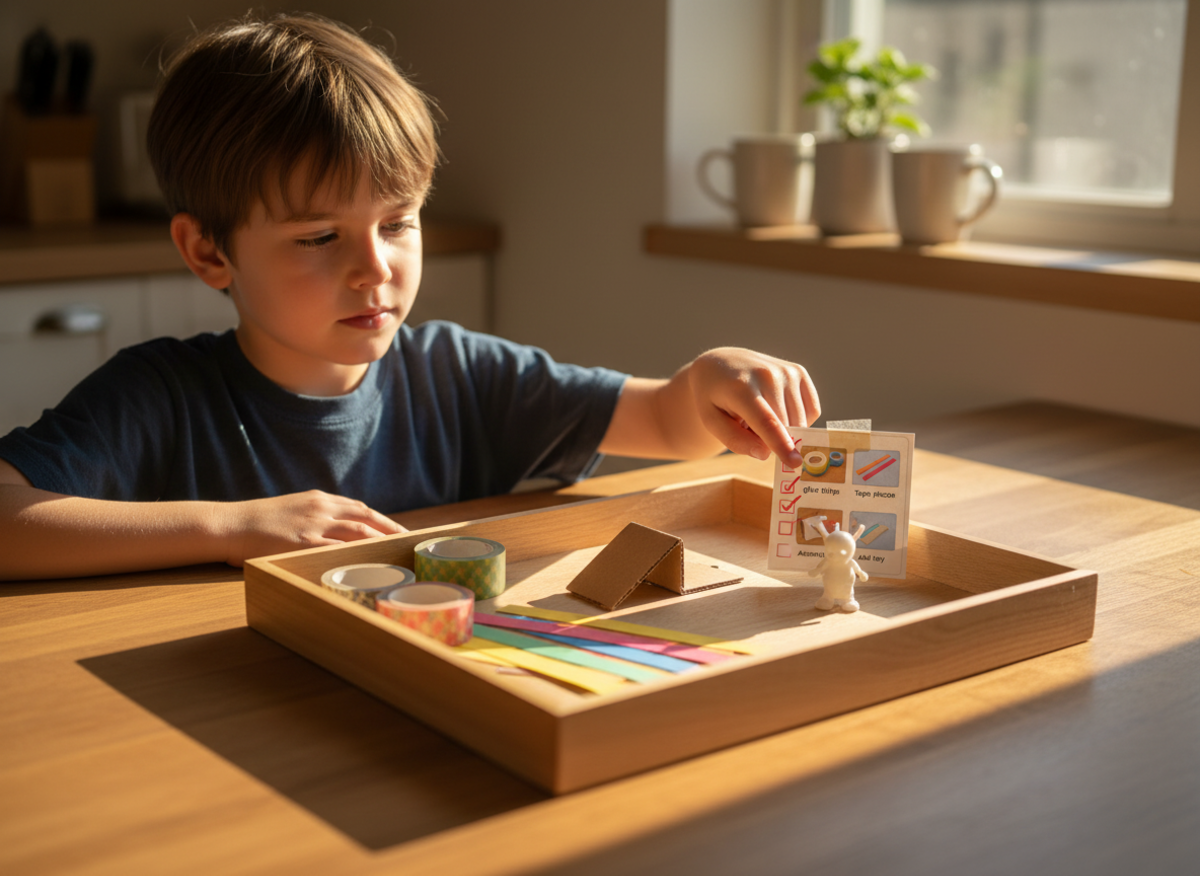
Watch what happens when you put the same craft tray in front of two kids. One of them grabs the scissors and goes. The other doesn't touch anything. They just look at the supplies, like they're waiting for somebody to read out the directions first. It's not shyness. It's not lazy either. They just want to know what they're supposed to make before they pick anything up. That second kid is the one I'm writing for here.
What works with them is giving them a frame to lean on. A tray on the table. Three to six steps they can actually see, drawn or written out somewhere they can point at the next one. Something they can pick up at the end and hand to a sibling or stick on a shelf. And then a cleanup that runs the same way each round, so cleanup stops being its own little argument. The project itself can change weekly. It honestly doesn't matter what they're building. The shape around the building part has to stay still.
Here’s what’s coming up: how to tell if your child needs this kind of structure, plus a five-part shape that fits almost any project. You’ll also get ideas for different times of day, an age-by-age cheat sheet, notes on materials and safety, and small things that can weaken the routine when adults miss them.
Why Kids Who Like Clear Steps Are Different

Some kids feel calmer when the rules are visible. Other kids just stall out. You can usually see the difference at a craft table within thirty seconds or so. One kid is already cutting and gluing. The other one is still staring at the supplies, hoping somebody will tell them where to start. Both are pretty normal, and there's nothing wrong with either kind. The hitch is that 'just make whatever you want' only works for the first kid. The second kid hears that and shuts down.
|
Open-ended play |
Predictable maker project |
|
'Make anything with these blocks.' |
'Build a 4-block tower, then add a roof.' |
|
No fixed ending |
A finished thing the kid can show |
|
Time pressure is unclear |
10–30 minutes, signaled in advance |
|
Mess spreads wherever |
One tray, one cleanup order |
The Signs Your Kid Wants Structure
You'll notice they ask the question 'what should I do first' a lot. They give up on craft projects that don't have an obvious ending. They line up their toys in rows before they actually start playing with them. They will happily read the same picture book every night for a month. Anything that surprises them tends to set off a meltdown. If you just read that list and recognized two or three of those behaviors, your kid is asking you for the frame. Giving them more freedom isn't going to be the answer.
What Predictability Actually Buys You
You get calmer starts to activities. Less arguing when it's time to clean up. Fewer of those 'just one more minute, just one more minute' fights at the end of an activity. The Kids Mental Health Foundation makes the point that routines help kids feel safe, build independence, and cut down on the kind of conflict that happens when a child has no idea what's coming next. A maker shelf is really just one small, repeatable version of the same idea.
Why 'Just Be Creative' Backfires
The phrase 'make whatever you want' sounds incredibly generous on the surface. To a kid who's already tired or a little overwhelmed, though, it can feel like a problem with no good answer. Try swapping it for something concrete like 'color the wings, then cut them out, then tape them on.' The kid still picks all the colors and all the stickers. They still get to make plenty of real choices. The path through the project just stays fixed, which means they get the freedom inside the frame instead of being asked to invent the frame themselves.
The Five-Part Shape Every Predictable Project Shares
There are five parts to the shape: choose, gather, build, test, and clean. That's the whole thing. If you run it with a kid three times, they start to recognize the pattern. If you run it ten times, you'll start catching them setting up the tray on their own when they want to make something.
|
Step |
What happens |
What the kid does |
|
Choose |
Pick one project from a small menu |
Decides — bridge or tower, not 'anything' |
|
Gather |
Supplies on one tray, nothing extra |
Names each tool out loud |
|
Build |
3–6 visible steps, action verbs |
Checks off each step as they go |
|
Test |
Finish does something — rolls, slots, prints |
Sees whether the build works |
|
Clean |
Same four moves every time |
Resets the tray for next time |

Choose and Gather Without Overwhelming Choice
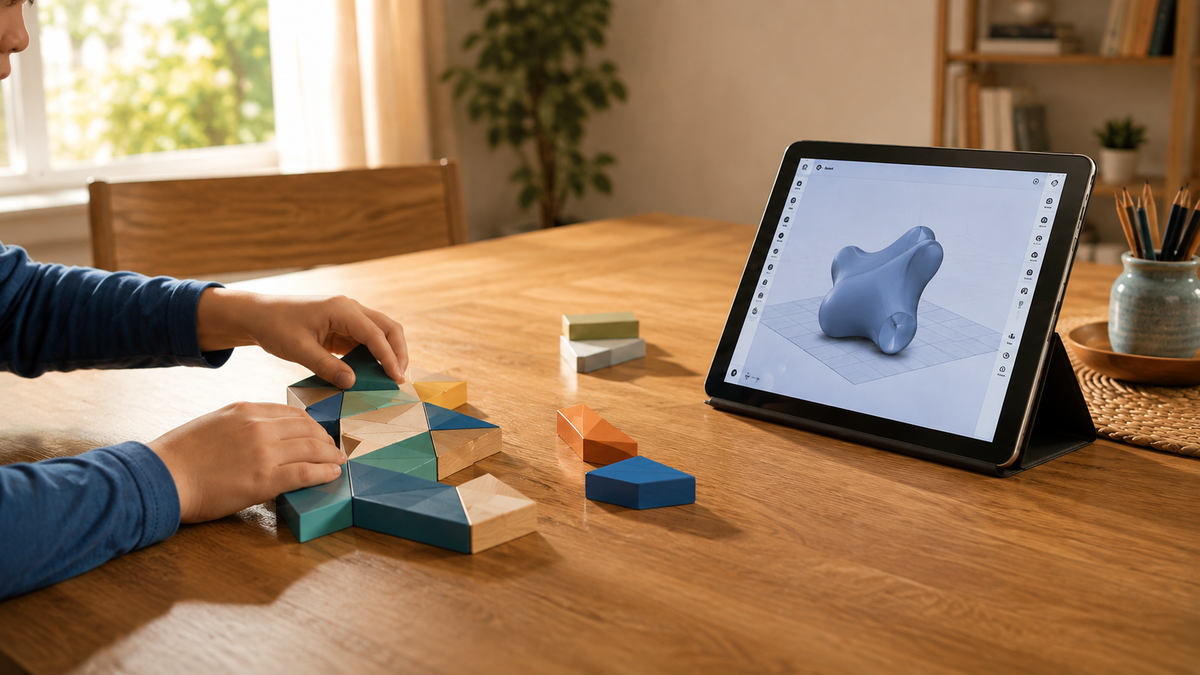
The question 'what do you want to make today' is too big for a lot of kids. Something like 'bridge or tower' is sized about right. Pick two options. Three if you have to. Never lay out the whole shelf at once and ask them to choose from everything. Once they've picked, all the supplies they need for the project go onto one tray. Nothing else. Families who add a beginner 3D printer for families to the routine can pre-load a short list of models the same way, so the choosing step stays just as small as it does with the paper crafts.
Build in Three to Six Visible Steps
The number of steps should track with the age of the kid. Three picture steps work well for a 4-year-old. A 9-year-old can usually handle a six-step card with short words on it. For older kids you can drop the step list entirely and give them a one-paragraph brief instead, with a goal, a materials list, and a single rule. Stick to action verbs the whole way through. Cut. Fold. Tape. Test. Don't bother explaining the reason behind each step. Kids who like structure don't need the explanation. They need the action.
Test, Then Clean the Same Way Every Time
The finished thing needs to do something at the end. A car that actually rolls across the floor. A stamp that prints a clean shape on paper. A puzzle piece that fits where it's supposed to fit. A finish that just sits on the shelf looking pretty tends to feel a little underwhelming. Then comes cleanup, which should look exactly the same way every time you run the routine. Tools go back in their bins. Scraps go in the trash. The table gets wiped down. The finished project goes on the display shelf. Tape that four-step card to the tray and let it do the explaining.
Picking Projects by Time of Day

The trick to making this routine actually stick is fitting projects into time slots your family is already running. Mornings have to stay tiny or they just won't happen. After school needs something grounding. Weekends can stretch out a little. Bedtime needs to stay quiet.
|
Time slot |
Length |
Project type |
Goal of the slot |
|
Morning |
5–10 min |
Checklist craft, backpack charm |
Move the morning forward |
|
After school |
15–25 min |
Build tray, sticker maze |
Reset the nervous system |
|
Weekend |
45–90 min |
STEM challenge, 3D print |
Test, fail, improve |
|
Bedtime |
5–10 min |
Bookmark, gratitude card |
Wind the body down |
Morning Checklist Crafts
Mornings aren't really the time for actual crafting. The morning slot is more for using a craft that the kid made on Saturday afternoon. A magnetic chore chart they decorated last weekend. A backpack charm. A little note slide-rail you keep on the fridge for messages between siblings. The making happened earlier in the week. Monday morning just gets to run with what's already there.
After-School Build Trays
The hour between school pickup and dinner is probably the hardest part of any kid's day to design well. They're tired. They're hungry. Often they're both at once. One small build tray sitting on the table is the closest thing to a soft landing you can offer them. Give them a snack first if they need it, then a single tray with one project on it. A block pattern, a cardboard bridge, a sticker maze, anything along those lines. AOSEED's step-by-step project guides cover paper builds and 3D-printed builds in the same place, which means a tech-leaning kid can queue up a model on a Tuesday afternoon and have it printed by Saturday morning without losing the thread.
Weekend STEM Challenges
Weekends are where projects get to fail and then try again. Every weekend project should be anchored to one testable question. Can this car make it across the rug without tipping over? Will this paper bridge hold the weight of ten coins on top of it? Will this 3D-printed stamp leave a clean shape on paper, or will it smudge around the edges? The build, test, fix, retest loop is the actual routine. The thing you build is almost beside the point.
Bedtime Wind-Down Crafts
No glue. No glitter. Nothing that needs a do-over if it goes wrong. Bedtime crafts should soften the transition into sleep. A bookmark for whatever book you're currently reading together. A little gratitude card. A paper moon you can tape above the bed. Keep the four-step bedtime order the same every night, in this order: pajamas first, then a small craft, then a story, then lights out.
Setting Up the Predictable Maker Shelf — Materials and Safety
|
SMALL PARTS — CHECK BEFORE BUILDING For children under 3, any part smaller than 4 cm is a choking hazard. CPSC small-parts rules apply to homemade and 3D-printed pieces exactly as they do to manufactured toys. Store small accessories in a sealed bin and supervise the under-5 crowd during any paint or assembly session. |
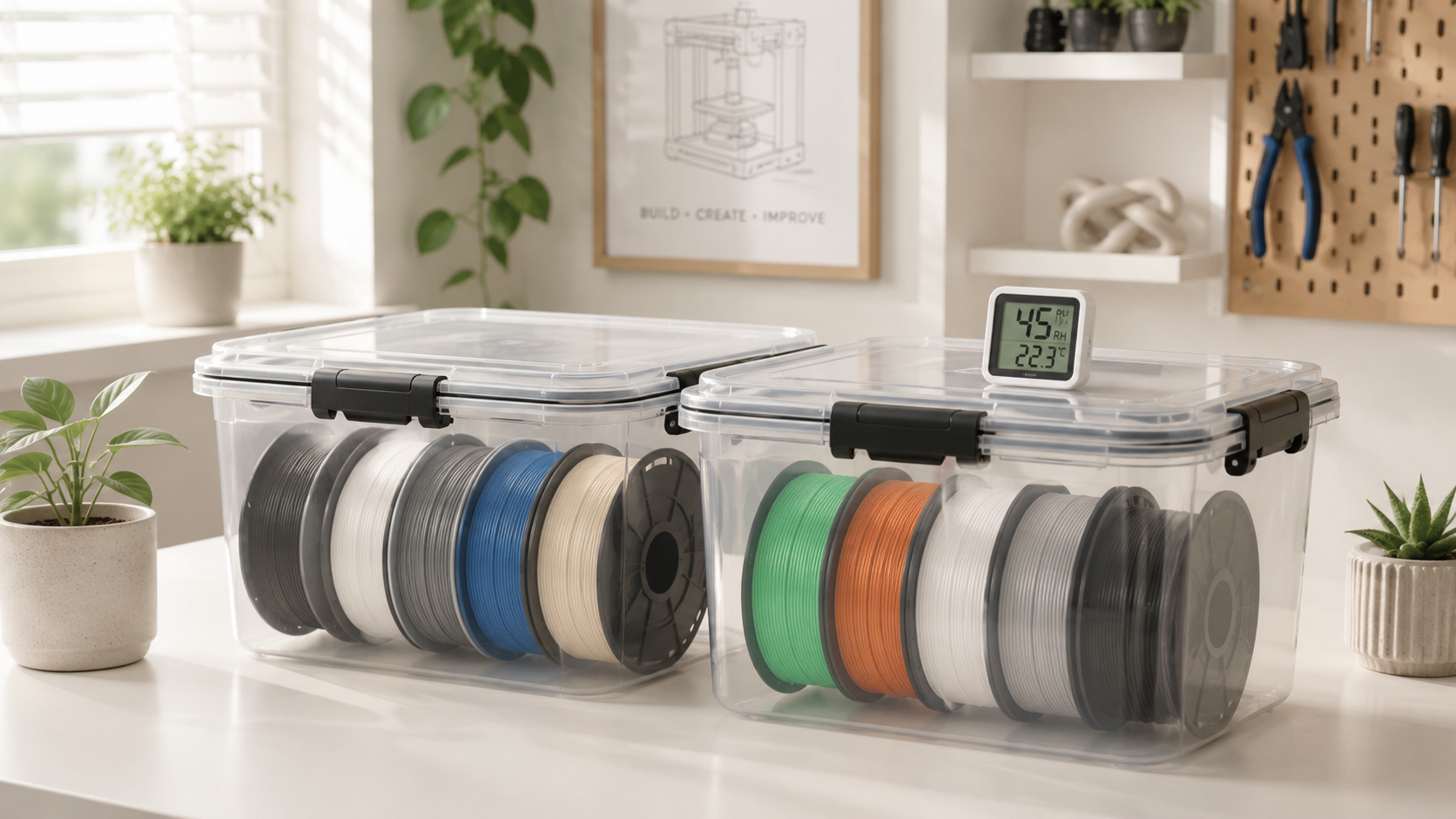
The shelf doesn't need to be big. One bin per material category. Picture labels on every bin so a kid who doesn't read yet can still tell what's in what. Project trays go on a lower shelf where the kid can actually reach them on their own. Sharp tools, glue guns, and 3D-printer hot ends live in an adult-only spot. That can be a high shelf, a locked drawer, or just a clearly labeled box that sits out of casual reach. A maker space doesn't have to feel risky in order to feel inviting.
|
Material |
Good for |
Watch out for |
Kid-friendly? |
|
Paper + tape |
Most morning, bedtime, after-school crafts |
Sticky residue on tabletops |
Yes — start here |
|
Cardboard |
Ramps, towers, robots, mini houses |
Adult-only cutting for thick stock |
Yes — workhorse of the shelf |
|
Acrylic paint |
Remix projects, decorating finished work |
Sand support marks first; dries fast |
Yes with smock + tray |
|
PLA filament |
Small 3D-printed toys and accessories |
Softens above 60 °C; brittle on thin parts |
Yes — default for first prints |
|
Hot glue, X-acto, glue gun |
Older kids, structural builds |
Burn risk; adult demo first |
Ages 9+ with supervision |
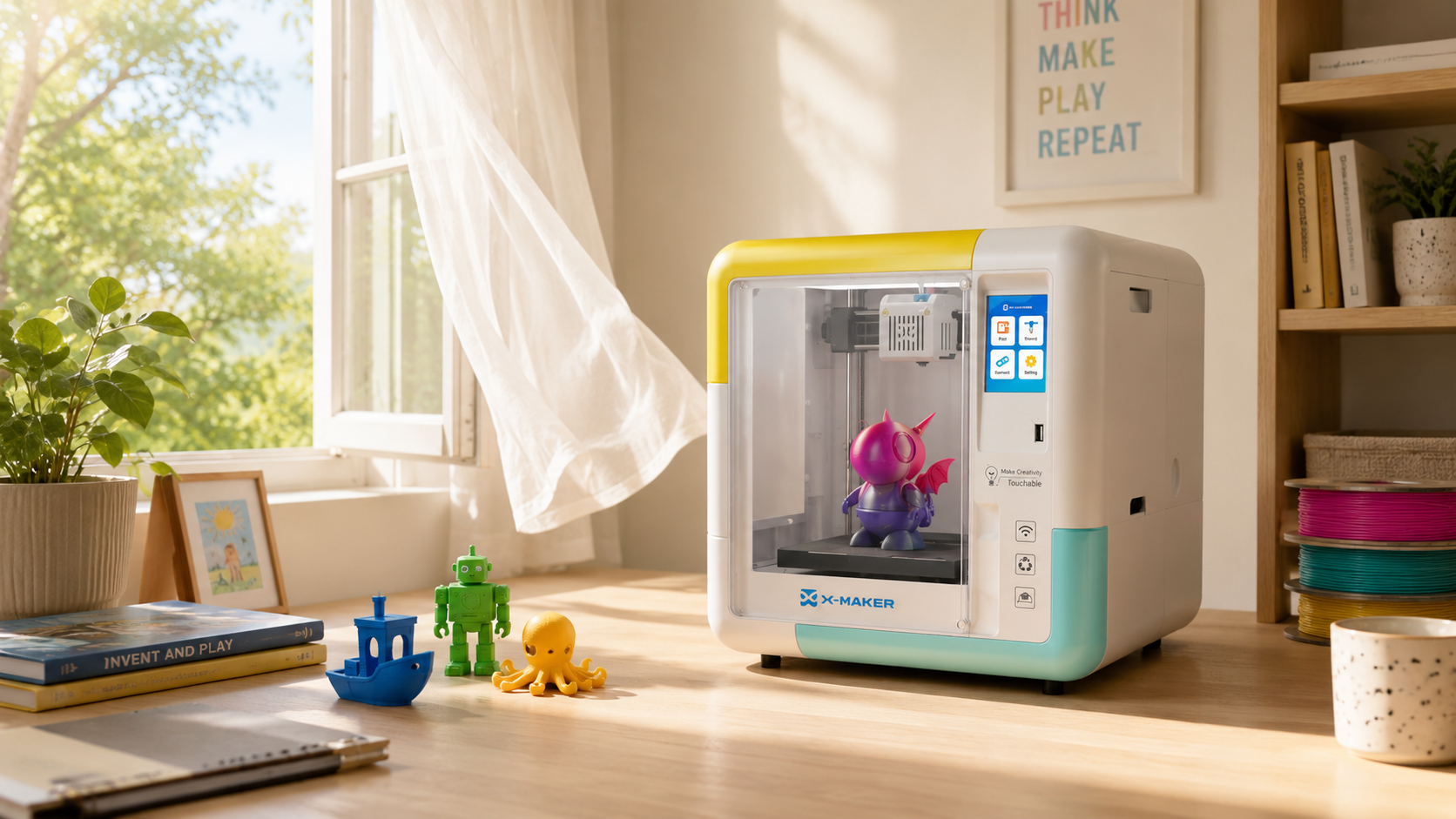
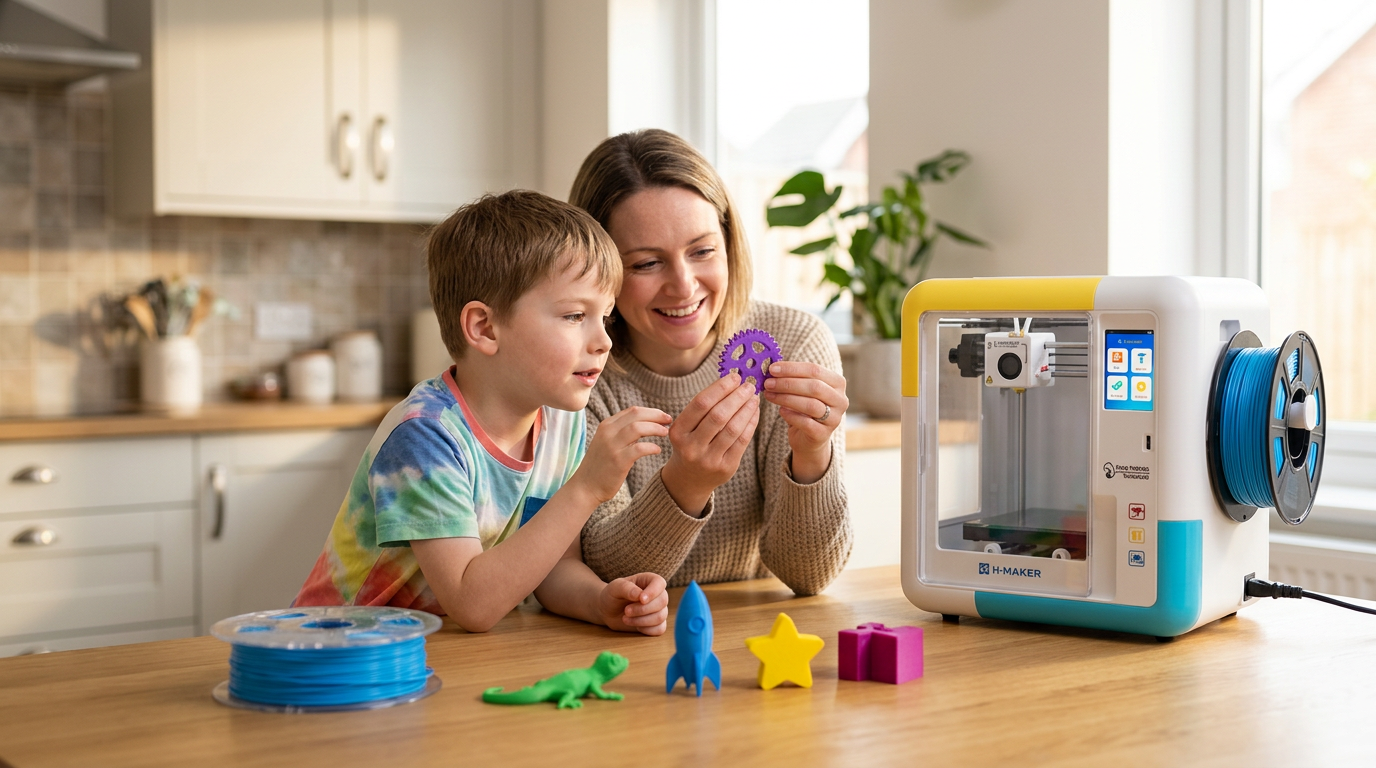
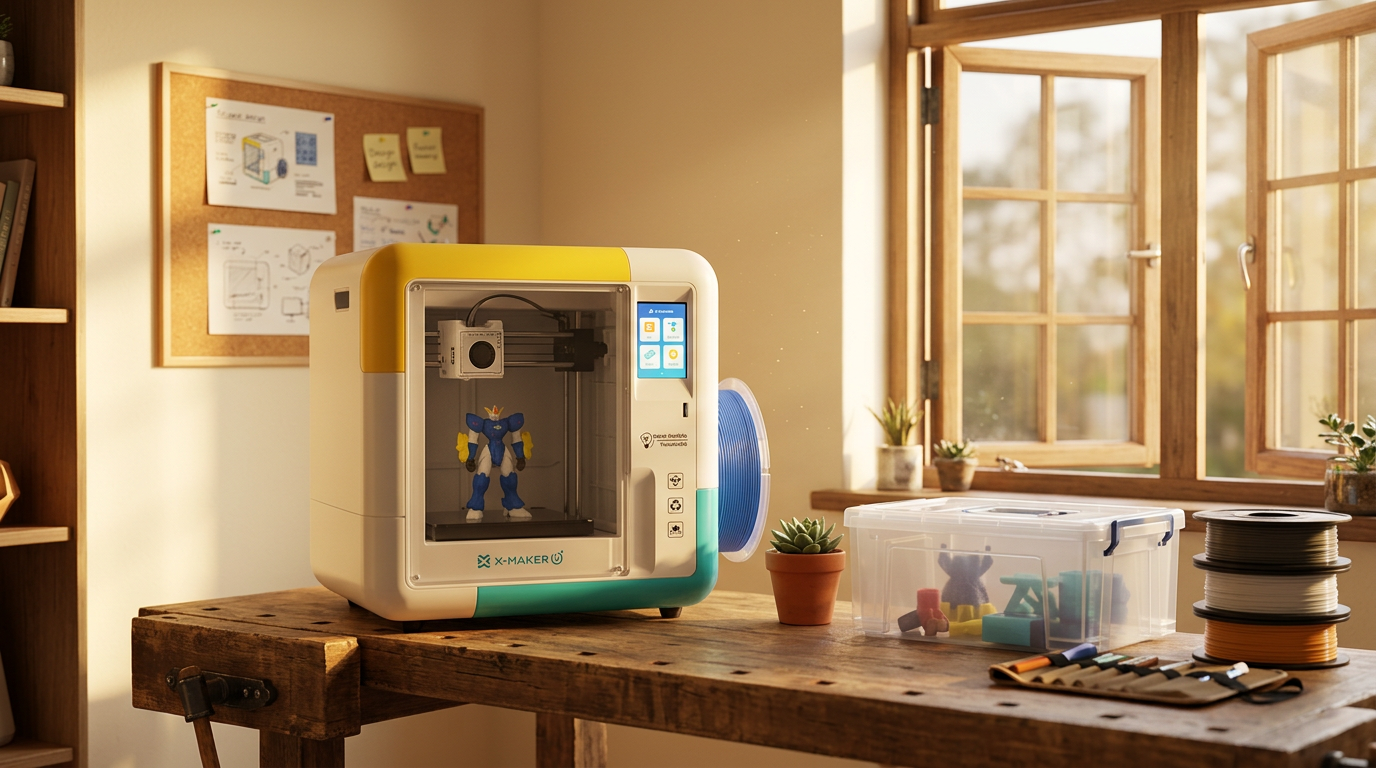
 For families just adding a printer to the maker shelf, a guided toy-making printer for younger kids handles most clear-step projects in PLA and keeps setup simple. Place the printer in a shared, well-ventilated family space so adults can supervise prints and keep the safety message consistent.EPA's 3D printing research points out that consumer 3D printing does release some VOCs and ultrafine particles into the room, so it's worth ventilating the space and keeping the printer on a hard surface rather than on fabric.
Adapting Projects by Age

Age-based routines help young children feel secure while still building independence, because each child gets the same clear steps with the right level of adult support.
The shape itself doesn't change as kids get older. Choose, gather, build, test, clean. What does change is the step count, the kinds of materials they can handle on their own, and how much help they actually need from you along the way.
|
Age |
Project shape |
Good wins |
Avoid |
|
6–8 |
5–6 step checklist with a test step |
Paper machine, marble path, simple kits |
'Make whatever' instructions |
|
9–12 |
Design card: goal + constraint + materials |
3D-printed builds, cardboard engineering |
Babyish craft language |
|
13+ |
Project brief, multi-session OK |
Phone stands, cosplay parts, room decor |
Micromanaging design choices |
Kids in the 3-to-5 range want a simple four-word routine they can hold in their head: pick, make, show, clean. Tell them out loud what the routine is on the first day. Run it the same way for about a week and most of them will be running it on their own by the start of the second week.
Ages 6 to 8 want the checklist to end with a test step. A paper bridge that holds five coins. A marble run where the marble actually finishes the course without jumping the track somewhere in the middle. The test step is the proof that the build worked. Skip that part and the project will feel half-baked to the kid, even if everything else went exactly right.
Ages 9 to 12 will outgrow the checklist format pretty quickly. What they need instead is a design card with a real constraint built into it, something like: 'Build a bridge from twelve craft sticks that can hold ten coins for ten seconds.' That gives them a predictable frame to work inside while leaving the actual design wide open. Add a three-question reflection when they're done. What worked? What broke? What would they change next time?
Teens want a project brief, not a craft card. Goal. Time limit. Budget. Finished result. A weekend desk-organizer build with a fifteen-dollar cap counts as a teen project. Respect their design choices even when those choices end up being objectively ugly. Step in for safety, for budget, and for tool rules. Don't step in for color choices, and don't step in for style.
Common Mistakes That Break the Routine
Most of the mistakes below are pretty small. All of them are fixable inside a day or two of trying.
|
Mistake |
Why it fails |
Better approach |
|
Asking 'what do you want to make?' |
Choice overload kills the start |
Offer two options. Or three. |
|
Skipping the cleanup card |
'Clean up' becomes a guessing game |
Tape four-step card to the tray |
|
Letting steps stretch past the age cap |
Kid gives up at step five of eight |
Match step count to age (table above) |
|
Reorganizing the kid's workshop |
Routine breaks when supplies move |
Bins stay where they were last week |
|
No save shelf for unfinished work |
'Cleanup' feels like 'erased' |
Add a sticky note: 'next: roof' |

Conclusion
Predictable maker projects work because the shape of them doesn't change. Same five steps. Same tray. Same cleanup process at the end. The project itself can be a paper plane, a sticker pattern, or a tiny 3D-printed stamp. The routine holds together either way.
That last part actually matters more than it might sound like it does. Most maker kids don't quit because the project itself was too hard. They quit because something about the setup felt slippery. Supplies in the wrong place. No clear start. No obvious endpoint. A parent who reorganized the kitchen corner the kid had been quietly using as their workshop.
Families looking to make this kind of routine a weekly thing can pair the shelf with AOSEED's family creativity platform, which is an age-banded printer ladder paired with a weekly-updated Toy Library, so the next project is usually queued up before the current one has even finished cooling. For older kids and tweens who've already outgrown picture cards, a guided STEM 3D printer for older kids and tweens handles design-card builds and printable accessories at home or inside a classroom. That same setup runs in over 5,000 schools and training institutions, which is a long way of saying the rhythm holds up in noisy rooms full of other kids, and probably in your own kitchen too.
A maker shelf that actually works isn't usually the prettiest thing in your house. It's the one your kid keeps wandering back to on a quiet Wednesday, without anyone needing to remind them.
|
THE CLEAR-STEP MINDSET Tray, then checklist, then finish, then cleanup. The project that earns its spot on the shelf isn't going to be the most ambitious one you ever tried. It's going to be the one your kid can run from start to finish without needing anybody. |
FAQs
What is the 3 3 3 rule for children?
Your kid names three things they can see, three things they can hear, and then moves three different body parts. It's a quick way to ground them during everyday stress. It isn't a fix for ongoing anxiety, and shouldn't be treated like one.
What is the 3 6 9 12 rule for kids?
It's a screen-time shorthand. No screens at all before age three. No personal game device before six. No unsupervised internet before nine. No social media until twelve. Adjust the numbers to fit your specific kid and household.
What is the 10-10-10 rule for kids?
Ten focused minutes in the morning, then ten after school, then ten before bed. A short maker project can drop into any of those windows pretty easily.
How do teachers show predictability with children?
They use visual schedules, timers, songs, the same phrases for the same routines, and picture cards for kids who can’t read yet, which makes predictable maker projects for kids who like clear steps easier to start and finish.
What is the 7 7 7 rule in parenting?
The most common version is seven minutes of focused attention at key transition points during the day. For a maker routine, that translates to seven minutes spent setting up the tray together, or seven minutes cleaning up at the end.
What is the 5 2 1 0 rule for kids?
Five servings of fruits and vegetables, two hours or less of recreational screen time, one hour of physical activity, and zero sugary drinks. A maker routine quietly supports both the screen cap and the activity hour at the same time.
Can you leave a 10-year-old at home for 10 minutes?
It depends on the kid, the home environment, and the local laws in your area. Most experts point to age eleven or twelve as a common starting point, but readiness matters quite a bit more than the birthday on the calendar.
How do you deal with a Gen Z child?
Clear limits. Real respect. Steady routines. With this age group, a project brief that names a specific goal and a time cap will go a lot further than a long verbal instruction ever will.
Sources
- U.S. Centers for Disease Control and Prevention,— guidance on routines, household rules, and predictable parenting practices that support kids' growth
- U.S. Head Start, The Importance of Schedules and Routines — research-backed guidance on predictability for young children
- Kids Mental Health Foundation, How Routines Help Kids' Mental Health — how routines help kids feel safe, build independence, and reduce power struggles
- American Academy of Pediatrics — HealthyChildren.org, The Importance of Family Routines — AAP guidance on how family routines support children's well-being
- U.S. Consumer Product Safety Commission, Toy Safety FAQ — federal toy safety standards, including the small-parts rule for children under 3
- U.S. Environmental Protection Agency, 3D Printing Research at EPA — research on emissions, VOCs, and ultrafine particles from consumer 3D printing
- AOSEED Kids 3D Printer Collection, 3D Printers for Kids — enclosed kid-friendly 3D printer lineup sorted by age range and project type


Further reading
AI vs CAD for Kids: Which Design Path Fits Each Age?

AI-Generated 3D Models for Kids: 9 Printability Checks Before You Print

How to Fund a Classroom 3D Printer: Grant Budget and Proposal Checklist