Structured Hands-On Activities for Kids Who Prefer Predictable Routines
Some children work best when they know what comes next. They find calm in clear steps. They engage most deeply when the beginning, middle, and end of an activity are visible before they start. For these children, open-ended creative play is not always the right entry point — they need structure first, and creativity follows from inside that structure.
3D printing offers exactly this. The session has a predictable shape: choose a model, load the color, press start, watch the print, cool down, decorate. Each step leads to the next. The outcome is visible before the activity begins. And within that structure, the child makes real creative decisions — decisions that feel safe because they happen inside a framework they understand.
This guide is for parents looking for structured, calm, repeatable creative activities that produce something real at the end. At AOSEED, the Toy Library is organized around exactly this experience: a clear project path, predictable session structure, and a finished object every time. These are not open-ended activities. They are structured maker sessions where the child always knows what they are working toward.
|
5 steps Every session follows this structure |
Clear end Object in hand every session |
Ages 4+ Full age range, same structure |
Repeatable Same process, new project each time |
Why Structured Hands-On Activities Are Important for Kids

Structured activities give children something that unstructured play sometimes cannot: a reliable relationship between effort and outcome. The child follows the steps. The steps produce the result. The result is what was expected. This reliability is the foundation of the confidence and focus that structured activities develop.
|
|
Open-Ended Activity |
Structured 3D Printing Session |
|
Predictability |
Outcome varies — hard to know what to expect |
Clear steps, known outcome, repeatable process |
|
Entry point |
Unclear — where do I start? |
Model chosen, color loaded, button pressed — done |
|
Completion signal |
Activity drifts — no clear end |
Print finishes. Object in hand. Session complete. |
|
Next session |
Starts from scratch |
New model from same library — structure carries over |
|
Child confidence |
Requires social navigation and improvisation |
Independent decisions within a clear framework |
Benefits of Structured Routine
|
Clear Expectations |
Completion and Confidence |
Repeatable and Sustainable |
|
A structured activity tells the child what each step involves and what the outcome will be. This transparency reduces decision fatigue and produces calmer, more focused engagement — particularly valuable for children who find unpredictability stressful. |
Every structured 3D printing session ends with a finished object. This clear completion signal is one of the most important elements for children who need to know when something is done. The object in their hand is unmistakable evidence that the activity was a success. |
Because the session structure does not change between projects, children can internalize the routine quickly. By session three or four, many children manage the full session independently. The structure becomes a resource they own. |
Hands-On Activities for Engagement
Hands-on structured activities engage children at a level that passive alternatives cannot reach. Edutopia's research on hands-on learning through play shows that manipulative-based structured activities consistently produce higher retention, longer attention spans, and more confident self-directed learning than instruction-based alternatives. 3D printing is a manipulative-based activity — the child handles the filament, presses the start button, and decorates the finished object. Every step is physical, visible, and within the child's control.
Promoting Creativity Through Structure
The most effective creative work for children who prefer predictable routines does not ask them to start from nothing. It offers a structure inside which creative decisions are possible. Choosing between a dinosaur and a penguin is a creative decision. Choosing the blue filament instead of red is a creative decision. Deciding to paint eyes on a figurine is a creative decision. All of these happen inside the structured session framework without requiring the child to improvise the activity itself. The Child Development Institute explains in its guide to what is structured play that structured creative activities are particularly effective at building creative confidence in children who need the security of knowing the rules before they begin.
The 3D Printing Session — 5-Step Predictable Routine
|
Step |
Phase |
What Happens |
Child's Role |
|
1 |
Choose |
Child browses the Toy Library or model links. Chooses the project and filament color. |
Full creative ownership — the only decision that needs to be made |
|
2 |
Load |
Parent loads the filament (one-time learning step for older children). Printer confirms it is ready. |
Watch and learn; older children do this independently after session two or three |
|
3 |
|
Child presses start. Printer runs. Child watches through the observation window. |
Calm waiting — visible progress through the window keeps the session structured |
|
4 |
Cool |
Print finishes. Brief cool-down before touching. Child inspects from outside. |
Patience practice with a clear endpoint — the cooling beep or timer signals the next step |
|
5 |
Decorate |
Child decorates with non-toxic paint markers. Session completes with a finished object. |
Full creative ownership — the decoration phase is entirely theirs |
Best 3D Printing Projects for Kids Who Like Structure

|
How These Project Cards Are Designed Each project card shows the activity as a 4-step structured process — exactly what the child does at each stage. This format matches the activity to the way structured learners process new experiences: step by step, with clear transitions. The calm play value note at the bottom describes what kind of focused engagement the project provides. |
Mini Race Cars and Tracks

|
Mini Race Cars and Tracks · Ages 5+ · ⏱ 30–60 min |
|
How it works (4 steps): 1 Browse the library and choose a car model in a specific color 2 Load the filament, press start, watch the print through the observation window 3 Cool-down period — child can prepare the race track while waiting 4 Race the car. Discuss what would make it faster. Plan the next print. |
|
Model: Linkable Train Cars Calm play value: Physical play with predictable physics — the car always behaves consistently |
Simple Building Blocks

|
Simple Building Blocks · Ages 5+ · ⏱ 25–45 min each |
|
How it works (4 steps): 1 Choose one block shape and one filament color for this session 2 Print the block — straightforward single-piece print, no assembly required 3 Add the new block to the growing collection from previous sessions 4 Build with all the blocks collected so far — creative work inside a known set |
|
Model: Tinkercad 3D Printing Lessons Calm play value: Incremental collection building — every session adds one clear unit to a growing structured set |
Puzzle Toys

|
Puzzle Toys · Ages 6+ · ⏱ ~30 min |
|
How it works (4 steps): 1 Choose the puzzle model and filament color 2 Print — the puzzle arrives already assembled (print-in-place design) 3 Cool completely before attempting to move the puzzle mechanism 4 Solve the puzzle. Reset. Solve again. Time each attempt if the child wishes. |
|
Model: Puzzle Cube Print-in-Place Calm play value: Repeated solving with a predictable outcome — same puzzle, same steps, satisfying completion signal each time |
Fidget Toys

|
Fidget Toys · Ages 5+ · ⏱ 2–20 min |
|
How it works (4 steps): 1 Choose the fidget model — whistle, spinner, or tactile ring 2 Print — most fidget designs are under 20 minutes, some under 5 3 Cool completely before handing to child — no sharp edges 4 Use the fidget during other structured activities, quiet work time, or travel |
|
Model: Optimized Dual Chamber Whistle Calm play value: Tactile and auditory engagement in a compact, repeatable format — predictable sensory output |
Personalized Gifts

|
Personalized Gifts · Ages 6+ · ⏱ 15–60 min |
|
How it works (4 steps): 1 Choose a gift model — keychain, figurine, or small desk object — and the recipient's favorite color 2 Add the recipient's name or a detail using the design app, then print 3 Inspect the print, sand any rough spots, let the child decorate 4 Wrap with a handmade tag. Session ends with a complete, usable object. |
|
Model: Tinkercad 3D Printing Lessons Calm play value: Clear completion signal (object wrapped and delivered) — strongest structured closure on this list |
The AOSEED Toy Library organizes models by session type and completion time — making it straightforward to find the right structured project for any available session window. Weekly updates add new options while the session structure itself never changes.
How to Choose the Right 3D Printing Projects Based on Kids' Interests

The best structured activity for a child combines predictable session structure with content the child finds personally meaningful. When both conditions are met, the child does not need to be encouraged to participate — they initiate.
|
Age |
Best Project Type |
Session Length |
What Provides Structure |
|
Ages 4–6 |
Spinning tops, animal figurines, whistles |
10–20 min max |
Color choice + press start + watch window |
|
Ages 7–9 |
Pull-back cars, puzzle cubes, train sets |
20–45 min |
4-step session flow: choose, load, print, decorate |
|
Ages 10–12 |
Fidget mechanisms, STEM gear sets, gifts |
30–60 min |
Model modification before printing + full session ownership |
|
Ages 13+ |
Creation kits, custom CAD builds, sets |
45–90 min |
Independent project cycle — plan, design, print, test, iterate |
For Kids Who Love Cars
Vehicle-focused children do best with projects where the printed object has a clear mechanical behavior — the car rolls, the train connects, the pull-back mechanism winds and releases. This predictability of function matches the predictability of structure that these children appreciate. Print a train car set one session at a time: engine on day one, first carriage on day two. Each session adds one piece to a growing structured collection.
For Animal Lovers
A child who loves animals and structured routines does particularly well with an animal collection project — a defined set of species to print across a defined number of sessions. Twelve animals, twelve sessions. Each session follows the same five-step structure. The collection grows in a predictable way toward a visible completion goal. The child can see both what has been done and what remains to be done.
For STEM-Focused Kids
Structured STEM builds give these children a problem with a correct solution — the gear turns the other gear, the lever lifts the load, the car completes the course. The AOSEED X-MAKER creation kits are well-suited for this profile: multi-session structured builds with defined steps, predictable outcomes, and a working mechanical object at the end. The session structure and the STEM structure reinforce each other — the child follows both simultaneously.
For Kids Who Enjoy Customization
|
Name and Text |
Color Selection |
Size Adjustment |
Decoration |
|
Name keychains, personalized tags, and text-engraved objects give the child a customization decision that is structured and bounded — one name, one font, one color. |
Choosing the filament color before every session is the simplest form of structured customization — one decision, made once, with visible consequence throughout the print. |
Guided design apps let children adjust object size within defined limits — a bounded creative decision with a predictable visual outcome. |
Post-print decoration with markers and paint is an open creative space within a bounded object — the child paints what they want but cannot change the shape of what they paint. |
Safety Considerations for 3D Printing for Kids
 Structured sessions work best when every safety element is also predictable and consistent. These four rules apply to every session in this guide.
|
✓ |
PLA — the structured session default: Non-toxic, plant-based, low odor, available in bright colors. Safe for every project in this guide from the youngest to the oldest child. The same material every session — no variation, no uncertainty. |
|
✓ |
PETG — for mechanical and active toys: More durable and impact-resistant. Good for fidget mechanisms, race cars, and train sets that will be used daily. Same safety profile as PLA with higher performance for high-use objects. |
|
⚠ |
Inspect before every session's play phase: A brief surface check is part of the structured session routine — it happens at the same point every session (after cool-down, before decoration) so it is a predictable step rather than an interruption. |
|
✗ |
No resin or ABS for structured family sessions: Both require variable-condition handling that disrupts session predictability. Neither belongs in a structured family session regardless of age. |
Best 3D Printing Materials for Kids
PLA is the right default for every structured project in this guide. Using the same material every session removes one variable from the routine — the child knows PLA means their project is safe to handle after the cool-down step. This material consistency supports session predictability in a practical way.
Avoiding Small Parts or Sharp Edges
For children who prefer predictable routines, the safety check can be incorporated into the session routine as a named step: after cool-down and before decoration, the child (with parent guidance for younger ages) runs a finger along all surfaces. This check happens at the same point in every session. Over time it becomes part of the session habit — predictable, brief, and reassuring.
Why an Enclosed 3D Printer Is Safer
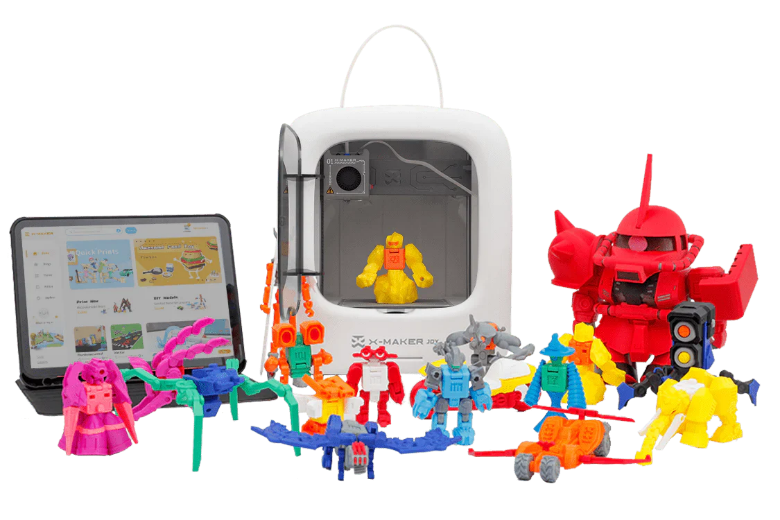
An enclosed printer is particularly well-suited for structured sessions because it creates a clear, consistent physical boundary around the active elements of the printer. The child knows the window is for watching and the door is for the parent — the same boundary applies every session. The AOSEED X-MAKER JOY's door sensor pauses the print automatically if the chamber opens mid-session — a safety feature that also supports session structure by keeping the print paused rather than interrupted when the boundary is momentarily crossed.
How to Make 3D Printing Fun and Easy for Kids
 For children who prefer predictable routines, 'fun' and 'structured' are not opposites. The most enjoyable sessions are the ones where the child knows the path, makes their choices within it, and ends with the object they expected. These five steps establish that experience reliably.
|
1 |
Use the same session flow every time Choose model. Load filament. Press start. Watch. Cool down. Decorate. This five-step sequence is the session. Running it the same way every time means children internalize it quickly and start sessions confidently rather than tentatively. |
|
2 |
Prepare the model choice before the session begins Browse the Toy Library with the child the evening before or the morning of the session. The model and color are chosen before the printer is approached. The session starts with all decisions already made. |
|
3 |
Use a visual timer for the cool-down step A visible countdown timer for the 5-minute cool-down period gives children a concrete signal for the transition from the print phase to the decoration phase. Predictable transition signals support the session structure. |
|
4 |
Keep decoration supplies at the same location every session Markers and paint pens in the same small box in the same drawer. Consistency in supply location removes friction from the decoration phase and keeps the session flowing naturally. |
|
5 |
End every session with the finished object displayed The same shelf or display area for each session's output. The child sees the collection growing in a predictable way. Each session adds one object to the display — a visible record of completed structured sessions. |
Start with Simple, Structured Projects
The first session for a child who prefers predictable routines should be the whistle or the spinning top — under 5 minutes, functional, and immediately playable. The child follows the five-step structure from start to finish and ends with an object that does something real. This complete first session is the model for every session that follows.
Encourage Creativity Through Customization
Color choice is the simplest structured customization and the right starting point. After several sessions, the child can take on text customization (adding a name using the app) and then scale adjustments. Each new customization type is introduced as a defined option within the session structure — one new decision per session introduction, not several at once.
Create a Designated Printing Space
A permanent, organized creation station supports session predictability in the most direct way possible. The child knows where the printer lives, where the filament is stored, where the decoration supplies are kept, and where finished objects are displayed. This environmental consistency is itself a form of structure — the space does part of the work of organizing the session before it begins.
Conclusion
The five-step structured printing session works the same way every time. Model chosen. Filament loaded. Start pressed. Print watched. Object decorated. Session complete.
For children who find security in knowing what comes next, this reliability is not a limitation — it is the condition that makes creativity possible. The most expressive color choices, the most carefully decorated figurines, and the most enthusiastic sessions all happen inside the structure, not despite it.
Start with one session. Follow the five steps. Put the finished object on the shelf. Come back to the same structure next week with a new project.
For families beginning their first structured printing routine, AOSEED 3D printers for kids shows both current models with age guidance — useful for choosing the printer that best supports the session structure described in this guide.
FAQs
What are structured activities for children?
Structured activities are those that follow a defined sequence of steps, have a predictable outcome, and provide the child with clear transitions between phases. A structured 3D printing session has all three: the five-step session flow, the known finished object at the end, and clear signals (print finishes, cool-down timer, decoration supplies) that mark transitions. Structured activities are particularly effective for children who thrive in predictable environments.
What is a hands-on activity for kids?
A hands-on activity requires active physical participation rather than passive observation or consumption. Loading filament, pressing the start button, watching through the observation window, and decorating the finished object with markers are all hands-on actions that engage the child physically throughout the session. The combination of structured steps and physical engagement is what makes 3D printing one of the most effective hands-on activities for children who prefer routine.
What are the benefits of structured activities?
Structured activities contribute to several areas of development. They build cognitive skills by requiring the child to follow a sequence. They develop emotional regulation by providing predictable transitions and a clear completion signal. They build attention span by giving the child a goal that is visible from the start of the session. And they build confidence by producing a reliable relationship between the child's effort and the session outcome — the child who follows the steps gets the result.
What are 5 examples of structured hands-on activities?
Five structured hands-on activities with clear step sequences and predictable outcomes: 3D printing sessions following the five-step model in this guide, interlocking puzzle building, assembly-based construction kits with defined end states, step-by-step cooking or baking with a recipe, and structured art activities like printmaking where the process determines the outcome. Of these, 3D printing is the only one that produces a new permanent physical object in every session.
Why is hands-on activity important?
Hands-on activities engage children's physical, cognitive, and creative systems simultaneously. They produce stronger learning outcomes than passive instruction for most children because the physical engagement creates more memory pathways for the content. For children who prefer predictable routines, hands-on structured activities are particularly valuable because the physical actions of the session (loading, pressing, decorating) are themselves part of the routine — they become familiar, reassuring, and owned by the child through repetition.
What are the 7 types of 3D printing?
The seven main 3D printing technologies are FDM (fused deposition modeling), SLA (stereolithography), SLS (selective laser sintering), DLP (digital light processing), LOM (laminated object manufacturing), EBM (electron beam melting), and binder jetting. For structured family sessions with children, FDM is the only relevant type — it is safe, affordable, uses non-toxic PLA filament, and produces visible layer-by-layer results through an observation window that children find naturally engaging.
How can structured 3D printing projects help kids?
Structured 3D printing projects help children in three specific ways. First, the session routine builds the habit of sustained focus — children who practice following a five-step process become more comfortable with step-by-step activities in other contexts. Second, the reliable completion signal builds confidence — every session ends with a finished object, which means every session is a success. Third, the creative decisions within the structure build expressive confidence without requiring the child to improvise the activity framework itself.
Sources
- Printables — Optimized Dual Chamber Whistle (2-minute structured print), Optimized Dual Chamber Whistle, 2024.
- MakerWorld — Linkable Train Cars (modular structured assembly set), Linkable Train Cars, 2022.
- Tinkercad — Tinkercad 3D Printing Lessons (step-by-step structured projects), Tinkercad 3D Printing Lessons, 2026.


Further reading

Thanksgiving STEM Activities for Kids: Table Projects and Simple Engineering Challenges

Halloween STEM Activities for Kids: Spooky Builds That Teach Real Science

STEM Crafts for Kids: Build, Decorate and Test