Winter STEM Activities for Kids: Snowflake Symmetry, Sled Races and Ice Tests
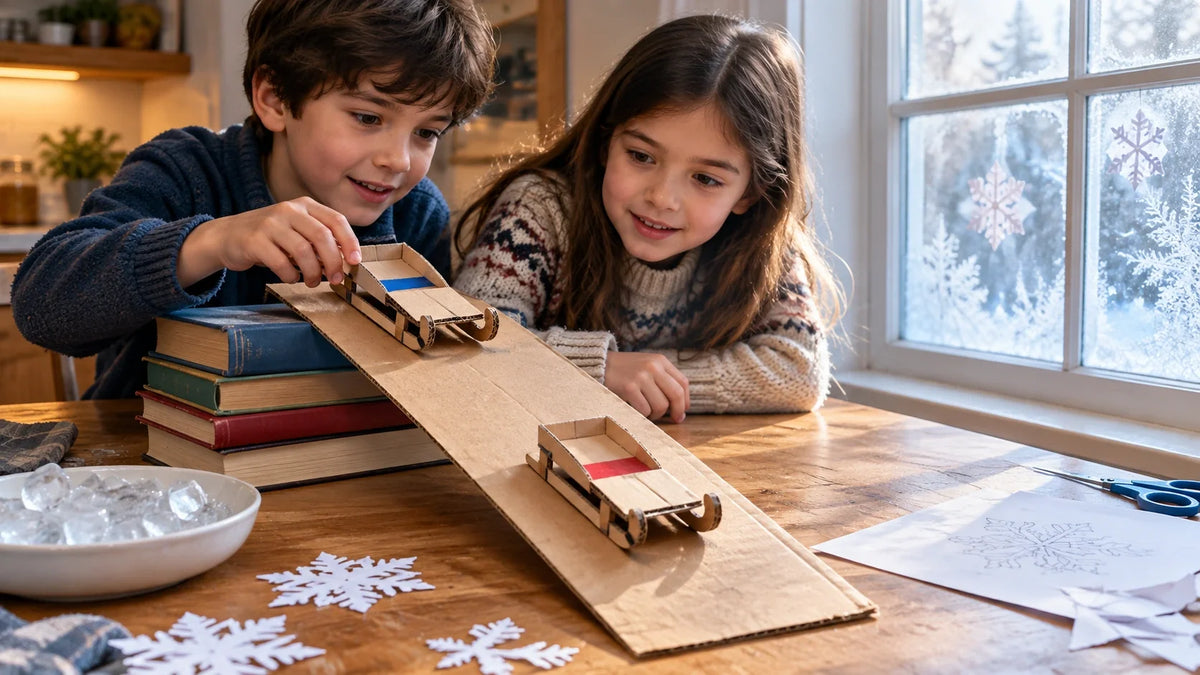
Winter hands kids three free science kits: snow, ice and short days. A paper snowflake teaches symmetry. A cardboard sled on a ramp shows friction. An ice cube on a plate turns melting into something you can time with a kitchen timer.
The 28 activities below are small investigations, not crafts to copy. Kids predict, test, measure and change one thing. Most need no real snow.
Quick Picks: Winter STEM Activities by Goal
|
Activity |
Ages |
Time |
STEM Focus |
What Kids Measure |
|
Paper snowflake prediction |
5+ |
20 min |
Math: symmetry |
Lines of symmetry |
|
Cardboard sled race |
6+ |
45 min |
Engineering, physics |
Distance and time |
|
Salt, sugar and sand ice race |
5+ |
30 min |
Science: melting |
Ice left, meltwater |
|
Water to ice expansion |
7+ |
Overnight |
Science: density |
Level change in mm |
|
Snow to water jar |
6+ |
2 to 3 hours |
Weather science |
Snow depth vs water depth |
|
Pom pom snowball catapult |
6+ |
30 min |
Engineering, physics |
Launch distance |
|
Marshmallow igloo load test |
5+ |
30 min |
Engineering |
Coins held before collapse |
|
Daylight tracking |
8+ |
4+ weeks |
Earth science, math |
Minutes of daylight |
What Makes a Winter Activity a STEM Activity?
STEM stands for science, technology, engineering and math. A winter project becomes STEM when kids have a question to answer and something to measure. Decoration alone is a craft.
Add deliberate choices about color and layout and it becomes STEAM, which folds in art.
|
Craft Version |
STEM Version |
What Changes |
|
Cut a paper snowflake |
Predict the pattern, then count lines of symmetry |
A prediction to check |
|
Build a gumdrop igloo |
Load it with coins until it fails |
A number to record |
|
Make a snow globe |
Time how fast the "snow" settles in water vs oil |
A variable to compare |
|
Decorate a sled |
Race two runner materials down one ramp |
A fair test |
Failure counts as data. A sled that tips points straight to the weak spot.
Snowflake Symmetry Activities
 Real snow crystals show sixfold radial symmetry because frozen water locks into a six sided lattice. Small shifts in temperature and moisture as a crystal falls change how its arms grow. That gives kids a true pattern to model with paper and sticks, no snowfall required.
1. Paper Snowflake Prediction Challenge
Fold a square sheet, cut a few shapes along the edges, then stop. Before unfolding, kids sketch the pattern they expect. Open it and compare. For round two, hand them a target pattern and ask them to plan the cuts backward.
Measure: lines of symmetry, and how many predicted shapes actually appeared.
|
TIP: FOLD INTO SIXTHS, NOT EIGHTHS The classic school fold makes eight arms, which real snow crystals do not have. Fold the square in half, then into thirds, before cutting. Now the paper model matches the six arms kids will see in snow crystal photos. |
2. Crystal Snowflake Growth Log
Bend a pipe cleaner into a snowflake with six arms and hang it in a crystal growing solution an adult prepares. Kids check it at set times and note where crystals show up first.
Measure: crystal coverage at 1 hour, 4 hours and the next morning.
|
ADULT STEP Crystal solutions are usually mixed with hot water. An adult mixes and pours, and follows the safety label on whichever crystal material you use. Kids watch and record. |
3. Snow Crystal Sorting Game
Print a set of snow crystal photos. Kids sort them into groups by any visible rule: branching arms, flat plates, columns, amount of detail. A partner then guesses the rule from the groups alone.
Measure: number of groups, and whether the partner cracked the rule.
4. 3D Snowflake Build
Give each team the same count of craft sticks or straws. The build must be symmetrical, stand on its own for 30 seconds and hold one small object. When it fails, kids find the weakest joint, fix it and run the test again.
Measure: seconds standing, width in centimeters and load held.
5. Digital Snowflake Simulator
NOAA's free Snowflake Simulator was built for grades 5 to 8. Students move a growing crystal between temperature zones and watch its shape change. Kids choose one zone change, predict the new shape, then run it.
Measure: which shapes each temperature zone produced.
Mini Sled Races and Ramp Engineering
 A cardboard ramp stands in for the hill. One rule keeps results honest: same ramp, same start line, one change per round.
6. Build a Cardboard Sled
Kids get cardboard, tape, scissors and a small toy rider. The sled has to carry the rider to the bottom without tipping or losing it. After the first run, look for drag spots and balance problems.
Measure: whether the rider stayed on, and distance traveled past the ramp.
7. Which Runner Material Slides Farthest?
Make matching sleds with different bottoms: plain cardboard, wax paper, foil and smooth plastic. Load each with the same weight and release it from the same point. Three runs per sled stop one odd launch from picking the winner.
Sample Record Sheet (copy one per group)
|
Runner Material |
Predicted Rank |
Run 1 (cm) |
Run 2 (cm) |
Run 3 (cm) |
Average (cm) |
|
Cardboard |
|
|
|
|
|
|
Wax paper |
|
|
|
|
|
|
Foil |
|
|
|
|
|
|
Smooth plastic |
|
|
|
|
|
Then link the ranking to friction: smoother bottoms grip the ramp less.
8. Weight and Ramp Angle Trials
Keep the sled fixed and change one factor. Add identical washers or coins one at a time, or raise the ramp one book at a time. Kids predict before each change and plot the results on a simple graph.
Measure: distance per load, or time per ramp height.
9. Redesign Round
Using their results, kids change one feature to make the sled faster: shape, width, runner or weight position. Race old against new. A slower redesign still tells kids which change to undo.
Ice Tests and Cold Science Experiments
Ice turns melting and insulation into things kids can time and weigh. Use equal cubes and identical dishes.
10. Salt, Sugar and Sand Melting Race
 Set out four equal cubes. Sprinkle a level teaspoon of salt on one, sugar on another and sand on the third. Leave the fourth plain as the control. Kids predict the winner, then check every 5 minutes.
|
Dish |
Added |
Prediction |
Ice Left at 15 Min |
Meltwater (ml) |
|
A |
1 tsp salt |
|
|
|
|
B |
1 tsp sugar |
|
|
|
|
C |
1 tsp sand |
|
|
|
|
D |
Nothing (control) |
|
|
|
Salt usually wins because it lowers the temperature at which water freezes. Let kids reach that pattern from their own numbers before you name it.
11. Water to Ice Expansion Test
Pour water into a plastic container that can go in the freezer, leaving space at the top. Mark the level with tape, freeze it overnight and mark again. Kids measure the gap in millimeters. The USGS explains that ice is about 9 percent less dense than liquid water. That is why the level rises, and why ice floats.
Measure: starting level, frozen level and the difference.
12. Ice Insulation Challenge
Wrap equal cubes in paper, fabric, bubble wrap and foil, and leave one bare. After the same wait, unwrap them all. Kids weigh the ice that is left or measure the meltwater.
Measure: grams of ice remaining after 30 minutes.
13. Frozen Toy Excavation
Freeze small plastic toys in cups of water. Kids get a short tool list: warm water, room temperature water, salt and a spoon. They time each method and name one downside of the winner.
Measure: minutes to free each toy.
14. Ice Lens Magnifier
Freeze clean water in a shallow curved bowl to make a lens shaped disc. Set it over printed text and compare how much different thicknesses enlarge the letters.
|
SAFETY NOTE Keep ice lenses out of direct sunlight. A curved lens can focus sunlight into a hot point. This activity is about magnification only. |
Snow and Winter Weather Investigations
Weather gives kids real data every day, even in warm climates.
15. Snow to Water Measurement
 Fill a straight sided jar with fresh snow and mark the level. Kids predict where the water line will land, then let it melt indoors and measure. Forecasters call that water depth snow water equivalent, the depth of water the snow would leave if it melted. Wet and dry snow give different results.
Measure: snow depth, water depth and the ratio between them.
16. Winter Temperature Log and Graph
Record the outdoor temperature at the same time each day for one or two weeks, from a thermometer or a local forecast. Add a nighttime reading if you can. Kids plot both lines, then find the highest, the lowest and the daily range.
17. Daylight Tracking Through the Solstice
Once a week, write down sunrise and sunset for your town and subtract to get minutes of daylight. In the Northern Hemisphere the December solstice brings the shortest day and longest night of the year. A graph started in early December dips, then turns upward. Older kids can connect the curve to Earth's tilt with NASA Space Place.
18. Compare Winter Around the World
Pick three or four cities with different climates. Collect the same numbers for each: average temperature, precipitation and daylight hours. Kids predict the coldest first and give a reason, then check.
Winter Engineering Builds
 Every build below needs a goal, a limit and a test that produces a number. Give each team the same materials so the results compare fairly.
|
# |
Build |
Materials |
Goal |
Test |
Redesign Prompt |
|
19 |
Pom pom snowball catapult |
Craft sticks, rubber bands, plastic spoon, pom poms |
Longest launch |
3 launches, measure each |
Move the pivot point |
|
20 |
Marshmallow igloo |
Toothpicks, mini marshmallows or gumdrops |
Dome that stands alone |
Add coins until it fails |
Swap squares for triangles |
|
21 |
Winter shelter |
Cardboard, paper, tape, toy figure |
Keep the figure dry and upright |
Fan for wind, cotton balls for snow |
Seal the gap where snow got in |
|
22 |
Ice cube tower |
Ice cubes, a tray |
Tallest tower that stands 30 seconds |
Height in cm, cubes used |
Same height, fewer cubes |
|
23 |
Snowflake catcher |
Dark card, cold surface |
Keep flakes visible longest |
Seconds before each flake melts |
Chill the card first |
|
TIP: WATCH THE SQUARES If a toothpick igloo sags, ask kids to point at the square frames. Swapping those squares for triangles is usually the fix they find on their own. |
Winter Math and Coding Activities
These fit days when outdoor tests are not practical. They also turn earlier results into analysis.
|
# |
Activity |
Skill |
How to Run It |
|
24 |
Snowflake symmetry math |
Angles, symmetry |
Measure the 60 degree angles between arms with a protractor, then draw a six part pattern |
|
25 |
Snowman logic puzzles |
Reasoning |
Hats, scarves and buttons stand for clues; kids rule out options and explain each step |
|
26 |
Winter coding grid |
Sequencing, loops |
Follow move and color commands to reveal a picture, then write the shortest command list for a new one |
|
27 |
Digital map challenge |
Geography, data |
Predict the coldest of five places from a map, then check real temperatures |
|
28 |
Winter photo log |
Observation |
Photograph one spot at the same time daily, label date and temperature, then list changes |
Quick 30-Minute Winter STEM Plan
Short sessions work when they chase one question. Prep the materials before kids arrive, then split the time like this.
|
Minutes |
Kids Do |
Adult Does |
|
0 to 5 |
Read the question and write a prediction with a reason |
Hands out materials and states the fair test rule |
|
5 to 20 |
Build or run the test, repeat it 2 or 3 times |
Keeps time and watches for unsafe steps |
|
20 to 25 |
Record numbers in the table |
Checks units: cm, seconds, ml |
|
25 to 30 |
Compare results to predictions and name one change |
Asks, "What would you change first?" |
Best fits: snowflake prediction, pom pom catapult, ice race, marshmallow igloo, one week temperature graph or one sled material test.
Design and Print Your Own Winter STEM Parts
A kids' 3D printer adds one stage to the design cycle. Kids shape a sled runner, snowflake or catapult arm on a screen, print it and put it through the same tests.
|
Print Project |
What Kids Design |
What They Test |
|
Snowflake with six arms |
A pattern with six matching arms |
Count lines of symmetry, compare with snow crystal photos |
|
Two sled runners |
One flat runner, one curved runner |
Race both down the same cardboard ramp |
|
Catapult arm |
Two arm lengths |
Launch distance with each arm |
|
Igloo connectors |
Joints that hold toothpicks at fixed angles |
Coins held before collapse |
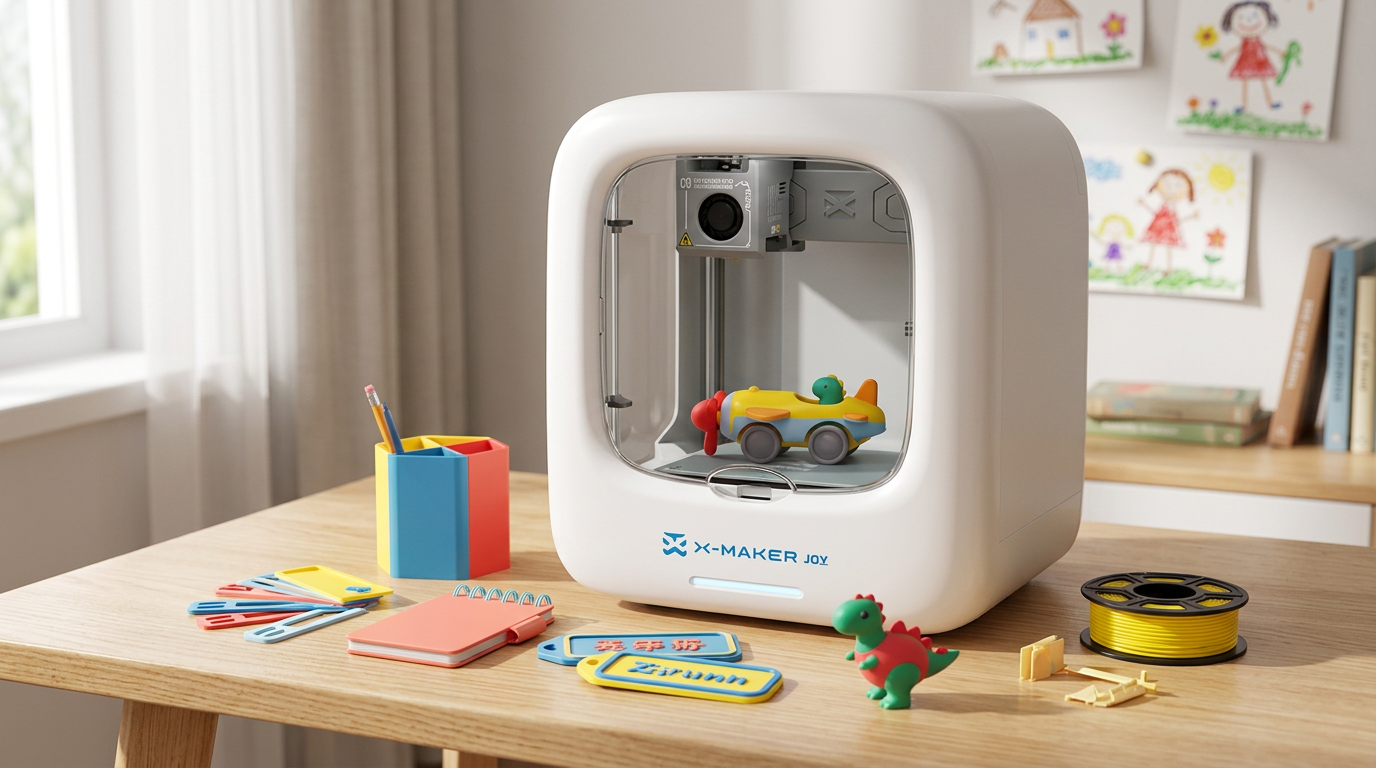
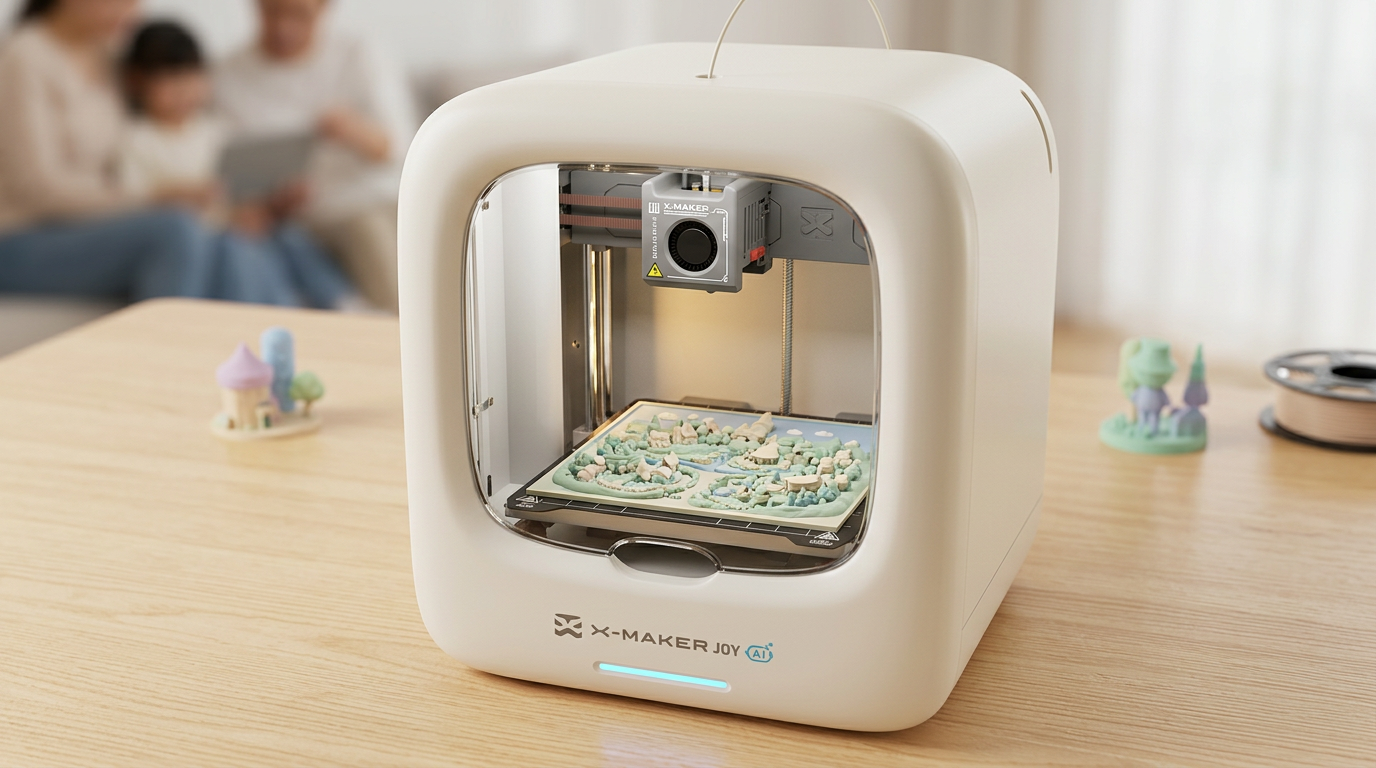
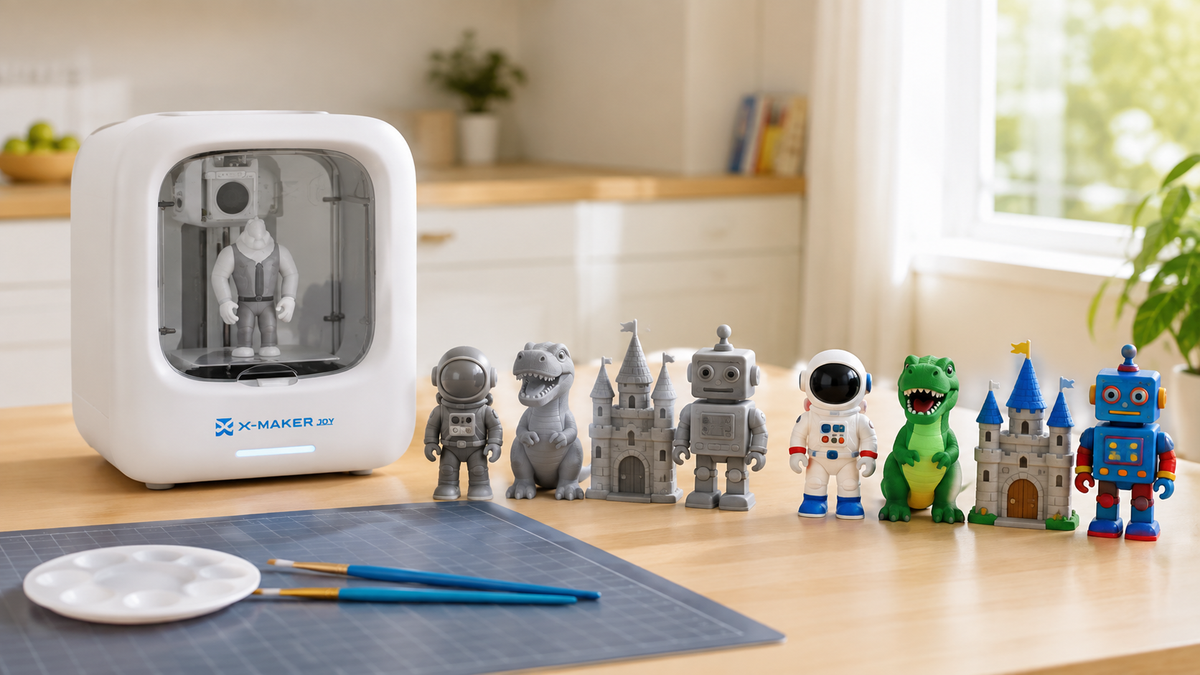
For families starting out, X-MAKER JOY is AOSEED's easy 3D printer for younger kids, recommended for ages 4 to 12. The print area is fully enclosed, it prints in PLA, and a built in camera lets kids watch a part take shape. Its 120 x 120 x 120 mm build area comfortably fits runners, snowflakes and catapult arms.
|
Stage |
Child Does |
Parent Does |
|
Idea |
Picks a model or sketches a shape in the AOSEED App |
Helps choose a part that fits the test |
|
Design |
Edits size, arms or runner shape |
Checks the part fits the build area |
|
|
Watches progress on the camera view |
Loads filament and starts the first print |
|
Test |
Races, loads or counts |
Records results with the child |
Themed mini design apps and thousands of ready to print models with weekly updates keep the next project lined up.
|
AOSEED PICK: PRINT THE PART, THEN TEST THE IDEA Older kids who want bigger builds, such as full size sled bodies or catapults with several parts, can outgrow a starter printer fast. You can compare kids' 3D printers side by side, including X-MAKER, recommended for ages 9 to 16 with a 150 mm build area. |
How to Turn Any Winter Activity Into a STEM Challenge
|
Step |
What Kids Do |
Sled Example |
|
1. Ask a testable question |
Pick one thing to find out |
Which runner material slides farthest? |
|
2. Predict |
Write a guess and a reason |
Wax paper, because it feels slippery |
|
3. Choose a measurement |
Pick a unit before starting |
Distance past the ramp, in cm |
|
4. Run a fair test |
Keep everything else the same, repeat 3 times |
Same ramp, start line and weight |
|
5. Record and compare |
Put every run in a table |
Average the three runs per material |
|
6. Change one variable |
Adjust a single feature |
Swap foil for plastic |
|
7. Test the redesign |
Run it under the same conditions |
Race the old sled against the new one |
"Which sled is best?" is too broad. "Which bottom material lets the sled travel farthest?" names the variable and the measurement.
Which Winter STEM Activity Should You Start With?
Start with a snowflake or ice test when:
• kids are 5 to 7 and need a result they can see within 20 minutes
• you have ice cubes and paper but no building supplies
• you want to practice predictions before fair tests
• space is tight, such as a kitchen table or one classroom station
Start with a sled or engineering build when:
• kids are 7 or older and like to build
• you have 45 minutes or more, including a redesign round
• you want numbers to average and graph
• a group needs a shared goal and a friendly contest
Conclusion
Paper, a cardboard ramp, ice cubes and a thermometer cover most of this list. The loop is what makes it STEM: predict, test, measure, change one thing, test again. Pick one row from the quick picks table and run it this week.
When kids want to design their own test pieces, AOSEED's family friendly 3D printing platform pairs a guided app with printers made for children. X-MAKER JOY is the starter pick at $239 (regular $339 at the time of writing), and it turns a winter design into a part kids can hold, race and improve.
FAQs
What Are Some STEM Activities for Winter?
Try paper snowflake symmetry, cardboard sled races, ice melting races, snow to water jars, pom pom catapults, marshmallow igloos and temperature graphs. Each turns a winter theme into something kids can measure. Snowflakes work well for geometry because real snow crystals show sixfold radial symmetry, according to NOAA.
Practical tip: test one variable at a time, such as runner material or what goes on the ice.
What Are Some Good STEM Activities for Kids?
Good STEM activities give kids a question to answer, not steps to copy. Look for four parts: a prediction, an observation, a measurement and a chance to improve. A sled that kids build, measure, adjust and race again covers engineering, math and science in one sitting.
Practical tip: set a target, such as "travel 90 cm past the ramp," instead of showing the finished design.
What Are Some Fun Winter Experiments for Kids?
Ice melting races, snow to water jars, crystal snowflakes, insulation tests and ice expansion checks all give visible results indoors. Freezing water in a marked container shows expansion, since the USGS notes ice is about 9 percent less dense than liquid water.
Practical tip: use cubes from the same tray and identical dishes so the comparison stays fair.
What Are Some 30-Minute STEM Activities for Elementary School Students?
A paper snowflake prediction, pom pom catapult, quick ice race, marshmallow igloo, temperature graph or single sled material test each fits 30 minutes. Keep the question narrow, such as two sled materials instead of six, and set out every material before the timer starts.
Practical tip: spend 5 minutes predicting, 15 testing, 5 recording and 5 comparing.
What Are Some Fun Winter Activities for School?
Snowflake symmetry, craft stick catapults, mini sled races, marshmallow structures, insulation tests, weather graphs and coding grids all work for pairs or small groups. Teachers can run them as stations. For a digital station, NOAA offers a free Snowflake Simulator for grades 5 to 8.
Practical tip: give every team the same materials and rules, but let each team pick its own design.
What Are Some Fun STEM Activities for December?
Daylight tracking fits December best, alongside snowflake symmetry, ice tests and sled builds. NASA notes the December solstice brings the shortest day of the year in the Northern Hemisphere, so a daylight graph dips and then turns upward during the month.
Practical tip: start logging sunrise and sunset in the first week of December.
What Are Some Activities for a Winter Theme?
Snowflakes, sleds, ice, shelters, temperatures and daylight all anchor a winter theme. Younger kids do well with marshmallow igloos and paper snowflakes. Older kids can average sled distances, graph temperatures or compare cities in both hemispheres, where seasons run opposite.
Practical tip: add one "Which," "How" or "What happens if" question to turn decoration into a test.
What Are Some STEM Activities About Weather?
Log daily temperatures, measure precipitation, melt a jar of snow, graph daylight hours or compare winter conditions between cities. The water left from melted snow is what the National Weather Service calls snow water equivalent. All of these use real observations, not special equipment.
Practical tip: record the date, temperature and weather in the same format every day.


Further reading

STEM Building Toys for Kids: Blocks, Kits and Printers Compared

Toy 3D Printer: What to Look for in a Printer That Makes Toys at Home

Personalized Gifts for Kids: Name Tags, Keepsakes and Custom Toys You Can Design