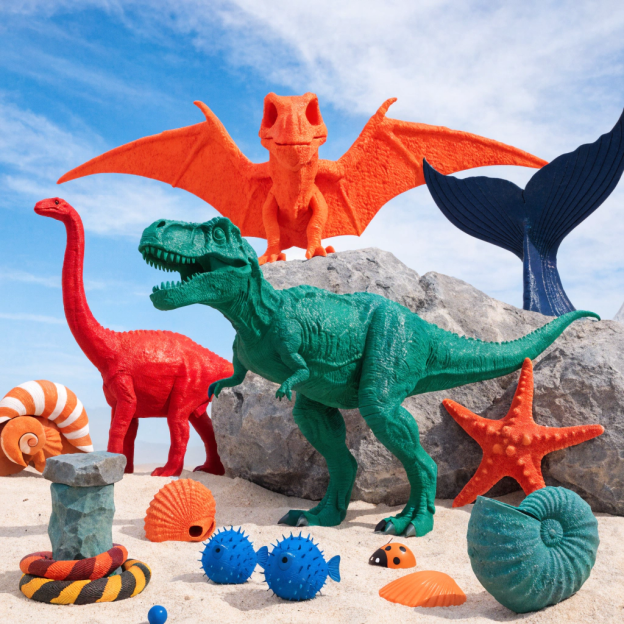
Cool Things to 3D Print for Kids Who Love Animals
Some children go through a dinosaur phase that never really ends. Others have an entire bedroom dedicated to ocean creatures, or a stuffed animal collection that runs across three shelves. For parents of children like these, a 3D printer is not just a gadget. It is a species factory.
The best part of 3D printing for animal-obsessed kids is not the novelty of watching something appear on a build plate. It is that the animal that appears is the one they asked for, in the color they picked, printed at the size that feels right to them. That ownership changes how they play with it.
At AOSEED, the most consistently printed models are animals — because children keep coming back to them. This guide covers the best cool things to 3D print for kids who love animals, organized by type, with material guidance, safety notes, and project ideas families can start this weekend.
Why Animal-Themed 3D Prints Are Perfect for Kids

Most parents find that animal-themed prints stay off the shelf longer than any other category. Here is why.
The Connection Between Animal Play and Creativity
A child who loves foxes does not print an articulated fox and put it down. They give it a name. They build it a home from a cardboard box. They bring it to the dinner table to show their grandparents. The emotional hook of animal-themed prints is different from abstract toys because the child already has a relationship with the species before the printer starts.
That emotional investment is what turns a 20-minute print into a months-long play companion. It is also what keeps children coming back to the printer asking for the next animal in their collection.
Animals Help Teach Empathy and Responsibility
When a child names a 3D-printed fox and decides it needs a den, they are practicing the same imaginative thinking behind empathy. What does it need? Where does it sleep? Is it safe? These questions do not need prompting. They come from the same instinct children show toward real animals and plush toys. A 3D-printed animal that the child made themselves occupies a particularly powerful position in that imaginative space — because they created it, they care for it.
For children who are not ready for a real pet, a growing collection of printed animals provides a gentler version of the same lesson. They learn to care for something beyond themselves, through the medium of creative making.
Interactive, Movable Designs Make Playtime Engaging
A static animal figurine gets picked up once and placed on a shelf. An articulated fox whose tail bends gets picked up every day. The difference is movement. Print-in-place articulated models — where the joints come off the build plate already working — create an immediate surprise that children find genuinely magical. The creature flexes, the shark swims, the panda poses. That movement is the hook.
|
Print Type |
How It Moves |
Best Animal Examples |
Play Value |
|
Print-in-place articulated |
Joints move freely off the build plate — no assembly |
Fox, panda, shark, whale shark, elephant, hippo |
Very high — immediate tactile movement on first pickup |
|
Poseable figurine |
Rigid but with stable standing pose — display-friendly |
Dinosaurs, cats, bears, dogs |
Medium — display + storytelling play |
|
Puzzle / snap-fit |
Pieces connect and separate for repeated assembly |
Animal puzzles, skeleton models |
High for older children — satisfying 'solved it' feedback |
|
Functional animal prop |
Does something practical — bookmark, stamp, holder |
Animal bookmarks, playdough stamps |
High — daily use maintains connection to the print |
Top Animal-Themed 3D Printing Projects for Kids
These four categories cover the animal types children ask for most. Each category includes specific model examples with direct links to verified files.
Articulated Animals for Hands-On Fun

|
�� Articulated Animals — The Print That Moves |
|
Articulated flexi animals are the most played-with category in kids' 3D printing. They come off the build plate already moving — no glue, no screws, no assembly. The fox's tail bends. The elephant's trunk sways. The panda poses in ten different positions. Children who receive these as first prints are almost always immediately asking for the next one in the collection. |
|
Example models: Articulated Fox (Printables), Flexi Elephant (MakerWorld), Articulated Panda with 10 joints (Printables), Articulated Hippo (MakerWorld) Print time: 45–90 min depending on size Best age: Ages 5+ — no small parts to lose |
The Articulated Panda on Printables features 10 joints and prints as a single piece — no assembly required. The Flexi Elephant on MakerWorld is described as support-free and easy to print, making it a reliable starting point for families new to articulated models.
Fun with Prehistoric Creatures

|
Prehistoric Creatures — Bringing Dinosaurs Back |
|
Dinosaur prints rank among the most searched models for children on every platform. The range goes from simple single-piece standing dinosaurs for younger children to multi-part skeleton assemblies and articulated T-rex models for older kids. The skeleton assembly models particularly reward STEM-curious children — they print individual bones and reconstruct the animal, like a real paleontologist. |
|
Example models: T-rex skull assembly (Thingiverse), standing stegosaurus figurines, articulated dino skeleton kits, poseable velociraptor Print time: 20–180 min depending on complexity Best age: Ages 5+ for figurines; ages 9+ for skeleton assemblies |
Dinosaur prints work especially well as part of a larger play world. A child who prints a T-rex this week will want a triceratops next week, then a pterodactyl, then a swamp habitat to put them in. Each print extends the session the week before. This is the project pipeline that keeps 3D printing active in a family home for months rather than weeks.
Marine Animal Models for Undersea Adventures

|
Marine Animals — The Ocean in Your Hands |
|
Sea creatures are among the most visually striking animal prints because of the movement inherent in their design. An articulated shark that 'swims' through the air when a child holds it. A whale shark divided into seven movable segments. A betta fish with a flowing tail designed to mimic real movement. These prints are particularly popular with children aged 7 to 11 who are in an ocean or marine biology phase. |
|
Example models: Articulated Shark — 4 versions (Printables), Articulated Whale Shark — 7 segments (Printables), Articulated Betta Fish (MakerWorld), Cute Orange Crab Flexi Print time: 60–120 min for articulated sea creatures Best age: Ages 6+ — check shark model for sharp teeth note |
One important note: the Articulated Shark on Printables offers four versions — the description specifically notes that non-movable versions are recommended for younger children because the articulated version's teeth can be sharp. This is exactly the kind of model-specific safety guidance parents should look for before printing for children under 8.
Cute Animal Figures for Role-Play Games

|
Cute Animal Figures — Characters for Every Story |
|
Not every child wants movement from their animal prints. Some want characters — specific creatures that fit into the game they are already playing. A walking penguin for a polar expedition. A poseable cat for a dollhouse. A small rabbit that fits in the same collection as their existing toys. These figurines are typically faster to print, simpler in design, and work well as gifts or classroom show-and-tell objects. |
|
Example models: Animal Bookmark Collection (MakerWorld), standing cat/rabbit/dog figurines, walking penguin models, Children Animal Puzzle (MakerWorld) Print time: 15–45 min for single figurines and bookmarks Best age: Ages 4+ — choose models without small parts for young children |
The Animal Bookmark Collection on MakerWorld is one of the most practical animal prints for children — the animal sits on top of the page and the child uses it every time they read. Each bookmark takes under 20 minutes. The full Animal Bookmarks set on Printables prints as a set of three in about 41 minutes total.
How to Choose the Right 3D Printing Materials for Animal Projects

The choice of filament affects how the animal feels, how durable it is, and whether it is safe for the age of the child handling it. Here is the practical breakdown.
|
Material |
Made From |
Safety |
Best For |
Flexibility |
|
PLA |
Corn starch / sugarcane — renewable |
Non-toxic, biodegradable — safest option |
Most animal prints, figurines, bookmarks |
Rigid — holds shape well |
|
PETG |
Polyethylene terephthalate glycol |
Low fumes, safe for home use |
Outdoor animal toys, durable parts |
Slightly flexible |
|
TPU |
Thermoplastic polyurethane |
Non-toxic at standard temps |
Articulated animals needing movement |
Very flexible — bends and bounces |
|
ABS |
Petroleum-based plastic |
Requires ventilation — not for young kids |
Advanced builds, heat-exposed parts |
Rigid — slightly impact-resistant |
Is PLA Safe for Kids' Animal Toys?
PLA (polylactic acid) is made from renewable plant materials — typically corn starch. According to the PLA safety data sheet published by NatureWorks, a leading PLA producer, the material does not contain heavy metals or known carcinogens and is classified as non-hazardous under normal conditions. It does not emit significant fumes at standard printing temperatures. For animal toys that children carry around, bend, and handle repeatedly, PLA is the correct default choice.
One practical note: PLA prints can have sharp layer lines if supports are not removed cleanly. Run a finger along the finished model before giving it to a child under 5. A quick pass with light sandpaper smooths any rough edges from support removal. For young children, choose models specifically designed as 'no support' — these print with clean edges and require no post-processing.
Choosing Flexible Filaments for Movable Parts
Most articulated animal models are designed for standard PLA and work well with it. The print-in-place joint gaps are calibrated for PLA's rigidity. TPU (thermoplastic polyurethane) adds flexibility — useful for animals whose limbs need to genuinely bend and hold a pose rather than snap back to position. TPU is slightly harder to print and usually requires a direct-drive extruder, so check your printer's compatibility before buying a spool.
For most families, especially at the start, PLA handles the full range of articulated animal prints in this guide. TPU becomes interesting when a child wants to create custom soft toys or squeezable animals — which is a project for after a few months of successful PLA prints.
How to Ensure Safety with 3D Printing Materials
The U.S. Consumer Product Safety Commission's toy safety guidelines specify that toys intended for children under 3 must not contain small parts. This applies directly to 3D prints: any animal model with legs or appendages smaller than about 25mm in diameter is a potential choking hazard for children under 3. Choose thick-bodied animal designs for very young children, and use the models marked as 'no sharp edges' or 'child-safe' in their descriptions.
|
Age Group |
Material Recommendation |
Size Requirement |
What to Avoid |
|
Under 3 |
PLA only — avoid TPU for this age |
All parts larger than 25mm diameter |
Articulated models with thin moving parts |
|
Ages 3 to 6 |
PLA primary — good surface finish |
No small parts that can detach |
Resin prints — require chemical handling |
|
Ages 6 to 12 |
PLA and PETG — durable for active play |
Standard sizing is fine |
ABS without ventilation |
|
Ages 12+ |
PLA, PETG, or TPU for advanced builds |
No restriction |
Resin without adult supervision and PPE |
Making the 3D Printing Process Easy and Fun for Kids

The best animal print is the one that comes out right the first time. Choosing the right printer setup is as important as choosing the right model.
Why Enclosed Designs Matter for Family Use
A 3D printer nozzle reaches above 200°C during printing. On an open-frame printer — which covers most budget models — that nozzle and the moving parts are fully accessible. For a home with children, an enclosed printer puts everything behind a sealed chamber. Children watch through the window. Their fingers stay outside. The AOSEED X-MAKER JOY uses this design specifically for family use — fully enclosed with a door sensor that pauses the print automatically if the chamber opens mid-session.
An enclosed design also helps print quality for animal models. Temperature consistency inside the chamber reduces warping on longer prints — which means that 90-minute articulated whale shark has a better chance of coming out clean and ready to play with.
Is PLA Filament Safe for Kids?
Yes. PLA is non-toxic, biodegradable, and the standard filament for every family-oriented printer on the market. It does not require ventilation beyond what is normal in a bedroom or living room. The finished prints are safe to handle, carry around, and play with. PLA is the material behind every model in the AOSEED Toy Library, and it handles the full range of animal prints in this guide.
The one thing to do before handing any print to a young child: check the model for rough edges from support material. If the animal was printed with supports, inspect the area where they were removed. A gentle sand with fine-grit sandpaper takes 60 seconds and makes the toy completely smooth for small hands.
How Noisy Is a 3D Printer in a Home Setting?
This is the question parents ask most often, and the honest answer is: quieter than most expect. Modern family-oriented printers with silent motor drivers operate at 45 to 50 decibels — roughly equivalent to a running refrigerator or a quiet background fan. Running a print while kids do homework or watch a film is not disruptive.
|
Sound Level |
Equivalent |
3D Printer Context |
|
35–40 dB |
Quiet library, soft whisper |
Silent mode on well-designed family printers |
|
45–50 dB |
Refrigerator hum, background fan |
Typical family printer during a standard 2-hour print |
|
55–60 dB |
Normal conversation in a room |
Some older or budget open-frame models at standard settings |
The Educational Value of 3D Printing Animal Models for Kids

Animal projects are one of the most effective ways to embed learning into making. The child thinks they are getting a toy. They are also learning biology, engineering, and creative thinking.
Teach About Animal Anatomy Through 3D Prints
When a child holds an articulated animal and bends its spine, they feel immediately how vertebrates move. An articulated fox has a spine made of printed segments — the child can count them, feel how they connect, and understand why a real fox can twist to catch prey. The AOSEED Toy Library includes anatomically considered animal models that translate real animal movement into playable prints. Combined with a quick conversation about why that particular animal moves that way, a 20-minute print session becomes a biology lesson that sticks.
For older children, printed skeleton models go further — individual bones that assemble into a complete dinosaur or animal structure teach the same concepts paleontologists use when reconstructing fossil findings. These are particularly effective for school reports or science fair projects.
Incorporating STEM Learning Through Creative Play
The AOSEED X-MAKER supports creation kits that pair printed parts with mechanical components — a useful extension once a child has mastered animal figurines and wants to build animals that move under their own power. A motorized bird that flaps, a rolling turtle with a printed shell chassis — these builds introduce gear ratios, motor mechanics, and iterative design in a context the child already cares about.
Even without creation kits, the basic act of printing an articulated animal introduces mechanical thinking. Why do the joints work? Why does the whale shark's tail move more freely than the shark's body? These questions, which children ask naturally, are engineering questions with real answers.
Animal-Themed Prints as Part of a Larger Learning Project
A 3D-printed animal collection becomes a classroom resource when the child is studying habitats, ecosystems, or food chains. Print a predator and its prey for a science project. Print an endangered species and research why it is threatened. Print a set of ocean creatures and build a diorama around them. The printer becomes a research tool rather than just a toy source — which changes how a child talks about what they make.
For homeschool families, animal prints are among the most versatile learning props available. Every subject from biology to history to geography can be anchored by a printed model that the child touched every step of the way.
How to Start 3D Printing with Kids Safely at Home

The setup for a first animal-printing session does not need to be complicated. Three things done right from the start make everything that follows much smoother.
Why Enclosed Designs Matter for Family Use
An enclosed printer in a shared family space is the right setup for animal printing with children of any age. The chamber keeps hot components away from curious hands, maintains temperature for longer prints, and contains any fumes from the filament. For families where the printer will live on a kitchen counter, in the living room, or anywhere younger siblings might approach, an enclosed design is not optional.
Is PLA Filament Safe for Kids' Toys?
Yes, with consistent use of quality PLA from reputable brands. The material itself is safe. The safety check is about the finished print — inspect for sharp support removal marks before giving the animal to a young child, and confirm all parts are sized appropriately for the child's age. For children under 3, avoid models with thin appendages. For everyone else, PLA animal prints are safe for regular handled play.
How to Keep First Projects Calm, Simple, and Low-Frustration
For a first animal print, choose a single-piece no-support model under 60 minutes. Something the child already cares about — the animal that has been requested most often or the one that matches the species on their bedroom wall. Have the filament color chosen before the session starts. Let the child press the start button. Stay nearby but let the print run without intervention.
• Start with a model marked 'no supports required' — these print cleanly without post-processing.
• Choose a print time under 60 minutes for the first session — long enough to feel significant, short enough to hold attention.
• Let the child choose the filament color — that decision creates ownership before the print starts.
• Have the second project chosen before the first one finishes — the gap between prints is when enthusiasm can drop.
• If the model has any rough edges, sand them together as a short post-print activity rather than doing it out of sight.
Real Project Ideas Families Can Start With First

Here are practical starting directions organized by what the family is looking for on a given afternoon.
Best First Prints for Imaginative Play
|
Animal Project |
Print Time |
Ages |
Why It Starts a Collection |
|
Articulated Fox — print-in-place, scalable |
45–60 min |
5+ |
Bends and poses — becomes the character in every game that follows |
|
Cute standing rabbit figurine |
20–30 min |
4+ |
Simple, sturdy, and immediately part of a pretend-play world |
|
Articulated Hippo — single piece, no assembly |
45–60 min |
5+ |
MakerWorld notes it is 'easy to print and results in a good toy' |
|
Mini animal family set (3 species) |
20–35 min each |
4+ |
Prints in a session — the family plays with the set together |
Best First Prints for Calm, Screen-Light Creative Time
|
Animal Project |
Print Time |
Ages |
Why It Works for Quiet Time |
|
Animal Bookmark set — 3 bookmarks total |
41 min total |
5+ |
Each bookmark goes into the book they are reading right now |
|
Children Animal Puzzle — flat, no supports |
30–45 min |
5+ |
Quiet sorting and matching play — designed for children |
|
Poseable cat or small dog figurine |
20–30 min |
4+ |
Sits on the desk as a companion — low-energy, continuous presence |
|
Geometric sea turtle — decorative but sturdy |
25–40 min |
6+ |
Bridges nature and geometric thinking — both calm and beautiful |
Best First Prints for Sibling Play or Family Game Time
|
Animal Project |
Print Time |
Ages |
How Siblings Play With It |
|
Articulated Shark — 4 versions for different ages |
60–90 min |
5+ |
Each sibling picks a different version — they race their sharks |
|
Articulated Whale Shark — 7 segments |
75–100 min |
6+ |
Pass it around the table — the segments make it fun to hold |
|
Mini animal battle set — predator and prey |
20–35 min each |
6+ |
The children invent rules — the game comes from what they made |
|
Animal puzzle race — who assembles fastest |
30–45 min total |
5+ |
Print one puzzle each — sibling competition with a family print session |
Best First Prints for Gifts, Classrooms, or Rainy Afternoons
|
Animal Project |
Print Time |
Ages |
Why It Works as a Gift or Classroom Piece |
|
Animal Bookmark — personalized species for recipient |
15–20 min each |
5+ |
Quick to print in recipient's favorite animal — genuinely personal gift |
|
Dinosaur skeleton assembly — science fair prop |
90–120 min total |
8+ |
Brings to class for biology or history report — impressive and tactile |
|
Mini endangered species figurine with fact card |
20–35 min |
7+ |
Child researches the species and writes the card — learning embedded |
|
Flexi animal collection — one per child in class |
45–75 min each |
5+ |
A teacher can print a set across a week — one per student |
Conclusion
The coolest things to 3D print for kids who love animals are the ones that survive from the build plate into regular daily play. An articulated fox that gets picked up every morning. An ocean creature collection that grows one species per weekend. A bookmark collection that turns a child's reading shelf into a safari.
Animal-themed prints combine the novelty of 3D printing with something children already love. That combination produces a longer engagement cycle than almost any other project category — because there is always a new species to print, a new habitat to build, and a new story to tell around the animals already on the shelf.
For families looking for a printer built around this kind of sustained family use, AOSEED 3D printers for kids shows both models side by side with age guidance. The Toy Library behind each printer updates every week — which means there is always a new animal waiting to be printed next Saturday morning.
FAQs
Can 3D printing be safe for kids?
Yes, with the right printer and the right filament. A fully enclosed printer keeps all hot components away from children during a print session. PLA filament is non-toxic and biodegradable. For families using an enclosed printer with PLA and adult supervision during filament loading and print removal, 3D printing is a safe and enjoyable activity from around age 4 upwards.
Is PLA safe for kids?
Yes. PLA is made from renewable plant materials like corn starch, is non-toxic, and does not produce significant fumes at standard printing temperatures. It is the most widely used filament for children's toys and animal models. The finished prints are safe to handle for all ages — just inspect prints for any rough edges from support material before handing them to very young children.
What animal-themed models are easiest to print for kids?
Print-in-place flexible animals are the easiest category. They print as a single piece with no support removal and no assembly. The articulated fox, flexi elephant, articulated hippo, and articulated panda models all meet this standard — they come off the build plate already moving, with no post-processing required. For very young children aged 4 to 5, choose simple single-piece standing figurines with thick bodies and no small parts.
How do I pick the right animal project for my child?
Follow the child's current obsession. If they are in a dinosaur phase, start with a standing T-rex figurine and build toward a skeleton assembly model as they develop confidence. If they love ocean animals, the articulated shark series provides a natural progression from simpler to more complex. The key is matching the first print to something they already care about — ownership of the subject drives engagement with the process.
Can a 7-year-old use a 3D printer?
Yes, with a well-designed printer and basic safety habits. A 7-year-old can browse a model library, choose the animal they want, select a filament color, and tap print. Adult supervision is most useful for loading the filament at the start and removing the finished print at the end. Most 7-year-olds can manage the full printing workflow independently after two or three guided sessions.
What can a 3D printer make for kids?
For animal lovers: articulated flexi creatures, dinosaur models and skeleton assemblies, marine life figurines, wildlife figurines, animal bookmarks, and animal puzzle sets. Beyond animals: working RC cars and robots via creation kits, personalized name tags and gifts, seasonal decorations, and STEM project models. The range is determined by the content library and the child's growing design confidence.
Should a 12-year-old have a 3D printer?
Absolutely. By 12, most children are ready to move from printing library models to modifying and eventually designing their own animals. A 12-year-old who prints an articulated shark can start adjusting the joint spacing. One who prints a dinosaur skeleton can research accurate proportions and resize the bones. These design skills — spatial reasoning, iterative thinking, tolerance understanding — are exactly what STEM education is trying to build.
How noisy is a 3D printer?
Modern family-oriented printers with silent motor drivers typically operate at 45 to 50 decibels. This is comparable to a running refrigerator or a quiet background fan. You can print a 90-minute articulated animal model in the corner of a living room during homework or reading time without it being disruptive. Cheaper open-frame printers can be louder — enclosed designs generally also buffer sound more effectively.
How do I choose age-appropriate 3D printing projects for kids?
Use three filters. Does the finished model have any parts smaller than 25mm? If yes, avoid for children under 3. Does the model require post-processing support removal with sharp tools? If yes, do that step yourself for children under 7. Does the assembly require fine motor skills beyond the child's level? Start simpler. For ages 4 to 6, choose single-piece no-support models. For ages 7 to 9, add articulated prints. For ages 10 to 12, introduce puzzle assemblies and multi-part skeleton builds.
Sources
- Printables — Animal Bookmarks (set of 3, full set 41 min), Animal Bookmarks, 2022.
- Printables — Articulated Fox (print-in-place, no support, scalable), Articulated Fox, 2024.
- Printables — Articulated Panda Print-in-Place (10 joints), Articulated Panda Print-in-Place, 2024.
- Printables — Articulated Shark (4 versions, non-movable for children), Articulated Shark, 2024.
- MakerWorld — Flexi Elephant Articulated (support-free, easy print), Flexi Elephant Articulated, 2024.
- MakerWorld — Children Animal Puzzle (PLA or ABS, 10–25% infill), Children Animal Puzzle, 2024.
- CPSC — Toy Safety FAQ (small parts requirements for children under 3), Toy Safety FAQ, 2024.



Further reading

Thanksgiving STEM Activities for Kids: Table Projects and Simple Engineering Challenges

Halloween STEM Activities for Kids: Spooky Builds That Teach Real Science

STEM Crafts for Kids: Build, Decorate and Test