

Creative Family Time Without Another App or Video
There is a certain Tuesday evening that happens in most households. Dinner is finished. Everyone is home. It is a quiet hour before bedtime. And without thinking, everyone reaches for a device.
Creative family time ideas exist specifically for this hour. They fill the gap before anyone reaches for a screen — not by restricting devices but by offering something that is more genuinely interesting. The best creative family activities produce something real at the end, require everyone to participate, and generate conversation that cannot happen during passive screen time.
This guide covers the best screen-free activities for kids and families — from nature walks to game nights to 3D printing sessions — and includes a practical tradition-builder calendar showing how each activity fits different days, seasons, and occasions. At AOSEED, the families who report the most sustained family making habit are the ones who built a weekly creative routine rather than planning one-off events. The routine is the product.
|
6 activities
Covered with occasion-match guide
|
Every occasion
Rainy days, camping, school nights, gifts
|
Ages 4–15
All family members, every activity
|
1 routine
Weekly creative session = the habit
|
Why Creative Family Time Is Important

Tinybeans' roundup of 52 ideas for quality family time identifies a consistent pattern: the activities that generate the strongest family memories are not the most expensive or elaborate ones. They are the ones where every family member contributed something — a painted stroke, a chosen game card, a designed object. The contribution is the memory-maker, not the output.
Building Stronger Family Bonds
Shared creative work generates shared stories. The batch of cookies that overflowed the pan. The race car that printed sideways. The puzzle that took three sessions to figure out. These small mishaps and unexpected moments become the stories told at holiday dinners — because they are stories that belong only to this family, from time spent actually making something together.
|
The Contribution Principle
The strongest family memories come from activities where every member contributes something — not just watches. An activity where the youngest child presses the start button and the oldest helps with decoration produces a memory that belongs to both of them. Design your creative family time so every age group has a real role.
|
Encouraging Communication and Collaboration
Screen-free activities for kids naturally generate conversation that passive entertainment cannot. 'Where should this piece go?' 'What color should we try next?' 'Does your design have moving parts?' These questions are not part of a script. They arise from genuine creative work and genuine curiosity about each other's ideas. Families report more authentic conversation during a 30-minute making session than during an equivalent period of co-watching.
Benefits for Kids' Development
Shot of Art's research on creative activities to unite family together highlights that children who regularly participate in family creative activities show stronger frustration tolerance, better collaborative communication, and more confident creative initiative than those whose family time is primarily screen-based. The mechanism is simple: creative work requires the child to tolerate uncertainty and work toward a result. Doing this alongside trusted family members makes the process feel safe enough to try.
Best Screen-Free Activities for Creative Family Time

When Each Activity Fits Best — Occasion Match Guide
|
Activity
|
Rainy Day
|
Camping ☔
|
After School
|
Weekend Morning
|
Gift Giving
|
|
Arts and crafts
|
✅ Perfect
|
✅ Great
|
✅ Good
|
✅ Good
|
✅ Good
|
|
Nature walk + sketching
|
❌ No
|
✅ Perfect
|
✅ Good
|
✅ Good
|
❌ No
|
|
Board or card game
|
✅ Perfect
|
✅ Great
|
✅ Good
|
✅ Good
|
❌ No
|
|
Baking together
|
✅ Perfect
|
❌ No
|
✅ Good
|
✅ Perfect
|
✅ Good
|
|
DIY science experiment
|
✅ Good
|
❌ No
|
✅ Perfect
|
✅ Good
|
❌ No
|
|
3D printing session
|
✅ Perfect
|
✅ Great
|
✅ Perfect
|
✅ Perfect
|
✅ Perfect
|
Arts and Crafts Projects

|
Arts and Crafts — Painting, Drawing, DIY Best for: All ages · Any mood · 30–90 min
|
|
Nature Walks and Outdoor Exploration

|
Nature Walks — Sketching and Scavenger Hunts Best for: Ages 4+ · Calm or energetic days · 45–90 min outdoors
|
|
Family Game Night

|
Family Game Night — Cards, Board Games, Storytelling Best for: Ages 4+ · After dinner, weekends · 45–90 min
|
|
DIY Science Experiments

|
DIY Science — Experiments at Home Best for: Ages 5+ · High-energy days · 30–60 min
|
|
Cooking or Baking Together

|
Cooking and Baking — Kitchen as Maker Space Best for: Ages 4+ · Afternoons, weekends, gift occasions · 45–90 min
|
|
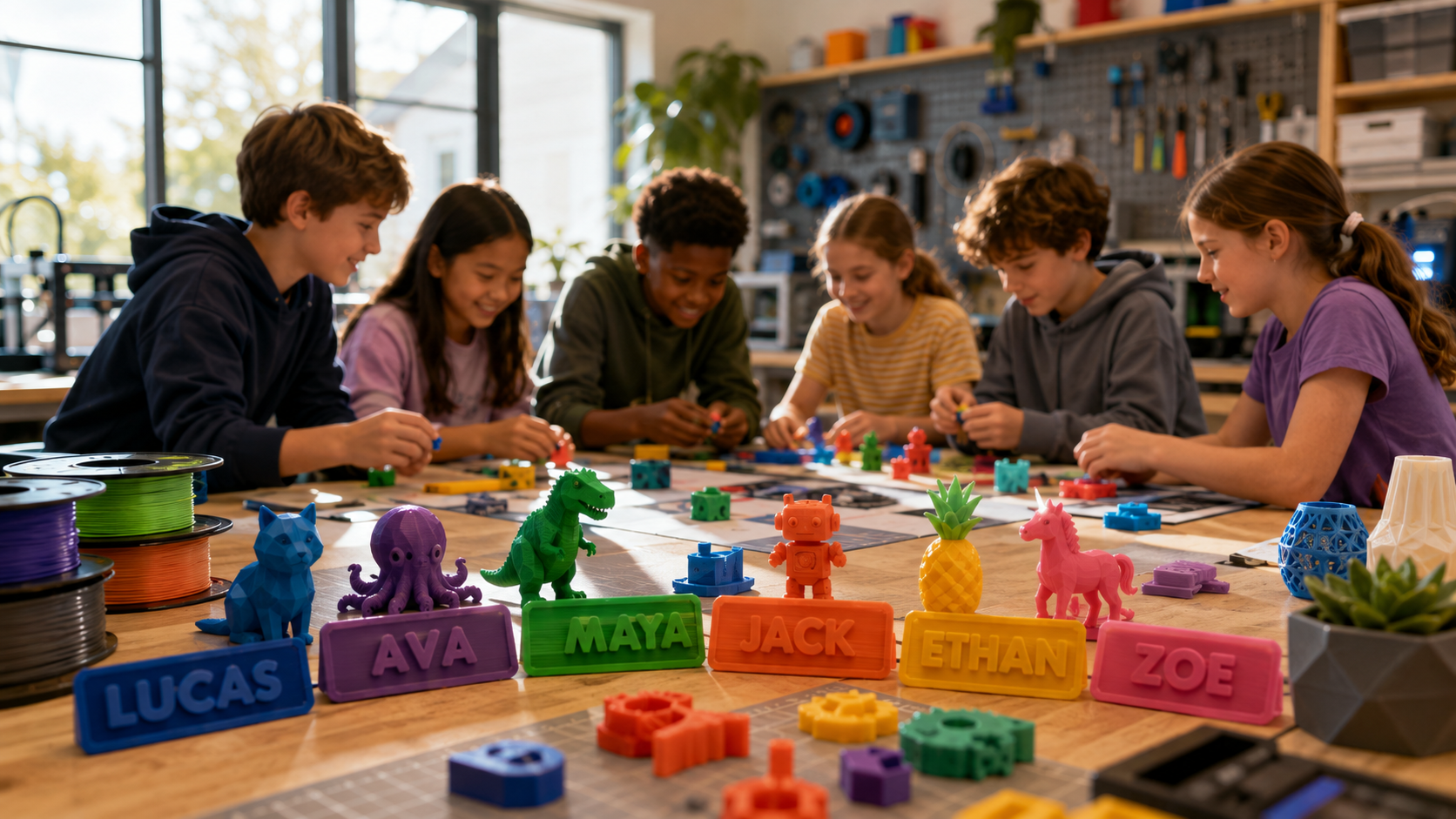
The AOSEED Toy Library connects 3D printing to all five activity types above — there are models that pair with nature walks (animal figurines, habitat models), game nights (custom tokens, puzzle sets), science sessions (gear mechanisms, simple machines), and cooking days (custom cutters, measuring tools). The library is organized for exactly this kind of cross-activity family use.
How to Make Family Time Fun Without Screens

The practical barrier to creative family time is not motivation — it is inertia. The default is whichever activity requires the least decision-making, and screens win that comparison consistently. The three approaches below address the inertia directly rather than relying on willpower.
|
Set the time slot before the day arrives
A 'Tuesday maker session' that is already on the family calendar does not compete with spontaneous screen use. It is simply what Tuesday evenings look like.
|
Prepare supplies the day before
Paint out on the table, printer loaded, a recipe printed and ready. Reducing the session startup time to under 2 minutes eliminates the friction that turns 'we should do something creative' into 'let's just watch something.'
|
|
Let kids choose within a defined set
'Do you want to print something, paint something, or play a game tonight?' Bounded choice reduces decision paralysis for both parent and child. Three options, child picks one.
|
Make the session format predictable
Children who know what a creative family session looks like are more willing to start one. A consistent opening ritual — supplies out, devices away, one person chooses the activity — creates the habit structure.
|
Set Clear Expectations
A device-free zone during a creative session is not a punishment — it is a design decision. The session has a clear beginning (supplies out, everyone at the table), a clear middle (the creative work), and a clear end (object made or game concluded). When the structure is visible, the expectation is easy to maintain.
Let Kids Lead the Activities
Children who choose the session's activity are more engaged throughout it. A weekly 'Family Fun Jar' where each family member writes one activity idea on a slip of paper produces a rotating child-led selection that prevents any one person dominating the creative agenda. When a child's idea gets drawn and everyone participates, the child experiences genuine creative leadership — not just participation.
Create a Screen-Free Routine
Building a Weekly Family Creative Tradition — Monthly Calendar
|
Month Slot
|
Screen-Free Family Activity
|
3D Printing Pair-Up
|
|
Weekly (Mon/Tue)
|
After-school maker session — 30 min, child-led
|
Print one project, decorate, add to growing display
|
|
Monthly anchor
|
Family game night — board games + storytelling
|
Print custom game tokens for a beloved board game
|
|
School holidays
|
Nature walk + outdoor sketching
|
Print animal figurine that matches what they spotted outside
|
|
Rainy weekend
|
Baking + science experiments at home
|
Print a set of kitchen gadgets (cookie cutters, molds)
|
|
Birthday / gift events
|
Make something for a family member together
|
Print and decorate a personalized gift — keychain, frame, figurine
|
|
Camping / outdoors
|
Scavenger hunts, fire-making, nature exploration
|
Pre-trip: print mini flashlight clip, whistle, or compass holder
|
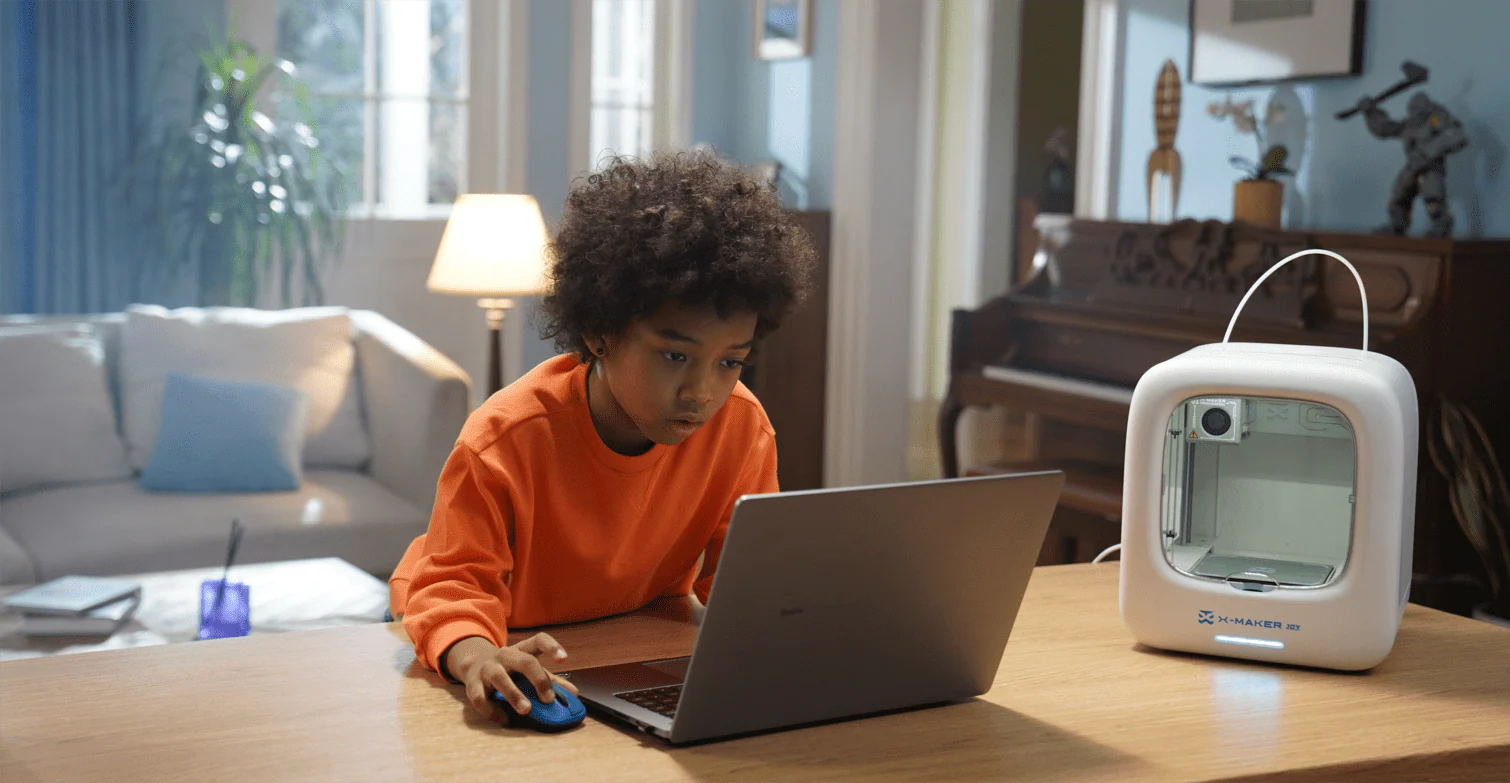
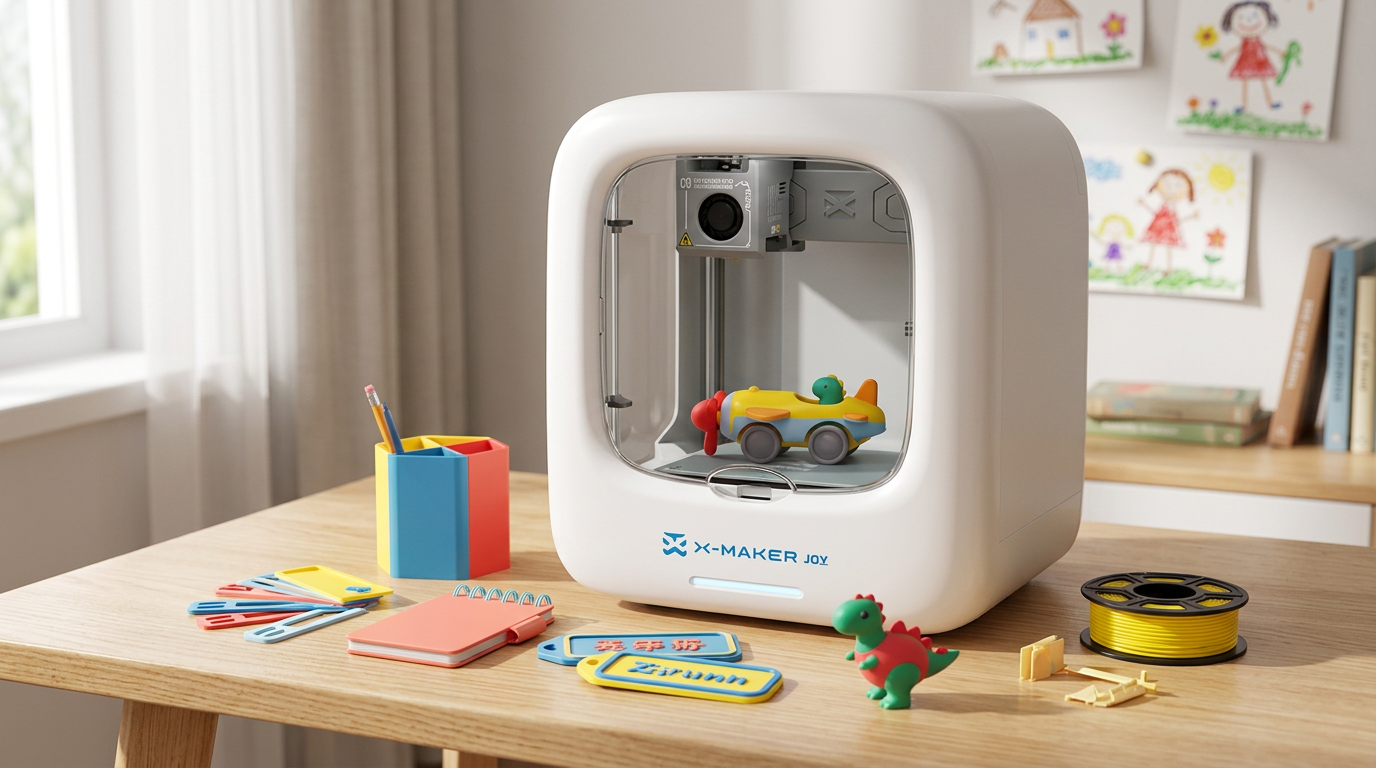
For families anchoring their weekly creative session around 3D printing, the AOSEED X-MAKER JOY app-led workflow makes the printer approachable for the session even when the parent is occupied in the kitchen or elsewhere in the house — the child follows the app, chooses the project, and presses start with minimal parent involvement needed.
Safety Considerations for Creative Family Activities

Creative activities stay creative when the safety elements are reliable and low-friction. These guidelines apply across all activity types in this article.
|
✓
|
Age-appropriate task allocation: Younger children handle paint, stickers, decoration, and button-pressing. Older children and parents handle sharp tools, hot surfaces, and chemical combinations (baking soda + vinegar, hot glue). Age-appropriate role assignment is both a safety decision and a confidence decision.
|
|
✓
|
Non-toxic materials as the default: PLA filament (non-toxic, plant-based), washable paint, food-safe ingredients, and non-chemical science experiments are the right defaults for all ages. These choices allow the session to proceed without a secondary layer of material safety management.
|
|
⚠
|
Adult tools stay with adults: Hot glue guns, sharp craft scissors, baking in the oven, and the 3D printer's nozzle are adult tools. The child's role in each of these is adjacent rather than direct — they select, design, and decorate. The adult handles the execution.
|
|
✓
|
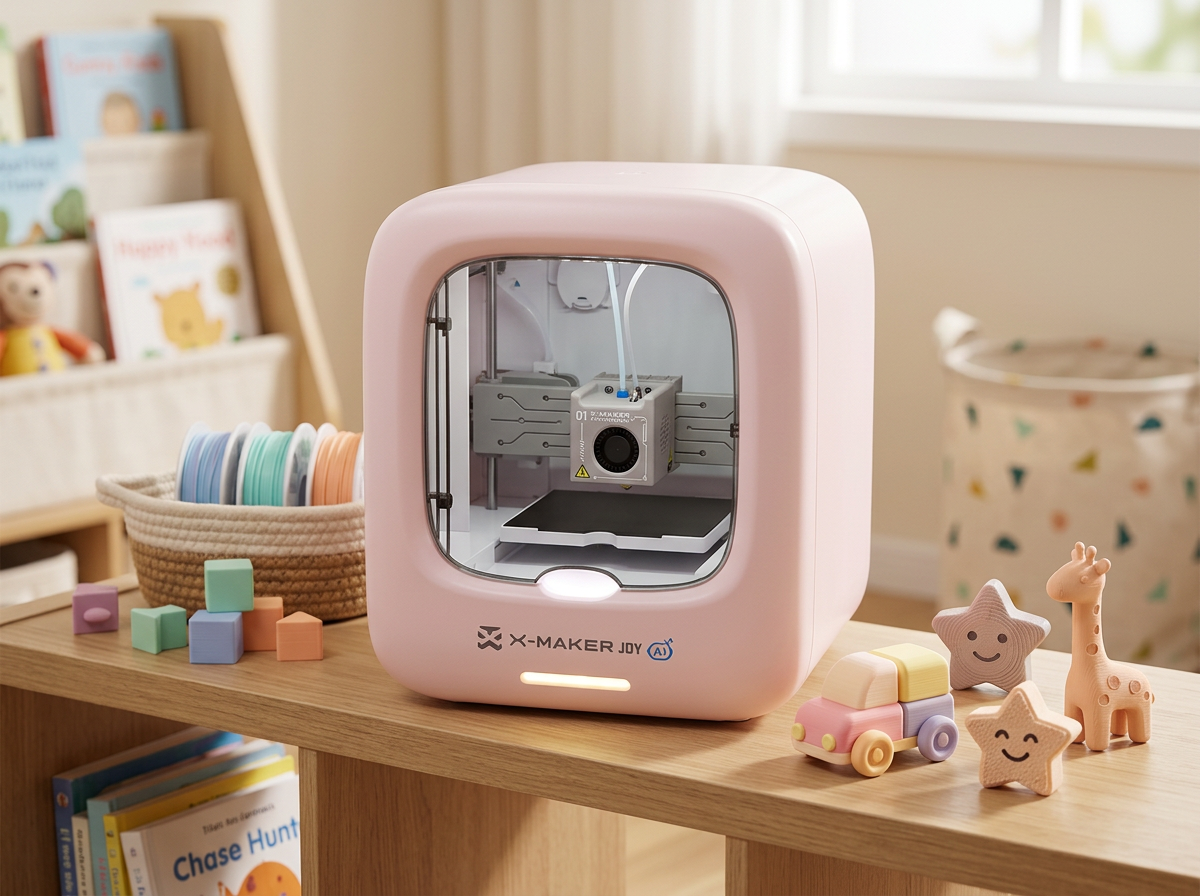
Enclosed printer for peace of mind: An enclosed printer design is the safest family creative station because the hot nozzle and moving belts are physically contained. The observation window is the child's interaction point — they watch through the window, not through the enclosure.
|
Age-Appropriate Activities
The safety question for any creative family activity is not 'is this safe for children generally?' but 'is this safe for the youngest child in this room?' A session designed around the youngest child's capabilities is a session where no one is frustrated by being excluded from a role they cannot yet manage safely.
Safety for Crafting and DIY Projects
The most effective safety setup is environmental rather than instructional. A dedicated maker station — printer at eye level, hot tools stored out of reach, decoration supplies in clearly labeled containers — communicates the safety boundaries through the physical arrangement of the space before any safety conversation happens. Children who work in organized environments develop safety habits faster than children who work in unorganized ones.
Screen-Free Camping Activities for Kids
Camping removes the option for passive screen entertainment naturally. The best screen-free camping activities for kids are the ones that replace screen entertainment with activities that are just as absorbing but genuinely outdoors.
Best Screen-Free Camping Activities by Family Type
|
Family Type
|
Best Camping Activity
|
3D Printing Prep at Home
|
|
Active families (hiking, exploring)
|
Nature scavenger hunts — species identification, rock collections, habitat sketching
|
Print a species identification card holder or small specimen box to bring camping
|
|
Creative families (art, music, stories)
|
Collaborative story around the fire — each person adds a chapter before passing
|
Pre-print character figurines for the story — one per family member to hold while narrating
|
|
Competitive families (games, sport)
|
Card games, outdoor quizzes, relay races — no setup required
|
Print waterproof card game holders or custom camping tokens for strategy games
|
|
Relaxed families (cooking, observation)
|
Stargazing with a printed constellation guide, slow cooking over fire
|
Pre-print a small constellation guide card and a fire safety log holder
|
|
Families with young children
|
Sensory exploration, nature art (leaf rubbings, mud printing), sound maps
|
Print small containers for nature collections and simple shape-stamp tools
|
|
Mixed age groups
|
Paired activities matching older and younger siblings — older leads, younger decides
|
Print a set of scavenger hunt tokens — older sibling hides, younger finds
|
The AOSEED X-MAKER creation kits are particularly useful for the pre-camping session — the week before a trip becomes a creative family time idea in itself, printing and decorating equipment for the journey ahead. The printed objects become part of the camping experience rather than just a home activity.
Conclusion
Creative family time ideas do not need to compete with screens on screens' own terms. They need only offer something screens cannot: a real object made together, a problem solved together, a story told together.
The Tuesday evening that begins with 'what should we do?' and ends with a painted animal on the shelf, or a race car on the kitchen floor, or a batch of cookies cooling on the counter — that evening is the one children remember.
Start with one session. One activity. One creative decision made together. Repeat it the following week with a different project. The routine becomes the tradition.
For families building a creative family station around 3D printing, AOSEED 3D printers for kids shows both current family models with age guidance — useful for choosing the right starting point for the weekly creative session described in this guide.
FAQs
How can I make family time fun without a screen?
Four specific approaches work across all family types: produce something real (a baked item, a painted page, a printed object, a completed puzzle — something physical exists at the end of the session); give everyone a role (not everyone watches — everyone contributes); match the activity to the family's current energy (high energy needs outdoor or physical activities, calm evenings suit making or game sessions); and repeat rather than reinvent (the same activity done weekly becomes a tradition faster than a different activity done once monthly).
Why is it important to have family time?
Family time is the primary mechanism through which family identity is built. Research consistently shows that children who grow up with regular, shared family experiences have stronger self-esteem, more resilient relationships, and more confident social skills than children whose family time is primarily individual. The specific activity matters less than the regularity and the genuine participation of every member. Weekly creative sessions are one of the most sustainable formats because they produce a visible output each time, making the time's value tangible.
What are normal family activities?
Normal family activities across most households include shared meals, outdoor walks, board and card games, baking and cooking, watching films together, and crafts. What transforms a normal family activity into a meaningful one is consistent repetition and everyone's genuine involvement. The families who report the strongest family bonds are not the ones doing the most elaborate activities — they are the ones doing simple activities consistently over years.
What are the best family games that do not involve screens?
By age range: ages 4–6: Go Fish, Snap, simple memory matching games; ages 6–10: UNO, Pictionary, Guess Who, cooperative puzzles; ages 10+: strategy card games, Scrabble, Catan, creative storytelling games. Across all ages, the most reliably engaging format is collaborative storytelling — one sentence per person, no preparation needed, always ends somewhere unexpected. It requires nothing and produces something that exists only in that moment.
What makes a family strong?
Three things consistently appear in research on family strength: shared routines (the predictable events everyone participates in, not because they are required but because they are genuinely anticipated), real communication (conversation generated by shared activity rather than performance or obligation), and physical presence around shared projects or spaces. Creative family time addresses all three simultaneously — the routine is the weekly session, the communication is generated by making together, and the physical presence is required by the activity itself.
What are screen-free camping activities for kids?
The most absorbing screen-free camping activities for kids are those that use the camping environment as the activity material: species identification walks, nature scavenger hunts, night sky observation, collaborative fire-side storytelling, map-reading expeditions, and sound mapping (sitting quietly and identifying every sound in the environment). All of these require genuine attention to the physical world and produce conversation that cannot happen in front of a screen. Preparing printed materials at home before the trip — constellation guides, scavenger hunt lists, character figurines for fire-side stories — extends the creative family time idea from home to outdoors.
What are some unique family traditions?
The most memorable family traditions tend to involve production — making something, not just doing something. A weekly maker session where every completed object is displayed on a shared shelf. A monthly baking day where a different family member chooses the recipe. An annual camping trip where a new collaborative story is started and continued in subsequent years. A family photo project where the same spot is photographed at each season. What all of these share is that they accumulate — each instance adds to a visible record of the family's shared creative history.
How much screen-free family time is enough?
Research suggests that 60 to 90 minutes of dedicated creative family activity three to four times per week produces measurable improvements in family closeness, child wellbeing, and creative confidence within four to six weeks. The frequency matters more than the duration — three 30-minute sessions produce better outcomes than one 90-minute session. Start with a single weekly maker session in a consistent time slot. Build from there. The goal is not maximizing screen-free time but building a creative routine that everyone genuinely anticipates.
Sources
-
Tinybeans — 52 Ideas for Quality Family Time, 52 Ideas for Quality Family Time, 2024.
-
Jenna Rainey — Low-Cost Family Time Ideas, Low-Cost Family Time Ideas, 2024.
-
Fat Mum Slim — 32 Fun Family Activity Ideas Together, 32 Fun Family Activity Ideas Together, 2023.
-
Motherly — Fun Ideas for Screen-Free Family Time, Fun Ideas for Screen-Free Family Time, 2024.
-
National Wildlife Federation — Outdoor Screen-Free Activities for Families, Outdoor Screen-Free Activities for Families, 2023.


Further reading
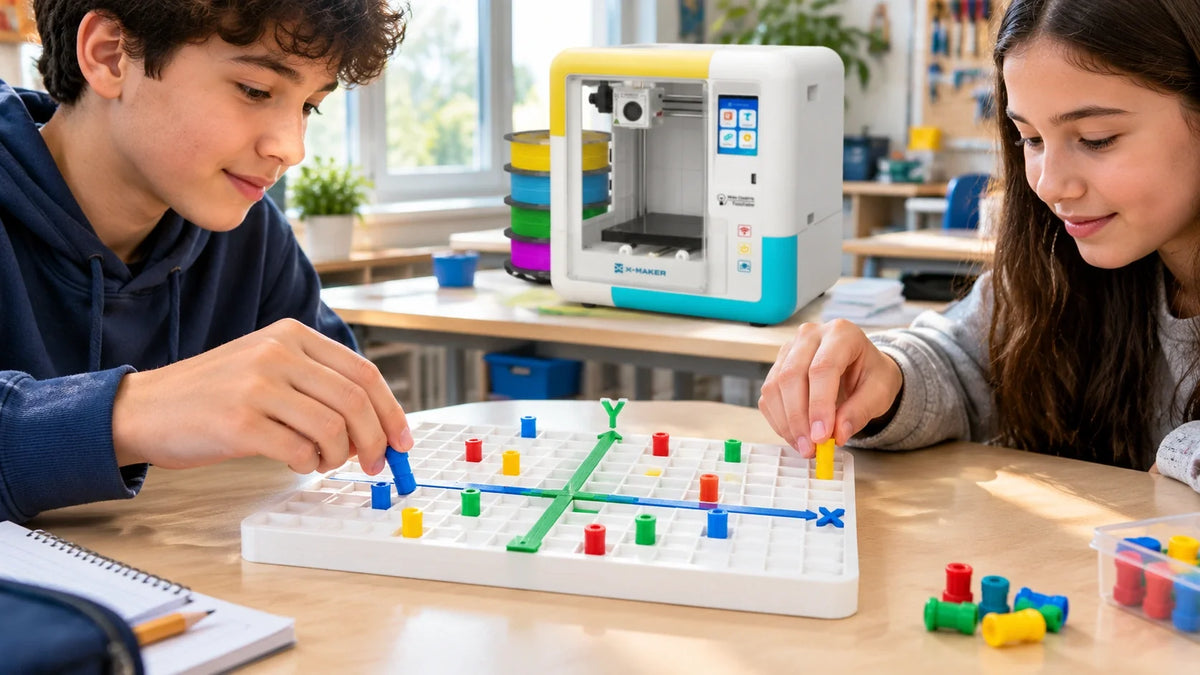
3D Printed Cartesian Plane Lesson Plan: Math and Technology Integration for Grades 5 to 8
Ordered pairs trip up a lot of students for one simple reason. On paper, a point is just a dot, and a dot in the wrong square looks almost the same as a dot in the right one. A 3D printed Cartesian...
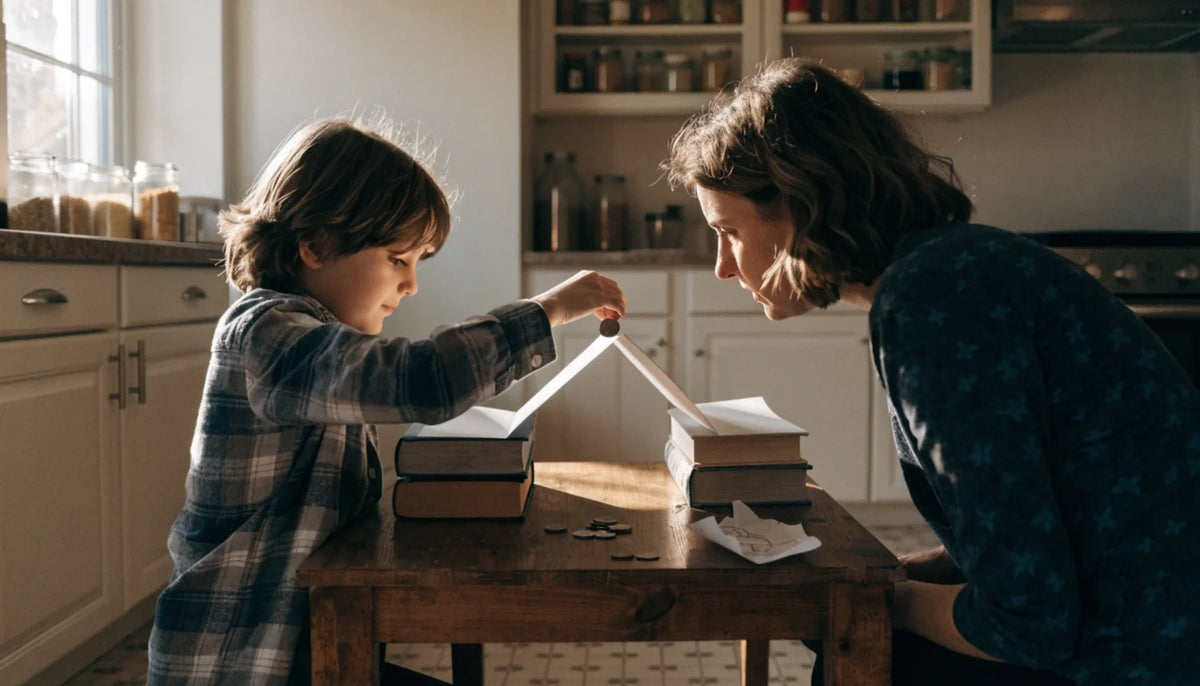
STEM Education for Kids: What It Means and How Parents Can Support It at Home
A paper airplane that keeps veering left. A block tower that falls at the same height every time. A kid asking why the ice in their juice melted faster than the cube on the counter.
Small questions...
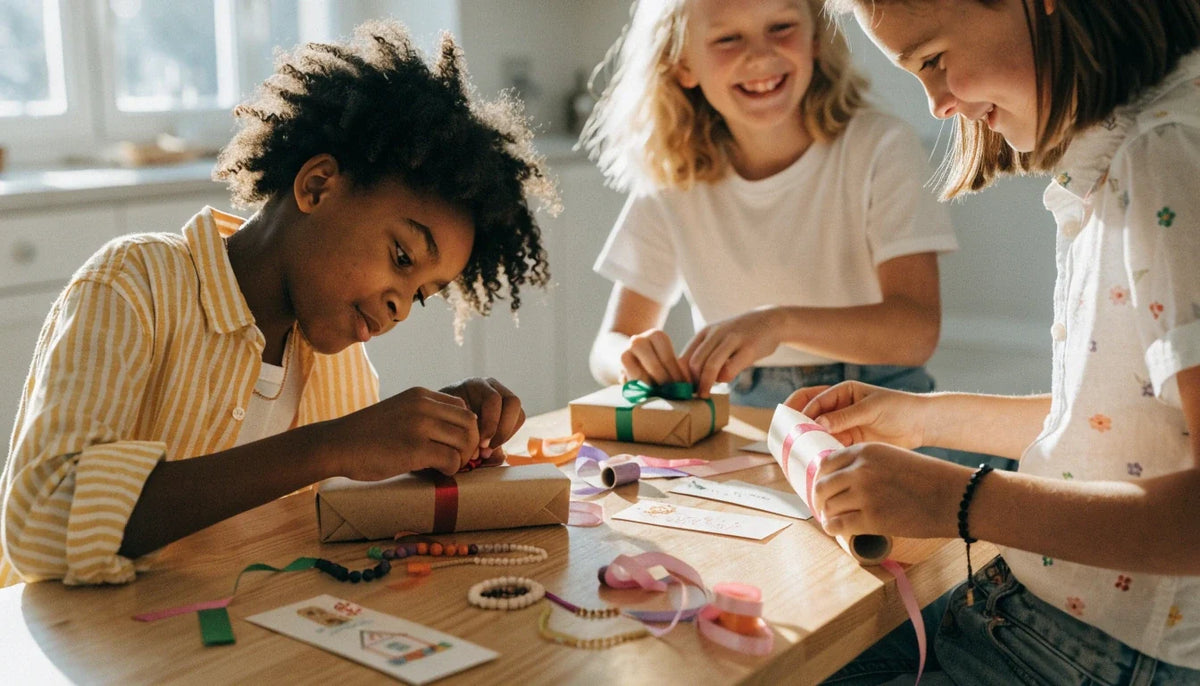
Small Gifts for Kids: Party Favors and Little Presents Kids Can Make
A small gift for a child does not need a big price tag. A bookmark they drew, a lump of clay, a pocket card game. Kids hold on to the things they can use, make, or play with again.
Party favors wor...
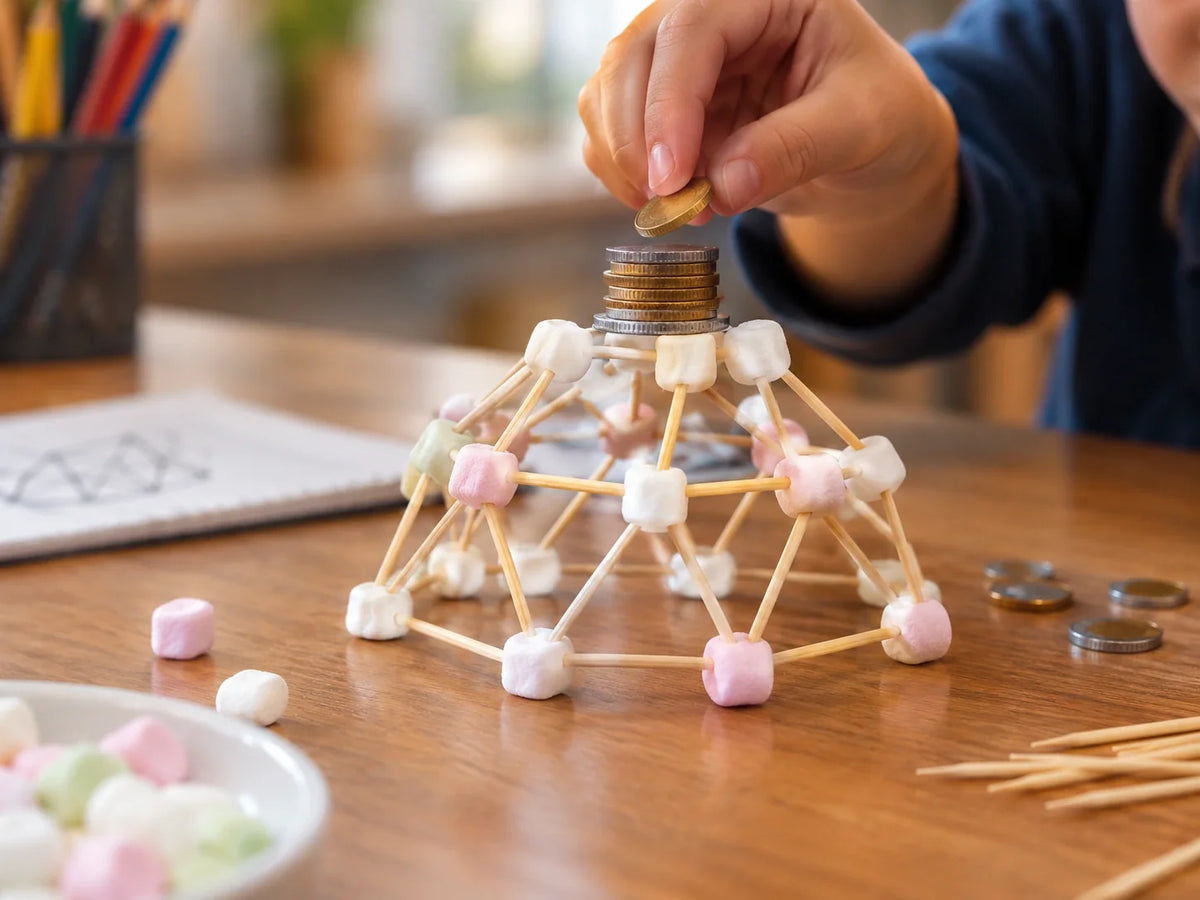
Christmas Gifts for Kids Who Love to Build and Create
Some kids open a finished toy, play for ten minutes, and wander off. Others ignore the toy and build something out of the box it came in. If you are shopping for the second kind, start here.
This l...


