Best Gifts for Kids Who Are Tired of Screens
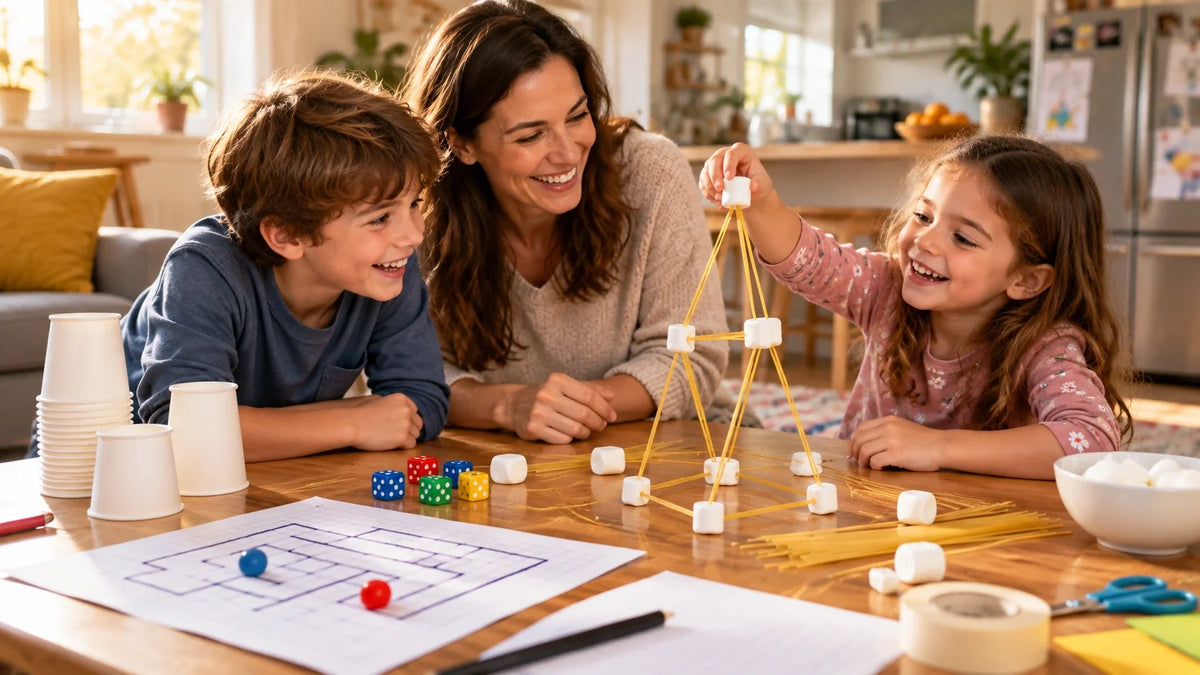
The child is not tired of being entertained. They are tired of being passive. A child who spends three hours on a screen and then says 'I'm bored' is telling you something specific: they were consuming, not creating, and consuming does not fill the creative need.
Screen-free gifts are not about removing something. They are about replacing it with something that produces an outcome the child can hold, show, and feel proud of. The best screen-free gifts share one characteristic: when the session ends, the child has made something.
This guide covers seven screen-free gift categories, a situation-based selector for the specific challenge you are facing, and a week-long session planner. For families who want the single highest-repeat-use screen-free gift, the AOSEED X-MAKER JOY is covered in detail — including how it addresses the most common parent question: 'but doesn't it use an app?'
|
3 hours Average daily screen time for children 8–12 |
1 object All needed to shift a session from passive to active |
1500+ X-MAKER JOY Toy Library projects |
7 types Screen-free gift categories in this guide |
Screen Session vs Maker Session — What Is Actually Different
|
Dimension |
Screen session (passive) |
Maker session (active) |
|
What the child does |
Consumes content created by someone else |
Creates an object, game, or experiment that did not exist before |
|
Attention required |
Passive — screen provides all stimulation |
Active — the child must drive the session forward |
|
Session end state |
Returns to default — nothing made or produced |
Has a physical outcome to show, play with, or give |
|
Repeat engagement |
Needs new content to maintain interest |
Tool enables infinite new sessions |
|
Social dynamic |
Individual or spectator activity |
Natural sharing context — child shows what they made |
|
Skill built |
Media literacy, passive consumption |
Fine motor, spatial reasoning, engineering thinking, patience |
Screen-Free Gift Score Matrix — All 7 Categories at a Glance

|
Gift category |
Zero screens |
Repeat sessions |
Social play |
Creates something |
Age range |
|
Craft kits |
✅ |
⚠ Supplies consumed |
✅ |
✅ |
6–12 |
|
STEM building kits |
✅ |
✅ Reconfigurable |
✅ |
✅ |
7–14 |
|
3D printing — X-MAKER JOY |
✅ |
✅✅ 1500+ projects |
✅ Show/share |
✅✅ |
8–14 |
|
Outdoor exploration kits |
✅ |
✅ Seasonal reuse |
✅ |
✅ Data collected |
7–13 |
|
Board games + puzzles |
✅ |
✅ Replay often |
✅✅ Social core |
❌ Play only |
6–14 |
|
Science experiment kits |
✅ |
⚠ Finite experiments |
✅ |
✅ Results |
8–13 |
|
Creative building sets |
✅ |
✅✅ Open-ended |
✅ |
✅ |
5–12 |
1. Craft Kits and Creative Playsets

Melissa and Doug's Screen-Free Week — Our Favorite Screen-Free Activities identifies structured craft kits as the most reliable gateway activity for children transitioning from passive screen time — because they provide the same step-by-step progress reward without a screen delivering it.
Why Craft Kits Are Perfect for Screen-Free Fun
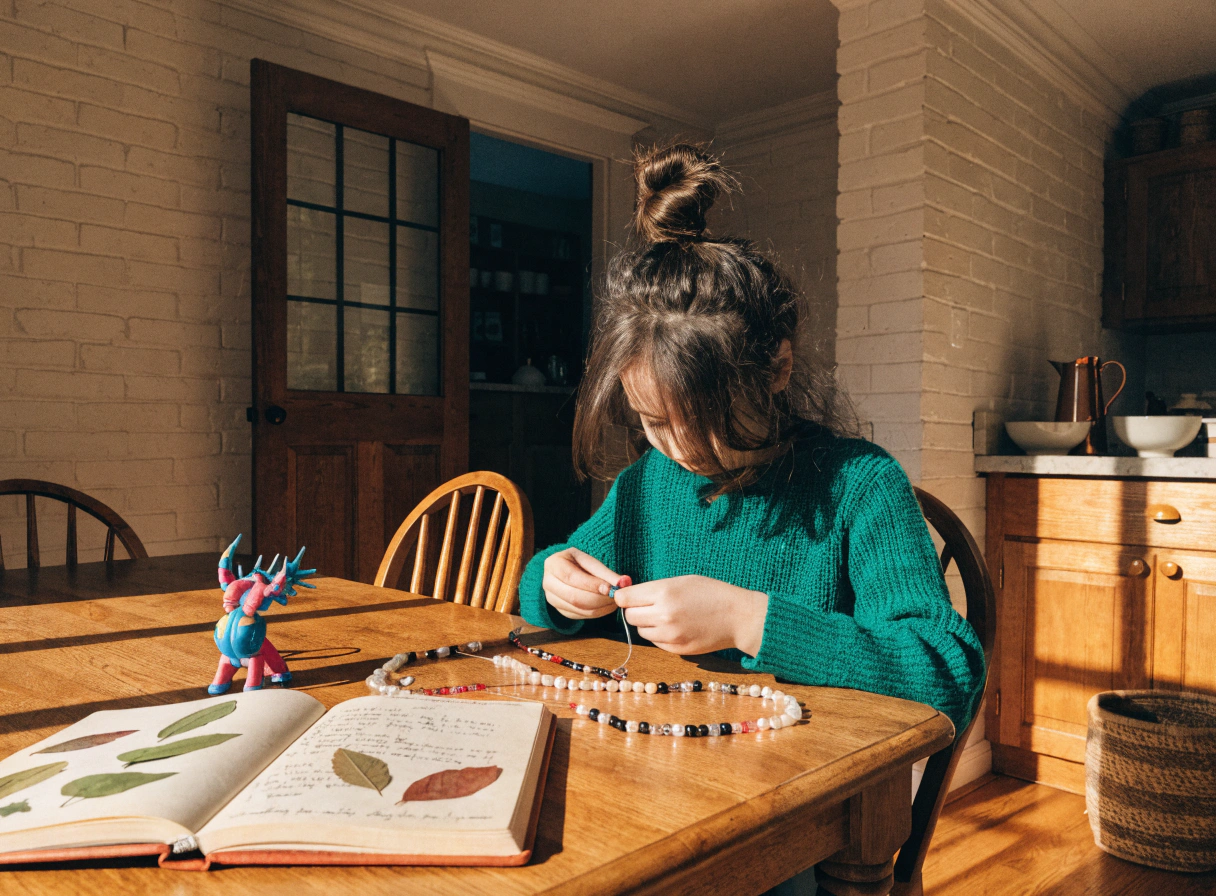
A craft kit provides three things a screen cannot: a physical object the child made, a sequence the child controls, and a social context (showing the finished object). These three elements together produce what screen sessions lack — the 'I made this' outcome.
The most important feature of a screen-free craft kit: the session has a natural endpoint. Unlike a screen session that requires external management to end, a craft session ends when the object is complete.
Craft Kit Guide — What the Child Makes, Skill Developed, and Session Length
|
Craft kit type |
What child makes |
Skill developed |
Session length |
|
Bead and jewelry kit |
Wearable bracelets, necklaces, and accessories |
Fine motor precision, pattern recognition, color theory |
30–90 min |
|
Air-dry clay set |
Figurines, animals, decorative tiles |
Spatial reasoning, 3D thinking, material handling |
45–90 min |
|
Origami set |
Paper constructions — animals, flowers, boxes |
Sequence-following, spatial folding, geometry intuition |
20–60 min |
|
Textile and weaving kit |
Loomed fabric, friendship bracelets, woven patches |
Pattern thinking, rhythm, tactile focus |
60–120 min |
|
Mixed-media art kit |
Collages, illustrated cards, layered art pieces |
Creative composition, material experimentation |
30–60 min |
Recommended Craft Kits for Kids
Three characteristics that make a screen-free-worthy craft kit:
- All required materials sealed in one package — the child can start immediately without a trip to a craft store.
- The finished object is usable or displayable — a bracelet the child wears, a key hanger they use, or an origami box they fill. Ongoing physical evidence of the session.
- A refill or expansion path — a kit that runs out in one session is a one-time experience. A kit ecosystem that can be expanded maintains the session habit.
2. STEM Kits for Young Innovators

How STEM Kits Foster Creativity and Problem-Solving
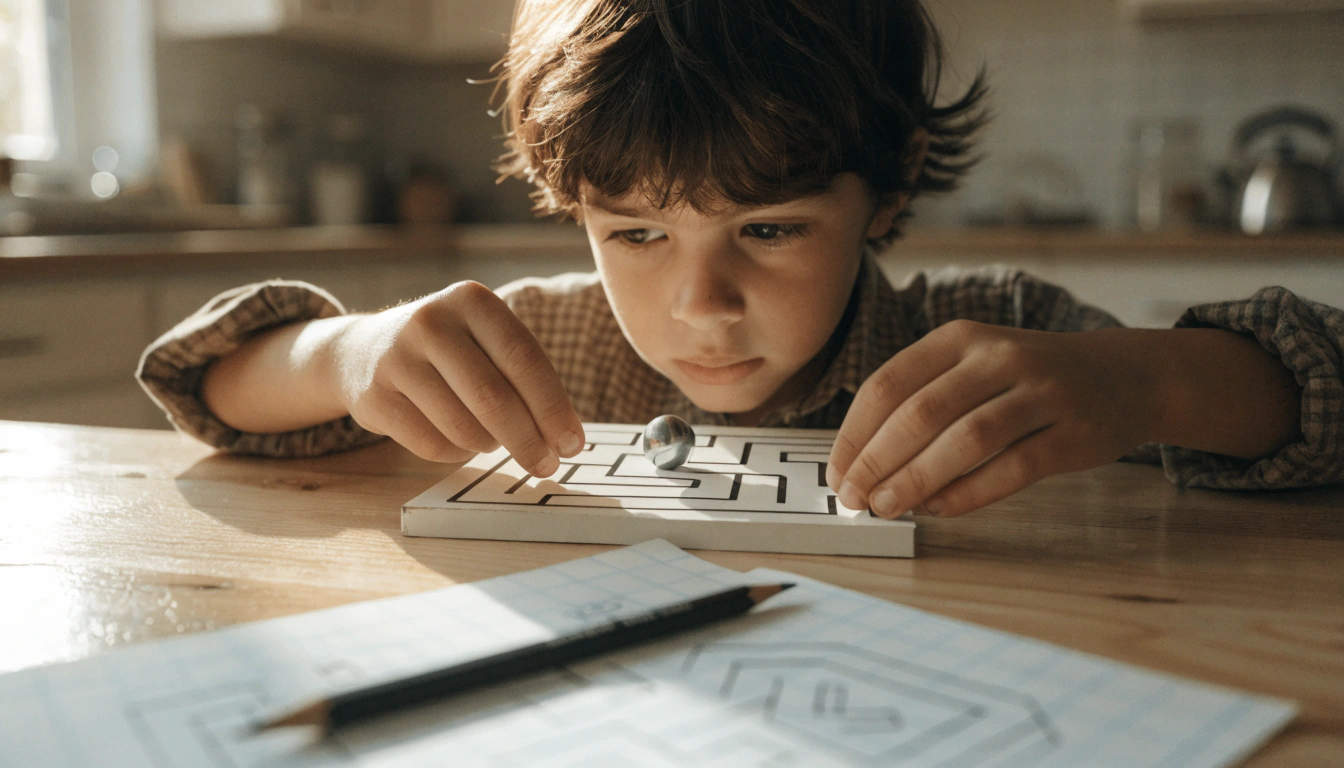
STEM kits at the screen-free intersection are particularly powerful because they mimic the reward structure of games — progressive challenge, visible achievement, immediate feedback — without a screen providing those rewards. A child who solves a GraviTrax configuration after 20 failed attempts has experienced the same satisfaction loop as a game level, but with their hands.
The critical distinction for screen-heavy children: STEM kits require them to be the engine of the session. The kit does not entertain them — they have to drive it forward. This active engagement is what replaces passive screen consumption.
Popular STEM Kits for Screen-Free Fun
|
STEM kit |
Screen-free-worthy because |
Age fit |
Repeat sessions |
|
GraviTrax marble run |
Open reconfiguration — hundreds of valid layouts from the same set. No single correct solution. |
7–14 |
✅✅ Infinite reconfigurations |
|
LEGO Technic sets |
Functional builds — gears, pistons, levers. Teaches real physics. Disassemble and redesign. |
9–14 |
✅✅ Rebuild across configurations |
|
Snap Circuits electricity kits |
Working circuits from snap connectors. Each project produces a functional outcome. |
8–13 |
✅ Long series of projects |
|
Magna-Tiles construction sets |
Free-form 3D structure building with magnetic edges. No instructions — fully child-directed. |
5–10 |
✅✅ Open system |
3. Outdoor Exploration Kits

Inspiring Curiosity About Nature
Outdoor exploration kits have a built-in screen-free mechanism: they only work outside. A field microscope requires a natural sample. A solar robot requires sunlight. A nature journal requires something to observe. The kit creates the reason to go outside — and once outside, the screen is not available.
For screen-heavy children, outdoor kits work best when they have a defined collection or documentation task. A child sent outside with no purpose returns to the screen. A child sent outside to collect 5 different leaves for microscope slides stays occupied with a goal.
Top Outdoor Exploration Kits for Kids
|
Kit type |
Screen-free mechanism |
Pairs with |
Best season |
|
Field microscope set |
Requires real samples — child must collect outdoors to use |
Nature journal for documenting observations |
All — different specimens each season |
|
Solar robot kit |
Requires direct sunlight. Tests variables — shade vs sun. |
Weather station — pair solar performance with weather data |
Spring + summer |
|
Bug-catching and viewer set |
Insects exist outdoors. The viewer extends engagement beyond catching. |
Nature journal for sketching and naming |
Spring + summer |
|
Navigation and compass kit |
Requires physical space — cannot be done on a couch |
Homemade map project + marked waypoints in park or garden |
Spring + autumn |
|
Weather station kit |
Records real data only — outdoors. 14-day project creates ongoing engagement. |
Science journal for graphing temperature and humidity |
All — especially autumn |
4. Board Games and Puzzle Sets

How Board Games and Puzzles Encourage Screen-Free Play
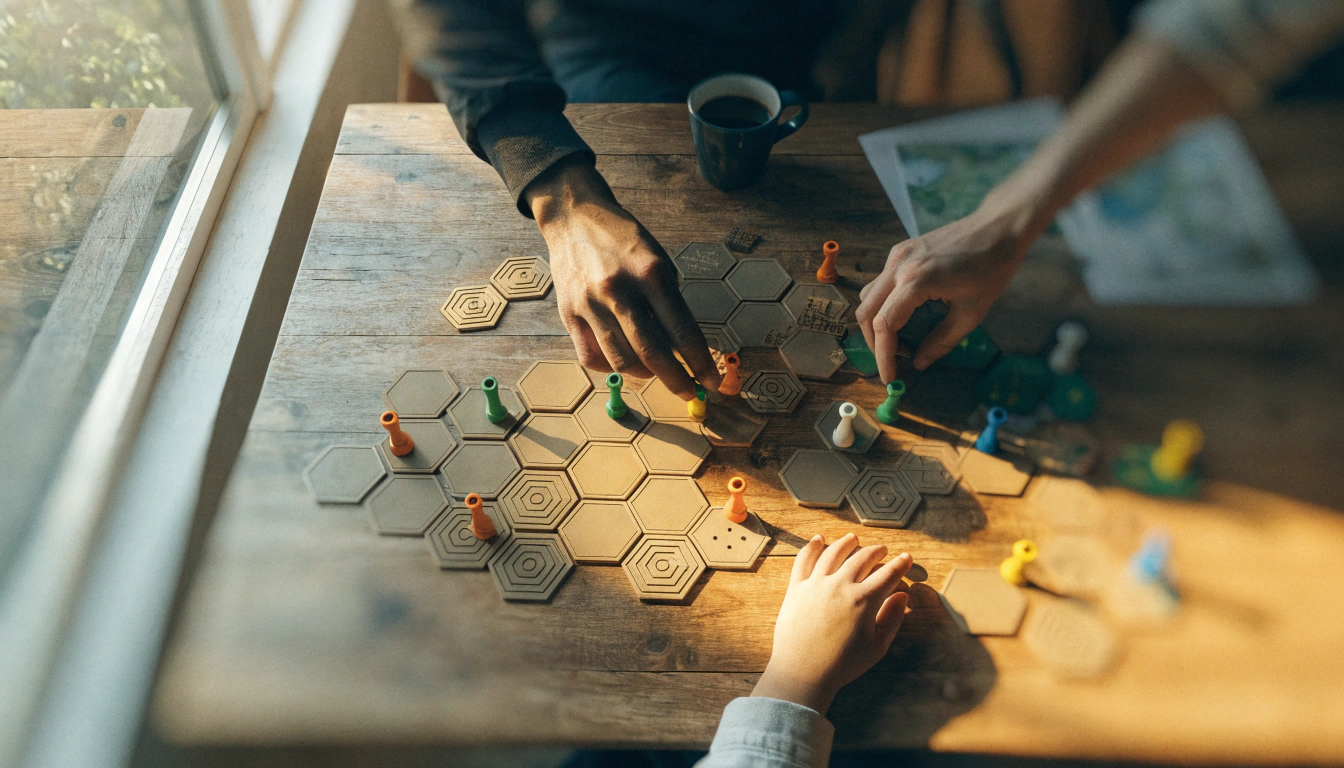
Board games compete with screens on social terms. A screen will always be more visually stimulating. But a board game where the child is the agent of the outcome, where their decision matters to someone else in the room, where laughter happens in shared physical space — that experience is not replicable on a screen.
The most screen-free-effective board games are not the most complex. They are the ones with the highest 'one more round' rate. Cooperative games, quick-reset formats, and dexterity games that make everyone laugh produce natural re-engagement without any parent management.
Board Game Selector — Format, Age, STEM Skill, and Session Length
|
Game type |
Players |
Age fit |
STEM skill |
Session length |
|
Cooperative (Outfoxed, Hoot Owl Hoot) |
2–4 |
5–9 |
Logic and teamwork |
20–45 min |
|
Strategy (Rush Hour, Chess) |
1–2 |
8–14 |
Sequential planning, spatial reasoning |
20–90 min |
|
Family party (Telestrations, Codenames) |
4–10 |
8+ |
Communication, creative thinking |
30–60 min |
|
Physics + dexterity (Rhino Hero, Jenga) |
2–6 |
5–12 |
Spatial balance, structural intuition |
15–30 min |
|
Puzzle games with levels (ThinkFun) |
1 |
8–14 |
Spatial reasoning, pattern recognition |
20–60 min |
|
The One-More-Round Test The best screen-free board game is the one where the child asks for one more round without being prompted. This almost always happens with cooperative games (near-wins produce re-play instinct) and dexterity games (the laugh is the reward). Choose the first game by the one-more-round potential, not by how impressive it looks on a shelf. |
5. DIY Science Experiment Kits

Why Science Kits Are Great for Screen-Free Play
Science experiment kits are screen-free because they require physical handling of materials that a screen cannot simulate — mixing chemicals, observing crystal growth, handling biological specimens. The result is always in the physical world.
The screen-free staying power of a science kit depends on whether it produces ongoing observable results or single-use reactions. Crystal-growing kits produce visible change over 5–7 days — a reason to check back daily without screens.
Recommended Science Experiment Kits
Science kit types by screen-free staying power:
- Highest staying power: multi-day growing kits (crystals, plant experiments, butterfly life cycle) — the child has a reason to return every day without prompting.
- Good staying power: chemistry sets with 20+ experiments — enough sessions to build a habit before the kit is exhausted. Look for built-in experiment logs.
- Medium staying power: slime-making kits — high initial engagement, lower repeat value once the formula is mastered. Best as a secondary kit.
- Best combination: crystal-growing kit (ongoing observation) + chemistry set (session experiments) + nature journal (documentation) — three kits that build a 6–8 week science habit.
6. 3D Printing — The Highest-Repeat-Use Screen-Free Maker Gift

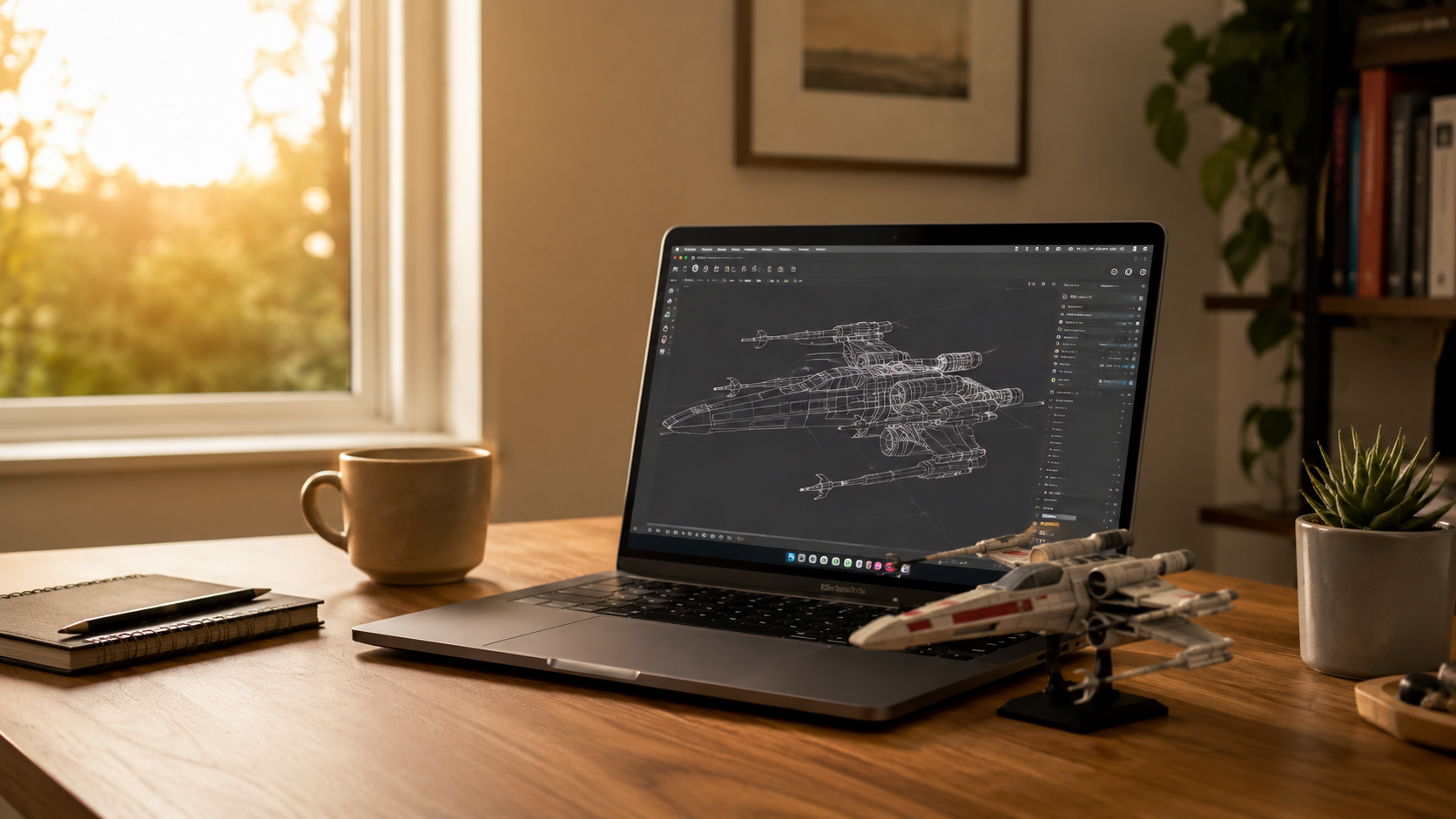
The most common objection to 3D printing as a screen-free gift: 'it uses an app.' The answer is in the session structure. The app is used for 2–3 minutes. The session is 10 to 90 minutes. The outcome is a physical object.
Addressing the App Question Directly
|
Parent concern about screens |
How it applies to 3D printing |
How AOSEED addresses it |
|
"The app is still a screen" |
Used for 2–3 minutes to select a model. The session is physical — watching through the observation window, waiting, then holding the printed object. |
The X-MAKER JOY app functions as a remote control, not entertainment media. The child looks at the printer, not the phone, during the session. |
|
"They will spend hours on the tablet" |
Session is complete once the model is selected. Child puts the tablet down and watches the printer. |
Structure: 3 min app use → 10–90 min waiting and observing → physical object in hand. App is a launcher, not a destination. |
|
"Is this just another gadget?" |
3D printing develops spatial reasoning, design thinking, and engineering thinking without passive screen consumption. |
Every session produces a physical object the child made. The opposite of passive screen time. |
What the Child Does in a Screen-Free 3D Printing Session
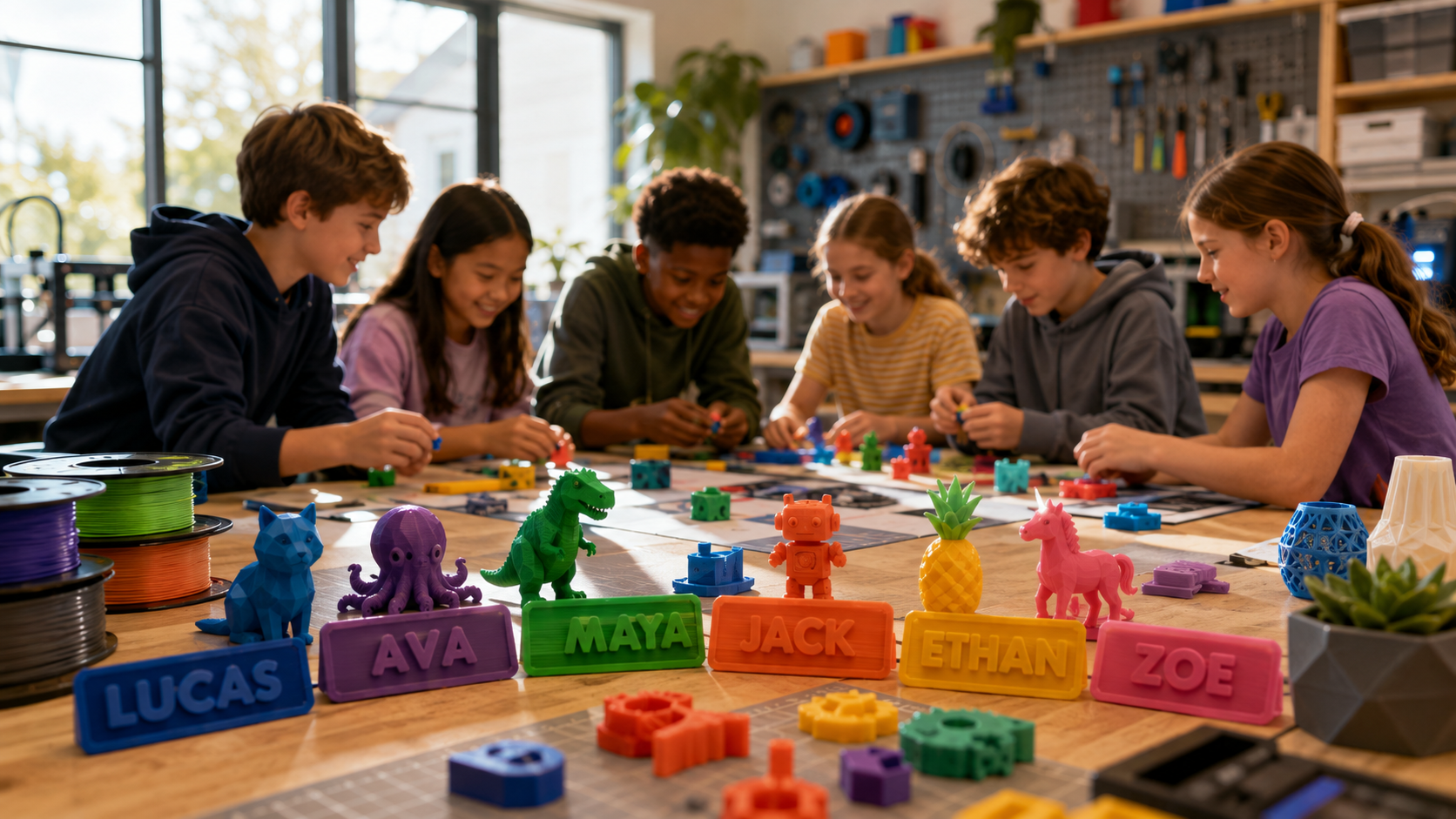
The session flow: the child opens the app, browses the Toy Library (same time as reading a cereal box), selects a model, and presses start. The printer runs. The child watches through the observation window, wanders, draws, talks. When the print timer ends, the child retrieves a physical object, decorates it, and shows it to someone.
The AOSEED Toy Library provides 1500+ tested models organized by print time, interest category, and age range. Weekly additions mean the selection grows across the full year. There is no week where the child runs out of new projects — the most important characteristic for a screen-free gift that genuinely displaces screen time.
|
Why 3D Printing Scores Higher Than Other Screen-Free Gifts Every other screen-free gift category either runs out (craft kit supplies), ends (board game), or needs specific conditions (outdoor kit — needs good weather). A 3D printer with a continuously updated project library never runs out and is available any time, any weather, any day. |
7. Creative Building Sets

Why Building Sets Foster Screen-Free Play
Open-ended building sets are screen-free by nature. They require spatial manipulation that a screen cannot simulate. The child picks up pieces, rotates them, tests configurations, and observes physical results.
The most important feature for sustained screen displacement: the set cannot be finished. LEGO sets with instructions end. An open-ended building system (Magna-Tiles, Tegu blocks, or K'NEX) has no final state — the child can always build something new.
Best Creative Building Sets
|
Building set |
Screen-free-worthy because |
Ages |
Best first purchase |
|
Magna-Tiles (magnetic tiles) |
Fully open — no instructions. 3D structures from 2D tiles. Magnetic snap gives instant feedback. |
4–10 |
Starter set (32 or 48 pieces) — expands with color packs |
|
Tegu magnetic wooden blocks |
Dense hardwood magnetic blocks — tactile and open. The weight and texture compete with screens on a sensory level. |
3–10 |
Tegu Classic Set (42 pieces) |
|
K'NEX big education set |
Large-scale engineering — bridges, towers, working machines. |
8–14 |
'Big Ball Factory' — working mechanism, not just static structure |
|
LEGO Classic large brick set |
Open-system with sorting trays — no instructions, pure creation mode. |
5–12 |
Large Creative Brick Box with sorting tray |
Screen-Free Gift Situation Selector — Match the Gift to the Challenge

The Screen-Free Gift Guide 2024 from Better Screen Time identifies the most common parent mistake: choosing the gift they think is 'educational' rather than the one that specifically addresses how their child is engaging with screens.
Match the Gift to the Specific Screen Challenge
|
When parents say... |
The real challenge |
Best screen-free gift solution |
|
"They reach for the tablet the moment bored" |
No established non-screen default activity |
3D printing — provides a structured session with a physical outcome. The printer is the default when bored. |
|
"They start gaming and I cannot get them off" |
Screen activity is more rewarding than alternatives |
GraviTrax or LEGO Technic — high-challenge systems that provide the same problem-solving reward without screens |
|
"They have no interest in anything non-screen" |
Nothing physical has competed with screens yet |
3D printing — child chooses from digital selections, but the output is physical and new |
|
"They only want to watch videos, not play" |
Passive entertainment preference |
Craft kit with defined outcome — the creation loop: make something, show someone |
|
"Family game night never lasts" |
Games not engaging enough to sustain attention |
Cooperative board games or dexterity games — high interaction, short rounds, natural re-play |
|
"Creative but everything ends up on screens" |
Creative energy routed digital rather than physical |
3D printing + clay kit — digital decisions produce physical results |
A 7-Day Screen-Free Session Planner

Running a screen-free week does not require banning screens entirely — it requires having a full schedule of maker activities that fills the same time slots. The planner below provides a morning and afternoon session for each day using the gift categories in this guide.
Screen-Free Week Session Planner — Morning, Afternoon, and Gift Used

|
Day |
Morning session (30–60 min) |
Afternoon session (30–90 min) |
Gift that supports it |
|
Mon |
Nature walk — observe and sketch 5 things |
Crystal-growing kit — set up and record starting observations |
Outdoor kit + science kit |
|
Tue |
Origami session — complete 3 shapes |
Board game with siblings or parent (2+ rounds) |
Craft kit + board game |
|
Wed |
3D printing — child selects model, presses start |
Post-print decoration with paint markers |
3D printer — X-MAKER JOY |
|
Thu |
LEGO or GraviTrax building session — free design |
Crystal-growing kit — measure and record day 2 growth |
STEM kit + science kit |
|
Fri |
Clay sculpting — create a character |
Bead-making kit — make a gift for someone else |
Craft kit |
|
Sat |
3D printing — personalized design session |
Outdoor exploration — solar robot in different light |
3D printer + outdoor kit |
|
Sun |
Family board game night — 2 games |
Review the week's made objects — photograph and document |
Board games + any maker gift |
The planner uses 3D printing as the Wednesday and Saturday anchor because these are typically the longest available sessions. The printer runs independently during wait time, allowing the child to do a second activity while the print completes.
Conclusion
Screen-free gifts work when they replace what screens provide — not when they ask the child to want less. The child reaching for a tablet is looking for stimulation, challenge, and reward. The gifts in this guide provide all three — with a physical outcome, a social sharing context, and a session that ends naturally when something is made.
The best screen-free gift is the one still being used in week 4, not just week 1. For most gift categories, that requires an open-ended system — one where there is always a next session available. A 3D printer with a project library that updates weekly is the most reliable version of that.
For families choosing their first screen-free maker gift, AOSEED 3D printers for kids shows both models with guidance on age fit, session structure, and what a typical week of use looks like after the first month.
FAQs
How to make kids screen-free?
The most effective approach is replacement before restriction. Screens fill a need — stimulation, challenge, reward. Identify which screen activity the child prefers: passive watching (replace with craft kit or board game), gaming (replace with GraviTrax or LEGO Technic), creative apps (replace with 3D printing). One new maker activity per week, added without removing screens, usually produces a natural shift in preference within 4–6 weeks. Screen time after the session works better than before it — a child who printed something for 45 minutes and then has screen time is in a completely different state.
What is screen-free play?
Screen-free play is any activity that does not require a digital display for its core engagement: physical building and construction (LEGO, Magna-Tiles), hands-on making (craft kits, clay, 3D printing), outdoor exploration (nature kits, navigation), board games and puzzles, science experiments, and open imaginative play. A 3D printer that uses an app for 2–3 minutes of session setup but runs physically for the remainder qualifies as screen-free play, as the primary activity is physical creation and the outcome is a tangible object.
What are the 4 types of gifts?
A practical gifting framework for screen-free gifts: (1) Something to make — craft kit, 3D printer, clay set; (2) Something to discover — outdoor exploration kit, science experiment set; (3) Something to play together — board game, cooperative puzzle set; (4) Something to build — LEGO, GraviTrax, K'NEX, Snap Circuits. For children with screen habits, category 1 (something to make) is the highest-impact because it provides the creation reward screens simulate but cannot deliver.
What are the 5 types of gifts?
The 5-gift framework: (1) Something they want; (2) Something they need; (3) Something to wear; (4) Something to read; (5) Something to create. For the 'something to create' slot, prioritize gifts with the highest repeat-session potential — open-ended kits, reconfigurable building systems, or a 3D printer with a curated project library. This category is the most powerful screen-free slot in any gifting framework.
How to be screen-free for kids — a practical approach?
Three approaches that work better than screen bans: (1) Replace first, remove second — add one new maker activity before reducing screen time; (2) Build the session habit before the expectation — run a craft session every Saturday for 4 weeks before introducing 'no screens on Saturdays.' The habit exists before the rule; (3) Use the session planner above — a week of screen-free sessions works when every time slot already has a maker activity scheduled. Empty time produces screen reaching. Full maker schedules produce maker habits.
What are the 12 ultimate gifts?
In the screen-free gifting context, the 12 ultimate gifts are organized around the 7 categories in this guide plus 5 additional experience-based gifts: (1) 3D printer with project library, (2) open-system building set, (3) chemistry or crystal-growing kit, (4) outdoor exploration kit, (5) field microscope, (6) cooperative board game set, (7) craft kit ecosystem with refills, (8) family cooking experience (baking kit), (9) museum or science center membership, (10) STEM class enrollment, (11) maker workshop day, and (12) a nature journal documenting the year's outdoor sessions.
Sources
- Better Screen Time — Screen-Free Gift Guide 2024, Screen-Free Gift Guide 2024, 2024.
- Treehouse Schoolhouse — Holiday Gift Guide for Screen-Free Gifts, Holiday Gift Guide for Screen-Free Gifts, 2025.
- Fat Brain Toys — Screen-Free Fun for Kids, Screen-Free Fun for Kids, 2025.
- KidKraft Blog — Screen-Free Activities for Kids, Screen-Free Activities for Kids, 2026.
- Disciple Mama — Screen-Free Week: A Beginner's Guide, Screen-Free Week: A Beginner's Guide, 2025.



Further reading

Thanksgiving STEM Activities for Kids: Table Projects and Simple Engineering Challenges

Halloween STEM Activities for Kids: Spooky Builds That Teach Real Science

STEM Crafts for Kids: Build, Decorate and Test