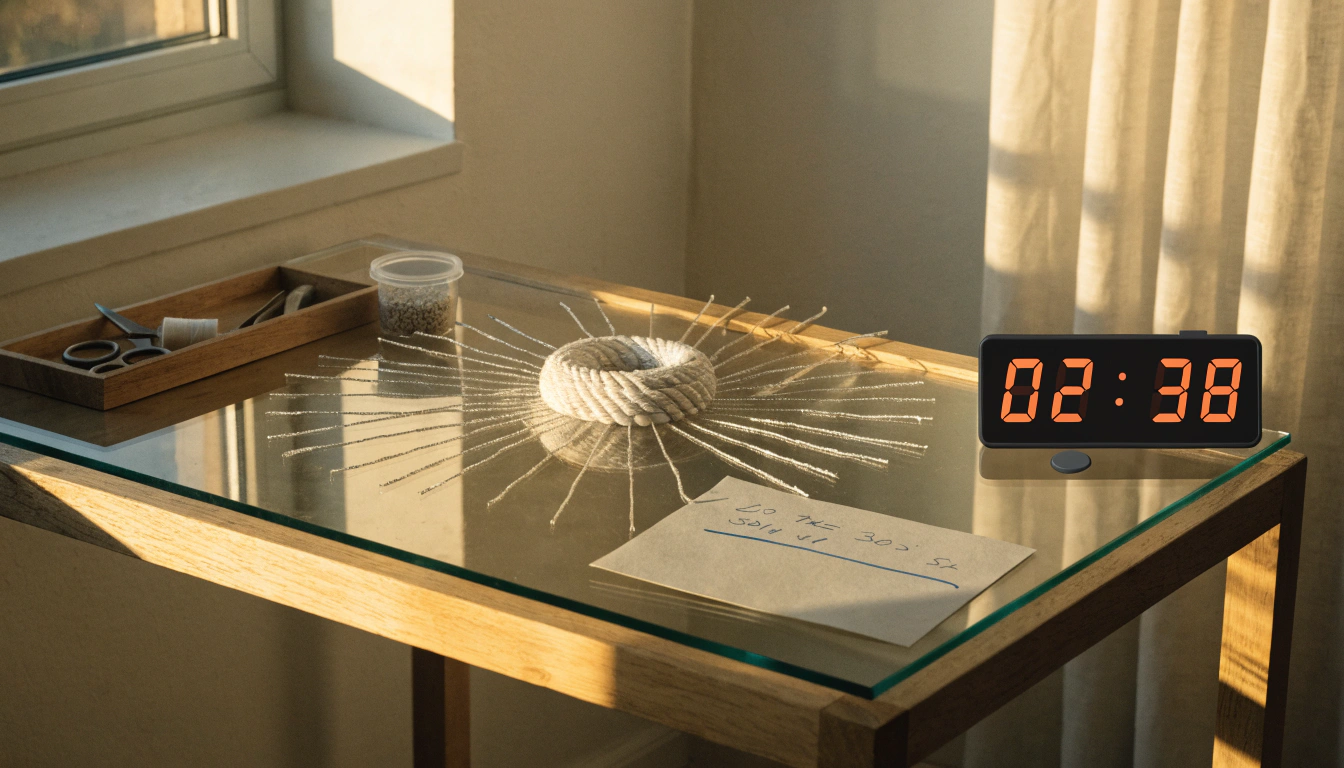
An ADHD-Friendly Maker Session: 6 Short Stages With a Clear Finish
An ADHD-friendly creative session should feel inviting, not like a test of discipline. Without a simple plan, painting a model, sewing a bag, wiring a circuit, or finishing a 3D print can quickly turn into a table covered with tools and several half-started ideas.
ADHD can affect attention, organization, and the ability to finish longer projects, and the experience differs from one person to another. A flexible activity routine can make starting, switching tasks, and stopping feel more manageable without expecting the same energy or focus every day.
The six short stages below give each maker session a clear beginning, one small goal, and a visible stopping point. You will prepare the workspace, make steady progress, and leave the bench ready for the next session.
The Session at a Glance
Before the detail, here is the whole arc. Most people set this up in about four minutes once it becomes familiar.
|
Stage |
What You Do |
Time |
The Question It Answers |
|
1. Match energy |
Rate energy low, medium, or high. Pick the session size that fits. |
30 sec |
What can I realistically do today? |
|
2. Set the finish line |
Name one task, part, or test. Write it where you can see it. |
1 min |
How will I know I'm done? |
|
3. Stage the station |
Put only the tools for that task on a tray. Nothing else. |
2 min |
What do I need in front of me? |
|
4. Run one sprint |
Set a 10, 15, or 25 minute timer. Start with a physical action. |
10-25 min |
How do I actually begin? |
|
5. Reset |
Move, drink water, leave a restart cue. Come back. |
2-5 min |
How do I return without losing my place? |
|
6. Finish clean |
Wrap-up signal, write the next step, park the project. |
5 min |
How do I stop without making a mess? |
What Makes a Maker Session ADHD-Friendly

Why Open-Ended Projects Create Friction
Creative projects usually start with a vivid picture of the finished thing. The steps in between stay blurry.
Take “build a robot.” That is really: find the parts, test a motor, charge the batteries, write the code, fix a loose wire, clear the bench. When six jobs hide inside one goal, starting feels heavier than any single job would.
Time gets slippery too. Not because you don't care about it, but because interesting work quietly eats an hour. Open-ended projects create friction at the other end as well. With no planned finish, the session runs until you're tired or facing a cleanup bigger than the progress you made.
Structure Is Not Strictness
Structure answers four questions. What am I making? What do I need? How long will I work? What counts as finished today?
Strictness insists you follow the same plan when your energy, space, or attention has already changed. That's how one rough session turns into abandoning the whole routine.
|
The flexible version Keep the boundaries, change the size. A full assembly on a good day and five sorted parts on a flat day both count, because each one had a target. The scale moves. The pattern holds. |
Stage 1: Match the Project to Your Energy

Run a 30-Second Check
Before you touch a tool, pause. Rate energy and focus: low, medium, high. Then ask three things. Can I follow several steps right now? Can I handle a mistake without getting wound up? How long until I have to stop?
This isn't a motivation test. It's a weather report.
Low energy points toward sorting parts, sanding one surface, choosing colors. High energy supports soldering a board, cutting several fabric pieces, running a full print test.
Build Easy, Standard, and High-Energy Versions
Write all three before you need them. Each version moves the same project forward at a different level of effort.
- Easy: 10 minutes, one low-risk action. Label component bags, load filament, clean a brush, lay out the tray.
- Standard: One main build step plus a short reset.
- High-energy: Several connected steps, and still a planned ending.
Don't treat the easy version as a consolation prize. It protects the habit. On a rough Tuesday it's the only thing standing between you and a two-week gap.
Plan for Real Conditions, Not Ideal Ones
It's tempting to plan for the version of yourself with a free afternoon, a clear table, and infinite patience. That person is rarely the one who shows up.
Build around likely conditions instead. Work, school, noise, meals, medication timing, and the ten minutes it takes to put tools away. A smaller plan usually produces more finished work, because you're willing to start it.
Stage 2: Define One Clear Finish Line

Break the Project Into Physical Actions
List what your hands actually have to do. Skip the perfect plan for every future step.
A wooden shelf becomes: measure the wall, mark the board, cut one piece, sand the edges, drill the holes, apply finish. Each of those is a session on its own.
Break tasks down until one can start without an internal debate. “Prepare fabric” is still fuzzy. “Iron the blue fabric” is not.
Pick One Task, Part, or Test
Choose something that leaves visible evidence. Tests are useful when the project has unknowns, because a small trial answers a question without committing you to the whole build.
- Do these two materials bond with the glue I have?
- Does the model fit on the print bed?
- Does the LED work with the planned resistor?
- Does the paint still match after it dries?
One good test can save four hours of rework. It also makes a natural finish line, since the goal is to learn something rather than produce a perfect part.
Say What “Done” Looks Like
Describe the state of the project when the session ends, specifically enough that someone else could recognize it. First coat applied. Test file printed. All parts for one section in a labeled tray.
Add stopping conditions where they apply. The timer rings, the glue needs to cure, one safe work area is clear.
|
Write a backup goal before you start If the main goal is assembling four model pieces, the backup is cleaning the contact points and laying the pieces in order. Five to ten minutes, still part of the project. Switching to it is a planned move, not quitting. |
Stage 3: Create an ADHD-Friendly, Low-Friction Workspace

Keep Session Tools Visible and Close
Pegboards, open cups, magnetic strips, shallow drawers, clear bins. Any of them cuts the searching.
Visibility matters most for the tools tied to today's task. You don't need every supply you own on the desk. Pick a small set, put them within comfortable reach, and store sharp, hot, chemical, and powered tools according to their safety requirements.
Give each item a home you'll actually remember. A simple system you maintain beats a perfect one you avoid.
Stage Materials Before the Timer Starts
Gather everything during setup rather than mid-focus. Check quantities, sizes, batteries, charge levels, drying times. An empty glue bottle turns a short pause into a twenty-minute detour.
Use one small staging tray and put only what the finish line requires on it. Everything else stays in storage until the project reaches the step that needs it.
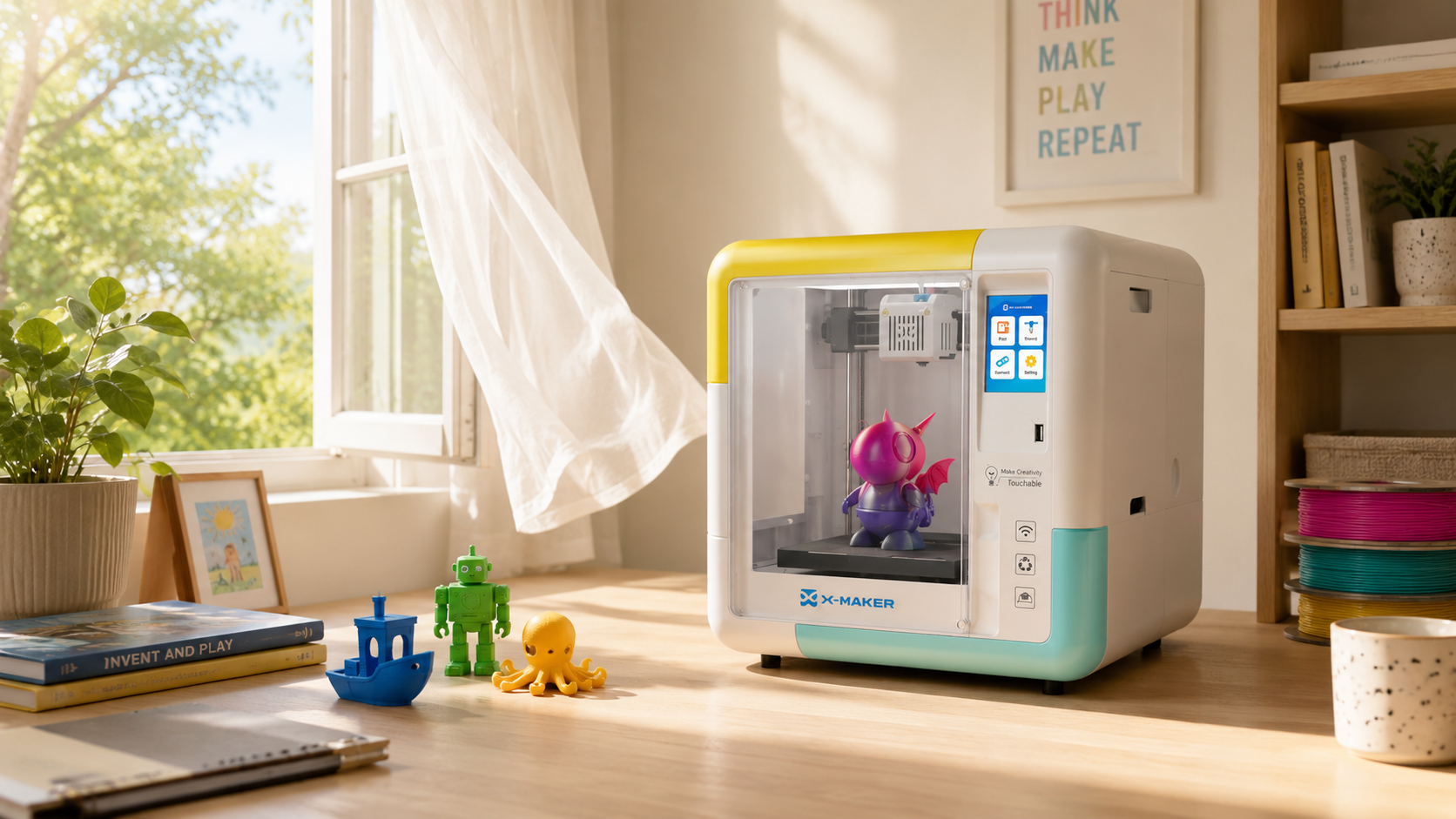
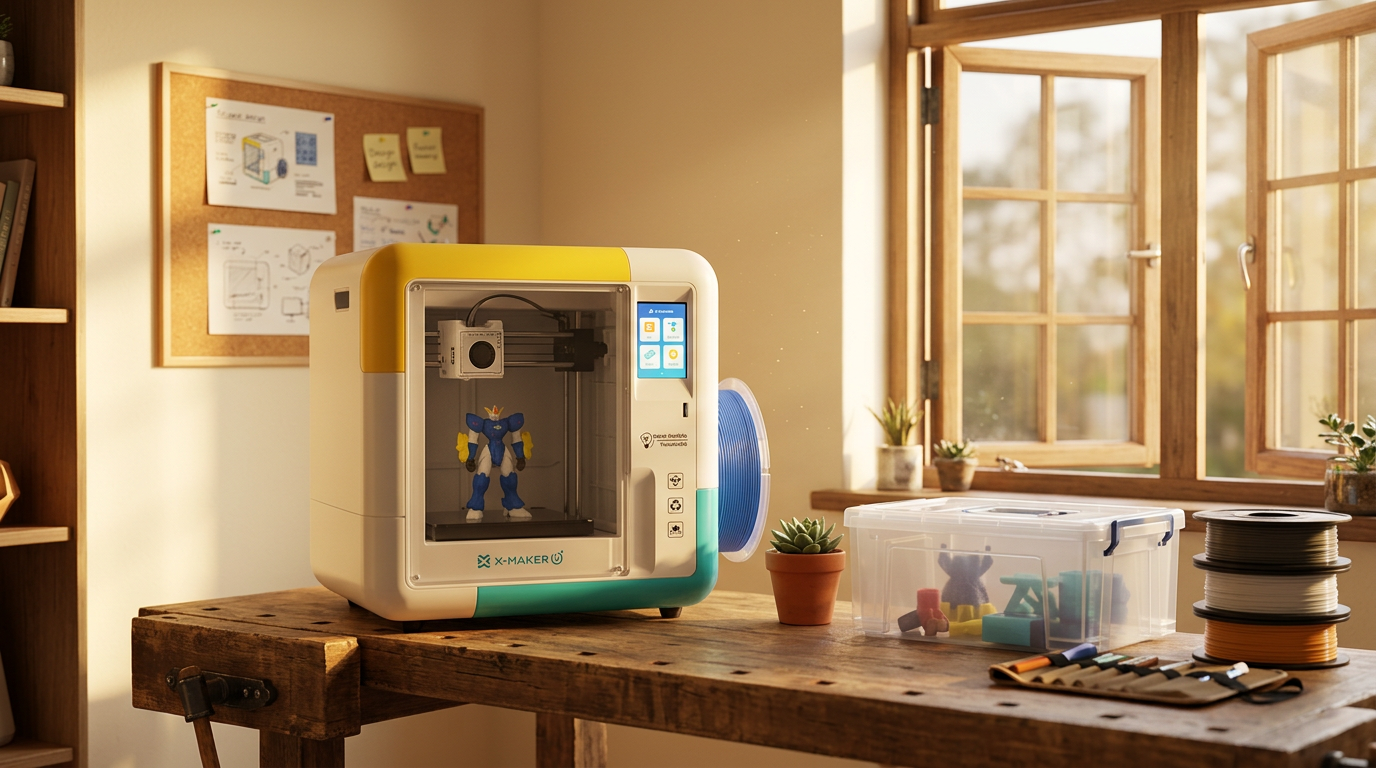
How a beginner printer can reduce setup stepsFor a 3D-printing project, a beginner-friendly printer with one-tap startup can reduce the setup and calibration work that often delays the activity. The X-MAKER JOY is one example, using guided controls to help the maker move from choosing a model to starting the print with fewer steps. |
Give Every Project a Container
One tray, basket, zip bag, or shallow bin per active project. Label it with the project name and the current next step. “Robot arm, test left servo” helps more than “electronics.”
A project kit lowers restart friction because you're not rebuilding the workspace from memory. It also gives unfinished work somewhere to live when the session ends.
Sound, Fidgets, and Body Doubling
Some makers focus better with steady background sound. A 2024 meta-analysis of 13 studies found a small but measurable benefit from white and pink noise on attention tasks for people with ADHD or elevated ADHD symptoms. Participants without ADHD did slightly worse under the same conditions, which is a good argument for testing it on yourself rather than assuming.
Try one sound condition at a time. A fan, rainfall, instrumental music, workshop noise, or silence.
Body doubling means working while another person is present, either in the room or on a video call. They don't supervise or help. Cleveland Clinic notes that working alongside someone can support focus and accountability for some people with ADHD. Keep it simple: state your goal at the start, work quietly, share what you finished at the end.
Stage 4: Start With a Short Focus Sprint
Choose 10, 15, or 25 Minutes

A sprint turns the first stretch of work into a limited promise. You're agreeing to one block, not the whole project.
Ten minutes suits a hard start. Twenty-five works when the task already feels interesting. The classic Pomodoro number is not a rule for makers, and the real measure is what happens after the timer rings. Did you restart easily, or did the stop cost you the rest of the session?
Keep the first sprint slightly shorter than your best guess. Ending with energy left over beats grinding until the work feels unpleasant.
Begin With One Physical Action
Open the project box. Plug in the tool. Put the fabric under the pattern. Set the first piece on the mat.
Movement breaks the gap between planning and doing, and it hands your attention something concrete to follow. Don't start by reviewing every possible project, because that restarts a decision you already made. Use the same opening action each time if you can. Familiar cues cost less.
Give the Sprint One Outcome, and Park Everything Else
“Sand both long edges” beats “make progress on the shelf.” The first tells you what to touch and when to stop.
Write the outcome next to the timer. When a new idea shows up, and it will, put it on a parking-lot note in a few words and go back to the sprint. The note is what stops you from opening six tabs and shopping for materials before the first block ends.
|
On timers A visual countdown shows time passing without making you check a clock. Pick an alert that gets your attention without a jolt: light, vibration, a soft chime. Put it where you can see it but not where you'll keep fiddling with it. Its job is to hold the boundary, not become a second project. |
Stage 5: Reset Without Losing Momentum

Take Breaks You Can Return From
Drink water. Look out a window. Wash your hands. Stand outside the work zone for two minutes.
Avoid anything without a clear endpoint. Social feeds, games, and long videos turn the return into a second full startup. Before you step away, leave a restart cue: put the next part in the middle of the mat, or write one action on a card. When you sit back down, the first move should be obvious.
Use Movement, and Keep It Short
Walk across the room, stretch your shoulders, do a few slow bodyweight movements. A 2025 systematic review found that physical activity eased core ADHD symptoms in children across seven randomized trials, though it works alongside professional care rather than replacing it.
Match the movement to the work. After detailed hand sewing, open and close your hands. After standing at a bench, sit down and stretch your legs. Two minutes, then back.
Reward the Sprint While It's Fresh
Check a box, move a token, add a sticker, photograph the finished step. Research on reinforcement in ADHD suggests immediate feedback tends to carry more weight than a distant payoff, though what counts as rewarding differs by person.
Tie the reward to the making when you can. Finishing a test unlocks a preferred paint color or a new pattern choice. Keep it small enough to repeat.
Treat the Timer as a Check-In, Not an Alarm
Hyperfocus is intense engagement with one task while everything else fades. Cleveland Clinic describes it as the capacity to engage in an activity to the exclusion of everything else, which cuts both ways for makers. It produces beautiful detail work. It also makes stopping, eating, and noticing the time hard.
When the timer rings, ask three quick questions. Do I have water? Is my body strained? Does anything else need me right now? You can take one short extension if the answers are fine. Set a second timer and name the exact unit you'll finish. Don't extend on an open ticket.
Switch to an Easier Task When Interest Drops
Interest can vanish mid-project. Instead of scrapping the session, move to something simpler inside the same build. Sort hardware. Clean one tool. Trim loose thread. Rename files. Prepare the next material.
This is where the backup goal from Stage 2 earns its keep. You chose it when you had planning energy, so you don't have to invent a path while running on empty.
Stage 6: Create a Clear Finish
Signal the Wrap-Up Two Minutes Early
Set an alert two minutes before the real stop. The first signal means finish the current safe action, not drop everything.
Use those minutes to save files, turn off heat, cap liquids, and secure sharp tools. Safety shutdowns come before speed, always. Use the same sound or phrase every time so the closing routine feels like part of making rather than a punishment after it.
Finish the Smallest Complete Unit
One seam. One solder joint. One paint area. One row. One file save.
Don't start a fresh unit in the last five minutes. “One quick extra step” is how a clean stop becomes another hour. If a step can't be safely completed, pause it according to the material instructions and label anything that needs curing, cooling, or charging.
Write the Exact Next Step
Before you move the project, write the first action for next time. Make it more specific than “continue building.”
“Attach the red wire to terminal B.” “Sand the left edge with 220-grit.” Include measurements or settings you might forget. Put the note on top of the project kit, and photograph the setup if the position of parts matters. Next session starts with an instruction from your past self instead of a reconstruction job.
Park Unfinished Work in One Place
A shelf, rolling cart, tray rack, or cabinet. Each project keeps its own container and its next-step note. Don't mix loose pieces from three builds into one unlabeled box.
Limit the number of parking spaces. When every slot is full, finish, pause, or release one project before adding another. That cap is the whole point.
Record the Win
Write one line about what changed. “Tested the motor and found the loose connection” is progress, even with the robot unfinished.
Name the skill as well as the object. You may have tested an idea, solved a fit problem, handled frustration, or stopped on time. Aim for a functional reset, not a spotless room. Clear the main surface and put back what a safe restart needs.
How AOSEED reduces setup friction during a maker session
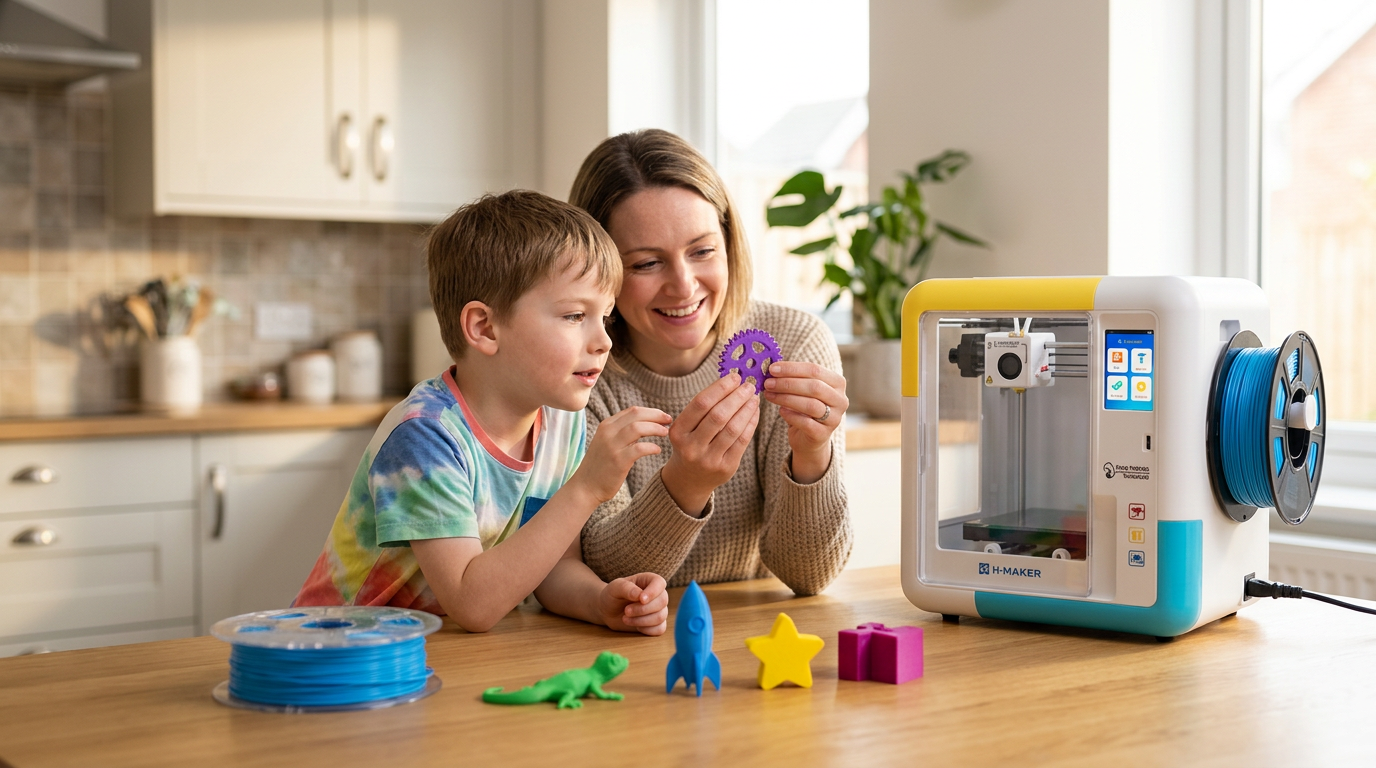
The six-stage routine works best when there are fewer steps between choosing an idea and taking the first useful action. AOSEED’s kid-friendly 3D printers follow the same approach. They arrive assembled and enclosed, use guided controls, and let a child start a model without working through a long settings menu. A parent can handle the filament setup while the child focuses on choosing and making. This reduces early setup tasks and leaves more session time for the creative work.
When to Shrink the Session, and When to Extend It
Two situations come up constantly. Here's how to read them.
Shrink the session when:
- You've read the same instruction three times without it landing.
- The setup tray still isn't staged 15 minutes after you walked in.
- You're irritated at the tool rather than the problem.
- Tomorrow has a hard commitment that needs you rested.
Extend the session when:
- The timer rang and you genuinely didn't notice it.
- You have water, food, and no obligation in the next hour.
- You can name the exact unit you'd finish in the extension.
- The next step after that unit is already written down.
Conclusion

An ADHD-friendly maker session doesn't run on perfect focus, endless motivation, or a spotless workspace. It runs on fewer decisions between the idea and the first useful action. Visible tools, one small goal, a flexible timer, and a real stopping routine.
The six stages also protect the project when your energy shifts. Shorten the block, switch to the backup task, or park the work without calling the day a failure. External supports take load off memory and self-control, which is precisely what CDC behavior guidance recommends: break complicated tasks into shorter steps, set realistic goals, and give feedback on the effort rather than waiting for the finished thing.
Start with one real project instead of redesigning the room. Pick a finish line you can reach today, stage only the tools that step needs, and leave a written note for next time. If the making happens with kids, creative tools built for family use shorten the setup even further, and the X-MAKER JOY covers ages 4 to 12 at $259. A session is not measured by how long you worked. It's measured by whether you made visible progress and left a clear path back.
FAQs
How do you lock in with ADHD?
You cannot force a state of deep focus, but you can make it easier to begin. Choose one visible outcome, remove extra choices, and start with a small physical action. For a maker session, that might mean writing one target such as “paint the first coat,” placing only the needed tools on a tray, and working for ten minutes before deciding whether to continue. This gives the creative routine a clear starting point without depending on motivation alone.
How do you build a routine with ADHD?
Attach the activity to something that already happens, such as coming home from school, finishing dinner, or starting the weekend. Keep the supplies together and use the same starting place so the routine requires less planning. Begin with a short 10- to 20-minute maker session, then repeat it consistently before adding more time. A predictable setup, one small goal, and a clear stopping step can make the routine easier to return to.
Can you be calm with ADHD?
Yes. ADHD does not always appear as visible hyperactivity, and a person may feel calm while still having trouble with attention, organization, or task switching. Before a creative session, slow breathing or a quiet setup can help reduce stress, but the goal is not to feel perfectly settled before starting. A simple activity routine can provide enough structure to begin, make progress, and stop without the session becoming overwhelming.
Do people with ADHD get tired easily?
Fatigue comes up often, though it isn't one of the core diagnostic symptoms. Planning, filtering distractions, and switching between tasks all take effort, and a day of that leaves people mentally flat. Mood, sleep, anxiety, and other health conditions feed into it as well. Schedule your maker work in your more alert hours, and raise persistent tiredness with a healthcare provider instead of filing it under ADHD by default.
What gives people with ADHD energy?
No food, supplement, or routine does it universally. Consistent sleep, regular meals, movement, and care that fits the individual keep symptoms from getting harder to manage. Interesting projects can feel energizing because holding attention on them costs less, but that burst isn't a substitute for rest. Physical activity has reasonable evidence behind it as a support, not a stand-alone fix. Before a session: water, a real snack, two minutes of movement, one target you actually believe in.
What is the afternoon crash of ADHD?
It describes a mid-to-late-day drop in energy, mood, patience, or focus. For people on short-acting stimulant medication, some of it can be a rebound as the dose wears off, and symptoms may feel briefly sharper than usual. Plenty of afternoon lows have nothing to do with medication at all. Put your easy session template in that window, and talk to your prescriber if the pattern looks dose-related.
What is the best lifestyle for someone with ADHD?
The one that reduces avoidable friction and fits your actual life. Consistent sleep, movement, meals you don't have to think about, treatment where it's needed, and external tools for planning and remembering. The CDC notes that adults with ADHD can struggle to maintain healthy habits during stressful periods, which is an argument for systems that don't lean on willpower. For creative work, that means visible supplies, sessions in your stronger hours, and a short backup routine for hard days.
What is missing in most ADHD productivity systems?
They explain how to plan and then go quiet about everything else. Starting friction, shifting energy, sensory needs, interruptions, and stopping all get skipped. Many assume one timer or checklist should work identically every day, which quietly turns the system into another unfinished project. A maker system needs to cover the full arc: choose the task, stage the tools, begin, pause, park the unfinished work, clean up, and come back.
Sources
- National Institute of Mental Health, “Attention-Deficit/Hyperactivity Disorder: What You Need to Know”
- Centers for Disease Control and Prevention, “Treatment of ADHD”
- Centers for Disease Control and Prevention, “Symptoms of ADHD”
- Centers for Disease Control and Prevention, “ADHD in Adults”
- Cleveland Clinic, “What Is Body Doubling and Can It Help With ADHD?”
- Cleveland Clinic, “Understanding Hyperfocus and ADHD”
- Cleveland Clinic, “Ditch the Distraction: 7 Ways to Focus When You're Living With ADHD”
- Journal of the American Academy of Child & Adolescent Psychiatry, “Do White Noise or Pink Noise Help With Task Performance in Youth With ADHD?”
- Medicine (Baltimore), “The Therapeutic Effects of Physical Activity on Children With ADHD”
- Clinical Psychology Review, “The Impact of Reinforcement Contingencies on ADHD: A Review and Theoretical Appraisal”


Further reading
AI vs CAD for Kids: Which Design Path Fits Each Age?

AI-Generated 3D Models for Kids: 9 Printability Checks Before You Print

How to Fund a Classroom 3D Printer: Grant Budget and Proposal Checklist